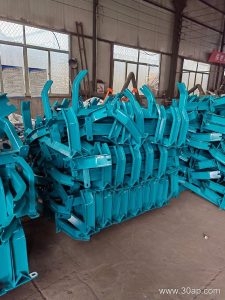
What a Diamond Grooved Lagged Pulley Does
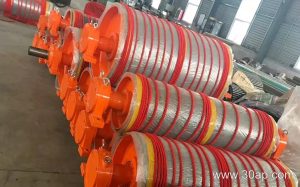
A diamond grooved lagged pulley is a conveyor pulley whose shell is covered with rubber lagging cut into a diamond pattern. In bulk handling, this component is also called a diamond rubber lagged drum or diamond grooved lagging pulley. The raised diamond blocks and the grooves between them give the belt more grip than a smooth steel face, while the grooves channel away water, dust and fine material that would otherwise sit between belt and shell.
It is most often used where the belt must transmit real torque without slipping, such as a head or drive position on a stone crushing line, a coal preparation plant or a cement clinker transport system. A tail pulley, by contrast, mainly guides and tensions the belt and usually does not need the same traction surface, so the two should not be treated as interchangeable.
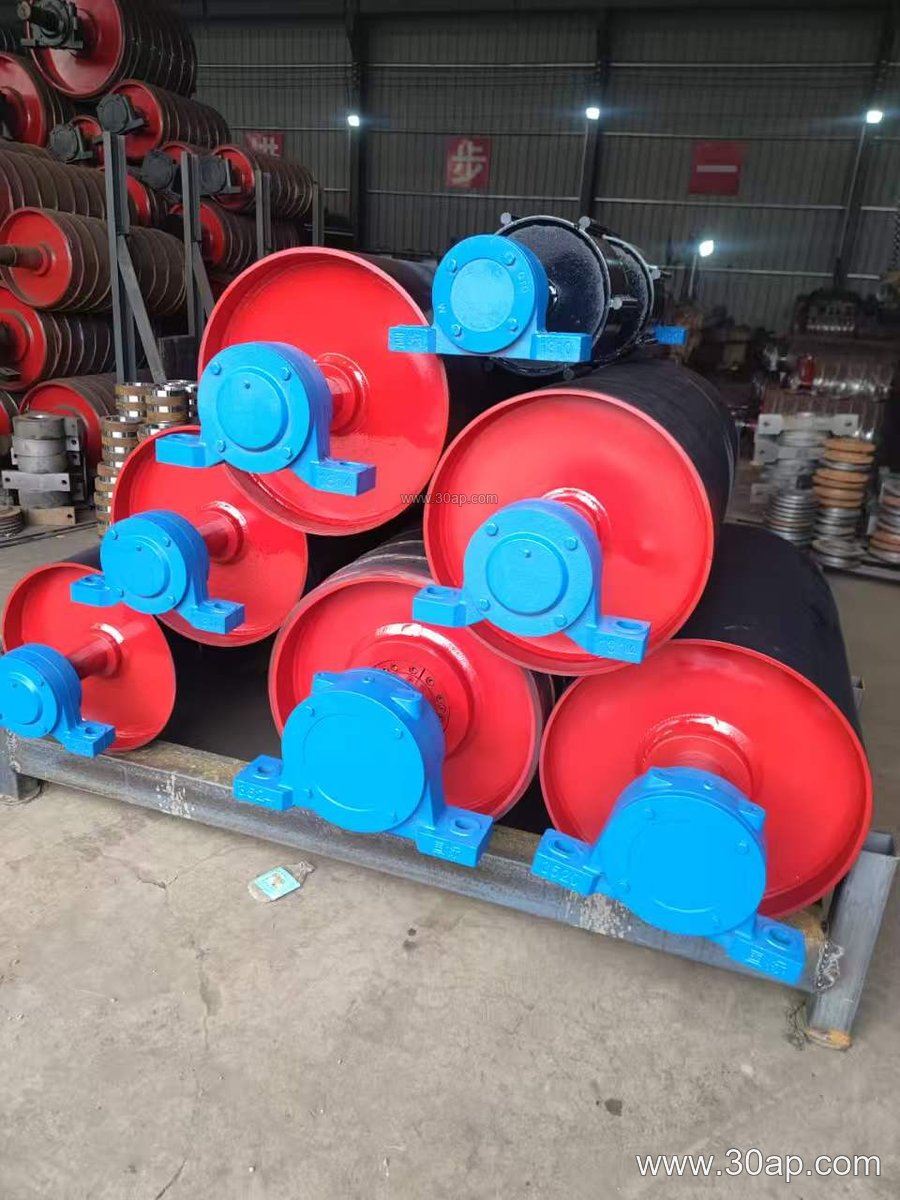
How the Diamond Pattern Is Built
The base is a steel drum with a machined face, welded end discs and a shaft that runs through the bearing housings. Rubber lagging is bonded to the shell by hot vulcanisation or cold bonding, and the diamond groove is then cut or moulded into the surface. Common lagging thicknesses are 8, 10, 12, 15 and 20 mm, and the pattern depth is normally a fraction of that thickness so the blocks keep their strength.
Plain, cast rubber, chevron and ceramic surfaces also exist, but each serves a different duty. The diamond form is a balanced choice for mixed dry and damp conditions because it drains well and still offers strong friction.
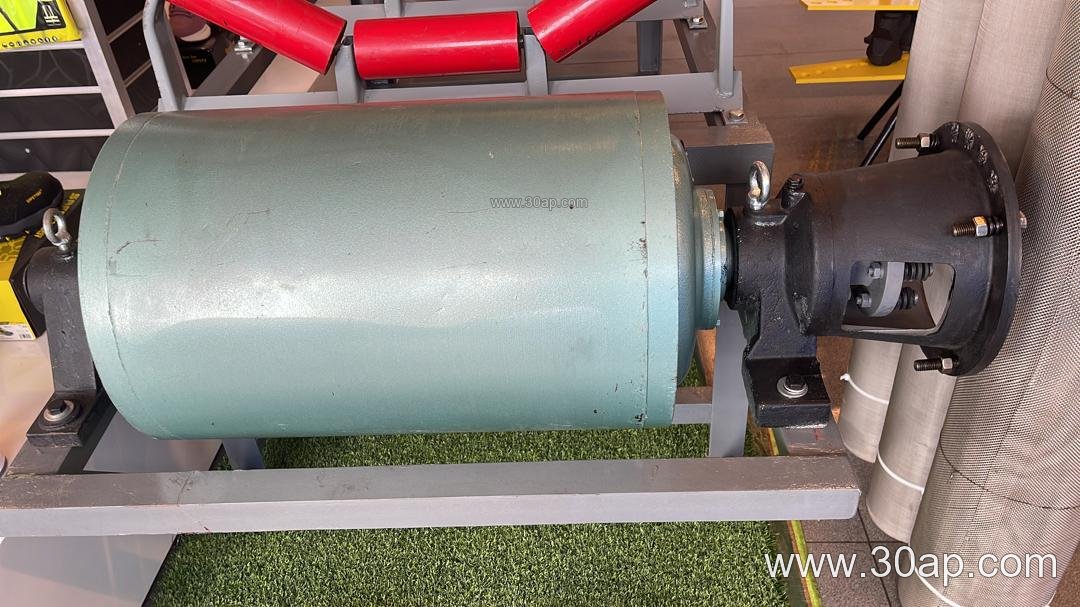
Typical Sizes and Combinations
Dimensions follow the conveyor duty rather than a fixed table. The values below are common reference points, not universal rules.
- Belt widths: B400, B500, B650, B800, B1000, B1200, B1400, B1600, B1800
- Pulley diameters: Ø200, Ø250, Ø315, Ø400, Ø500, Ø630, Ø800, Ø1000, Ø1250
- Shaft diameters: Ø50, Ø60, Ø70, Ø80, Ø90, Ø100, Ø120, Ø140, Ø160, Ø180, Ø200
- Shell widths usually exceed belt width, for example B800 about 950 mm and B1200 about 1400 mm
Useful pairings include B800 x Ø500, B1200 x Ø1000 and B1400 x Ø800. A wider belt does not lock the pulley to one diameter, and shaft size is set by torque and load, not by belt width alone.
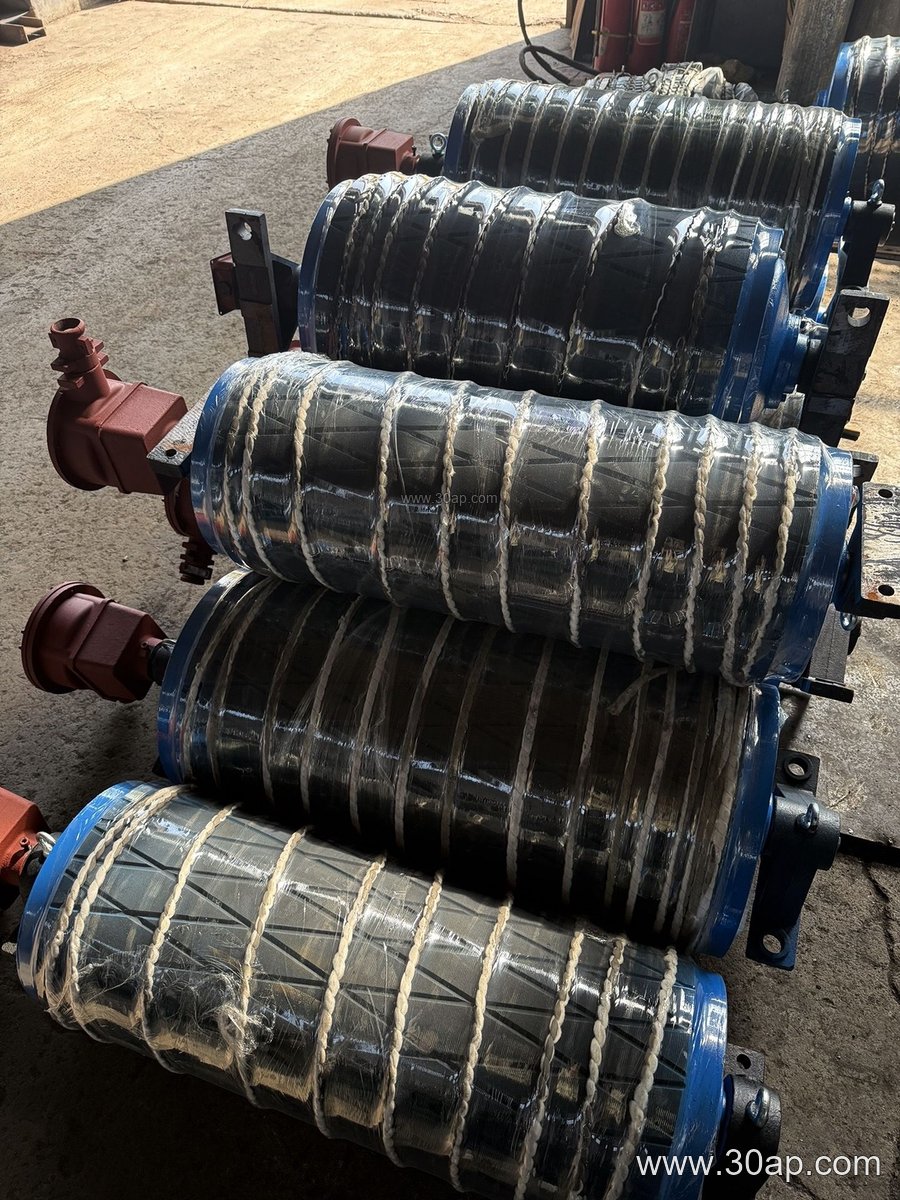
Where It Fits in a Conveying System
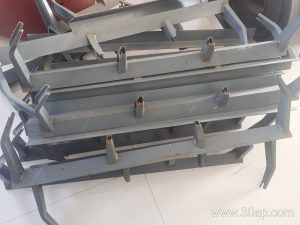
In an iron ore or limestone mine, a diamond grooved lagged pulley is often found at the head end, driving the conveyor belt with the help of a gearbox and motor. In a power plant coal yard or a fertiliser handling line, it may sit on a tension or bend station where some grip is still useful. The surrounding components matter too: conveyor idler rollers support the belt along the run, a conveyor bracket holds the bearing housing in place, and a take-up unit keeps tension steady.
| Position | Main Role | Surface Choice |
|---|---|---|
| Head / drive | Transmit torque | Diamond grooved lagging |
| Tail | Guide and tension | Plain or light lagging |
| Bend | Change belt direction | Plain or diamond, by load |
What Buyers Should Check
Before ordering, confirm belt width, belt speed, starting torque and the material being carried. Ask how the lagging is bonded and whether the groove depth suits a wet or abrasive environment. Check shaft diameter against the required torque, and verify that the bearing, locking assembly and bracket match the frame. For a dusty quarry or a sticky clay load, a deeper groove can clear material better; for a clean, dry line, a moderate pattern may be enough.
Routine inspection of the rubber surface, groove depth and shaft alignment helps avoid belt slip and premature wear. Re-lagging is possible when the rubber is worn but the shell and shaft remain sound.