What a Labyrinth-Sealed Idler Does on a Conveyor
A labyrinth-sealed idler is a carrying or return roller whose bearing housing uses a non-contact labyrinth seal to keep fine dust, grit, and moisture away from the bearing. In a quarry, coal washing plant, or cement kiln feed line, the difference between a standard idler and a labyrinth-sealed idler often shows up as longer bearing life and steadier belt tracking. The seal does not rely on a single rubber lip; it creates a long, tortuous path that particles must travel before reaching the bearing.
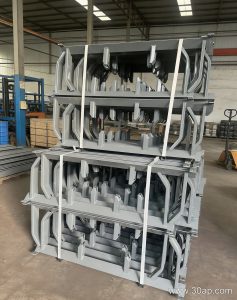
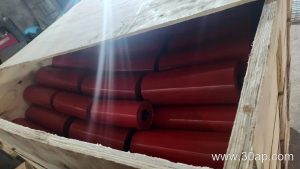
Despite the name, this is still a conveyor idler roller. It mounts on the same conveyor bracket and supports the same conveyor belt. The labyrinth seal is a design feature of the bearing housing, not a separate machine.
How the Seal and Roller Body Are Built
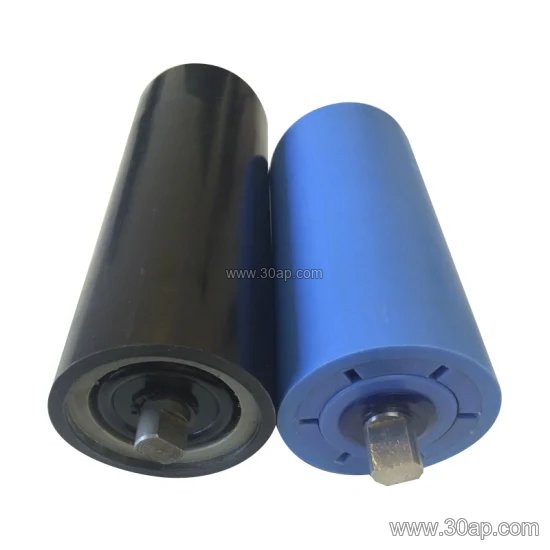
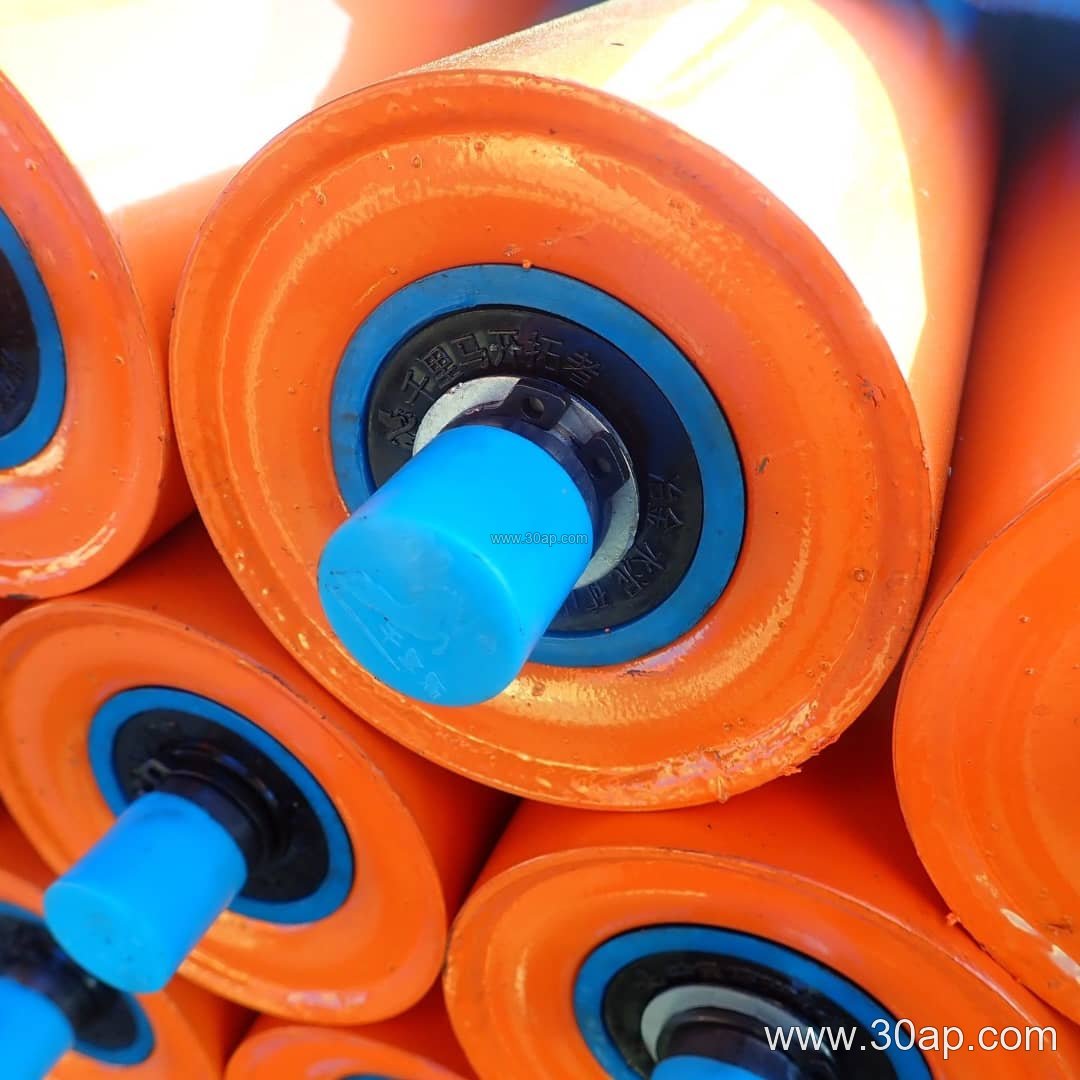
Most labyrinth-sealed idlers combine a steel tube shell, a shaft, bearing seats, and a multi-stage seal assembly. Grease fills the bearing cavity, and the seal stages overlap without touching, so friction stays low. Common bearing sizes include 6204, 6205, 6305, 6306, 6308, and 6310, but the correct bearing depends on the roller diameter, load, and speed rather than on belt width alone.
The roller surface may be plain steel, nylon, ceramic, or rubber rings. Rubber rings are often chosen for impact zones, while ceramic or nylon can suit abrasive fines. The seal itself is usually a combination of a metal labyrinth ring and a protective cover.
Where It Fits in a Bulk Handling Line
Labyrinth-sealed idlers appear in the carry side, return side, and transition zones of a conveyor. In an iron ore or copper mine, they are common on dusty transfer points. In a power plant coal yard or a sand and gravel line, they help reduce maintenance stops caused by seized rollers. They are also used in fertilizer and grain handling, where fine particles and occasional washdown are present.
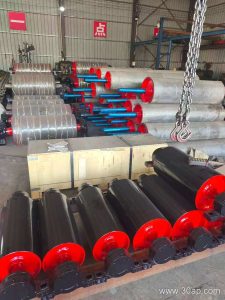
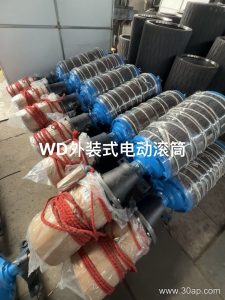
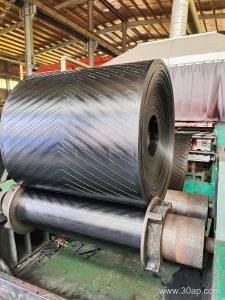
They are not a replacement for a drive pulley, tail pulley, or bend pulley. Those are conveyor pulleys that transmit power or change belt direction. A labyrinth-sealed idler only supports the belt and its load. A conveyor pulley and an idler roller serve different roles, even though both are rotating components.
Common Sizes and Arrangements
Labyrinth-sealed idlers are supplied in many diameters and belt widths. The table below shows typical reference values; actual selection depends on the conveyor design, belt speed, and load.
| Parameter | Common reference values |
|---|---|
| Roller diameter | Ø63, Ø76, Ø89, Ø102, Ø108, Ø127, Ø133, Ø159, Ø178, Ø194, Ø219 mm |
| Belt width | B400, B500, B650, B800, B1000, B1200, B1400, B1600, B1800, B2000, B2200, B2400 |
| Trough angle | 20°, 30°, 35°, 45° |
| Roller surface | Steel tube, nylon, ceramic, rubber rings |
| Bearing | 6204, 6205, 6305, 6306, 6308, 6310 |
For a three-roll troughing set, the side roller and center roller may have different lengths. Typical examples include about 200 mm for B500, 250 mm for B650, 315 mm for B800, 380 mm for B1000, 465 mm for B1200, 530 mm for B1400, 600 mm for B1600, 670 mm for B1800, and 750 mm for B2000. These are common examples, not fixed pairings. A belt width does not dictate one single pulley diameter or shaft diameter.
What Buyers Should Check Before Ordering
- Confirm the roller diameter, belt width, trough angle, and roller length from the conveyor drawing or the existing idler.
- State the environment: dust, moisture, washdown, or high impact. This affects the seal choice and roller surface.
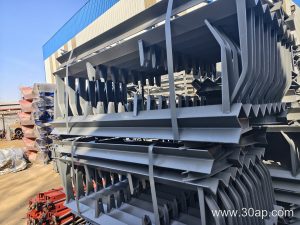
- Check the bearing size and shaft end dimensions against the conveyor bracket, not only against the belt width.
- Decide between a standard idler and a labyrinth-sealed idler based on maintenance intervals and dust exposure.
A labyrinth-sealed idler is not a universal answer for every conveyor. In a clean, light-duty line, a simpler sealed idler may be enough. In a crushing and screening plant, a cement silo discharge, or a tunnel muck conveyor, the labyrinth seal often pays back through fewer bearing failures.
Maintenance is straightforward: inspect for seized rollers, damaged seals, and belt misalignment. Replace a roller when the shell wears through or the bearing becomes noisy. Keep spare idlers in the same diameter and length as the installed set, and remember that a conveyor pulley, a bracket, and an idler roller are separate items with separate part numbers.