What a Belt Conveyor Guide Idler Does
A belt conveyor guide idler is a rotating roller assembly that keeps the conveyor belt centered and supported as it travels along the carrying or return run. In practice, this component is often called a training idler or self-aligning roller, but it remains a distinct idler subtype — not a drive pulley, tail pulley, or bend pulley. Its primary job is to correct belt misalignment, reduce edge damage, and maintain steady material transport in industries such as mining, coal preparation, cement plants, and power station coal handling.
The guide idler works by using angled rollers or a pivoted frame that reacts to belt drift. When the belt shifts to one side, the idler applies a gentle steering force to bring it back on track. This is a continuous, mechanical correction that protects the conveyor belt and extends the life of other components like the idler roller and conveyor pulley.
Construction and Common Types
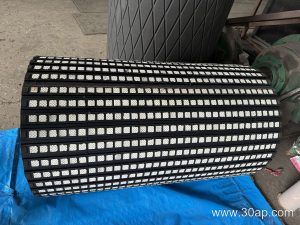
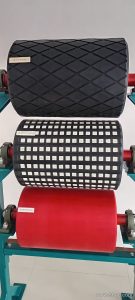
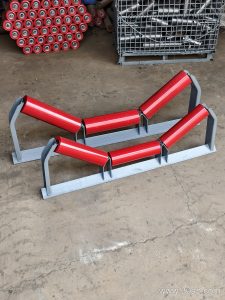
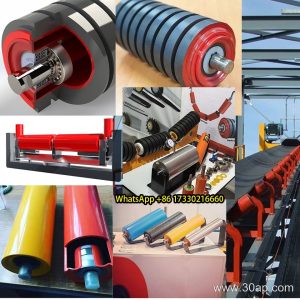
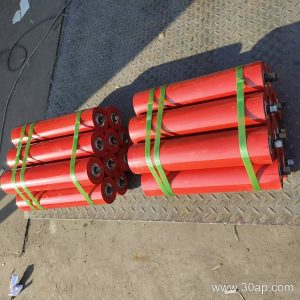
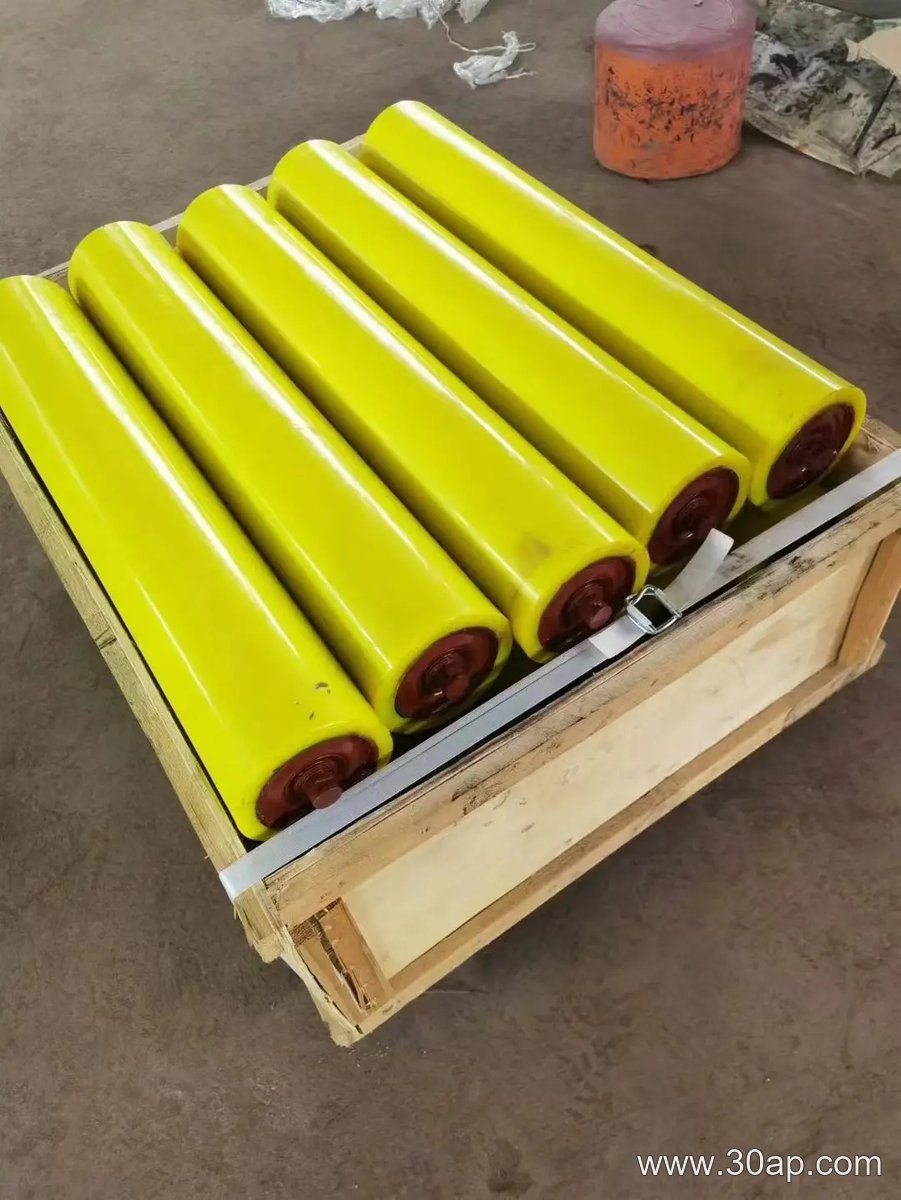
A typical guide idler consists of a steel tube shell, bearing housing, shaft, and sealing arrangement. The roller surface may be plain steel, nylon, rubber-covered, or ceramic-lined depending on the application. Bearings often include 6204, 6205, 6305, 6306, 6308, or 6310 sizes, matched to the load and speed of the conveyor. The frame can be a single roller, two-roller V-shaped, or three-roller trough configuration, with trough angles commonly 20, 30, 35, or 45 degrees.
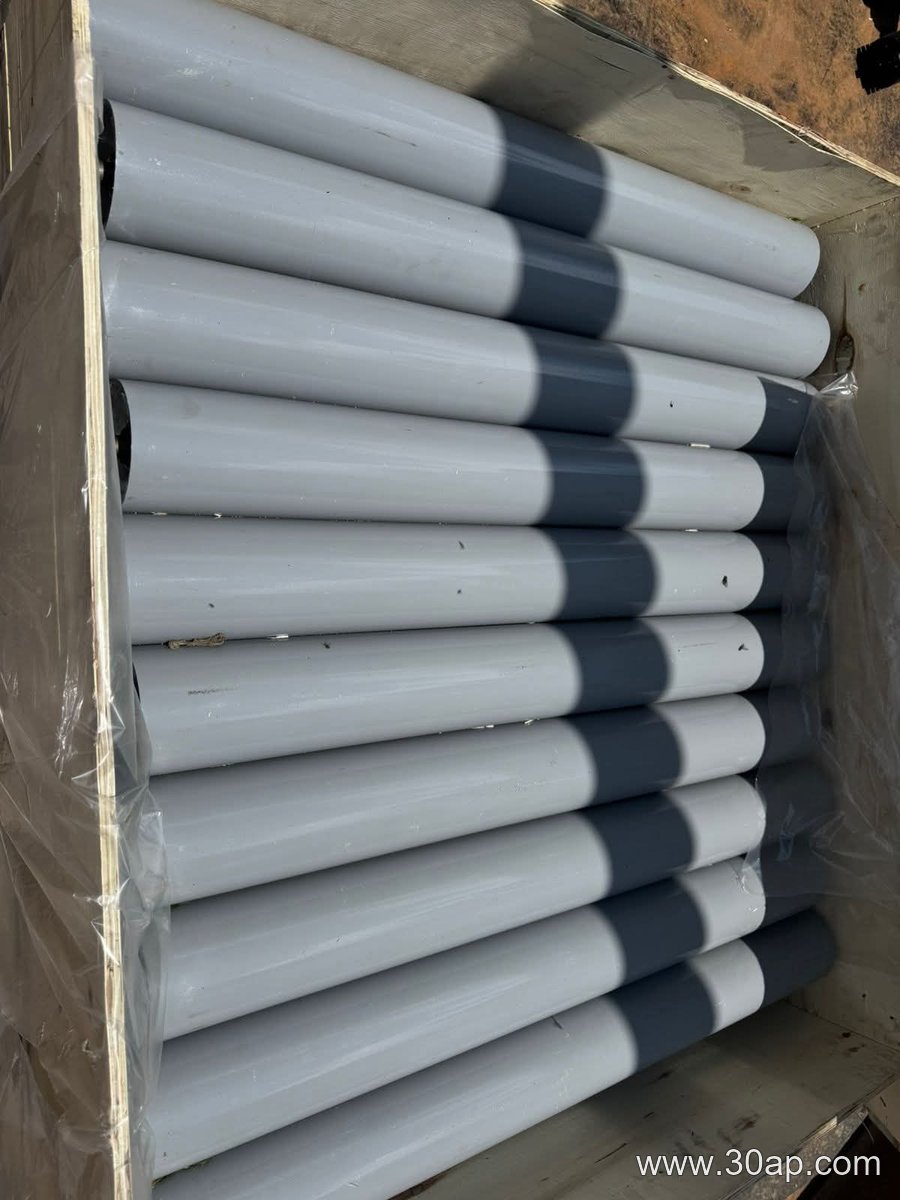
For alignment purposes, friction self-aligning and tapered self-aligning guide idlers are widely used. A friction type relies on belt contact to pivot the frame, while a tapered design uses conical rollers to create a steering effect. Both are distinct from standard carrying idlers or impact idlers, which serve different functions. A return guide idler, for example, may be a V-type or flat roller placed on the return strand to prevent belt wander.
Where Guide Idlers Are Used
These idlers appear in quarries, limestone mines, iron ore plants, copper concentrators, coal washing plants, aggregate crushing and screening lines, and port bulk terminals. They are also found in tunnel muck removal, fertilizer handling, and grain conveyors. In any of these settings, a misaligned belt can cause spillage, edge fraying, and premature wear on the conveyor belt and conveyor bracket. A guide idler is a low-cost way to avoid those problems.
They are especially useful at transition points, curves, and long overland conveyors where the belt has a natural tendency to drift. Unlike a drive pulley or tail pulley, which transmit power or change direction, the guide idler only influences lateral position. It does not replace a bend pulley or a snub pulley.
Key Parameters for Buyers
When selecting a belt conveyor guide idler, consider belt width, roller diameter, trough angle, and mounting arrangement. Common roller diameters include Ø63, Ø76, Ø89, Ø102, Ø108, Ø127, Ø133, Ø159, Ø178, Ø194, and Ø219 mm. Belt widths range from B400 to B2400, and roller lengths vary with belt width and trough form. For example, a three-roller trough set might use a roller length of about 200 mm for B500, 250 mm for B650, 315 mm for B800, 380 mm for B1000, 465 mm for B1200, 530 mm for B1400, 600 mm for B1600, 670 mm for B1800, and 750 mm for B2000. These are common references, not fixed pairings — side rollers and center rollers can differ.
Bearing selection should match the actual load and speed, not just the roller diameter. Sealing quality matters in dusty or wet conditions, such as coal preparation or cement plants. The roller surface — steel, nylon, rubber, or ceramic — affects friction and wear life. A rubber-covered guide idler may be preferred in abrasive environments, while a ceramic surface can help in sticky material handling.
Maintenance and Selection Tips
- Check belt tracking regularly and adjust guide idler frames only when the belt is running empty and loaded.
- Inspect bearings for noise, heat, or play; replace worn idlers before they damage the conveyor belt.
- Keep the idler roller surface clean; material buildup can reduce steering effectiveness.
- Verify that the guide idler matches the belt width and trough angle of the existing conveyor bracket.
- Do not substitute a drive pulley, tail pulley, or bend pulley for a guide idler — they are not interchangeable.
For reliable belt training, a properly sized and well-maintained guide idler is a practical investment in any bulk material handling system. Whether in a sand and gravel plant or a power station coal yard, it helps keep the conveyor belt running true and reduces unplanned downtime.