What a Steel Plant Conveyor Idler Does
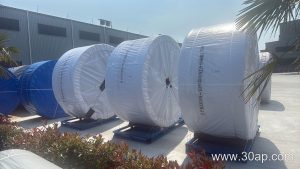
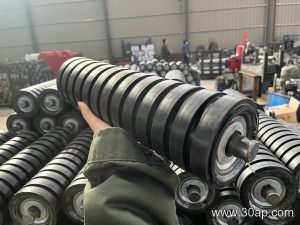
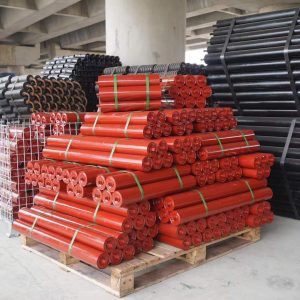
A steel plant conveyor idler is the rotating support that carries the conveyor belt along the load-carrying and return sides of a bulk handling system. In sinter plants, coke wharves, and raw material yards, these rollers keep the belt tracking steadily while ore, limestone, and coke move between crushers, screens, and storage bins. The idler roller is not a drive component; it only supports and guides the belt, while the conveyor pulley at the head or tail provides the motion.
Because steel plants often run belts at high capacity and in dusty, hot conditions, the idler set is usually matched to the belt width, the material load, and the section of the conveyor where it works.
How a Steel Plant Conveyor Idler Is Built
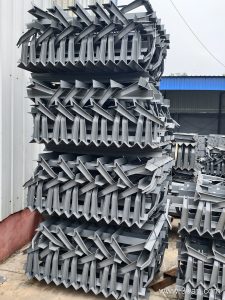
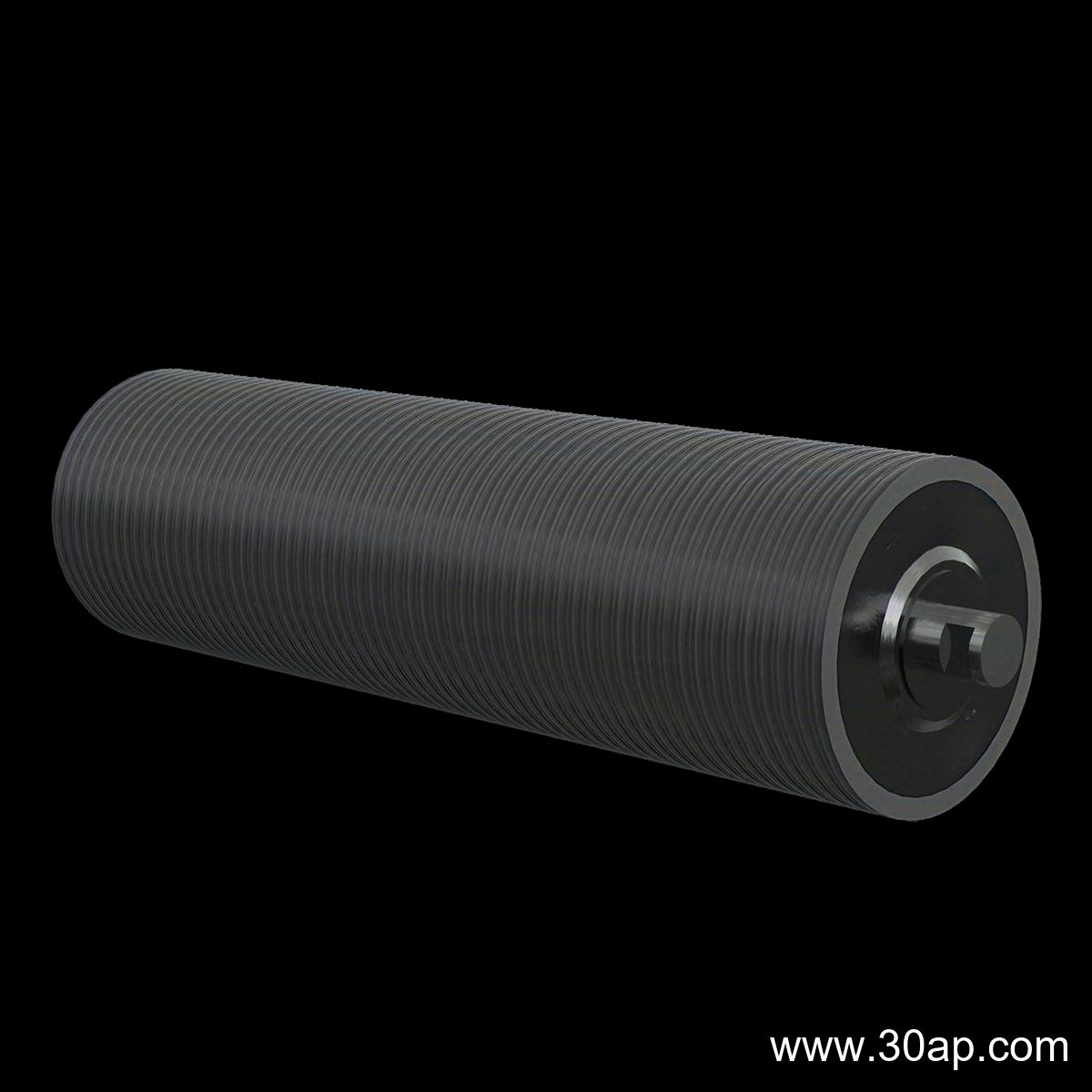
A typical unit combines a steel tube shell, a shaft, bearing housings, and seals. Common shell materials include plain steel pipe, nylon, ceramic, and rubber rings for impact areas. Bearings such as 6204, 6205, 6305, 6306, 6308, and 6310 are used across different roller diameters, but a given bearing is not tied to one shell size. The shaft ends fit into a conveyor bracket, and the roller rotates on its own bearings.
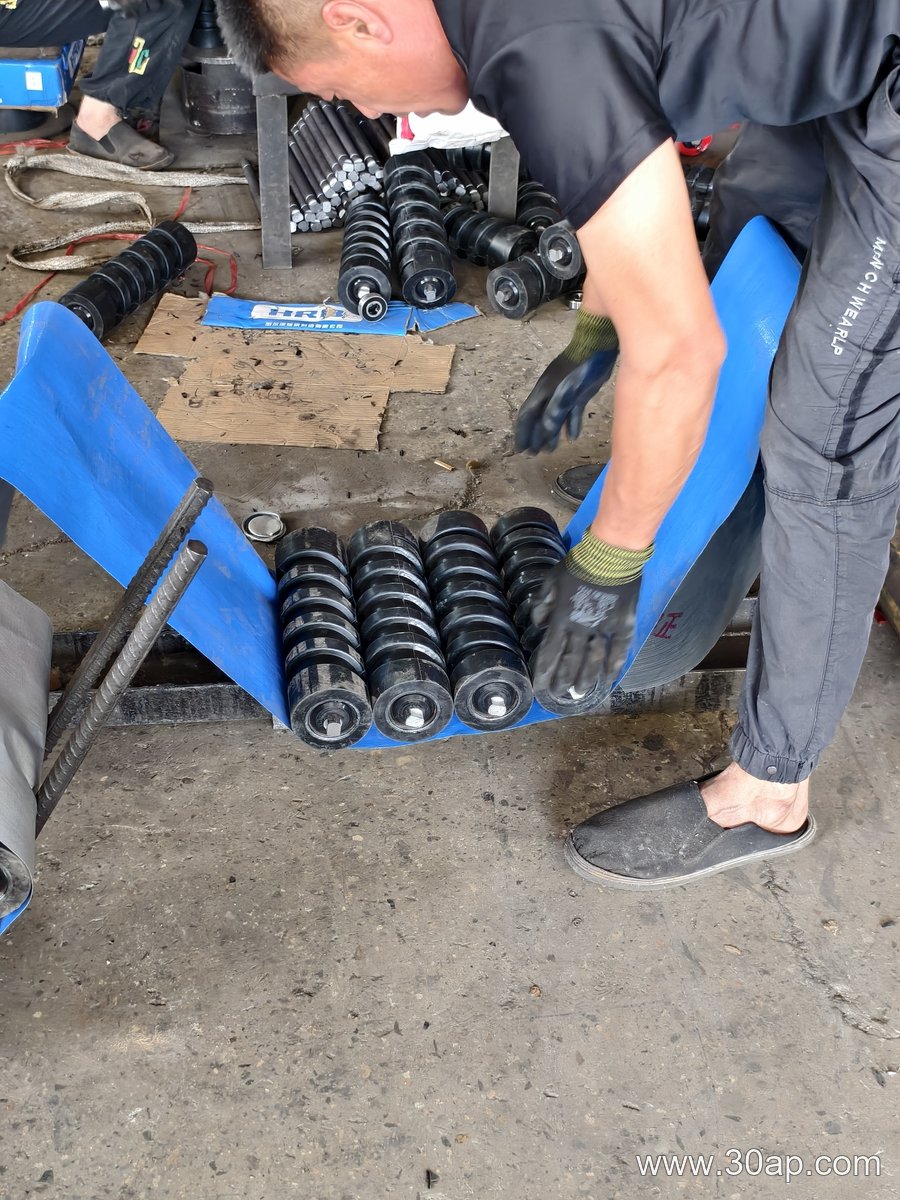
Sealing is critical in steel plant service. Fine dust and scale can enter a poorly sealed bearing and shorten roller life, so labyrinth or multi-stage seals are often chosen for sinter and coke handling lines.
Common Idler Types and Their Positions
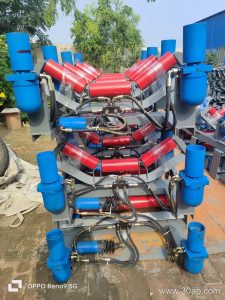
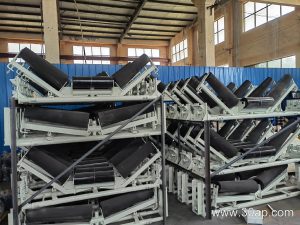
- Troughing idlers support the loaded belt and form a trough that keeps material centered. A three-roll troughing set is common on wider belts.
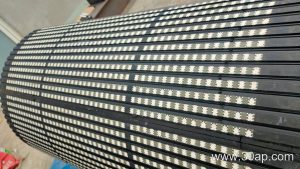
- Impact idlers with rubber rings sit below the loading chute to absorb the fall of heavy lumps.
- Return idlers support the empty belt on the lower run. Flat return and V-return designs are both used.
- Self-aligning idlers correct belt drift on long conveyors or where material builds up unevenly.
- Spiral idlers help shed sticky fines on the return side.
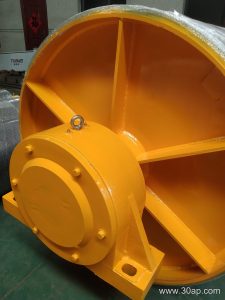
Drive pulleys, tail pulleys, and bend pulleys are not idlers. They transmit power or change belt direction, so they should not be substituted for a steel plant conveyor idler when the task is belt support.
Roller Diameter, Belt Width, and Roll Length
Roller diameter and belt width are selected together with the trough angle and the idler arrangement. Common roller diameters include Ø63, Ø76, Ø89, Ø102, Ø108, Ø127, Ø133, Ø159, Ø178, Ø194, and Ø219. Belt widths range from B400 up to B2400 in many plants. Trough angles are often 20, 30, 35, or 45 degrees. A three-roll troughing set may use different side and center roll lengths, so the values below are examples only and should be confirmed by the conveyor design.
| Belt Width | Typical Roll Length for a Three-Roll Troughing Set | Common Roller Diameter Range |
|---|---|---|
| B500 | about 200 mm | Ø63 to Ø108 |
| B650 | about 250 mm | Ø76 to Ø133 |
| B800 | about 315 mm | Ø89 to Ø159 |
| B1000 | about 380 mm | Ø108 to Ø159 |
| B1200 | about 465 mm | Ø108 to Ø178 |
| B1400 | about 530 mm | Ø127 to Ø194 |
| B1600 | about 600 mm | Ø133 to Ø194 |
| B1800 | about 670 mm | Ø133 to Ø219 |
| B2000 | about 750 mm | Ø159 to Ø219 |
These figures are reference data, not fixed matches. A single belt width can accept more than one roller diameter, and the final choice depends on load, speed, and idler spacing.
Where Steel Plant Conveyor Idlers Are Used
Inside a steel mill, these rollers appear on sinter feed lines, coke conveyor systems, limestone and dolomite handling, and slag transport. They also work in related bulk sites such as a coal washing plant, a power station coal yard, or an aggregate crushing and screening line. In each case the conveyor belt, idler roller, conveyor pulley, and conveyor bracket form one mechanical system, and the idler must suit the material and the environment.
What Buyers Should Check
- Confirm the belt width, trough angle, and idler group form before ordering.
- Match the roller diameter to the load and speed, not to a single belt size.
- Choose the seal and bearing type for the dust and temperature level on site.
- Check shaft end dimensions and bracket fit so the roller sits correctly.
- For impact zones, specify rubber-ring or cushion idlers rather than standard troughing rolls.
A well-chosen steel plant conveyor idler reduces belt wear, keeps material centered, and lowers the chance of unexpected downtime on a busy handling line.