What a Striped Lagged Pulley Is
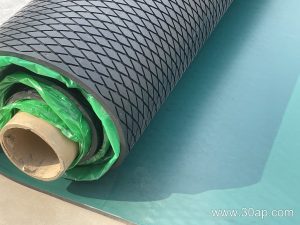
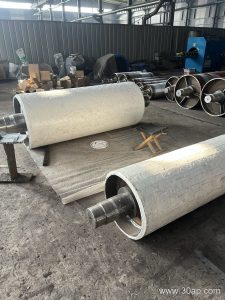
A striped lagged pulley is a conveyor pulley whose outer shell is covered with rubber lagging that carries a striped pattern, usually a series of grooves or raised ribs running across or around the face. In many plants this component is also called a grooved rubber lagged drum or a striped lagged roller. The striped surface is not only cosmetic. It helps shed water, fine dust and sticky material while improving grip between the pulley and the conveyor belt, which is especially useful in wet or muddy conditions.
How the Striped Lagging Is Built
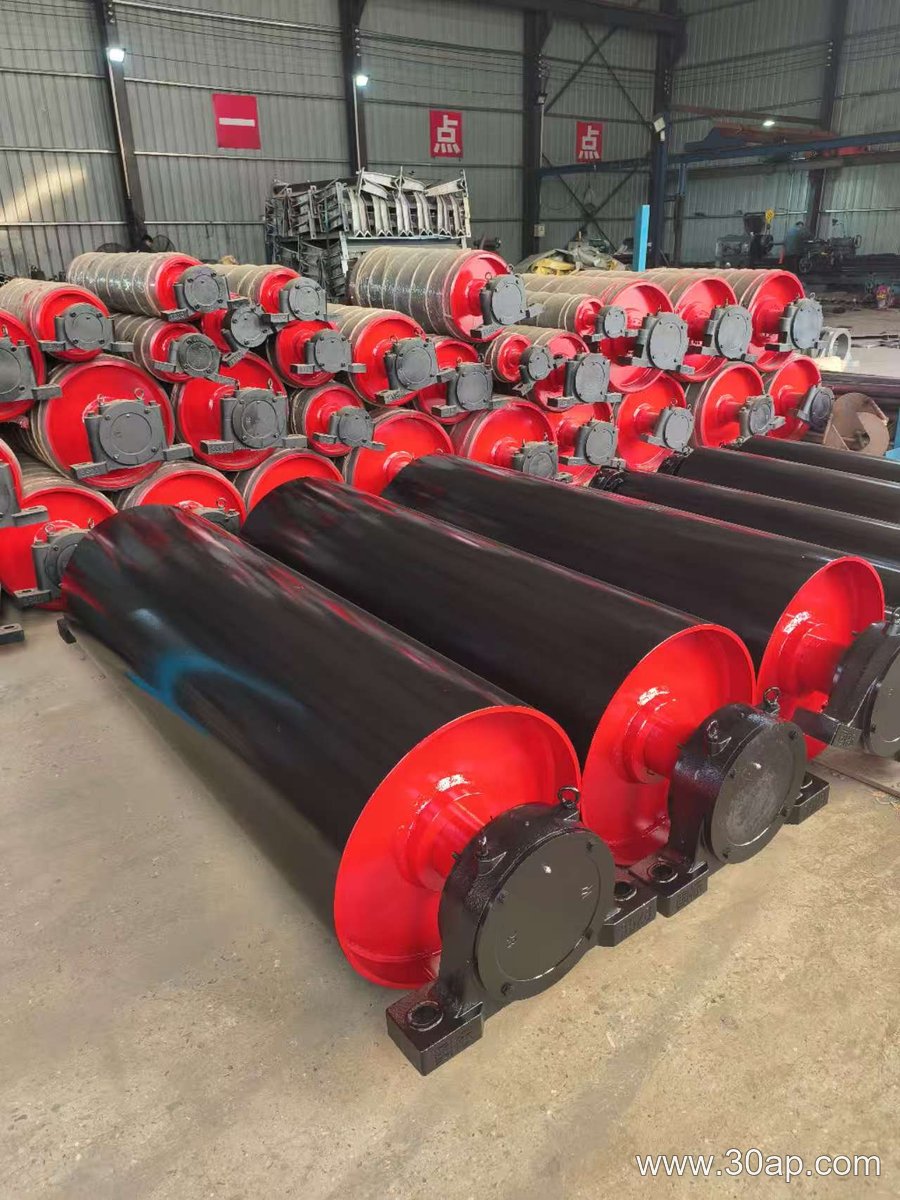
The base is a steel drum with a machined face, welded end discs and a shaft. Lagging is applied in one of several ways. Cold bonded rubber, hot vulcanized rubber and cast rubber are common methods. The stripe pattern is formed during molding or cut after bonding. A typical rubber layer may be 8 mm, 10 mm, 12 mm, 15 mm or 20 mm thick, depending on the duty. The stripe depth and pitch are selected to balance drainage and wear life. A striped lagged pulley is different from a plain smooth drum, and it should not be confused with a drive pulley, tail pulley or bend pulley, which are position based names rather than surface based ones.
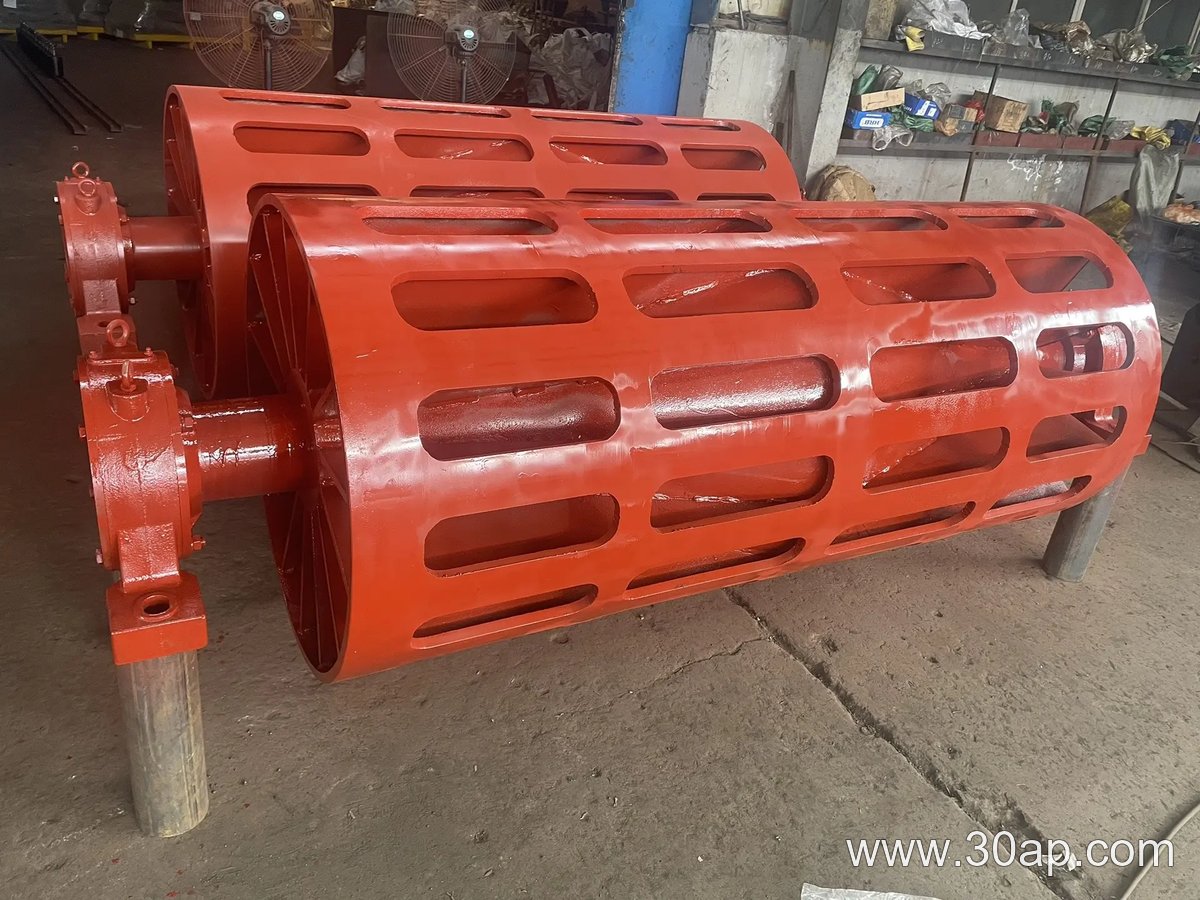
- Shell and end disc welded assembly
- Rubber lagging with striped or grooved profile
- Shaft sized by torque and load, not by belt width alone
- Bearing housings and conveyor bracket mounting points
Where It Fits in a Conveyor
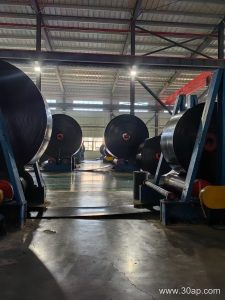
The striped lagged pulley is often used where the belt meets a driven or tensioning position and slip is a concern. In a coal preparation plant, a cement clinker line or a power station coal yard, moisture and fines can reduce friction. A striped rubber surface can help the pulley keep a positive grip. It may also be found on a tail pulley or a snub position in a quarry or sand and gravel plant, but the choice depends on the actual job. A drive pulley and a bend pulley are not interchangeable names, and a striped lagged pulley is not automatically a replacement for either one. It is a surface variant that can be applied to different pulley roles.
Common Sizes and Selection Notes
There is no single size that fits every conveyor. A buyer should match the pulley to belt width, belt tension, shaft load and the space available. The table below lists typical reference values, not a fixed supply promise. The drum face is usually wider than the belt. For example, a B800 belt often pairs with a face around 950 mm, while a B1200 belt may use a face near 1400 mm. Diameter and shaft diameter are determined by design.
| Belt width | Typical drum face width | Common diameter range | Common shaft diameter range |
|---|---|---|---|
| B400 | about 500 mm | Ø200 to Ø400 | Ø50 to Ø80 |
| B650 | about 750 mm | Ø250 to Ø500 | Ø60 to Ø100 |
| B800 | about 950 mm | Ø315 to Ø630 | Ø70 to Ø120 |
| B1000 | about 1150 mm | Ø400 to Ø800 | Ø80 to Ø140 |
| B1200 | about 1400 mm | Ø500 to Ø1000 | Ø90 to Ø160 |
| B1400 | about 1600 mm | Ø630 to Ø1250 | Ø100 to Ø180 |
| B1600 | about 1800 mm | Ø800 to Ø1400 | Ø120 to Ø200 |
Larger sizes such as B1800, B2000, B2200 and B2400 are also used in heavy duty ports and mining conveyors. Diameters can reach Ø1600 or Ø1800 in some designs. These values are common references only. A smaller diameter can be paired with a wider belt if the torque and wrap angle allow it, so do not assume one belt width must use one diameter.
Surface Options and Maintenance
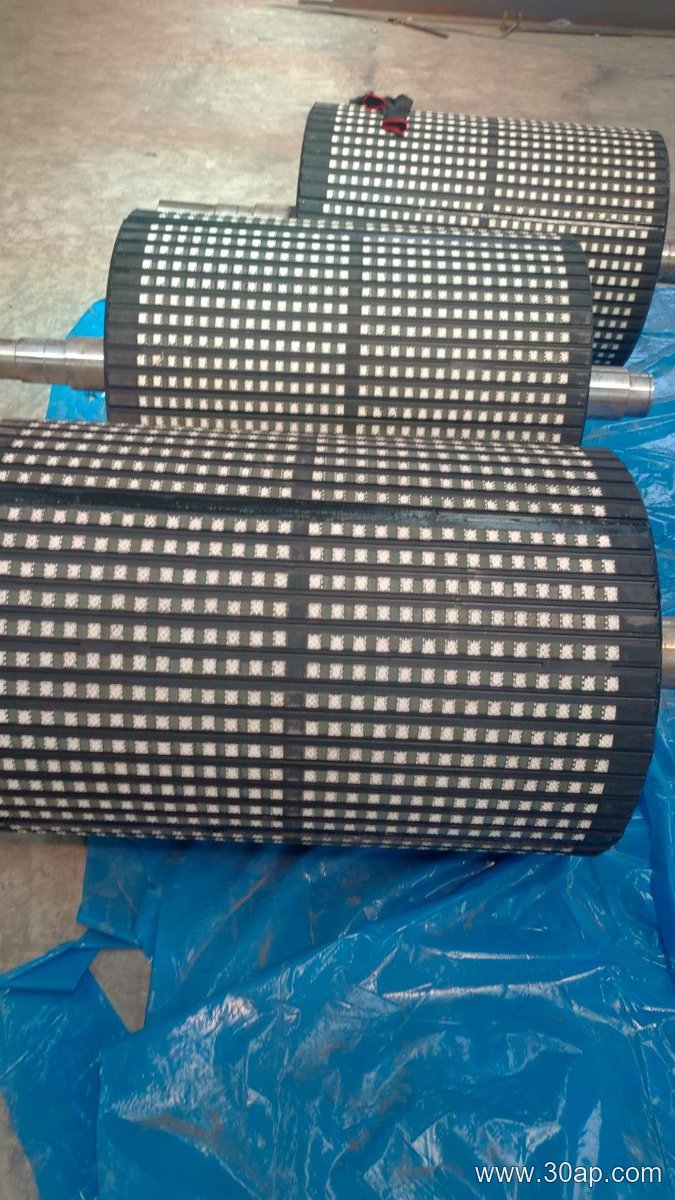
Striped lagging can be supplied in several rubber grades. Some customers choose a striped pattern for wet service and a plain or diamond pattern for dry abrasive rock. Ceramic lagging is a different option for very high wear areas. When maintaining a striped lagged pulley, check the stripe depth for wear, look for missing rubber, and confirm that the conveyor belt tracks correctly. Worn lagging can be re-covered rather than replacing the whole drum. Inspect the shaft, bearings and conveyor bracket at the same time.
What to Tell a Supplier
Provide the belt width, the pulley role, the expected belt tension, the material being carried and the environment. Mention if the area is wet, dusty or sticky. State the required face width, diameter and shaft size if known. Ask whether the striped lagging is cold bonded, hot vulcanized or cast, and confirm the rubber thickness. A clear specification helps the supplier offer a striped lagged pulley that fits the conveyor, not just a catalogue number.