What a High-Strength Idler Is
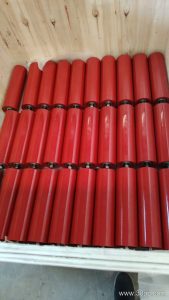
A high-strength idler is a heavy-duty idler roller built to carry a loaded conveyor belt without premature shell wear, bearing failure, or frame distortion. In practice, the term points to an idler roller with thicker tube walls, reinforced end discs, stronger bearing housings, and a sealing system suited to dust, moisture, and continuous operation. It is not a different category of conveyor component; it is the same idler roller family, specified for conveyors where standard duty would be marginal.
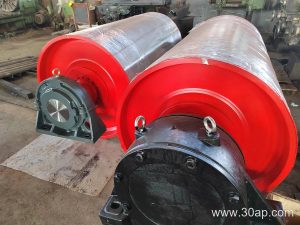
The accurate equivalent name for this same product is heavy-duty idler roller. Both terms describe a load-bearing roller, not a drive pulley, tail pulley, or bend pulley. Those pulleys transmit power or change belt direction, and they are not interchangeable with an idler. Where a high-strength idler is used, it supports the belt and the material load between pulleys.
How It Is Built
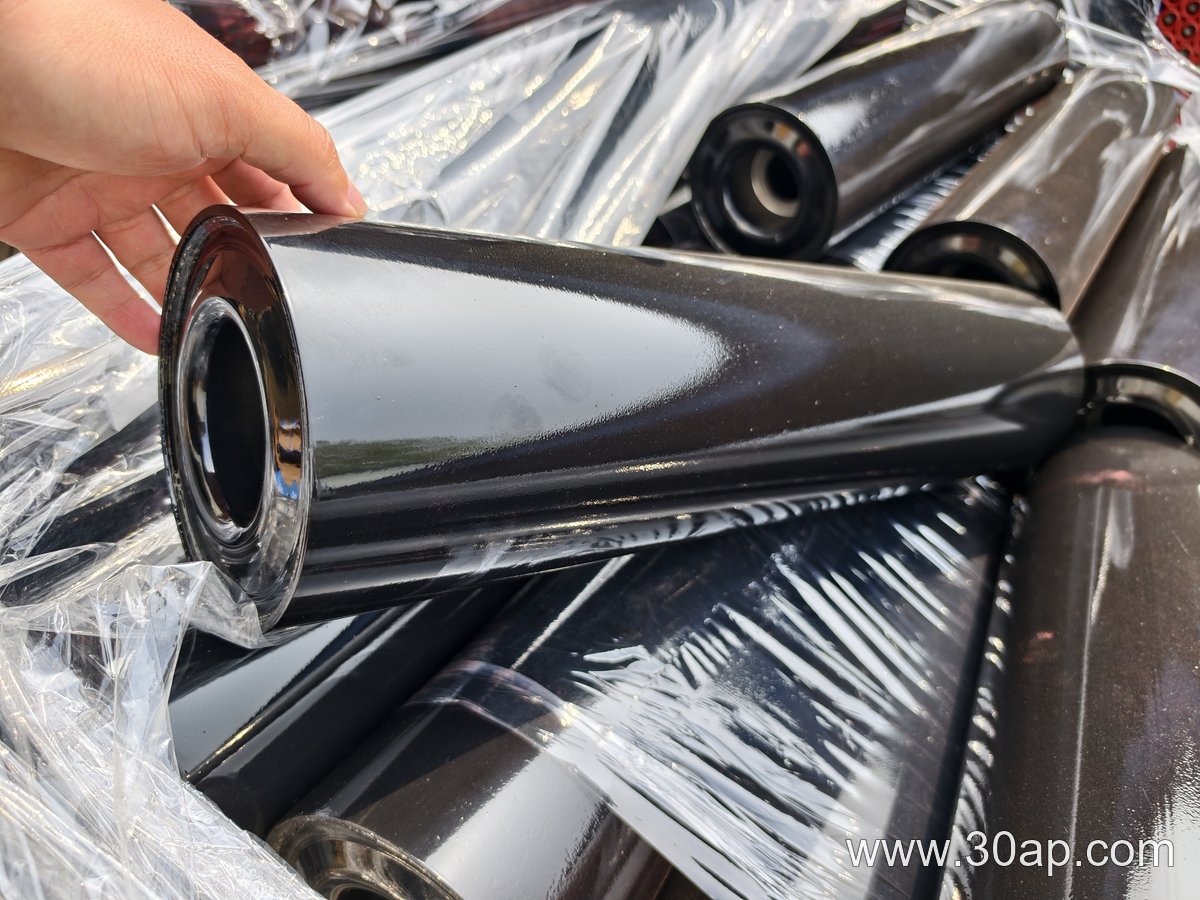
Construction usually starts with a seamless steel tube, machined at both ends to accept bearing housings. The shaft is often a cold-drawn round bar, sized to the bearing bore and the bracket slot. Common bearing numbers include 6204, 6205, 6305, 6306, 6308, and 6310; the choice depends on load, speed, and expected service life, not on one fixed rule. A high-strength idler typically uses a labyrinth seal, sometimes combined with a contact lip seal, to keep fine dust out of the bearing cavity.
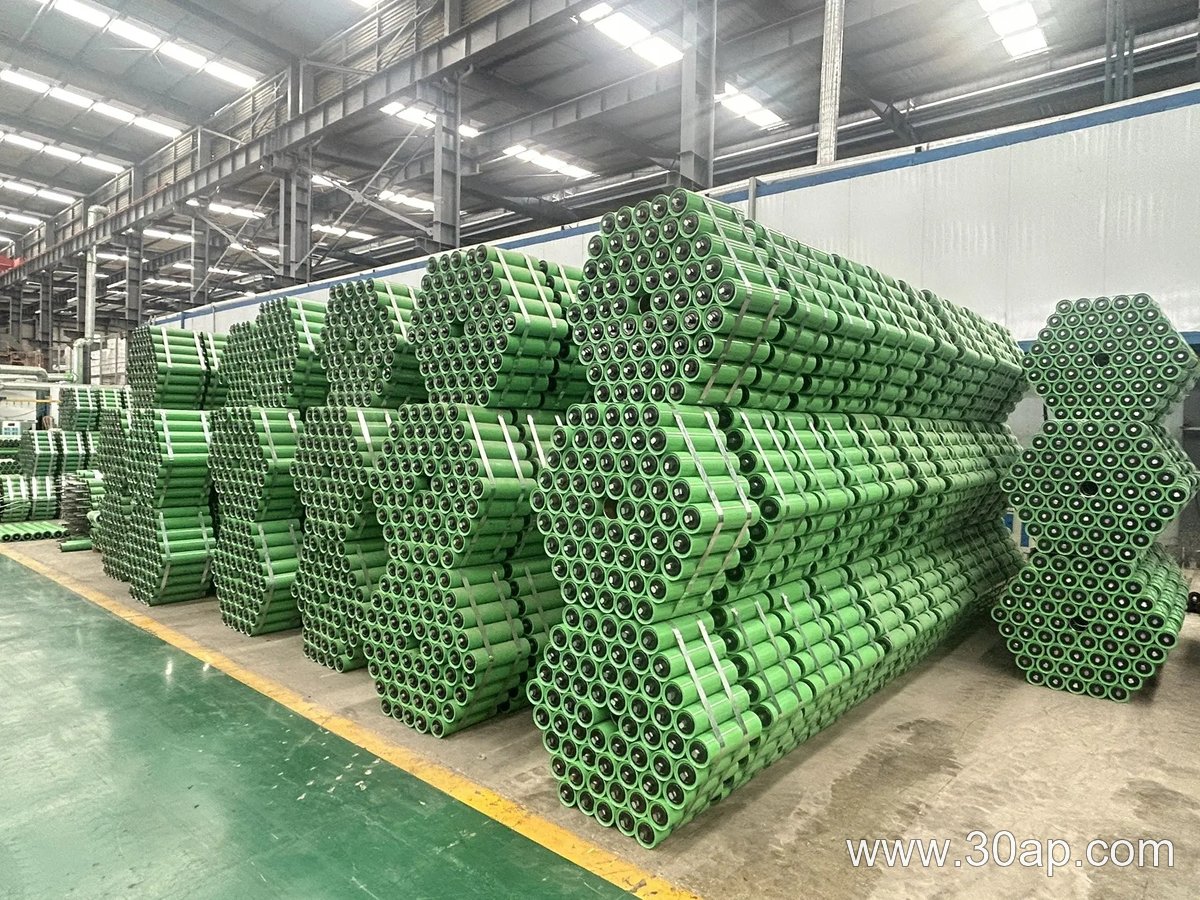
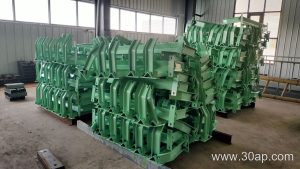
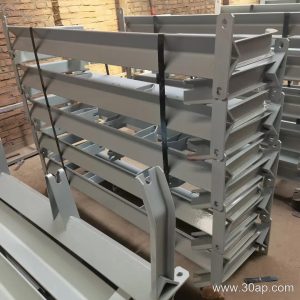
Roller diameter is selected from a range such as Ø63, Ø76, Ø89, Ø102, Ø108, Ø127, Ø133, Ø159, Ø178, Ø194, and Ø219 mm. Shell surface can be plain steel, nylon, ceramic, or rubber rings. A rubber-ring version is often chosen at the load point for impact absorption. The idler group may be a single roller, a two-roller set, or a three-roller troughing set with a trough angle of 20, 30, 35, or 45 degrees. A forward tilt of about 1.5 to 2 degrees is used on some troughing idlers to help center the belt.
Where It Fits on the Conveyor
High-strength idlers are common on the carrying side of long overland conveyors, in primary crushing stations, and at transfer points where the belt receives lumpy material. A three-roller troughing set supports the belt in a trough shape, while a return roller supports the empty belt on the way back. In a coal preparation plant or a power station coal yard, dust and moisture make sealing quality important. In a cement plant or a lime kiln feed line, abrasive fines call for a wear-resistant shell. In a quarry or a sand and gravel line, impact at the loading point may favor a rubber-ring buffer idler rather than a plain steel roller.
Belt width and idler length are linked by design, not by a single fixed pairing. For a three-roller troughing set, common roller lengths are approximately 200 mm for B500, 250 mm for B650, 315 mm for B800, 380 mm for B1000, 465 mm for B1200, 530 mm for B1400, 600 mm for B1600, 670 mm for B1800, and 750 mm for B2000. These are typical examples only; side rollers and center rollers can differ, and a given belt width can work with more than one pulley diameter or idler diameter.
Selection and Maintenance Notes
A buyer should match the idler to the actual load, belt speed, and environment. The following reference table shows common combinations, but final values should come from the conveyor designer.
| Item | Common Options | Notes |
|---|---|---|
| Roller diameter | Ø63, Ø76, Ø89, Ø102, Ø108, Ø127, Ø133, Ø159, Ø178, Ø194, Ø219 | Larger diameter helps at high load or high speed |
| Belt width | B400, B500, B650, B800, B1000, B1200, B1400, B1600, B1800, B2000, B2200, B2400 | Idler length follows belt width and trough form |
| Trough angle | 20°, 30°, 35°, 45° | Affects material containment and belt stress |
| Bearing | 6204, 6205, 6305, 6306, 6308, 6310 | Selected by load and life target |
| Surface | Steel, nylon, ceramic, rubber ring | Rubber ring for impact; ceramic for abrasive wear |
During inspection, check for a seized roller, a worn shell, a damaged seal, or a loose conveyor bracket. Replace a failed idler before it damages the conveyor belt. Keep spare rollers in the same diameter and bearing size as the installed set so that maintenance does not require modifying the bracket. For a conveyor pulley or a conveyor bracket, follow the original equipment specification; do not substitute one component type for another.
In short, a high-strength idler is a specification choice within the idler roller family. It is selected when standard duty is not enough, and it is always part of a system that includes the belt, the brackets, and the pulleys. Get the load and environment right, and the roller will do its job quietly for a long time.