What a Carbon Steel Idler Is
A carbon steel idler is the rotating roller that supports and guides a conveyor belt along its carrying and return runs. In everyday plant language it is often called a steel idler roller or simply an idler. The tube, shaft and end caps are normally made from carbon steel, which gives the roller the strength and wear resistance needed for heavy bulk handling. It is not a drive pulley, a tail pulley or a bend pulley; those are powered or redirecting drums, while an idler turns freely with the belt.
The steel grade is usually selected for weldability and toughness rather than for corrosion resistance, so carbon steel idlers suit dry or moderately damp bulk materials. For very wet or chemically aggressive service, a different material or coating may be worth discussing with the supplier.
How the Roller Is Built
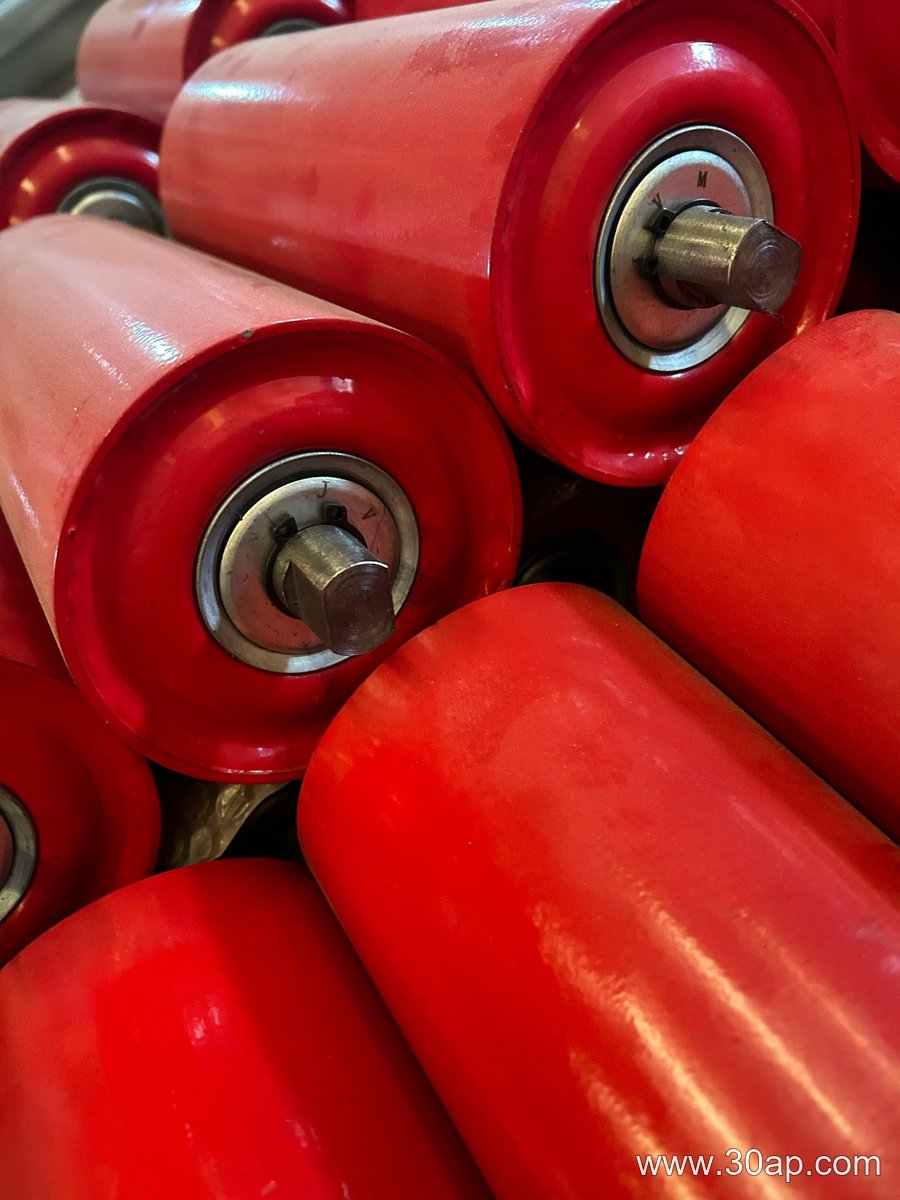
A typical carbon steel idler has four main parts: the steel tube, the shaft, the bearing housing and the sealing arrangement. The tube is cut to the required roller length and machined at both ends. Bearings are pressed into the end caps, and the shaft runs through the centre. Seals keep dust and fine particles away from the bearing cavity, which is the main factor in service life.
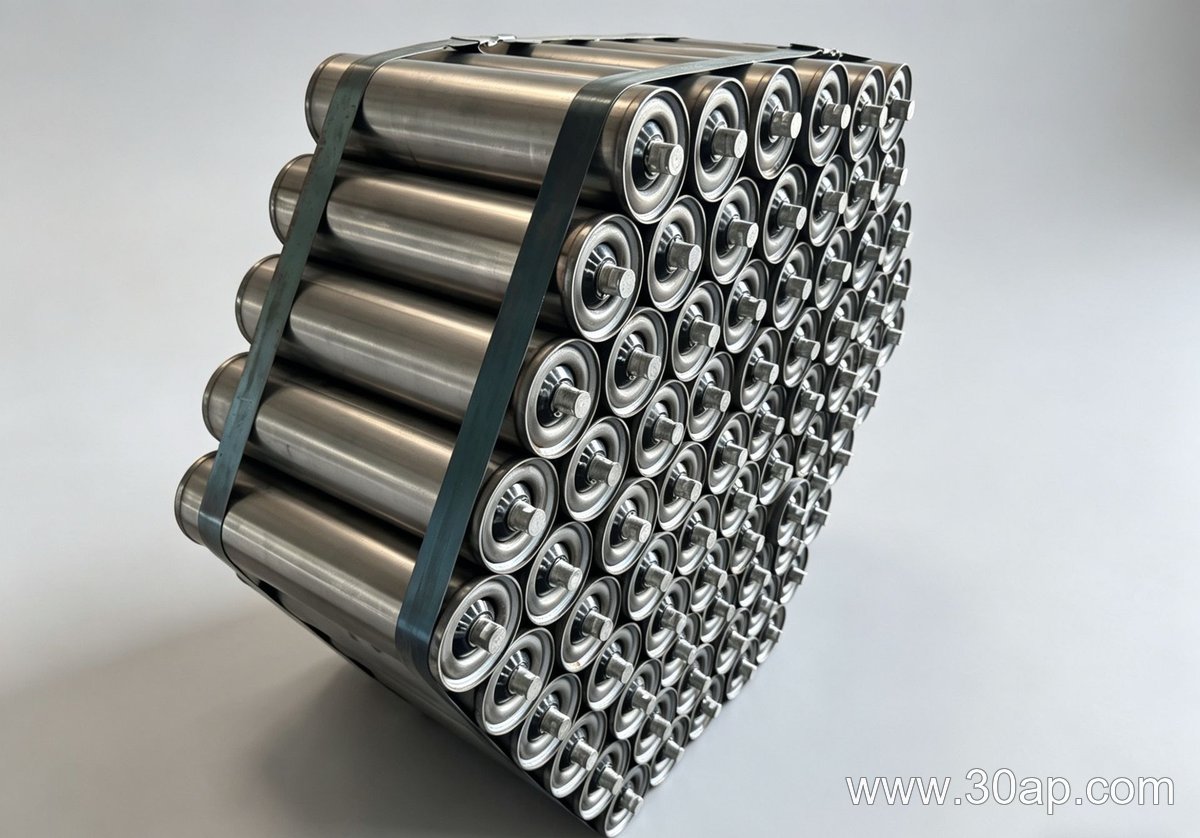
Common bearing sizes used in this family include 6204, 6205, 6305, 6306, 6308 and 6310. These are matched to the roller diameter and load, not to the belt width alone. A larger roller does not automatically mean a larger shaft, and the same belt width can be served by more than one roller diameter depending on the conveyor design.
Types and Where They Sit on the Conveyor
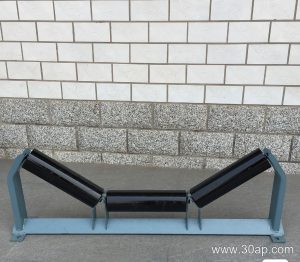
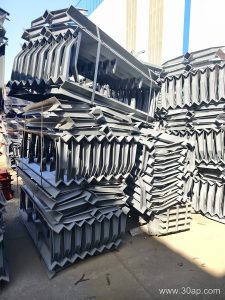
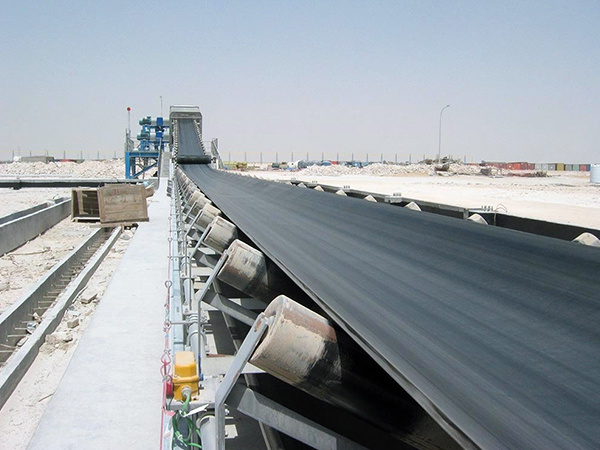
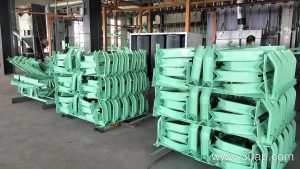
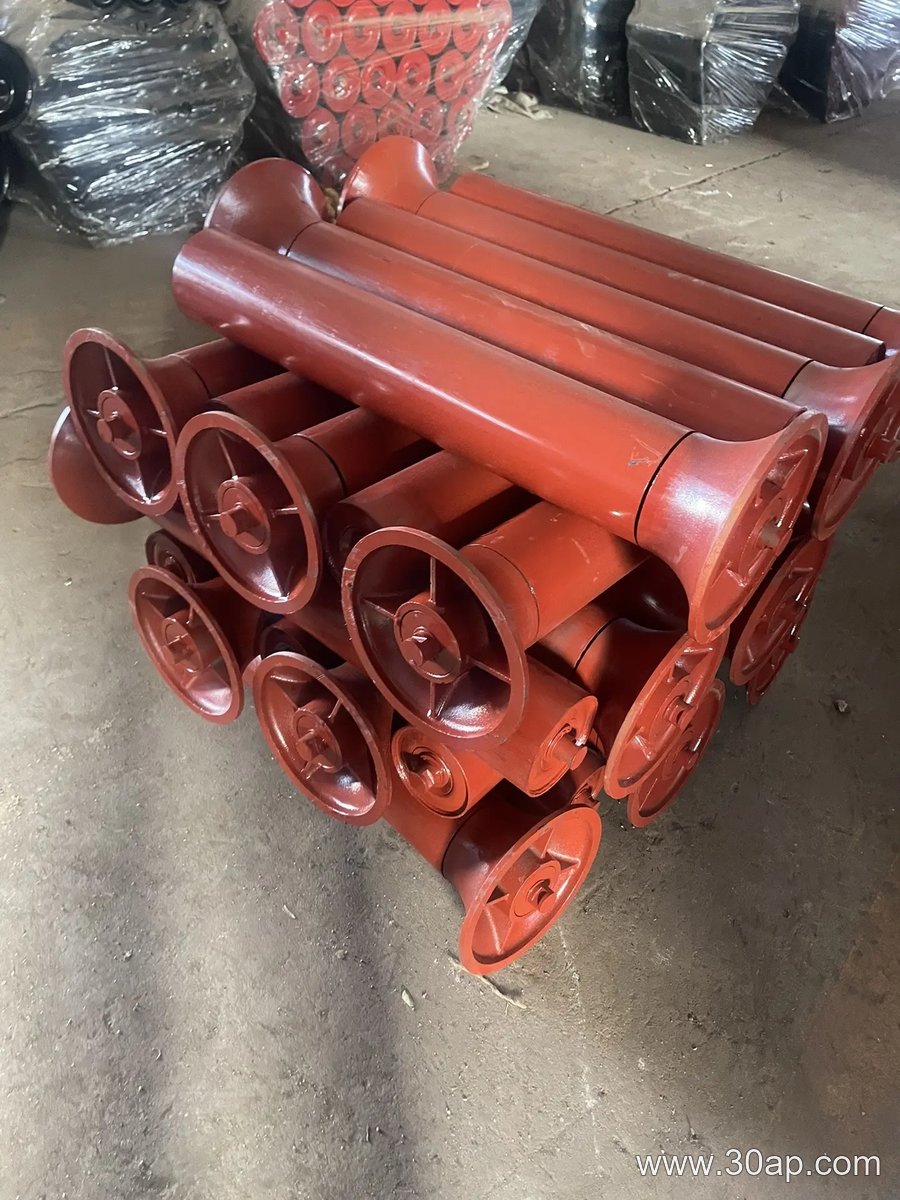
Carbon steel idlers appear in several positions. Troughing idlers form the carrying side, usually in two-roll or three-roll sets, so the conveyor belt is shaped into a trough that holds the material. Return idlers support the empty side of the belt; flat return rollers and V-return rollers are both common. Impact idlers, often fitted with rubber rings, sit under the loading point to absorb the drop of lumpy material. Training idlers, including friction and tapered self-aligning designs, correct belt drift on long runs. Spiral and comb rollers are used where sticky material tends to build up on the roller surface.
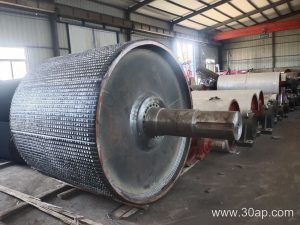
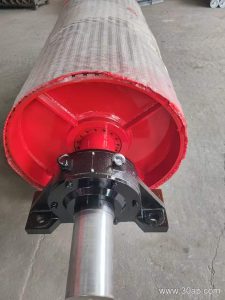
These are not interchangeable with a conveyor pulley. A pulley is a drum that transmits power or changes belt direction; an idler only carries the belt. The two work together, but they are different components with different selection rules.
Common Sizes and Configurations
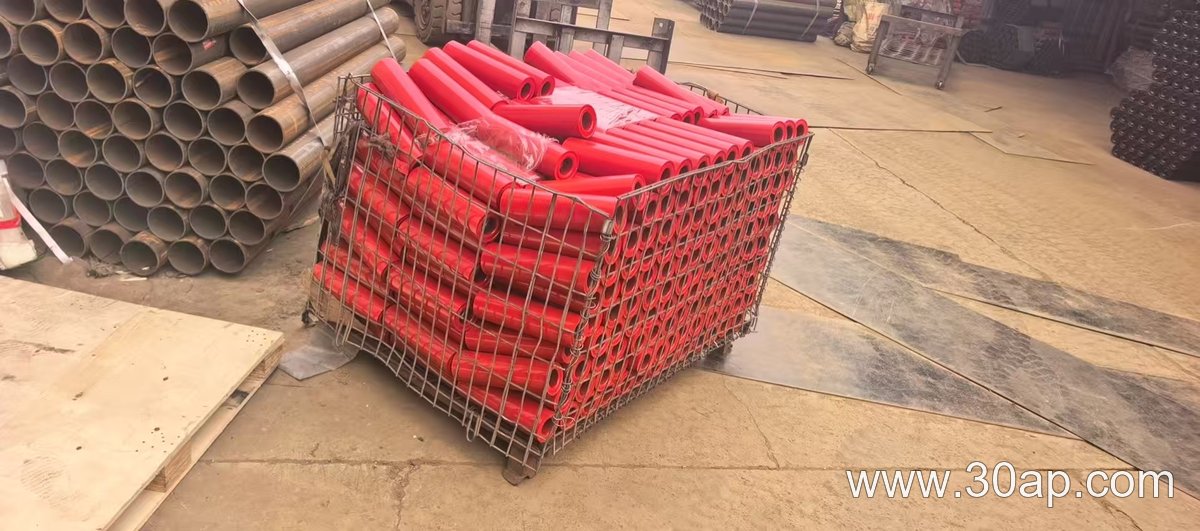
Roller diameter and belt width are chosen together with the trough angle and the load. The table below gives common reference values, not fixed universal specifications.
| Item | Common reference values |
|---|---|
| Roller diameter | 63, 76, 89, 102, 108, 127, 133, 159, 178, 194, 219 mm |
| Belt width | B400, B500, B650, B800, B1000, B1200, B1400, B1600, B1800, B2000, B2200, B2400 |
| Trough angle | 20, 30, 35, 45 degrees |
| Idler set | single roll, two roll, three roll troughing |
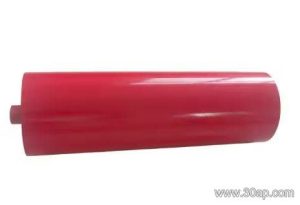
| Roller surface | steel tube, nylon, ceramic, rubber rings |
Roller length changes with belt width, trough angle and set arrangement. For a three-roll troughing set, a common mid-roller length is about 200 mm at B500, 250 mm at B650, 315 mm at B800, 380 mm at B1000, 465 mm at B1200, 530 mm at B1400, 600 mm at B1600, 670 mm at B1800 and 750 mm at B2000. Side rollers can differ from the centre roller, so these figures are only a starting point for design.
Typical Applications
Carbon steel idlers are widely used in a limestone quarry and in a coal handling plant, where the belt runs continuously and the material is abrasive but not highly corrosive. They also appear in crushing and screening circuits and in aggregate lines. In these environments the main enemies are dust, fines and misalignment, so seal quality and roller concentricity matter as much as tube thickness.
What Buyers Should Check
- Confirm the roller diameter, shaft size and bearing number required for the actual load and speed.
- Match the roller length and set type to the conveyor belt width and trough angle.
- Check the sealing method for the site conditions; dusty or wet locations need more attention here.
- Ask about the tube wall thickness and end cap welding, since these affect roller stiffness.
- Verify that the idler fits the existing conveyor bracket and frame dimensions.
- For impact zones, consider rubber-ring or cushion idlers instead of standard steel rollers.
A well-chosen carbon steel idler keeps the conveyor belt running straight and reduces the power needed to move the load. Selection should always follow the conveyor design, not a single catalogue number.