What a Galvanized Conveyor Bracket Does
A galvanized conveyor bracket is the structural component that holds idler rollers in place along a belt conveyor. It connects the roller shafts to the conveyor frame, maintaining the correct trough angle and spacing so the conveyor belt runs smoothly under load. When the bracket is hot-dip galvanized, the zinc coating protects the steel from moisture, abrasion, and corrosive dust—conditions common in quarries, coal washing plants, and fertilizer handling lines.
This article focuses on the galvanized conveyor bracket, its construction, common configurations, and what buyers should check before ordering. The product is also known as a galvanized idler bracket or galvanized roller support bracket; these terms refer to the same item.
How It Is Built
Most galvanized conveyor brackets start as angle steel, channel steel, or folded steel plate. The fabrication steps typically include cutting, punching or drilling mounting holes, bending to the required profile, and then galvanizing. Hot-dip galvanizing is the usual method because it creates a metallurgical bond between the zinc and the steel, offering better durability than paint in wet or acidic environments.
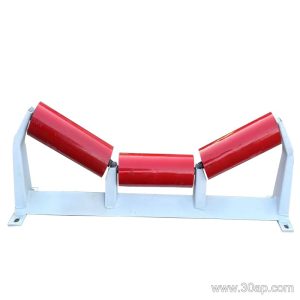
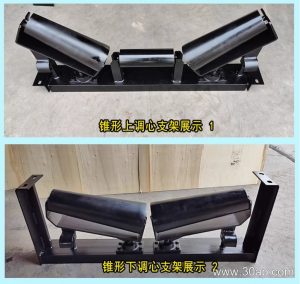
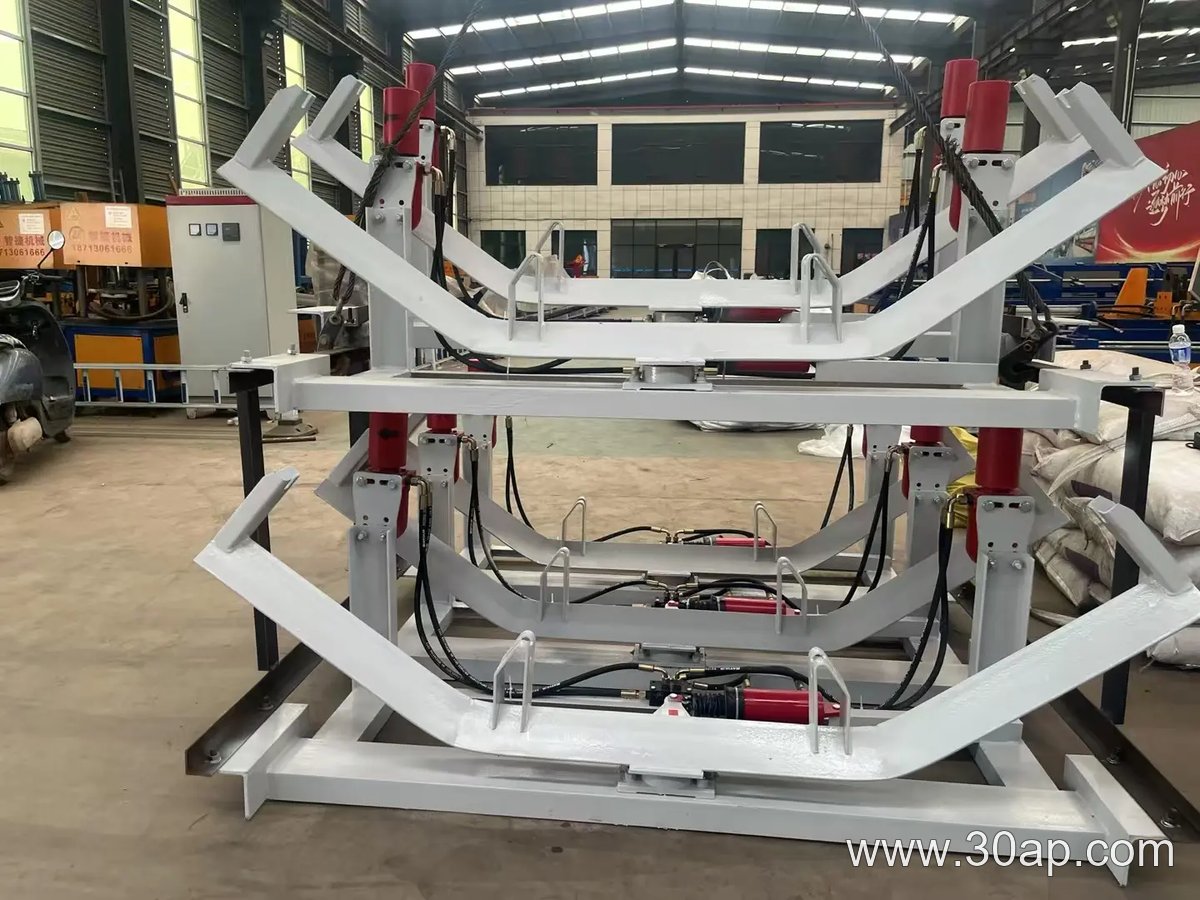
The bracket design depends on the roller type it carries. A troughing bracket, for example, has three or more mounting positions to hold rollers at a trough angle. A return bracket supports the belt on the return run, often with a single flat roller or a V-shaped arrangement. Adjustable brackets include slotted holes or movable arms so the trough angle can be changed on site.
Common Types and Configurations
The table below lists typical bracket types and their usual roles. These are reference examples, not a fixed supply list. Dimensions and hole spacing are determined by the conveyor design, belt width, and roller diameter.
- Troughing bracket (槽型托辊支架) – supports three rollers to form a trough; common trough angles are 20°, 30°, 35°, and 45°.
- Transition bracket (过渡支架) – used where the belt changes from flat to troughed, reducing stress on the belt edge.
- Return bracket (回程支架) – holds the return belt; may be flat or V-shaped.
- Impact bracket (缓冲托辊支架) – positioned at loading points to absorb impact; often used with impact rollers.
- Self-aligning bracket (调心支架) – allows slight lateral movement to help center the belt.
- Adjustable bracket (可调支架) – permits changes to trough angle or roller position after installation.
Belt widths for these brackets commonly range from B500 to B2200. Roller diameters often include Ø89, Ø108, Ø133, Ø159, and Ø194. A bracket for a B800 belt with a 35° trough angle might use Ø108 rollers, while a B1200 conveyor with a 45° trough angle could use Ø133 rollers. These combinations are examples only; the actual match depends on the conveyor’s load, speed, and engineering design. One belt width does not limit the bracket to a single trough angle or roller diameter.
Where Galvanized Conveyor Brackets Are Used
These brackets appear in many bulk material handling systems. In a limestone quarry, they support the conveyor belt through dusty, slightly alkaline conditions. In a coal washing plant, the galvanized coating resists the corrosive effect of wet coal and process water. Other common sites include sand and gravel lines, crushing and screening plants, and fertilizer handling facilities.
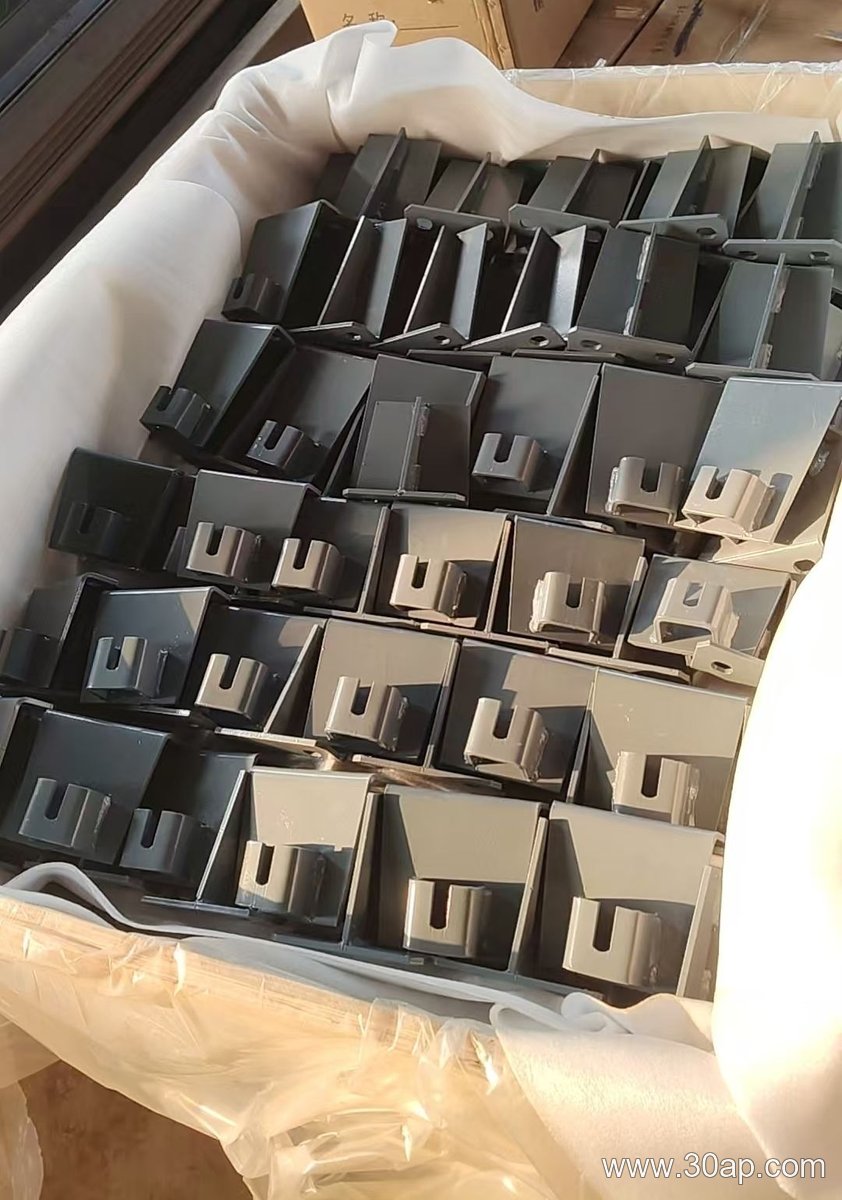
The choice between a fixed bracket and an adjustable bracket often depends on the need for field tuning. A fixed bracket is simpler and more rigid; an adjustable bracket allows the maintenance team to fine-tune the trough angle or roller contact after the belt is running.
Buyer’s Checklist
Before ordering a galvanized conveyor bracket, confirm the following with your supplier or engineering team:
- Belt width and required trough angle (for example, B650 with 30° or B1000 with 35°).
- Roller diameter and shaft size, so the mounting slots or holes match the idler roller.
- Bracket type: troughing, return, impact, self-aligning, or adjustable.
- Mounting hole spacing and crossbeam length, which vary with belt width and trough angle.
- Galvanizing standard or coating thickness, if the environment is highly corrosive.
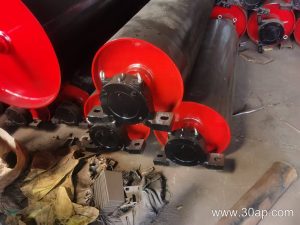
Do not assume a fixed shaft diameter from belt width alone. The shaft size is determined by the roller load and conveyor design. Also remember that drive pulleys, tail pulleys, and bend pulleys are not interchangeable with brackets; they serve different functions in the conveyor system.
A well-chosen galvanized conveyor bracket keeps the conveyor belt aligned and the idler rollers secure, extending service life in demanding conditions. Matching the bracket to the roller and belt width is the key step for reliable operation.