What a Conveyor Support Bracket Does on the Line
A conveyor support bracket is the structural interface that holds a idler roller or conveyor pulley in the correct position relative to the moving conveyor belt. In everyday workshop language it is often shortened to conveyor bracket, but the function stays the same: it transfers the load from the roller and the material being carried into the conveyor frame. Without a rigid, well-aligned bracket, the belt can drift, the roller can wear unevenly, and the whole carrying side loses its profile. The bracket is not a glamorous part, yet it decides how quietly and how long a conveyor runs.
How the Bracket Is Built
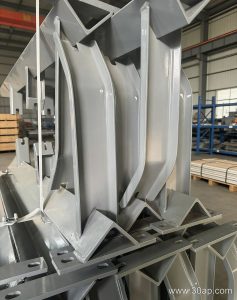
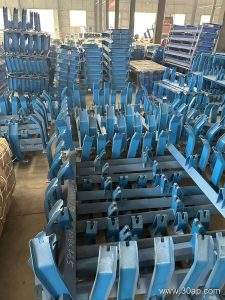
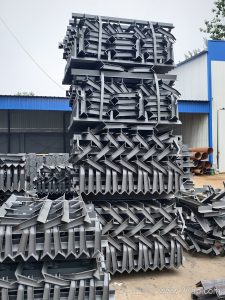
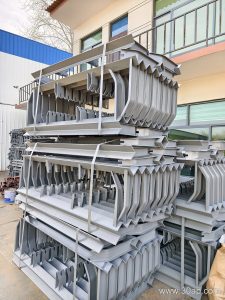
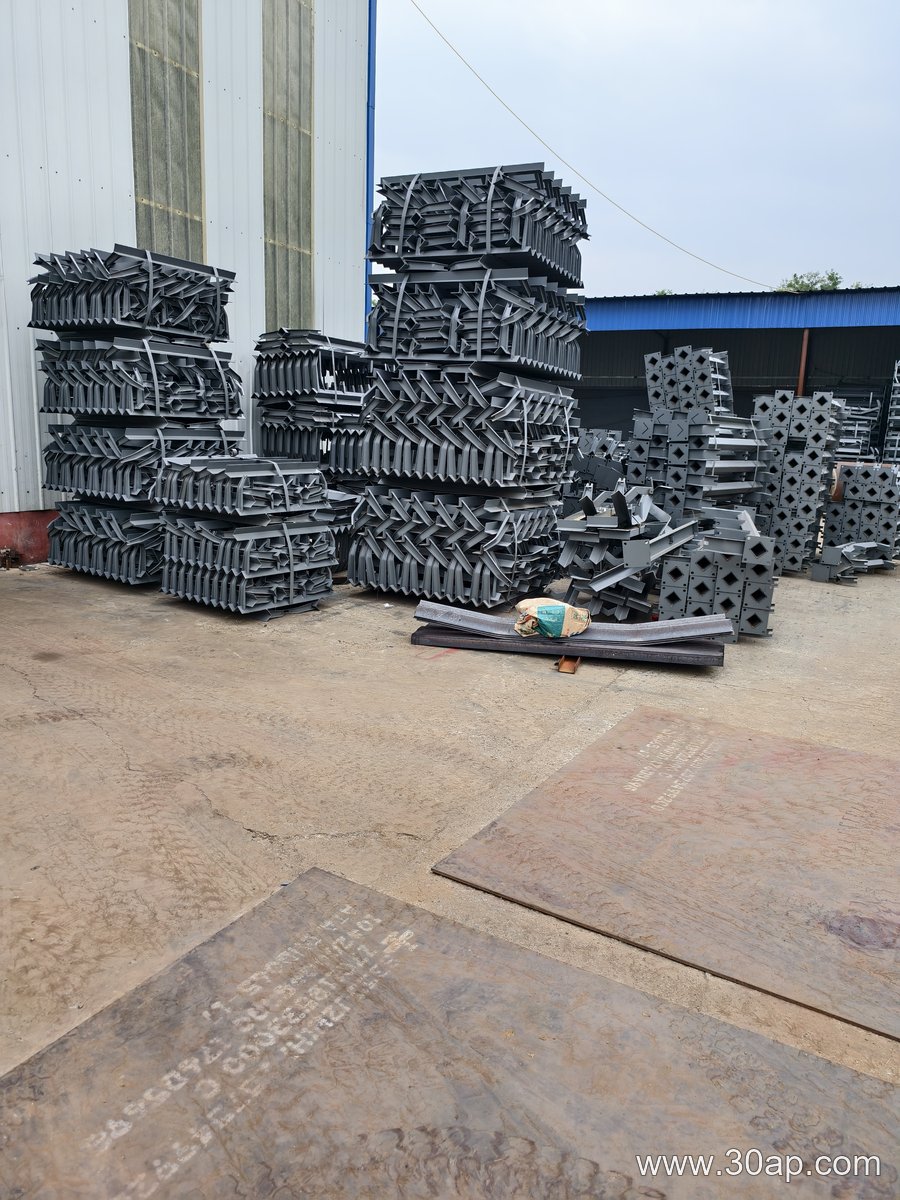
Most brackets are fabricated from angle steel, channel steel, or folded steel plate. The choice depends on the load, the belt width, and whether the bracket must be adjustable. A typical troughing bracket uses a base plate or cross beam plus angled arms that set the trough angle. A return bracket is flatter and usually simpler, because it only has to support the belt on its way back. Welded brackets are common, while bolted designs make replacement easier in tight spaces.
Common Materials and Surface Treatment
- Angle steel and channel steel for general carrying and return positions
- Folded steel plate for lighter, more compact brackets
- Painted or galvanized finish for dusty or damp locations
Troughing, Return, and Adjustable Variants
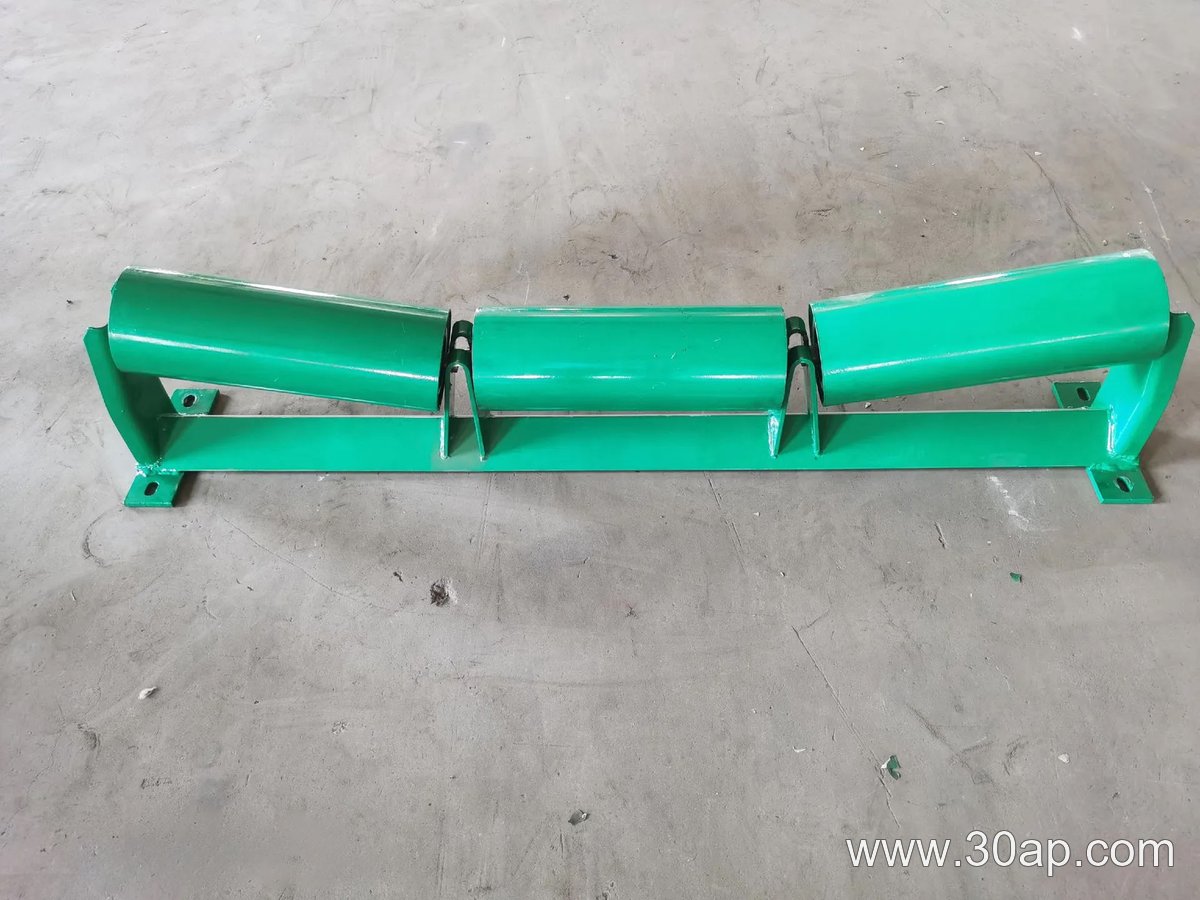
The most familiar group is the troughing bracket, sometimes called a carrying bracket. It sets the trough angle that shapes the belt into a curve so bulk material stays centered. Common trough angles include 20 degrees, 30 degrees, 35 degrees, and 45 degrees. A transition bracket sits between the tail pulley and the first full troughing station, easing the belt from flat to troughed. On the return side, a flat return bracket or a V-shaped return bracket supports the empty belt. A buffer bracket is used under loading points, and a self-aligning bracket helps correct belt drift. Adjustable brackets allow the trough angle to be changed on site, which is useful when the material or the belt condition changes.
Mounting Positions
Brackets are placed at regular intervals along the conveyor. The spacing depends on belt width, material weight, and the stiffness of the belt. A short bracket spacing near the loading zone reduces sag, while wider spacing is acceptable on long, lightly loaded runs. The bracket must sit square to the conveyor centerline; a small twist at one station can push the belt off track several meters later.
Matching Bracket to Belt Width and Roller Diameter
Belt width and roller diameter are related, but they are not locked into a single combination. A B800 belt may run with Ø89, Ø108, or Ø133 rollers depending on the load and the frame design. A wider B1200 conveyor often uses Ø133 or Ø159 rollers, and a heavy B1600 line may use Ø194. The bracket hole spacing and cross beam length change with belt width, trough angle, and roller diameter, so they should be confirmed by the conveyor designer rather than copied from a table. The examples below show typical reference combinations, not fixed rules.
| Belt width | Trough angle | Typical roller diameter | Bracket note |
|---|---|---|---|
| B500 | 20 degrees | Ø89 | Light duty, narrow frame |
| B650 | 30 degrees | Ø89 or Ø108 | Common in small aggregate lines |
| B800 | 35 degrees | Ø108 or Ø133 | General bulk handling |
| B1000 | 35 degrees | Ø133 | Medium duty, wider cross beam |
| B1200 | 45 degrees | Ø133 or Ø159 | Higher capacity, deeper trough |
| B1400 | 45 degrees | Ø159 | Heavy duty carrying side |
| B1600 | 45 degrees | Ø159 or Ø194 | Large tonnage, reinforced bracket |
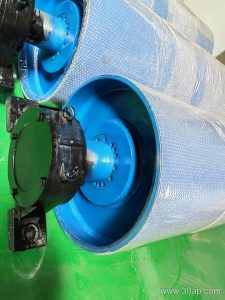
Forward-leaning brackets, often tilted about 1.5 to 2 degrees, are used to help center the belt. They are not a replacement for a self-aligning bracket, but they can reduce drift on long runs. A conveyor pulley at the head or tail has its own support structure, and its bracket or bearing housing should not be confused with a troughing bracket.
Where These Brackets Are Used
You will find conveyor support brackets in quarry and sand and gravel lines, in coal preparation plants, and in cement or power plant coal handling systems. A crushing and screening plant relies on them to keep the belt stable under a fast-moving load. In a grain silo or fertilizer plant, a lighter bracket with a smooth finish may be preferred to reduce material build-up. The same bracket family also appears in tunnel muck removal and in steel plant sinter lines, where heat and dust demand a sturdy design.
What a Buyer Should Check
Before ordering, confirm the belt width, the trough angle, the roller diameter, and the mounting hole spacing. Ask whether the bracket is fixed or adjustable, and whether it is for the carrying side, the return side, or a transition point. Check the material thickness and the surface treatment for the actual environment. A bracket that is too light will flex and wear the roller; one that is too heavy adds cost without benefit. The conveyor support bracket is a small item, but it is one of the few parts that touches every meter of the belt, so it deserves a proper match to the rest of the conveyor.