What an Anti-Sticking Idler Does
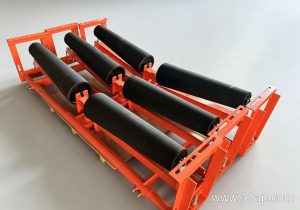
An anti-sticking idler is a carrying or return roller built to keep material from clinging to its shell. On conveyors that move damp, clay-rich, or otherwise tacky loads, a standard steel roll can collect a growing layer of fines. That build-up changes the roll diameter, throws the belt off line, and adds drag. The anti-sticking idler attacks the problem at the surface, so the belt keeps running on a round, clean roller instead of a lumpy one.
The same product is also called a self-cleaning idler or non-stick roller in many workshops. These are equivalent names for the same item, not different hardware. It remains an idler roller, so it supports the belt and turns with it; it does not drive the belt the way a conveyor pulley does.
How the Roller Is Built
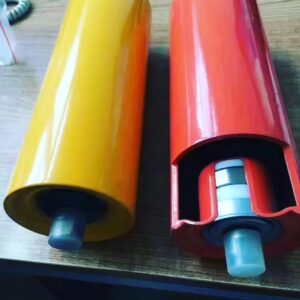
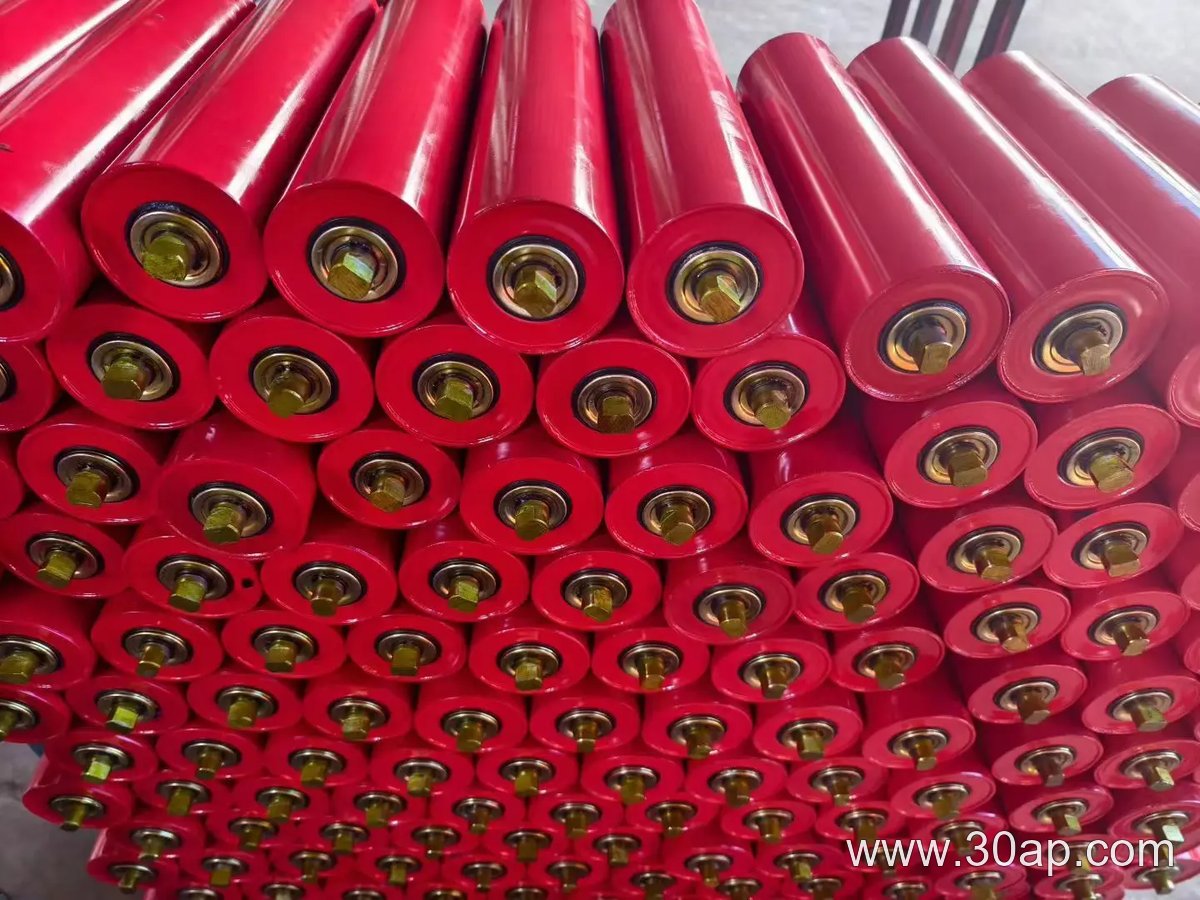
Most designs combine a sturdy shaft and bearing housing with a shell that sheds material. Common surface forms include:
- Rubber rings or a rubber sleeve that flex and release sticky fines
- Nylon or polymer shells with a low-friction face
- Ceramic-coated or specially finished steel for abrasive, wet duty
- Spiral or grooved surfaces that break the contact patch
Bearing seats usually take standard deep-groove ball bearings such as 6204, 6205, 6305, 6306, 6308, or 6310, matched to the load and roll diameter rather than to belt width alone. Seals matter as much as the surface: a good labyrinth or contact seal keeps slurry and dust out of the bearing cavity, which is where most idler failures begin.
Where It Fits on the Conveyor
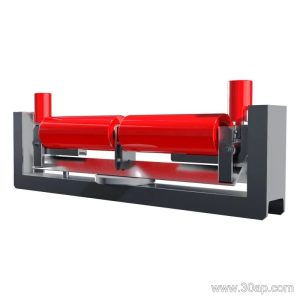
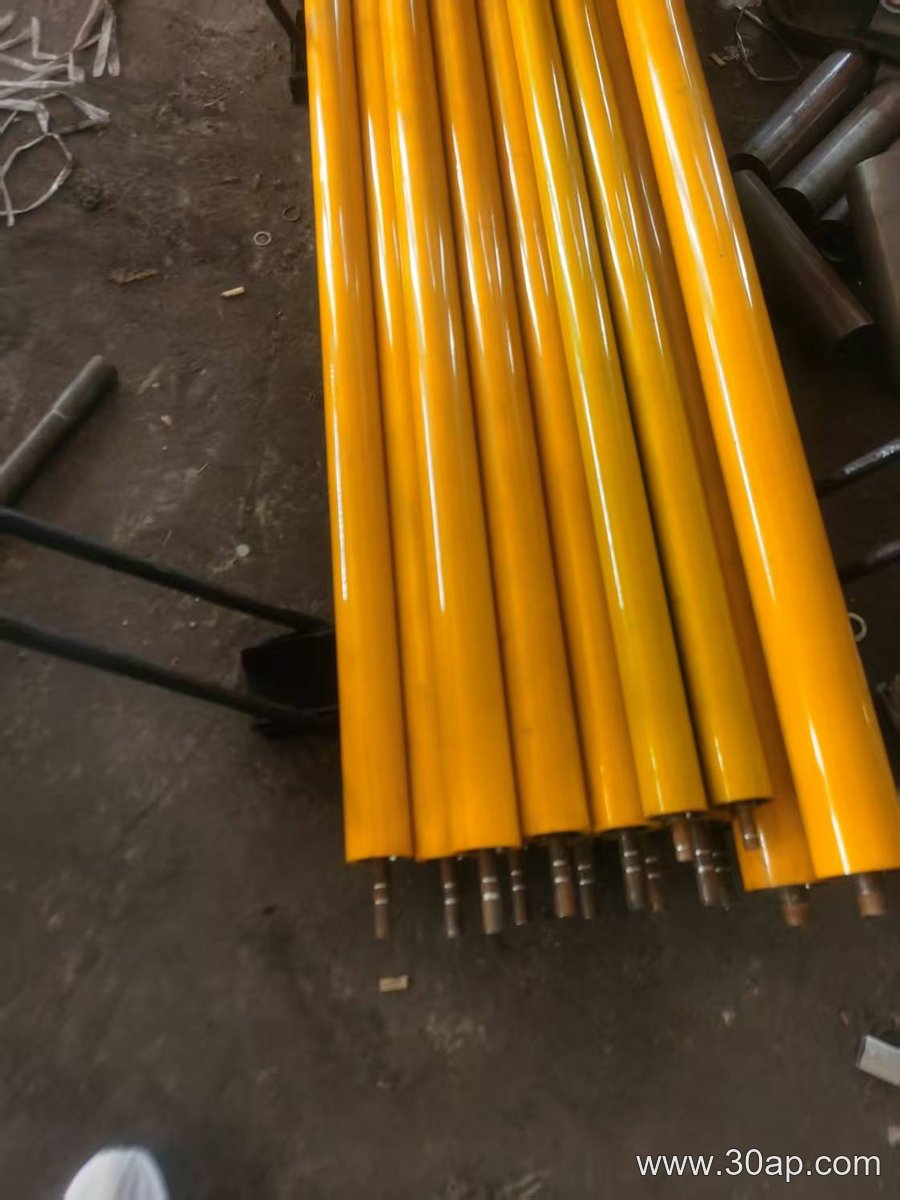
Anti-sticking rollers are used on the carrying side and the return side. In a three-roll troughing set they can serve as the center roll or the side rolls, and on the return run they may replace a flat return roll or sit alongside a V-type return set. They are also common at transfer points where wet ore, washed coal, or sticky aggregate first lands on the belt.
Typical sites include a wash plant, a coal preparation plant, a limestone quarry, and a concrete batching yard. In each case the feed has enough moisture or fines to coat a plain roll, so the self-cleaning surface pays for itself in reduced downtime.
Choosing Diameter, Length, and Trough Angle
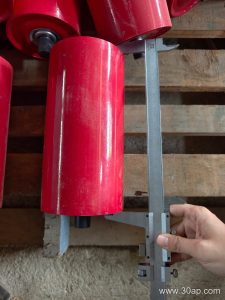
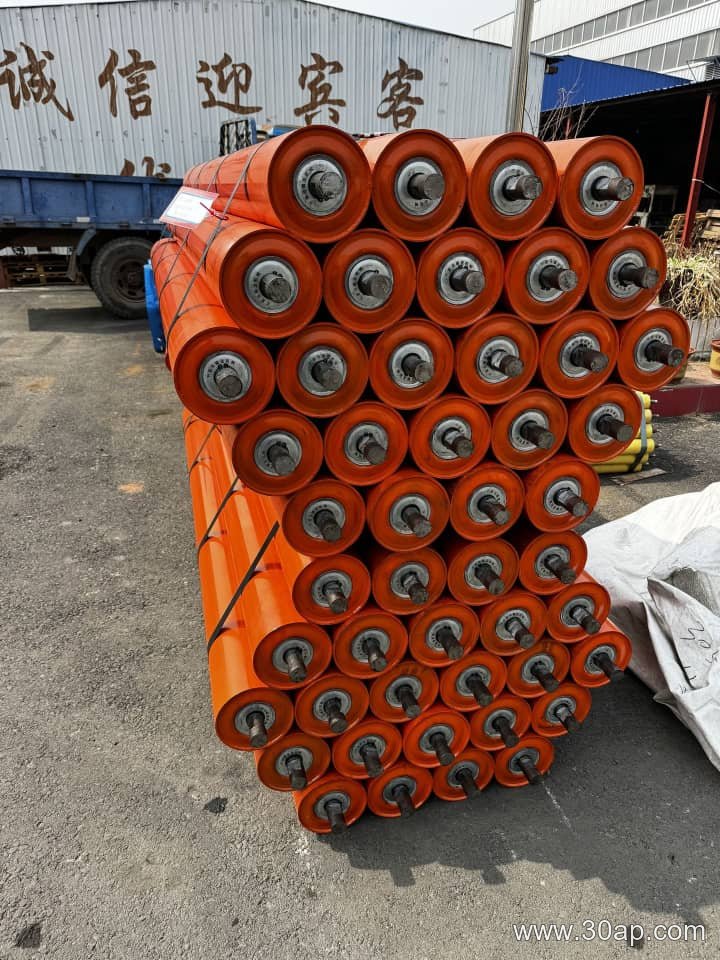
Roll diameter is selected from the belt speed, load, and available frame space. Common sizes range from Ø63 and Ø76 for light duty up to Ø159, Ø178, Ø194, and Ø219 for heavy, high-tonnage lines. A larger diameter turns slower and tolerates more build-up before the belt path is affected.
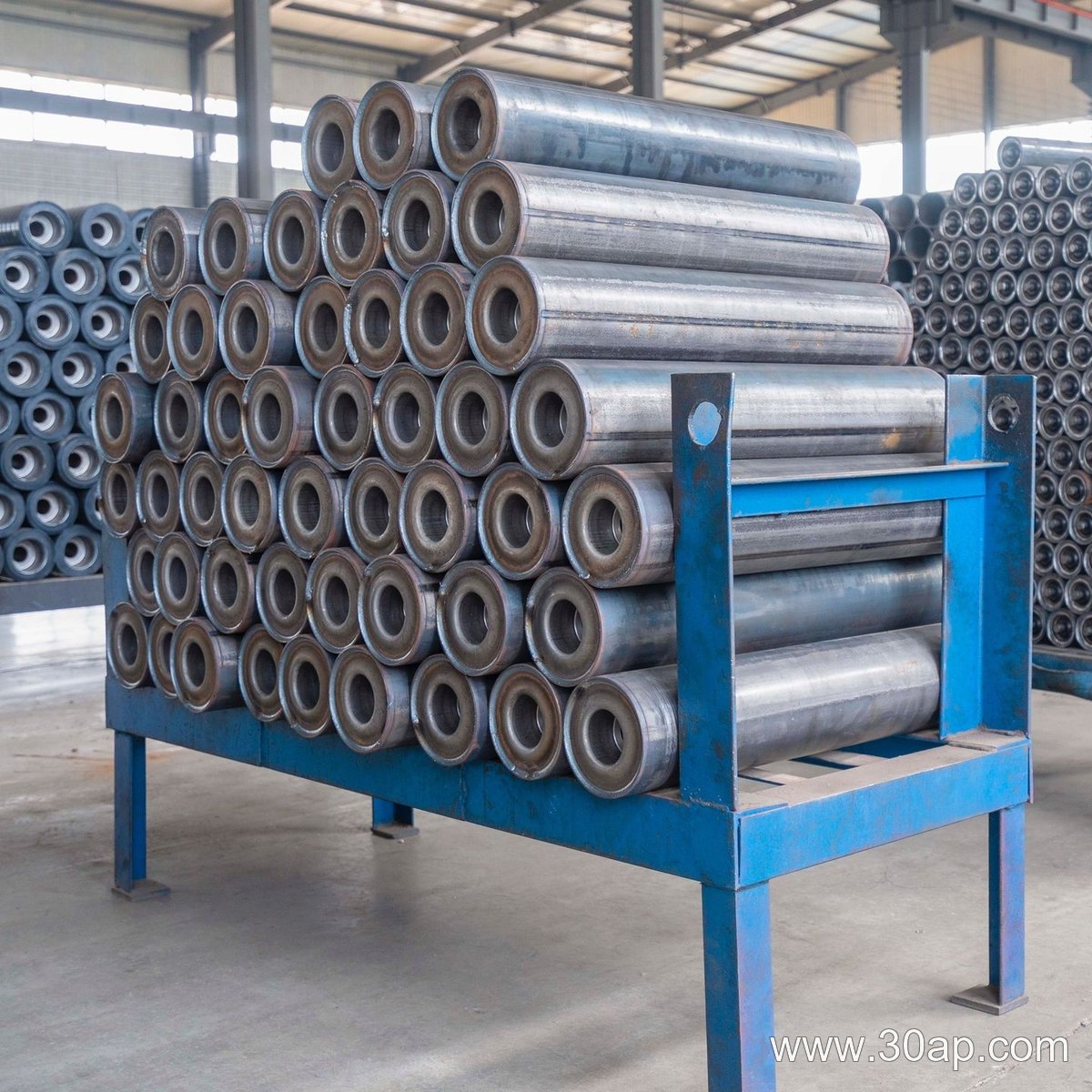
Roll length follows belt width, trough angle, and the roll position in the set. For a three-roll troughing arrangement, common roll lengths are roughly 200 mm at B500, 250 mm at B650, 315 mm at B800, 380 mm at B1000, 465 mm at B1200, 530 mm at B1400, 600 mm at B1600, 670 mm at B1800, and 750 mm at B2000. These are reference examples only; side rolls and center rolls often differ, and the final figure is set by the conveyor designer.
Trough angles of 20, 30, 35, and 45 degrees are all used. A steeper trough contains the load better but increases the chance of material pressing into the roll face, so the anti-stick surface is especially useful at 35 and 45 degrees. Where belt training is a concern, a slight forward tilt of about 1.5 to 2 degrees can help, though it is a separate feature from the non-stick surface.
What a Buyer Should Check
Before ordering, confirm the belt width, the trough angle, and whether the roll is a center or side position. Ask for the bearing size, seal type, and shell material, since two rollers with the same diameter can behave very differently in wet service. Check that the shaft ends match the existing conveyor bracket, and that the mounting dimensions suit the frame. A roller that fits the bracket but not the duty will still fail early.
Also consider the environment. In a dusty quarry, a rubber-ring roll may shed fines well; in a wet coal plant, a polymer or ceramic face may last longer. Neither is mandatory for every conveyor, and a mixed set of carrying and return rolls is normal. The goal is a roller that stays round, turns freely, and keeps the belt centered, so the anti-sticking idler is chosen for the specific material and layout rather than by a single size rule.