What a Conveyor Bend Pulley Does
A conveyor bend pulley is a drum that changes the direction of a conveyor belt without driving it or providing primary tension. It sits at an intermediate point along the belt path, often near a take-up unit or a transfer, and redirects the belt so the route can follow the structure. Unlike a drive pulley, which transmits torque to move the belt, or a tail pulley, which returns the belt at the loading end, a bend pulley simply guides. These three roles are not interchangeable, and specifying the wrong one leads to poor belt tracking or excessive wear.
In some layouts, the same function is called a snub pulley or a deflector pulley. These are accurate equivalent names for the same product when the duty is purely to change belt direction. A bend pulley may also work alongside a tension pulley in a take-up system, but it should not be confused with that subtype.
How It Is Built
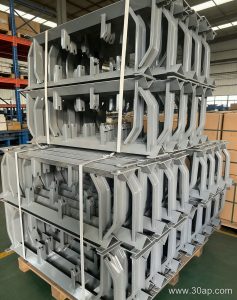
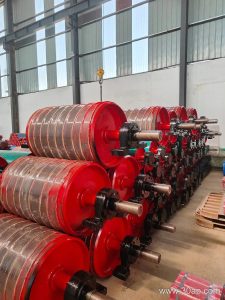
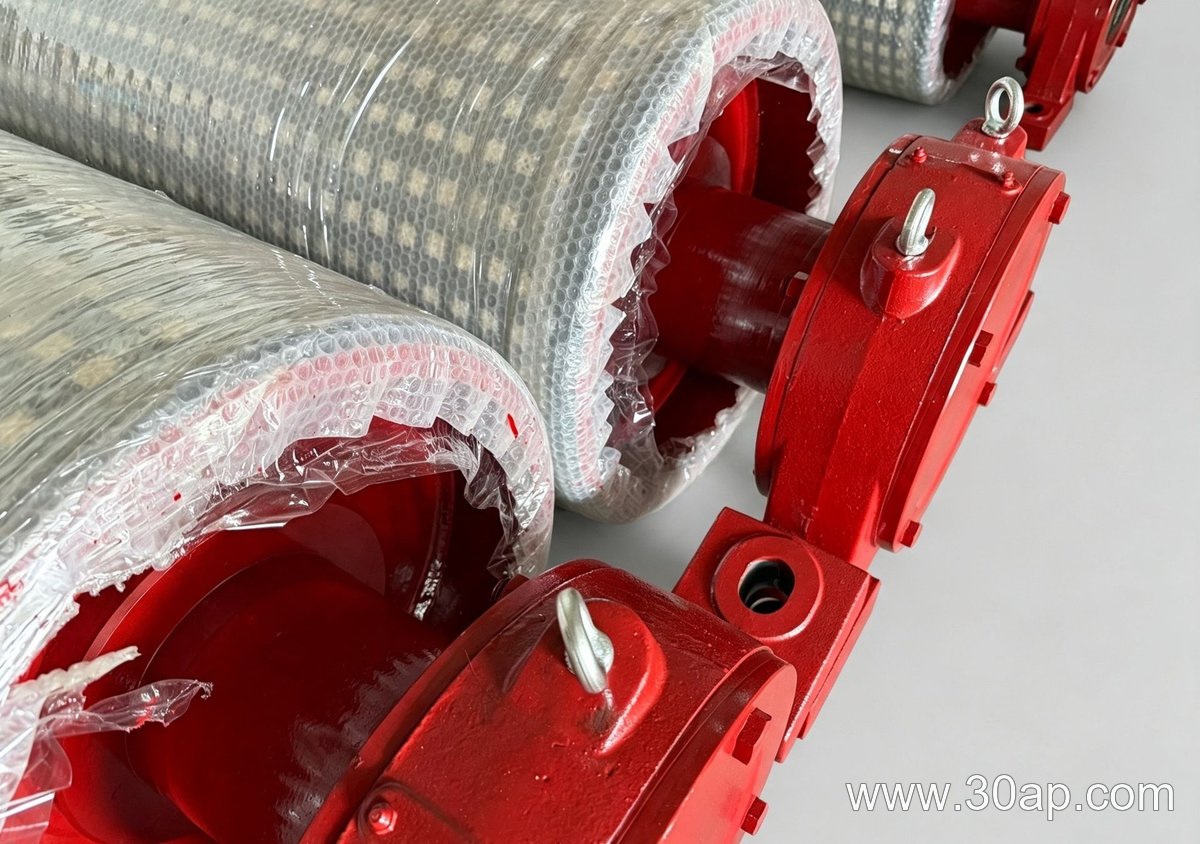
The typical construction starts with a cylindrical shell, usually made from seamless steel pipe or rolled plate. End discs are welded to the shell, and the shaft is fitted through the center. The shaft may be keyed or shrink-fitted depending on the torque and load. Bearings are mounted in housings at each end, and the whole assembly is held by a conveyor bracket or frame.
Surface finish depends on the application. A plain finish is common for light-duty routing where slippage is not a concern. Rubber lagging, either cold-bonded or hot-vulcanized, improves grip and protects the shell from abrasive material. Diamond or herringbone patterns are used when the belt needs extra traction or when material buildup is a risk. Ceramic lagging is chosen for high-wear areas, though it is more common on drive pulleys.
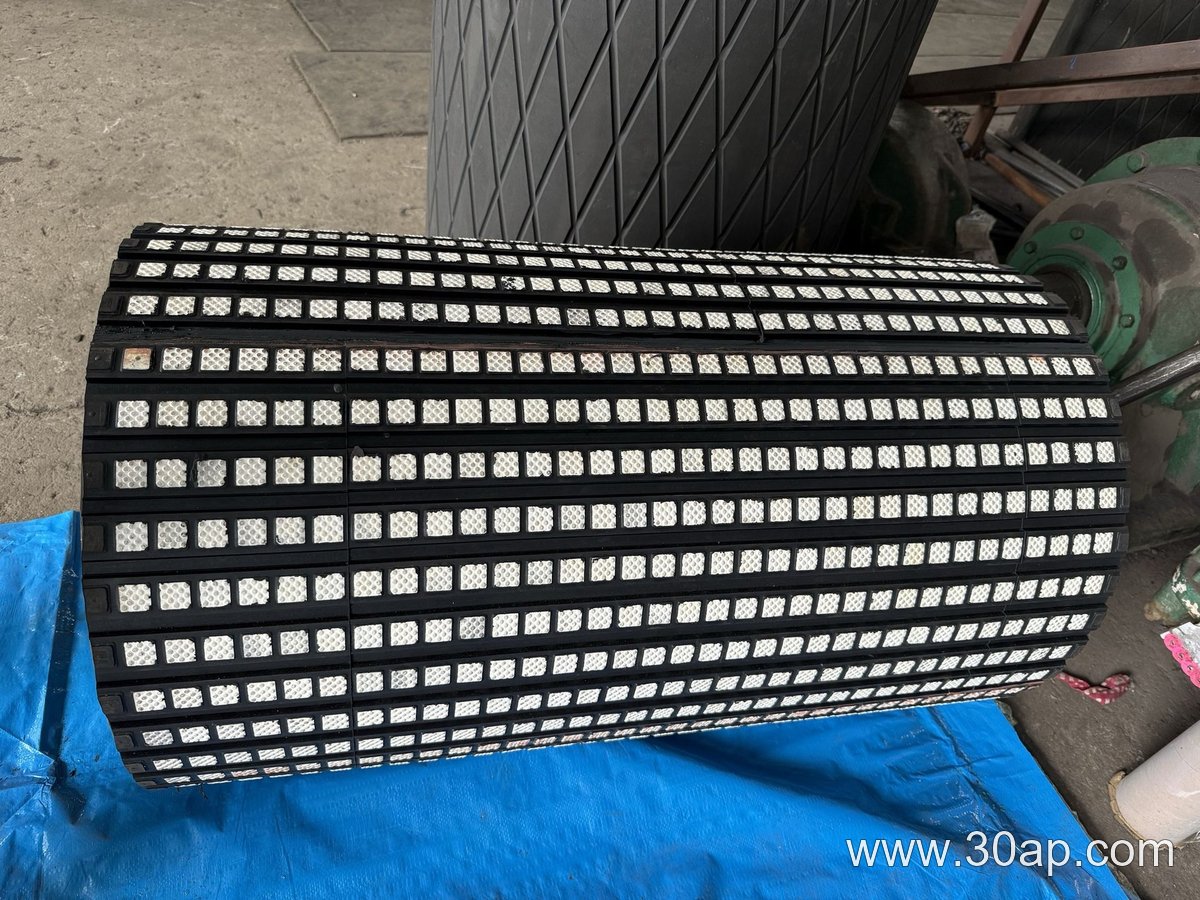
Common shell diameters for bend pulleys include 200 mm, 250 mm, 315 mm, 400 mm, 500 mm, and 630 mm. Larger diameters are available for high-tension or thick-belt systems. The face width is normally wider than the belt itself. For example, a B800 belt often runs on a pulley face around 950 mm, while a B1200 belt may use a face near 1400 mm. These are typical references, not fixed rules. Shaft diameter is determined by torque and load, not by belt width alone. A B1000 bend pulley could use a 100 mm shaft in one design and a 120 mm shaft in another, depending on the belt tension and bearing span.
Where It Fits in a Conveyor
Bend pulleys appear in several locations. In a long overland conveyor, they may be placed at vertical curves to keep the belt aligned with the idler roller frames. In a crushing and screening plant, they help route the belt around structural columns or transfer chutes. At a port bulk terminal, they guide the belt through a shuttle or tripper area. In a coal-fired power plant, they are used in the coal handling system to change direction before the belt reaches the stacker or bunker.
They are also common in tunnel excavation conveyors, where space is tight and the belt must follow the tunnel profile. In a concrete mixing station, a bend pulley may redirect the belt from the aggregate feeder to the weighing hopper. The key is that the pulley does not drive the belt and does not provide the main take-up force. It only changes the path.
What Buyers Should Consider
Before selecting a bend pulley, confirm the belt width, the belt type, and the maximum tension at that point. The pulley diameter should be large enough to avoid excessive bending stress in the belt carcass. A smaller diameter may save space but can shorten belt life, especially with high-tension fabric or steel cord belts.
Check the shaft and bearing size against the actual load. Do not assume a fixed shaft diameter from belt width. The bearing type, housing, and lubrication method also matter. For dusty or wet conditions, choose sealed bearings and a lagging that resists material buildup.
Consider the mounting arrangement. A conveyor bracket that allows adjustment for belt tracking is helpful. If the pulley is part of a take-up system, confirm whether it rotates on a fixed shaft or turns with the shaft. Both designs exist, and the choice affects maintenance.
Finally, ask about balance and runout. A bend pulley that is not balanced can cause vibration and belt misalignment. A slight crown on the shell is sometimes used to help center the belt, but it is not universal. The right choice depends on the belt, the load, and the environment. A bend pulley is a simple component, but it must match the conveyor it serves.