What a Conveyor Frame Does on a Belt System
A conveyor frame is the structural backbone that carries the idlers, pulleys, and belt along a defined path. It is not a single part but an assembly: longitudinal beams, cross members, mounting plates, and support legs joined into a rigid unit. On a typical installation, the frame holds the carrying idlers that support the loaded belt and the return idlers that keep the empty belt from sagging. The frame also positions the conveyor pulley at the head and tail ends so the belt can wrap and track correctly. Without a straight, well-anchored frame, even correctly sized rollers will misalign, and the belt will drift, edge-damage, or spill material.
How the Structure Is Assembled
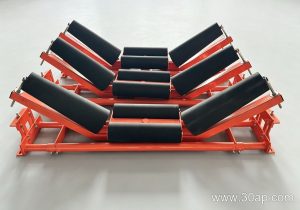
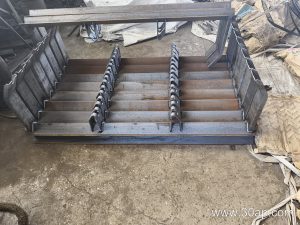
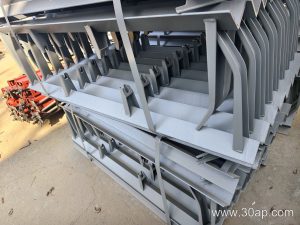
Most frames are built from welded or bolted steel sections. Angle iron and channel steel are common choices for lighter and medium-duty runs, while folded steel plate is used where stiffness matters. The cross members that hold idler stations are spaced at regular intervals; the exact spacing depends on belt width, load, and the permissible sag between supports. A conveyor bracket at each connection point ties the cross member to the main beam and allows field adjustment. Frames are usually supplied in modular sections so they can be shipped, aligned, and bolted on site.
Angle, channel, and folded plate
Angle frames are simple and economical. Channel frames resist bending better on long spans. Folded plate frames give a clean profile and high rigidity for wider belts. None of these is automatically superior; the choice follows span, load, and environment.
Idler Stations and Support Types
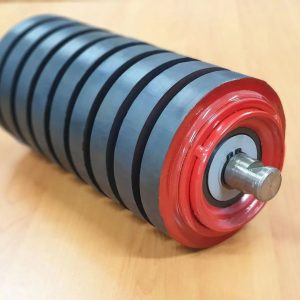
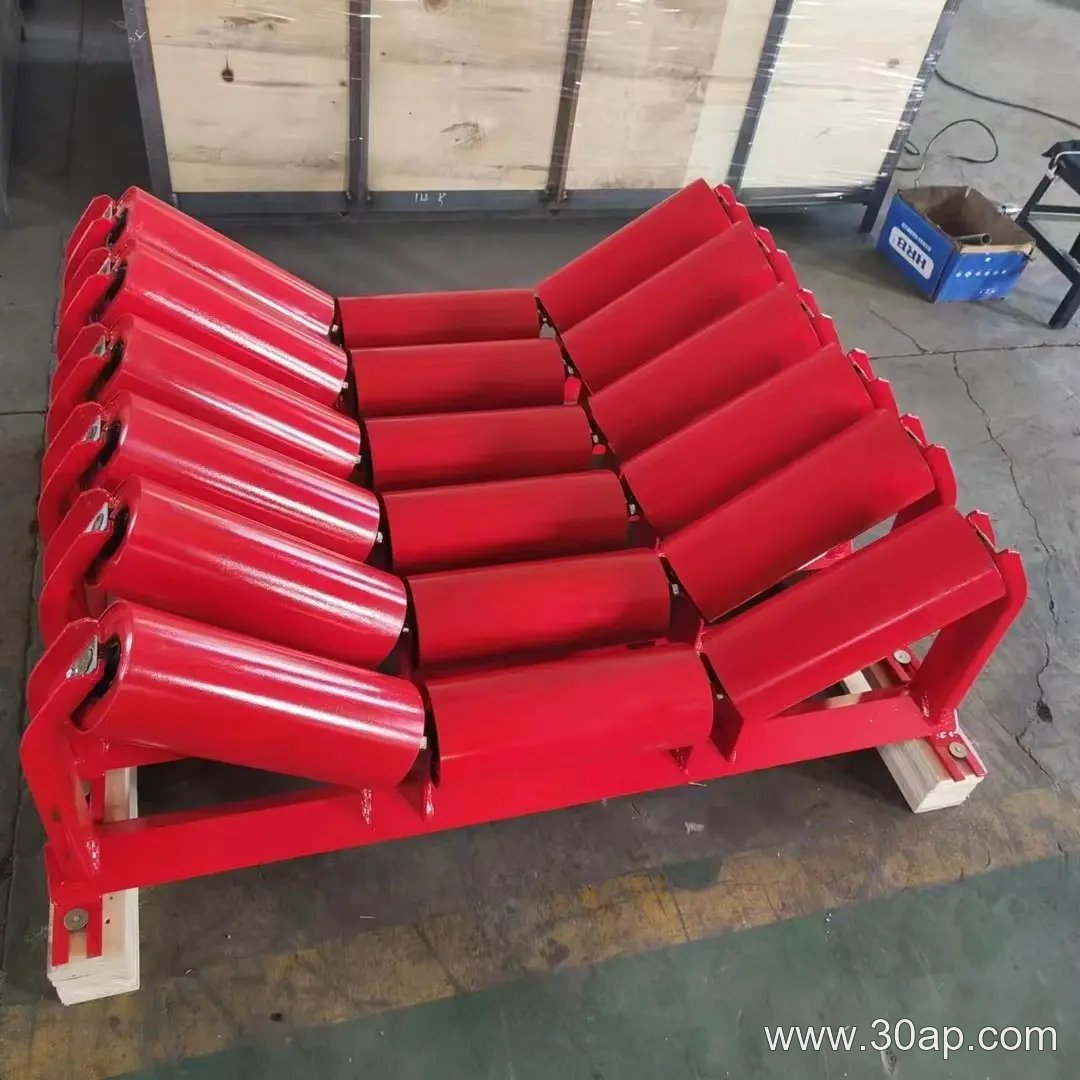
The frame carries several station forms. Troughed carrying idlers sit in a three-roller arrangement that cups the belt. A transition frame eases the belt from the flat tail pulley into the trough. Return stations may be flat or V-shaped to help center the belt. Impact frames use cushioned rollers under the loading point, and self-aligning or forward-tilted stations correct minor drift. A spiral roller station can reduce material buildup in sticky service. A hanging frame suspends the idler from the structure above, which is useful where floor space is tight.
Adjustable frames let maintenance crews change the trough angle to match the material. Common trough angles are 20, 30, 35, and 45 degrees. A forward tilt of about 1.5 to 2 degrees is sometimes used to encourage belt tracking, but it should be set deliberately rather than by guesswork.
Matching Belt Width and Roller Diameter
Frame dimensions follow the belt. A narrow line might use B650 with 30-degree troughs and Ø89 rollers. A medium duty run may be built around B1000, 35 degrees, and Ø108. Wider and heavier lines, such as B1400 or B1600, often use Ø133, Ø159, or larger rollers. These are common pairings, not fixed rules. Belt width does not dictate a single roller diameter, and a given belt width can be combined with different trough angles or roller sizes depending on load, speed, and material. Hole spacing and cross-member length change with belt width and trough angle and should be taken from the design drawing, not assumed.
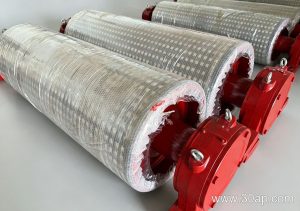
Pulley selection is separate from frame selection. A drive pulley, a tail pulley, and a bend pulley each perform a different function and are not interchangeable. The frame must position each one correctly, but the pulley itself is sized by torque, belt tension, and wrap angle.
Where Frames Are Used
Conveyor frames appear wherever bulk material moves continuously. In a quarry or crushing and screening plant, they carry shot rock and graded aggregate over long distances. In a cement plant, they handle clinker, limestone, and additives. Similar structures serve coal handling at power stations and bulk terminals at ports. The same principles apply in a fertilizer plant or a grain silo, though corrosion protection and cleanliness become more important there.
What to Check Before Buying
- Confirm the belt width, trough angle, and roller diameter the frame must accept.
- Check the cross-member spacing against the load and the allowable belt sag.
- Verify that the mounting holes match the idler and bracket pattern you intend to use.
- Ask how the frame handles transitions, impact zones, and return runs.
- Review the surface treatment for the site environment, since dust and moisture affect service life.
- Make sure the frame sections can be aligned and adjusted after installation, because a frame that cannot be trimmed in the field is hard to correct.
A conveyor frame is a long-life structural item, so the cost of getting the geometry wrong is paid every day in belt wear and downtime. Buy on fit, rigidity, and adjustability rather than on a single dimension.