What a Drive Rubber Lagged Pulley Does
The drive rubber lagged pulley is the powered wheel at the head of a conveyor that transfers torque from the gearbox to the conveyor belt. Its rubber cover, called lagging, raises the friction between the pulley shell and the belt so the belt can move without slipping under normal loads. In many systems this component is also described as a rubber lagged head pulley or a lagged drive drum, and both names refer to the same item. A drive pulley is not the same as a tail pulley or a bend pulley; those serve different positions and duties, and they should not be ordered as substitutes for one another.
Where the conveyor carries abrasive or wet material, the lagging also protects the steel shell from wear and reduces the chance of belt polish. The result is steadier starting, less belt drift and longer service between maintenance stops.
How the Pulley Is Built
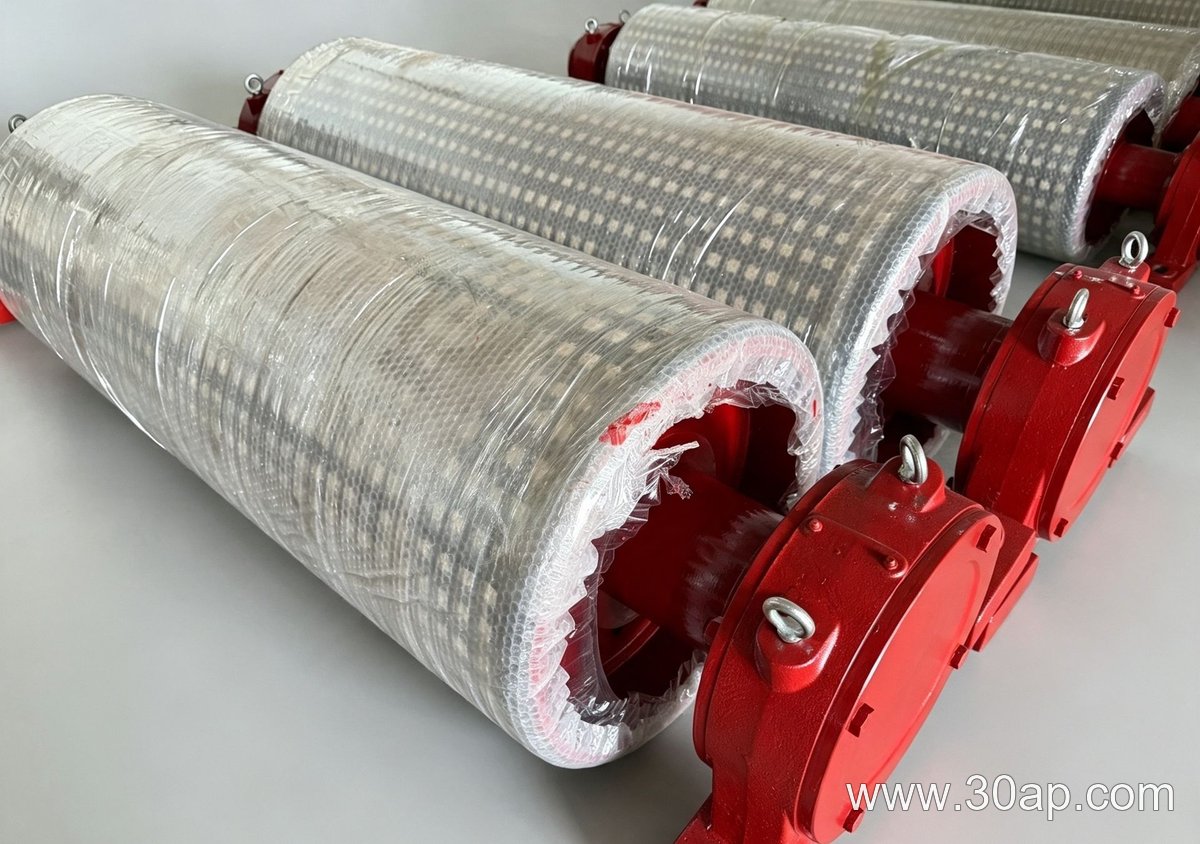
A typical unit starts with a cylindrical steel shell, two end discs and a shaft. The shaft is sized by torque and load rather than by belt width alone, so a B800 conveyor may use one of several shaft diameters depending on the drive arrangement. Common shaft sizes include Ø80, Ø100, Ø120 and Ø140, but the final value is set by the designer.
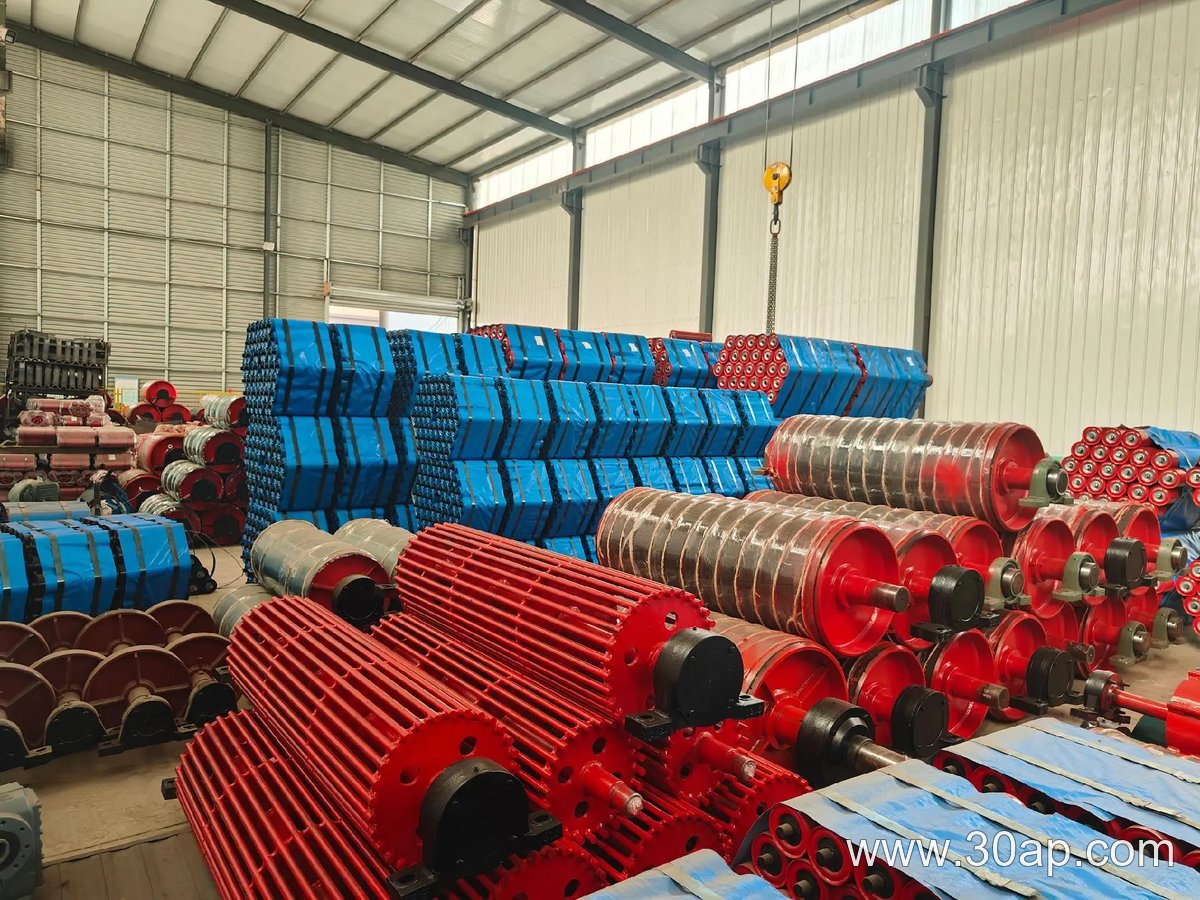
The rubber layer is applied in one of several ways:
- Hot vulcanized rubber, bonded under heat and pressure for heavy duty
- Cold bonded rubber, often chosen for field repair or smaller drives
- Cast rubber, formed directly on the shell in some workshops
- Ceramic lagging, used where extra grip and wear resistance are needed
Surface patterns include plain, diamond and herringbone. Diamond and herringbone profiles help water and fine particles escape from under the belt, which keeps traction more consistent in wet conditions. Lagging thickness commonly runs from 8 mm to 20 mm; a thicker cover is not automatically better, because it adds weight and cost.
Where It Is Used
These pulleys appear in bulk handling systems where the belt must be driven positively. One common setting is a quarry or sand and gravel line feeding a crusher or screen. Another is a coal handling circuit at a power station, where dust and moisture make belt slip a real risk. In both cases the drive rubber lagged pulley works with the conveyor belt, idler rollers and conveyor brackets to keep the load moving at a steady speed.
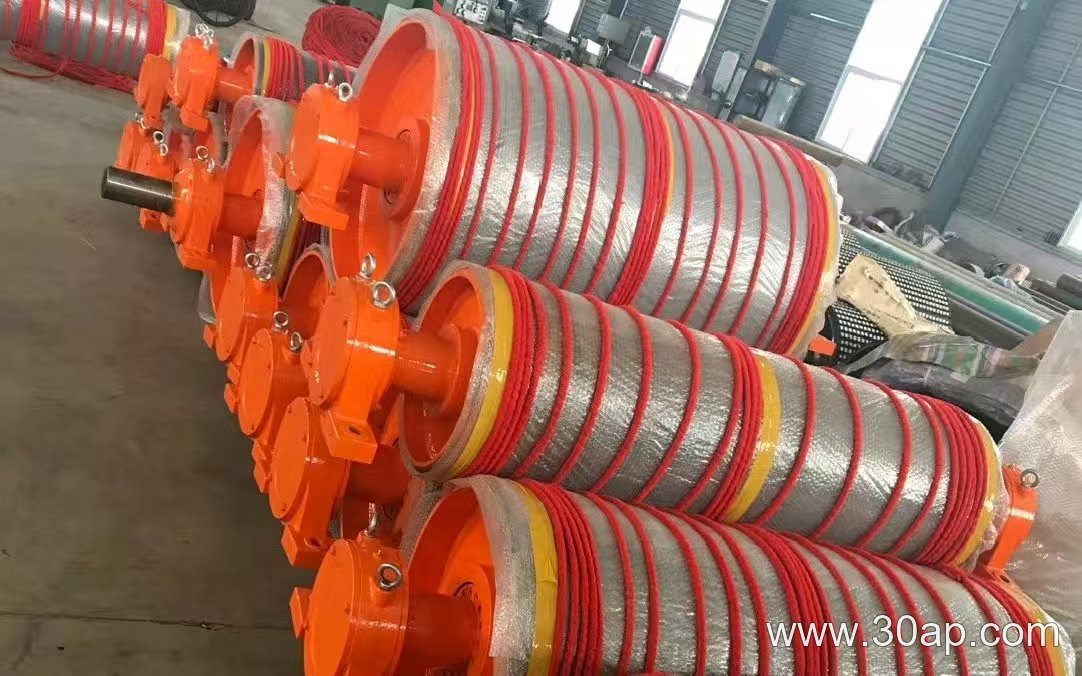
A bend pulley or take-up pulley may sit nearby, but it does not drive the belt. Only the drive position receives motor torque, so its lagging is selected with more attention to friction and wear.
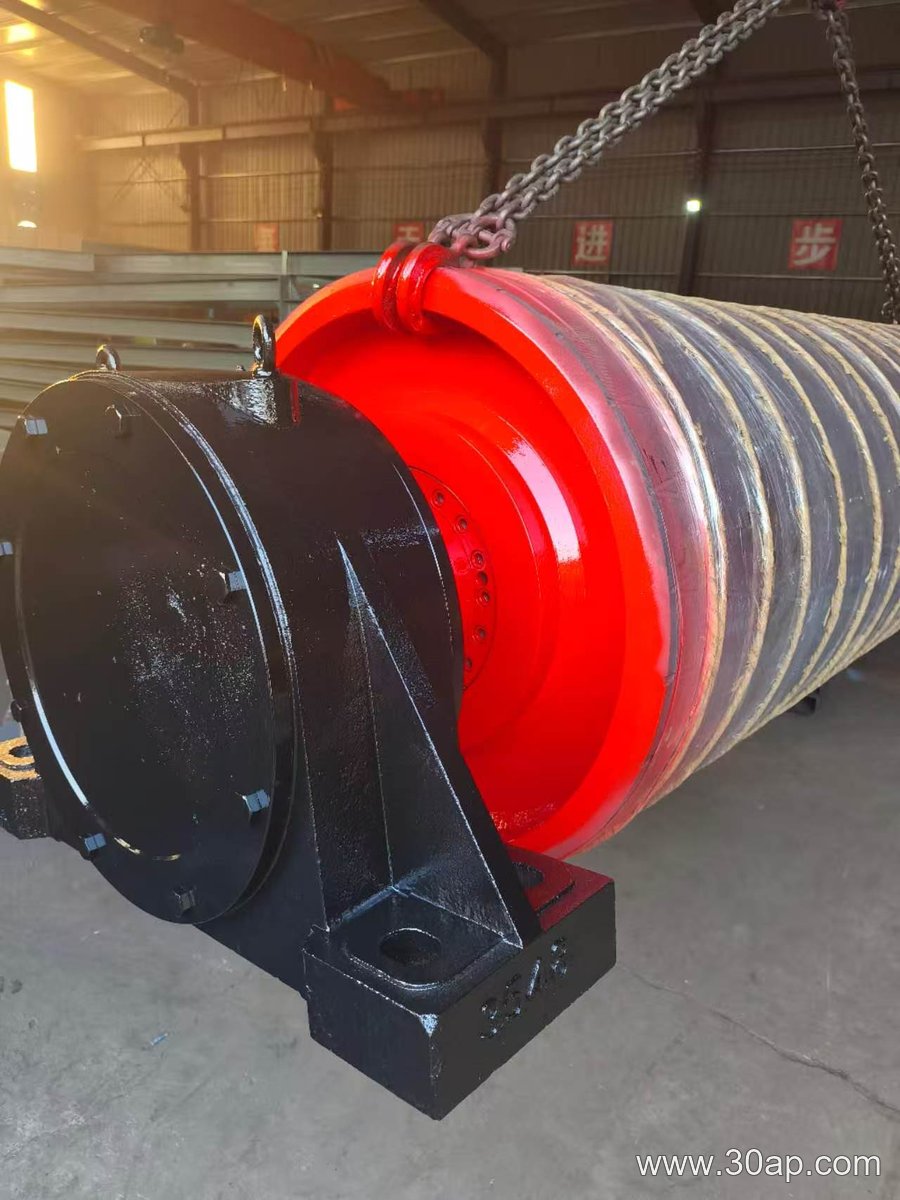
Choosing the Right Drive Pulley
Buyers should match the pulley to the conveyor duty, not to a single dimension. Useful questions include:
- What belt width and pulley face width are required? A face width is usually slightly larger than the belt, for example about 950 mm for a B800 belt, but this is a design guide, not a fixed rule.
- What diameter suits the belt and the available space? Common drive diameters include Ø500, Ø630, Ø800 and Ø1000. A B1200 belt might use Ø1000 in one plant and a different diameter in another.
- Which lagging type and thickness fit the material? Wet, fine or oily cargo often calls for a grooved surface.
- What shaft diameter and bearing arrangement does the torque demand?
It also helps to confirm the pulley role: head, drive, tail, tension or bend. Each has its own loading pattern, and mixing them up leads to premature belt wear or slippage.
Maintenance Notes
Inspect the rubber surface for cuts, glazing or missing sections. Worn lagging loses grip, and a slipping drive pulley can overheat the belt. Check that the pulley is aligned with the conveyor frame and that the belt tracks centrally. When replacing lagging, keep the same profile and thickness unless the duty has changed. With reasonable care, a well matched drive rubber lagged pulley gives long service in quarries, power plants and similar bulk material systems.