What a Mining Belt Conveyor Idler Does
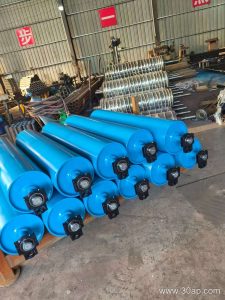
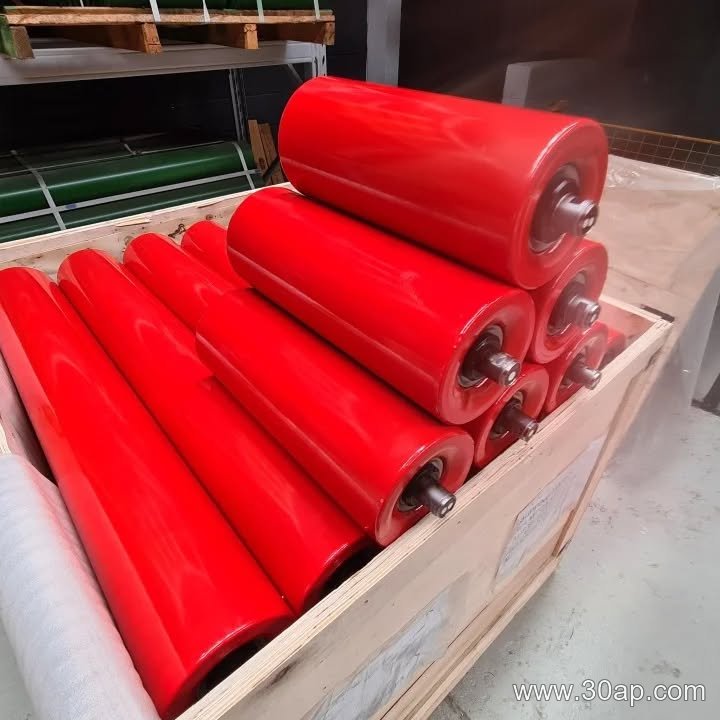
A mining belt conveyor idler is the rotating support that carries the conveyor belt along the carrying and return runs of a bulk material handling system. In practice, the same component is often called an idler roller, and the two terms refer to the identical product. The idler does not drive the belt. Its job is to support the belt and its load, reduce friction, and help the belt track in a stable path. In hard rock operations, the idler also absorbs part of the impact and abrasion that come with heavy, sharp material.
Because mining conveyors run long distances and often operate outdoors, idler selection affects energy use, belt life, and maintenance frequency. A poorly matched idler can cause belt mistracking, premature roller failure, or excessive vibration. A well-chosen one keeps the belt moving smoothly with minimal attention.
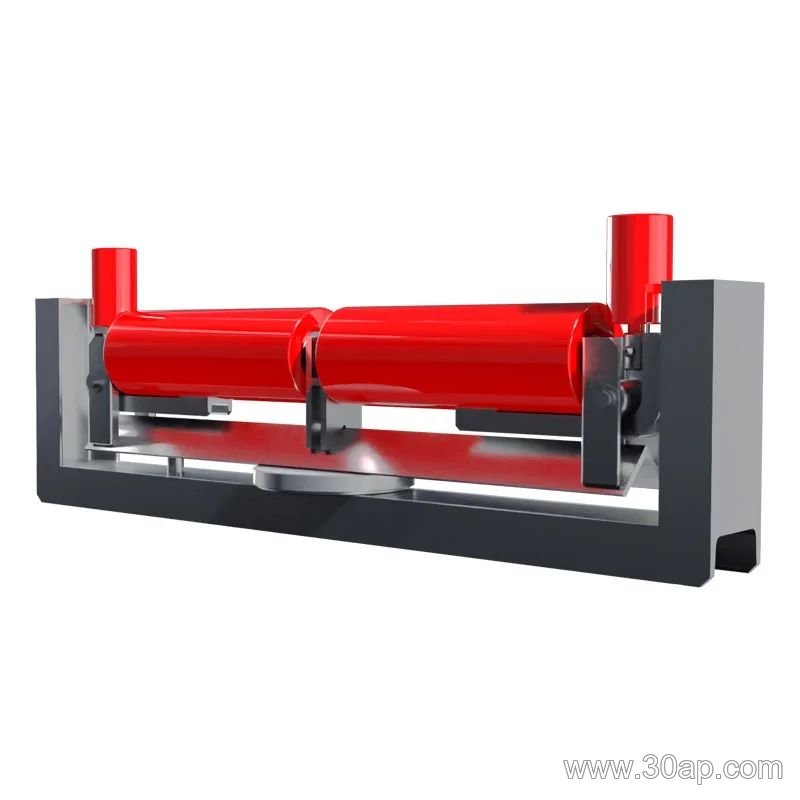
How a Mining Belt Conveyor Idler Is Built
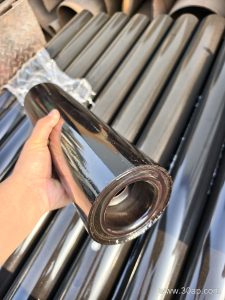
The main body is a steel tube, usually machined at both ends to hold the bearing housing. Inside, a shaft runs through the roller and is fixed to the conveyor bracket at each end. Bearings are fitted into the tube ends and sealed against dust and water. Common bearing sizes include 6204, 6205, 6305, 6306, 6308, and 6310, but the correct bearing depends on the load, speed, and roller diameter rather than on belt width alone.
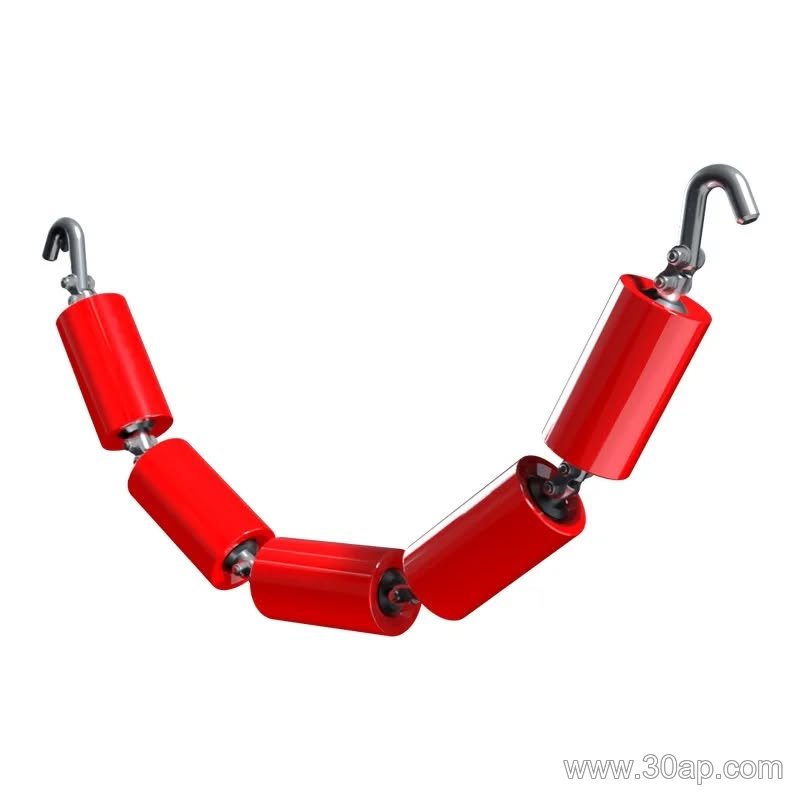
The roller surface may be plain steel, nylon, ceramic, or rubber rings. Rubber rings are often used on impact idlers where lumpy material drops onto the belt. Ceramic or nylon surfaces can reduce sticking and wear in wet or abrasive conditions. Sealing quality is critical: a mining environment exposes the idler to fine dust, moisture, and temperature swings, so a multi-stage labyrinth seal with grease retention is common.
Where It Fits on the Conveyor
On the carrying side, troughing idlers form the belt into a trough shape. A three-roll troughing set is common, with a center roll and two side rolls. The trough angle may be 20, 30, 35, or 45 degrees, depending on material characteristics and belt width. For example, a 35-degree trough is a frequent choice for coal and aggregate, while a deeper 45-degree trough can help contain fine, free-flowing material.
On the return side, flat return idlers or V-return idlers support the empty belt. Training idlers, also called self-aligning idlers, are used where the belt tends to wander. Impact idlers with rubber rings sit under the loading point to cushion falling material. Transition idlers are placed near the head and tail to guide the belt from a flat to a troughed profile without overstressing the edges.
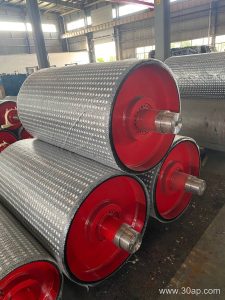
It is worth noting that a conveyor pulley is a different component. Drive, tail, and bend pulleys transmit power or change belt direction, and they are not interchangeable with idlers. A mining belt conveyor idler only supports the belt; it does not drive or redirect it.
Roll Diameter and Belt Width
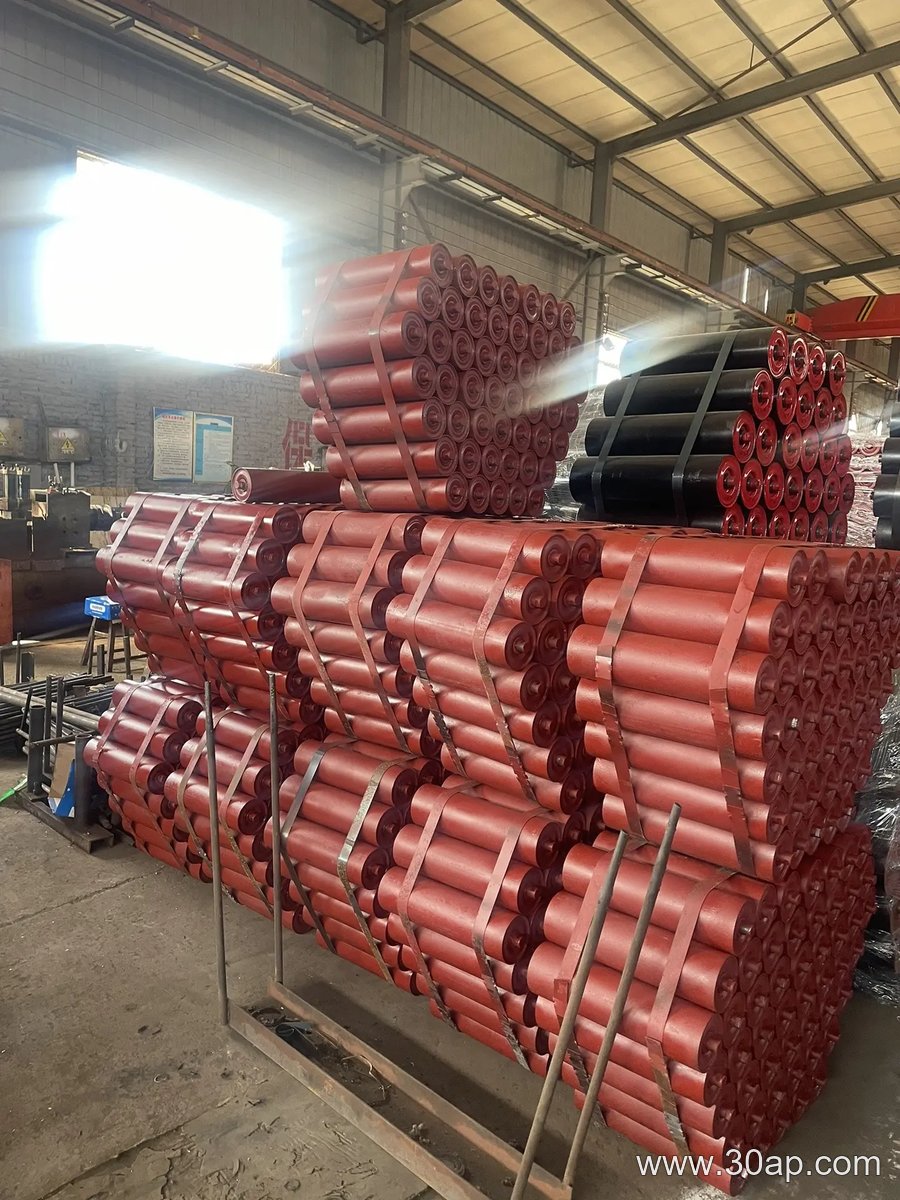
Idler roll diameters commonly range from 63 mm to 219 mm, including 63, 76, 89, 102, 108, 127, 133, 159, 178, 194, and 219 mm. Belt widths for mining conveyors are often given as B400, B500, B650, B800, B1000, B1200, B1400, B1600, B1800, B2000, B2200, and B2400. These are reference ranges, not fixed pairings. A wider belt usually needs a larger roll and a longer roller, but the exact combination is determined by the conveyor design, load, and speed.
Roll length changes with belt width, trough angle, and idler arrangement. For a three-roll troughing set, common roller lengths are approximately 200 mm for B500, 250 mm for B650, 315 mm for B800, 380 mm for B1000, 465 mm for B1200, 530 mm for B1400, 600 mm for B1600, 670 mm for B1800, and 750 mm for B2000. Side rolls and center rolls may differ. These figures are examples only and should not be treated as universal rules.
What Buyers Should Check
- Confirm the belt width, trough angle, and idler arrangement before ordering.
- Match the roll diameter and shaft to the actual load and speed, not just to belt width.
- Ask about bearing size and seal type for dusty or wet conditions.
- Choose the roller surface based on material abrasiveness and impact.
- Check that the conveyor bracket and mounting dimensions fit the existing frame.
- For impact zones, consider rubber-ring cushion idlers rather than standard troughing rolls.
A mining belt conveyor idler is a simple part, but it is not a commodity that can be chosen by size alone. The right idler keeps the conveyor belt centered, reduces downtime, and protects the belt over years of operation.