What a Herringbone Grooved Lagged Pulley Does
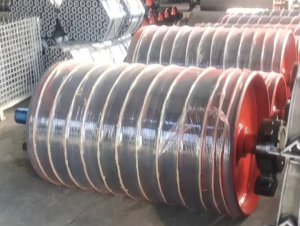
A herringbone grooved lagged pulley is a conveyor pulley whose outer surface carries a rubber lagging cut with V-shaped grooves that meet at the center. The pattern pushes water, fine dust, and loose grit sideways out of the contact zone instead of letting them sit between the rubber and the conveyor belt. On a drive pulley, that cleaning action helps maintain friction when the belt is wet or muddy. On a bend or tail pulley, the same herringbone rubber lagging can also help center the belt because the two angled groove sets guide the belt toward the middle.
The accurate equivalent name for this product is a chevron grooved rubber lagged pulley. Both terms describe the same component, and either one may appear on a drawing or inquiry sheet.
How the Pulley Is Built
The core is a cylindrical steel shell welded to end discs and a shaft. After machining, the shell receives a rubber layer, usually by hot vulcanization or cold bonding. The lagging is then cut with a herringbone or chevron groove pattern. Groove depth and pitch are chosen so the rubber still has enough contact area to transmit torque while giving dirt and water a path to escape.
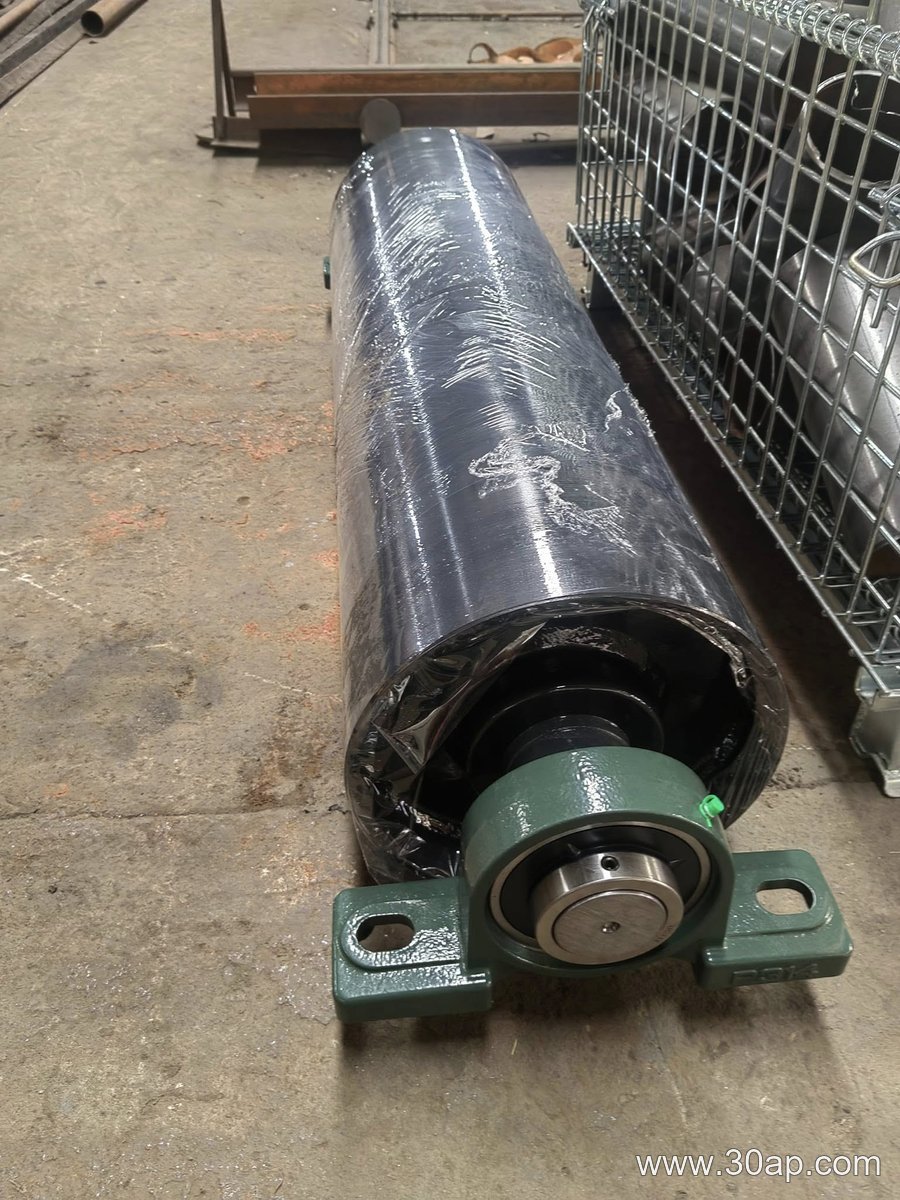
Common lagging thicknesses include 8 mm, 10 mm, 12 mm, 15 mm, and 20 mm. The right thickness depends on belt tension, pulley diameter, and how abrasive the site is. A larger diameter pulley can carry a thicker lagging without the rubber flexing too much under load.
Drive, Tail, and Bend Positions
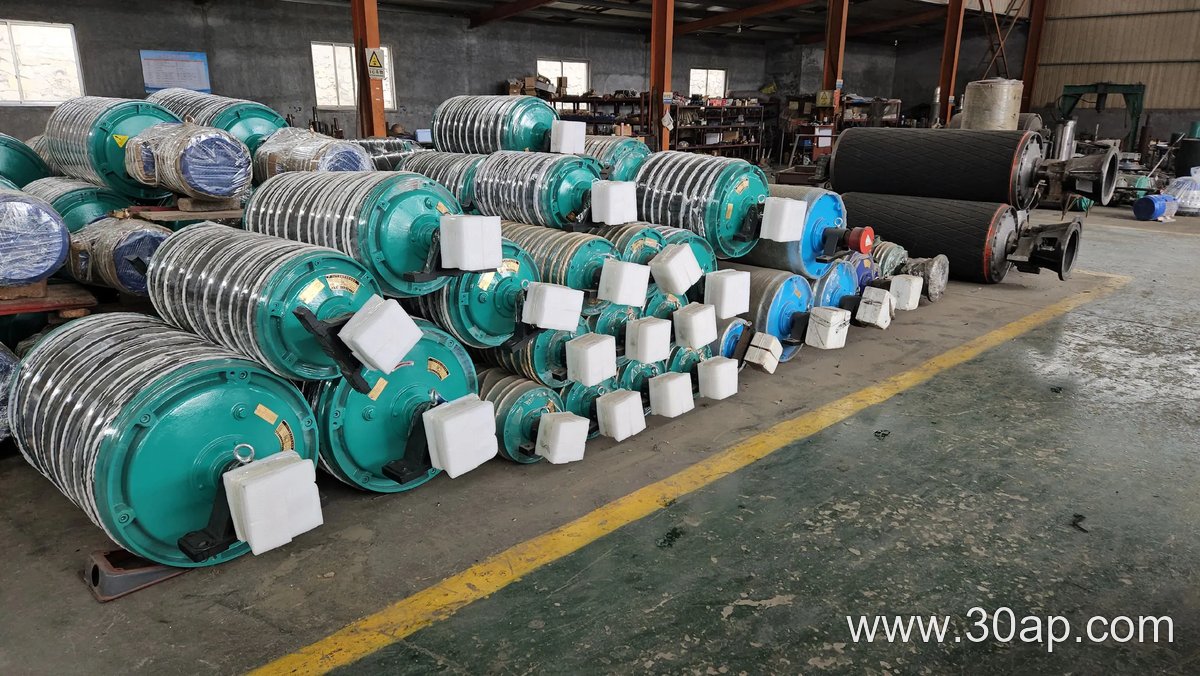
Position matters more than many buyers expect. A drive pulley needs high friction, so a herringbone grooved lagged pulley is often specified for the head or drive station. A tail pulley may use the same grooved lagging to reduce material buildup and help tracking. A bend pulley, by contrast, mainly changes belt direction and usually carries a lower load, so a plain or lightly lagged surface may be enough. These three positions are not interchangeable, and the groove pattern should be chosen for the duty of each one.
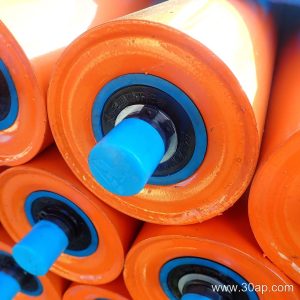
When the belt is heavily loaded, an idler roller and conveyor bracket work alongside the pulley to keep the belt aligned. If the belt slips on the drive pulley, the problem may be lagging condition, tension, or loading rather than the groove pattern alone.
Where It Fits in a Conveying Line
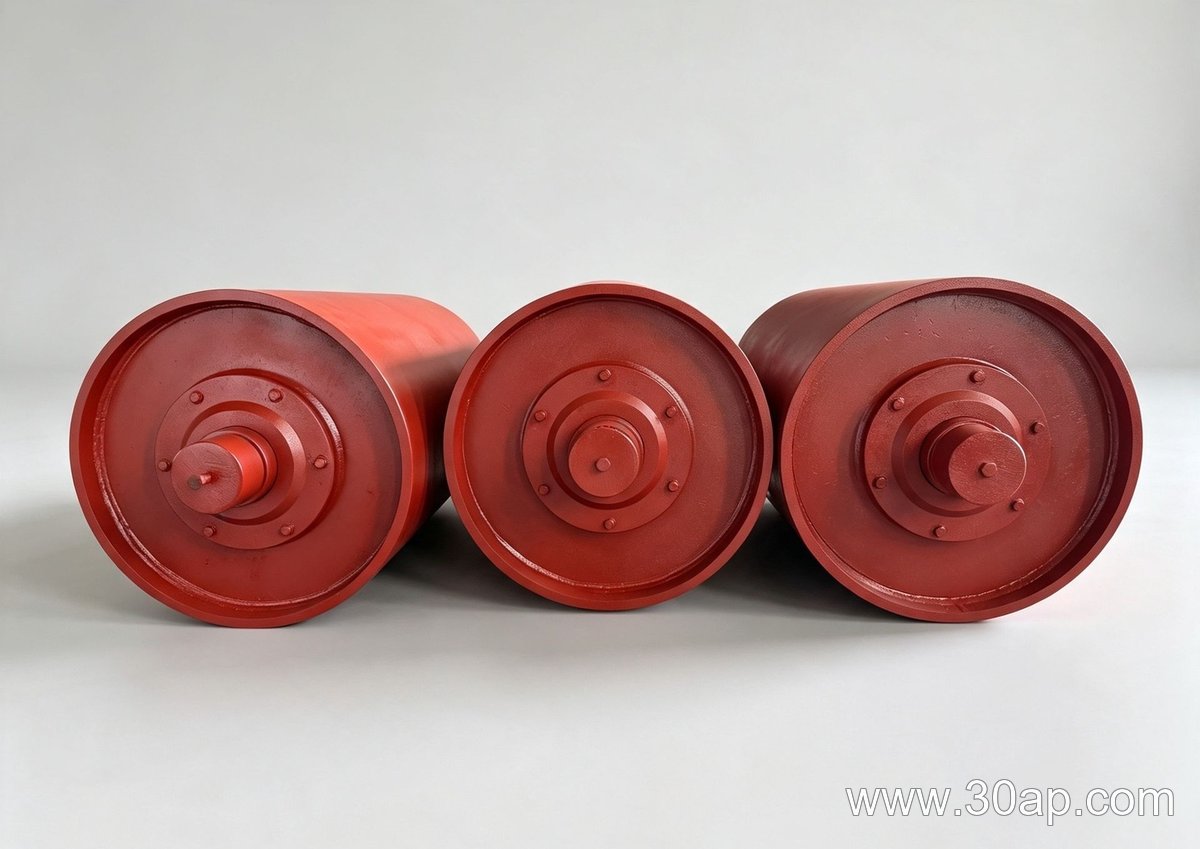
Herringbone grooved lagged pulleys appear in quarry and limestone crushing circuits, sand and gravel aggregate lines, coal handling at power plants, and cement clinker transport. In these places, wet or dusty belts are common, and a smooth lagged surface can lose grip. The chevron groove pattern gives the belt a cleaner contact patch, which supports steady torque transfer and reduces the chance of misalignment.
They are also used in fertilizer plants and grain silos, where fine dust and moisture can build up on the pulley face. In each case, the groove pattern is a practical response to the local material, not a universal answer for every conveyor.
Specifying the Right Unit
Buyers should start with belt width and pulley diameter as a pair, not as a fixed rule. A B800 belt may run on a Ø500 pulley in one conveyor and a larger diameter in another, depending on wrap angle, belt speed, and tension. Common shell widths are slightly wider than the belt, for example B650 with about 750 mm face, or B1200 with about 1400 mm face. Diameters such as Ø400, Ø630, Ø800, Ø1000, and Ø1250 are all seen in heavy duty work, but the final choice comes from the conveyor design.
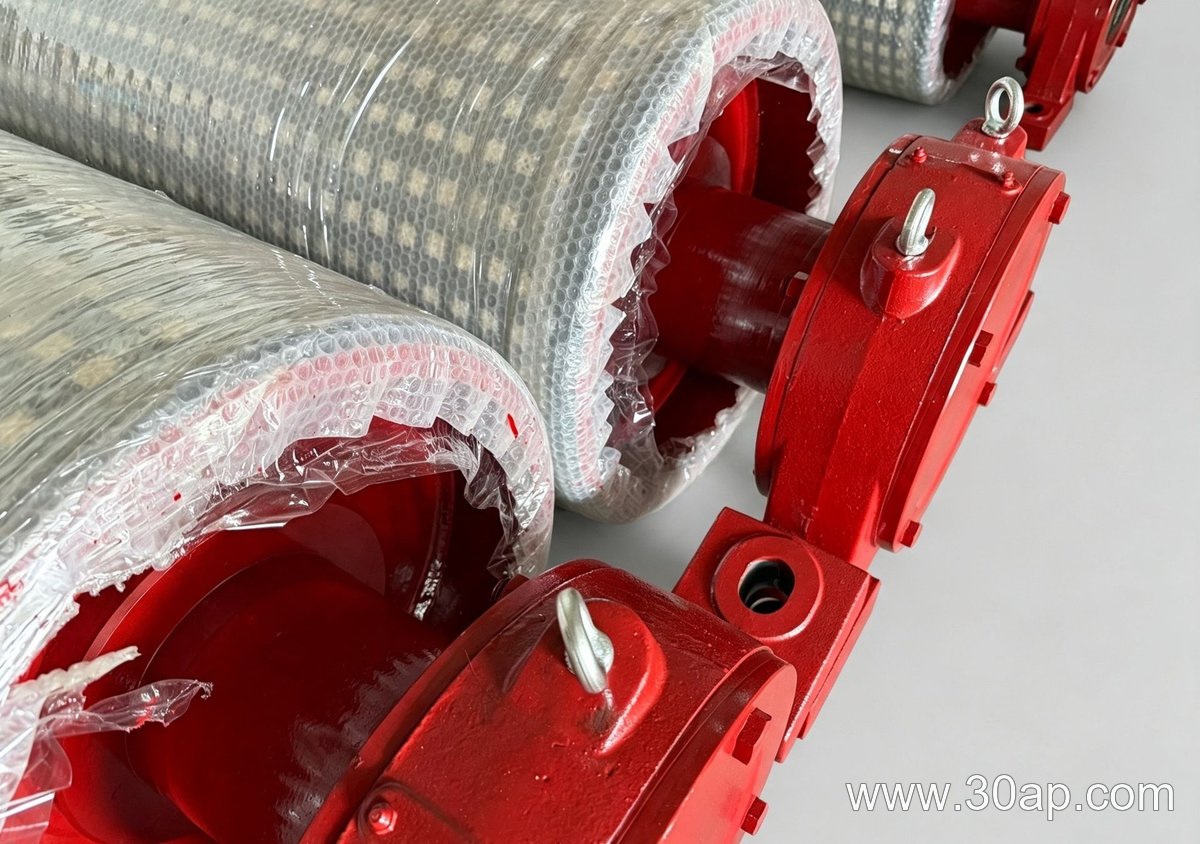
Shaft diameter is set by torque and bearing load, not by belt width alone. Common shaft sizes include Ø80, Ø100, Ø120, Ø140, and Ø160, but a given belt width can be paired with different shaft sizes across different conveyors. The lagging surface, groove depth, rubber grade, and bonding method should be stated on the order, along with the pulley position and duty.
Maintenance and Inspection Notes
Check the herringbone grooves for packed material, because a filled groove loses its cleaning effect. Look for cracks, worn edges, or separation between the rubber and the shell. If the lagging is worn thin, regrooving is not always possible, and replacement lagging may be the better route. Keep the belt tension within the design range, since an overloaded belt can slip even on a well-grooved pulley.
For any replacement, match the new herringbone grooved lagged pulley to the original mounting, shaft, and belt width, and confirm whether the position is drive, tail, or bend. That single check prevents many tracking and slip problems before the pulley is installed.