What an Impact Idler Bracket Does
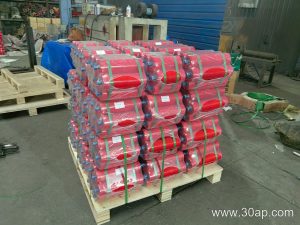
An impact idler bracket is the support structure that holds the impact rollers directly beneath a conveyor loading point. Its job is not simply to keep a roller in place; it absorbs and distributes the repeated shock that occurs when material drops onto the belt. A standard bracket farther along the conveyor only carries the weight of the belt and cargo, but this bracket must handle dynamic force from falling rock, ore, or aggregate. That difference shapes how the part is designed, where it is installed, and what a buyer should check before ordering.
The assembly is sometimes called a buffer roller support or impact roller bracket. That is the same product under an equivalent name, and it refers specifically to the bracket used with impact idlers, not to troughing brackets, return brackets, or any pulley support. A drive pulley, tail pulley, and bend pulley all perform different functions and are not interchangeable with this component.
How the Bracket Is Built
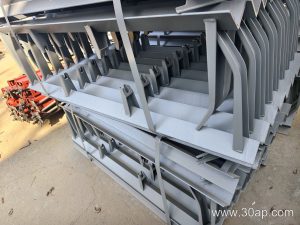
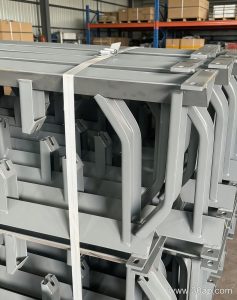
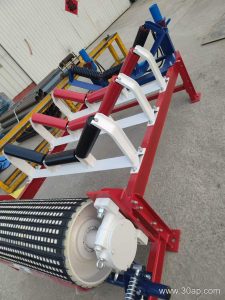
Most impact idler brackets are fabricated from angle steel, channel steel, or folded steel plate. The frame is usually welded or bolted into a rigid shape that can resist bending when a heavy lump strikes the belt above it. Because the loading zone is a high-wear area, the bracket often includes reinforced mounting points and a crossbeam that keeps the rollers at a consistent height.
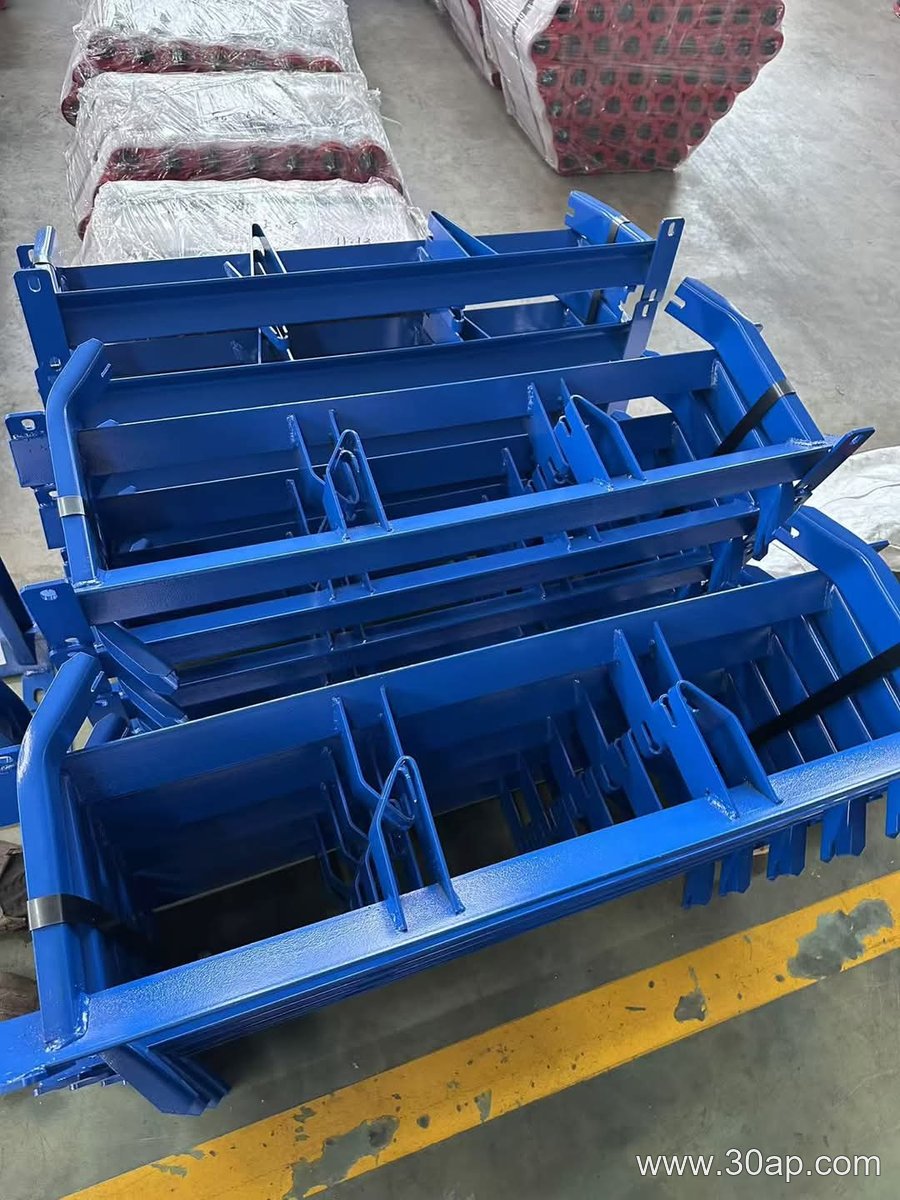
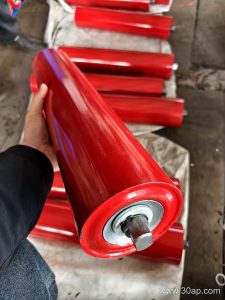
The bracket may also include a rubber or elastomeric cushion between the roller shaft and the frame. This cushion is what separates a true impact bracket from a plain support. It allows the roller to move slightly downward under load, spreading the shock over a longer time and reducing the peak force on the belt. The rollers themselves are typically heavier-duty idler rollers with thicker shells or rubber discs, and they are selected together with the bracket rather than as an afterthought.
- Fabricated frame from angle, channel, or folded plate
- Reinforced mounting holes and crossbeam
- Cushioning elements for shock absorption
- Compatible with heavy-duty impact idler rollers
Where It Fits on the Conveyor
The impact idler bracket is installed in the loading zone, usually just downstream of the feed chute. In a quarry or limestone mine, this is where run-of-mine rock first lands on the conveyor belt. In a coal preparation plant or power station coal handling system, the same bracket protects the belt from the initial drop of crushed coal. The exact number of impact stations depends on the drop height, the lump size, and the belt speed, so the layout is normally decided by the conveyor designer rather than by a fixed rule.
A common arrangement uses several impact stations in a row, followed by transition brackets that gradually change the trough angle to the standard carrying idlers. This transition matters because a sudden change from a deep impact trough to a shallow carrying trough can cause the belt to misalign or to lift off the rollers. The impact idler bracket, the transition bracket, and the standard troughing bracket are separate parts with separate roles, even though they all support idler rollers.
Trough Angle and Roller Selection
Impact brackets are made for the same range of trough angles used on the rest of the conveyor. Common values include 20 degrees, 30 degrees, 35 degrees, and 45 degrees. A 35-degree trough is widely used in bulk handling, while a 45-degree trough can contain a wider load profile on some belts. Adjustable brackets allow the same frame to be set at more than one of these angles, which can be useful when the loading conditions are not fully known at the time of purchase.
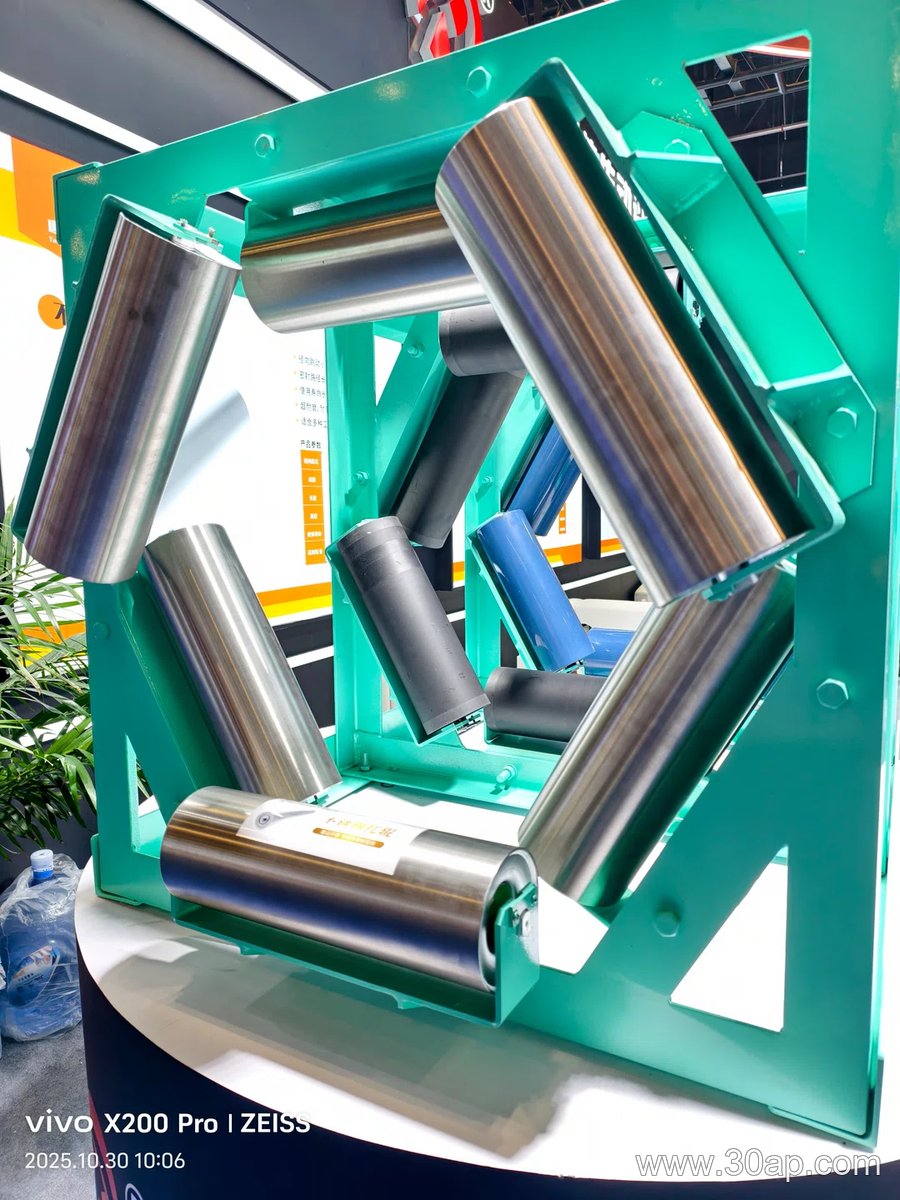
The roller diameter must suit the belt width and the load. Typical idler roller diameters include 89 mm, 108 mm, 133 mm, 159 mm, and 194 mm. A B800 belt with a 35-degree trough might use 108 mm rollers, while a B1200 belt at 45 degrees might use 133 mm rollers. These are examples, not fixed pairings. A B650 belt at 30 degrees could use 89 mm rollers, but the final choice depends on belt speed, material density, and the impact energy at the loading point. The bracket mounting hole spacing and crossbeam length change with belt width and trough angle, so they should be confirmed against the conveyor drawing rather than assumed.
Fixed and Adjustable Brackets
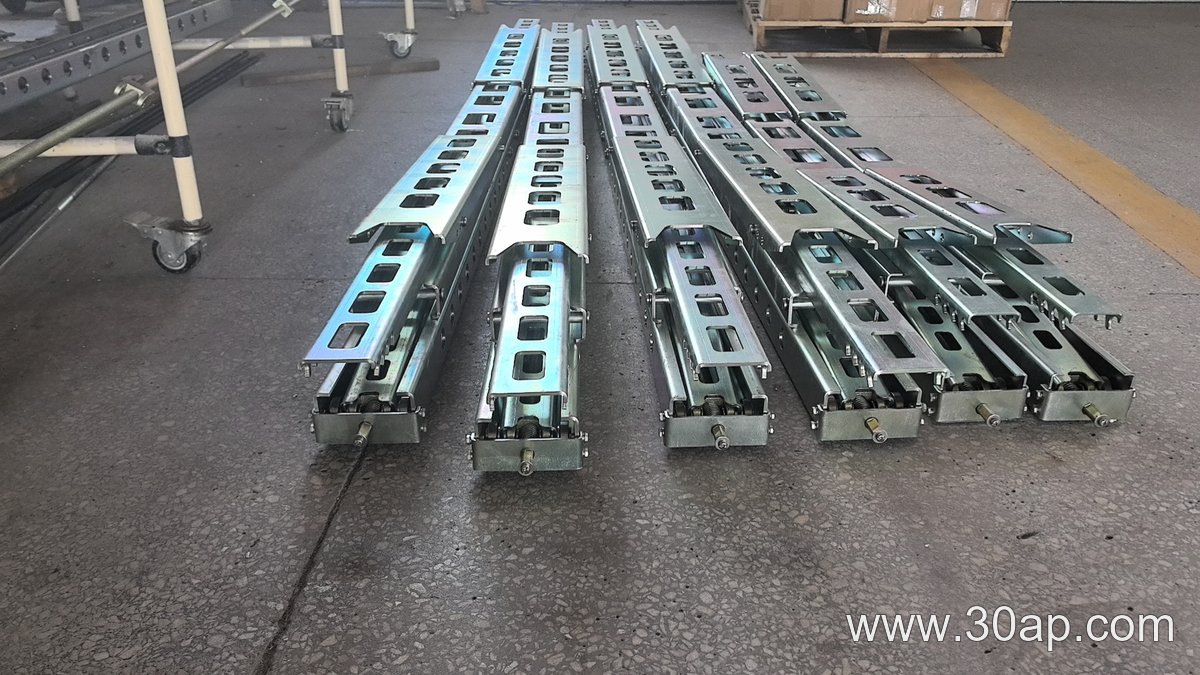
A fixed impact idler bracket is set to one trough angle at the factory. It is simple, rigid, and usually less expensive. An adjustable bracket has slotted or multiple mounting positions, so the maintenance team can change the trough angle or fine-tune roller contact after the conveyor is running. In a crushing and screening plant, where feed size can change with the blast pattern or crusher setting, an adjustable bracket can reduce the need to replace the whole support when conditions shift.
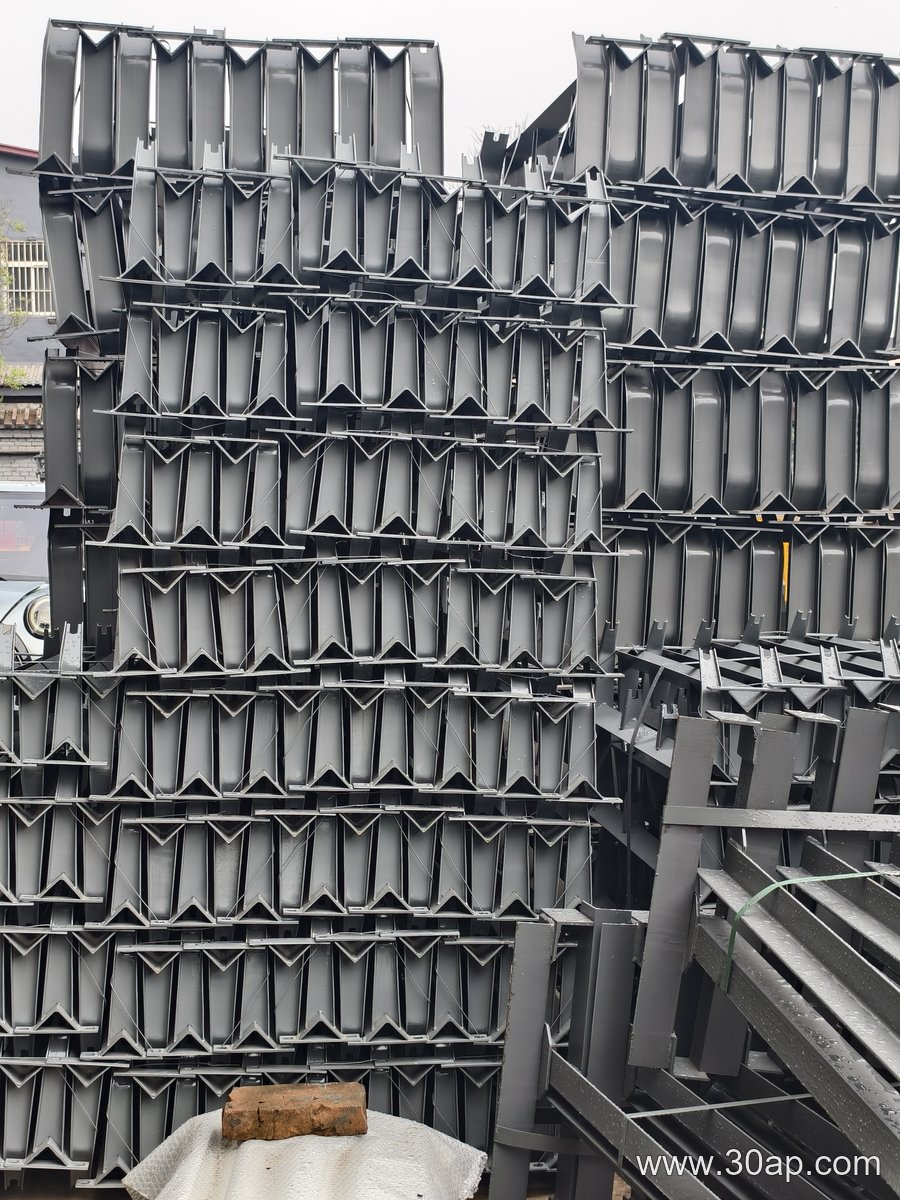
Adjustable brackets are not a substitute for correct engineering. They still need a rigid frame and proper cushioning, and the adjustment range should match the intended trough angles. A bracket that is adjustable but too light for the impact load will still deform or crack.
What Buyers Should Check
When specifying an impact idler bracket, start with the conveyor belt width and the required trough angle. Then confirm the roller diameter and shaft size that the bracket must accept. Check the mounting hole pattern against the existing conveyor frame, because a bracket that does not bolt up will not work regardless of its strength. Ask whether the bracket is fixed or adjustable, and whether the cushioning is built into the bracket or into the roller.
Also consider the material being handled. Sharp, heavy ore in an iron mine places different demands than grain in a silo or fertilizer in a blending line. The bracket should be selected for the actual impact energy, not for a nominal tonnage figure alone. Finally, keep the spare parts consistent. If the loading zone uses impact idler brackets, the transition and carrying zones should use their own correct brackets, and the pulleys at the drive, tail, and bend positions remain separate items with their own specifications.
A well-chosen impact idler bracket protects the conveyor belt, keeps the idler rollers aligned, and reduces downtime in the most punishing part of the conveyor. It is a small component, but it sits at the point where the belt takes its hardest hit.
What a 2200mm Conveyor Belt Means in Practice
A 2200mm conveyor belt is a wide-format rubber belt designed for high-capacity material transport. The 2200mm figure refers to the belt width, and it is one of the largest standard widths used in bulk handling. Belts of this width are not simply scaled-up versions of narrower belts. They demand careful engineering because the belt must carry heavy loads, resist tracking problems, and work with structural components that match its span. When someone asks for a 2200mm conveyor belt, they are usually specifying a belt for a mainline conveyor in mining, port loading, or a large processing plant.
The same product is often called a 2200mm wide conveyor belt or a 2.2-meter conveyor belt. These are accurate equivalents. The key is that the width is the defining feature, and the belt’s construction, strength, and cover grade must be selected together with that width.
How the Belt Is Built
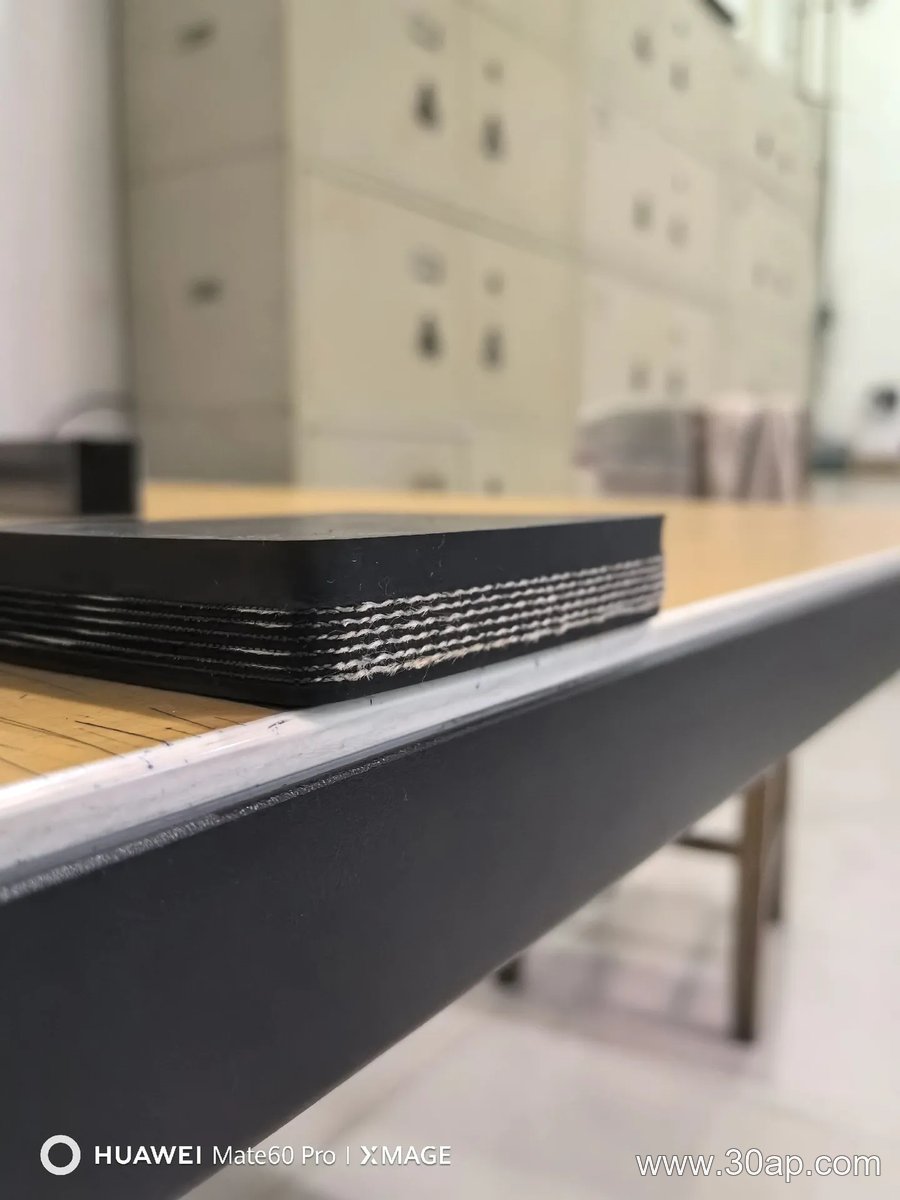
A 2200mm conveyor belt is typically a multi-ply rubber belt with a fabric or steel cord carcass. The carcass provides tensile strength and resistance to stretching. Common fabric types include EP (polyester-cotton) and NN (nylon-nylon). For very high tension applications, steel cord belts are used. The number of plies usually ranges from two to six, depending on the required strength and the load conditions.
The cover rubber protects the carcass from abrasion, impact, and environmental attack. Cover thickness is often expressed as top cover plus bottom cover, such as 6+2 mm or 8+3 mm. The grade of the cover can be selected for wear resistance, heat resistance, oil resistance, flame resistance, or antistatic properties. For a belt of this width, cover quality matters because any premature wear can lead to expensive replacement and downtime.
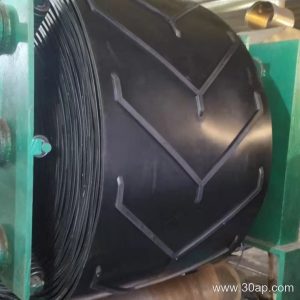
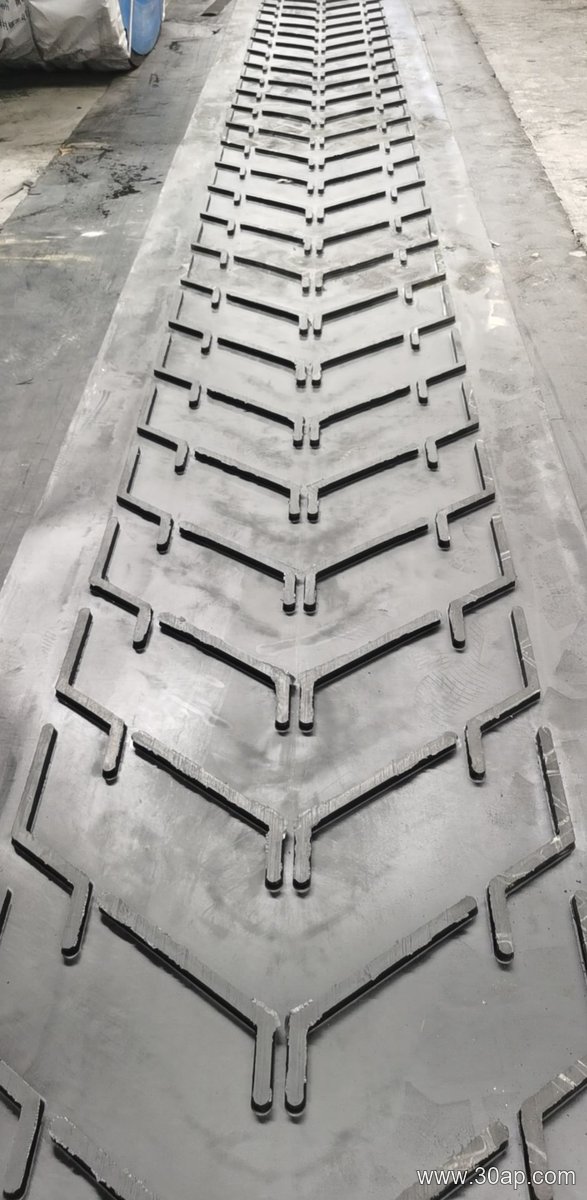
A 2200mm belt may also include special surface forms. A patterned or chevron surface can help with inclined conveying, while a corrugated sidewall belt can prevent material spillage on steep angles. These options are not mandatory, but they are relevant when the conveyor path is not flat.
Where This Wide Belt Is Used
Wide belts are common in large-scale bulk material handling. A 2200mm conveyor belt might be found in:
- Open-pit mines and underground mines moving ore, coal, or overburden.
- Port terminals loading and unloading bulk cargo such as iron ore, bauxite, or grain.
- Power plants transporting coal or biomass.
- Steel mills and cement plants handling raw materials and clinker.
- Large-scale sorting and processing facilities for aggregates or minerals.
In these settings, the belt works with a complete conveyor system. The belt runs over idler rollers that support it along the carrying side. A conveyor pulley at the head end drives the belt, while a tail pulley and bend pulleys help route it. Conveyor brackets hold the idlers and pulleys in position. Each component must be sized for the belt width and the load. A 2200mm belt does not dictate a single pulley diameter. The pulley diameter is selected based on belt tension, carcass type, and the manufacturer’s recommendations. Similarly, the shaft diameter is not derived from belt width alone; it depends on the torque and the pulley design.
Specifying the Right Belt for the Job
When choosing a 2200mm conveyor belt, several factors come into play. The material being conveyed determines the required cover grade and thickness. Sharp, heavy rock might call for a thick, abrasion-resistant cover, while hot materials may require a heat-resistant compound. The operating environment matters too: a cold climate may need a belt that remains flexible at low temperatures, and a flammable atmosphere may require a flame-retardant and antistatic belt.
The required tensile strength is another key input. Common strength grades include EP200, EP400, EP630, and EP1000, but the correct value must be calculated from the belt tension, load, and conveyor geometry. A belt that is too weak will stretch or fail; one that is too strong may be unnecessarily heavy and costly.
Belt width itself influences the load capacity. A wider belt can carry more material at a given speed, but it also requires a wider conveyor structure, larger idlers, and properly aligned pulleys. For a 2200mm belt, the conveyor frame must be robust enough to keep the belt flat and centered. Misalignment can cause edge damage and reduce belt life.
Installation and Maintenance Notes
Handling a 2200mm conveyor belt during installation is a major task. The belt is heavy and stiff, so it must be unrolled carefully and supported to avoid kinking. Splicing is usually done on site, either by vulcanization or mechanical fasteners. A properly executed splice is critical for a wide belt because any weakness can propagate across the width.
Once in operation, regular inspection helps catch problems early. Check for edge wear, cover gouges, and exposed carcass. Monitor the belt tracking and adjust idlers or pulleys as needed. Keep the belt cleaner and return side free of buildup. Lubricate and align the conveyor pulley and idler roller bearings according to the maintenance schedule. A 2200mm belt represents a significant investment, so preventive care pays off.
Buyer Checklist
- Confirm the actual belt width required by the conveyor design.
- Specify the carcass type and strength grade based on calculated tension.
- Select cover grade and thickness for the material and environment.
- Decide whether a patterned, chevron, or sidewall profile is needed.
- Check that the conveyor structure, idlers, pulleys, and brackets are rated for the belt width and load.
- Plan for proper splicing and a maintenance routine.
A 2200mm conveyor belt is a heavy-duty component for high-capacity systems. It is not a one-size-fits-all item, and no single specification fits every conveyor. By matching the belt to the application and the rest of the conveyor hardware, buyers can achieve reliable performance and longer service life.
What a Belt Conveyor Idler Does on the Line
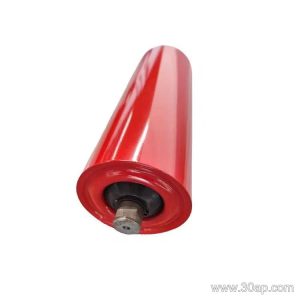
A belt conveyor idler is the rotating roller assembly that supports the conveyor belt and the material riding on it. The idler roller does not drive the belt; it simply carries it, reduces friction, and helps keep the belt tracking in a stable path. In a typical conveyor system, the drive pulley pulls the belt, the tail pulley returns it, and the idler rollers support it along the carrying and return runs. Some engineers refer to this component as a conveyor idler or belt idler. The term describes the same product, while the word roller often points to the rotating body itself.
Getting the idler selection right matters because idlers run under load for long hours. A poorly matched idler can wear the belt, raise power demand, or cause material spillage. A well-chosen one keeps the belt moving smoothly and extends service life.
How a Belt Conveyor Idler Is Built
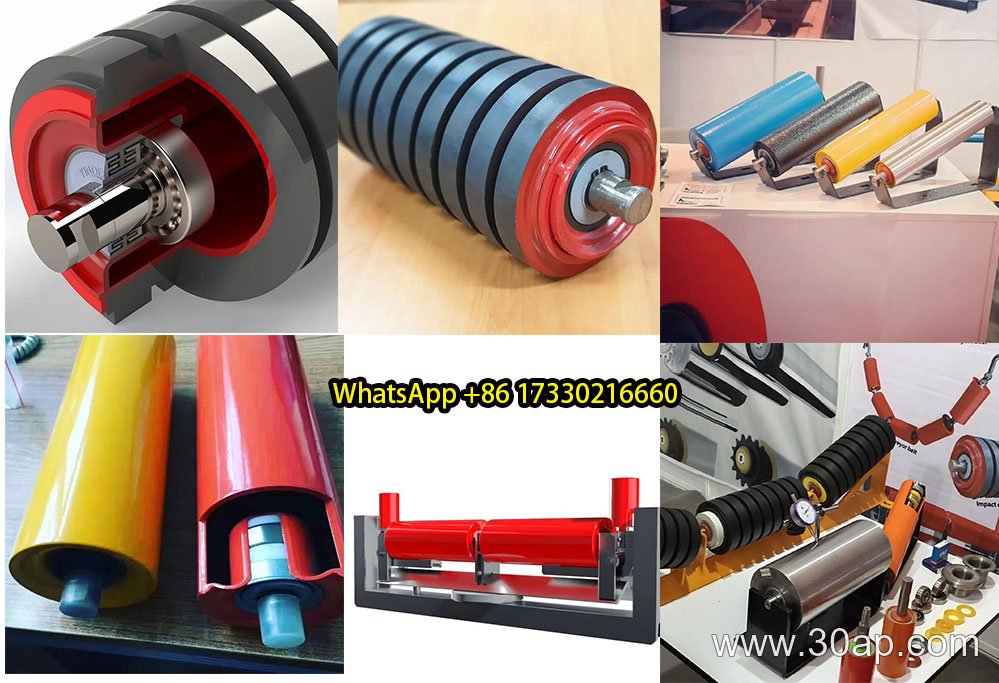
Most idlers share a simple structure: a steel tube shell, bearing housings at each end, a shaft, and a sealing arrangement. The shell may be a plain steel pipe, or it may carry a rubber ring, nylon, or ceramic surface for specific duties. Bearings are usually deep-groove ball bearings, with common sizes such as 6204, 6205, 6305, 6306, 6308, or 6310. The bearing size is not tied to one roller diameter alone; it follows the load, speed, and design life of the conveyor.
Sealing is a critical detail. Dust, water, and fine particles are the main enemies of idler bearings. A labyrinth seal, contact seal, or combination seal helps keep contaminants out and grease in. Buyers should ask how the seal is designed for the site conditions, because a quarry or a coal yard places different demands on an idler than a clean grain terminal does.
Common Idler Types and Where They Sit
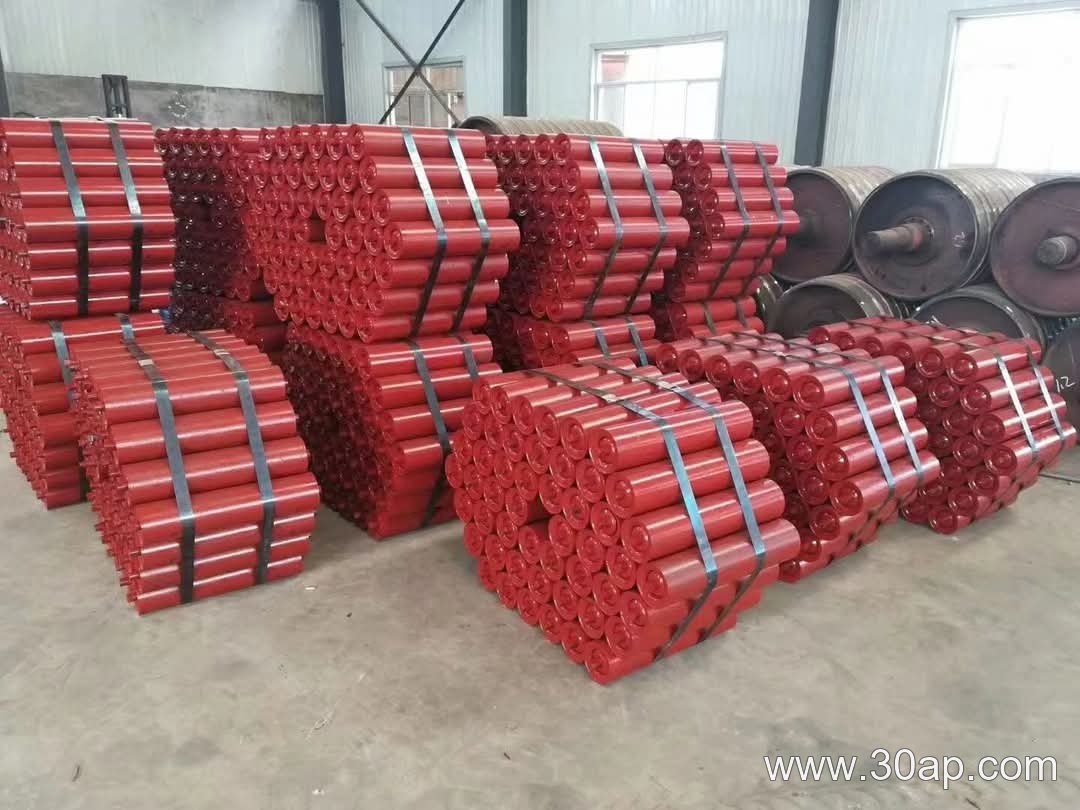
The carrying run usually uses troughing idlers, often arranged as a single roller, two-roller, or three-roller set. A three-roll troughing idler is common on wider belts because it forms the belt into a trough that holds material in the center. The trough angle may be 20, 30, 35, or 45 degrees, depending on the material and belt width. A small forward tilt of about 1.5 to 2 degrees is sometimes used on troughing rolls to help center the belt, though this is a design choice rather than a universal rule.
Impact idlers, including rubber-ring impact idlers, are placed at loading points where lumps fall onto the belt. Their resilient surface absorbs shock and protects both the belt and the roller. Return idlers support the empty belt on its way back. A flat return idler is the simplest form, while a V-return idler helps keep the belt centered. Spiral idlers are used where sticky material tends to build up on the roller. Self-aligning idlers, also called training idlers, correct minor belt misalignment.
These are not interchangeable with drive, tail, or bend pulleys. A conveyor pulley is a larger drum that transmits power or changes belt direction, while a belt conveyor idler only supports the belt. The two work together, but they serve different functions.
Roller Diameter, Belt Width, and Roll Length
Roller diameter is often chosen from a range such as 63, 76, 89, 102, 108, 127, 133, 159, 178, 194, or 219 mm. Larger diameters generally suit higher loads, wider belts, or faster speeds, but the final choice depends on the conveyor design. Belt width is another key input. Common belt widths include B400, B500, B650, B800, B1000, B1200, B1400, B1600, B1800, B2000, B2200, and B2400.
Roll length changes with belt width, trough angle, and idler arrangement. For example, a three-roll troughing set on a B500 belt may use rolls around 200 mm long, while a B1000 belt may use rolls near 380 mm, and a B1600 belt may use rolls near 600 mm. These are common examples, not fixed pairings. The center roll and side rolls can differ, and the exact length is set by the conveyor designer. A buyer should never assume that one belt width matches only one pulley diameter or one shaft size.
Where Belt Conveyor Idlers Are Used
These idlers appear in many bulk handling settings. In a sand and gravel plant, they carry crushed stone and aggregate on long inclined belts. In a coal-fired power station, they support the coal belt from the stockpile to the boiler bunkers. Other common locations include cement plants, iron and copper mines, ports, and tunneling projects. Each site has its own dust, moisture, and temperature profile, so the idler surface and seal should match the environment.
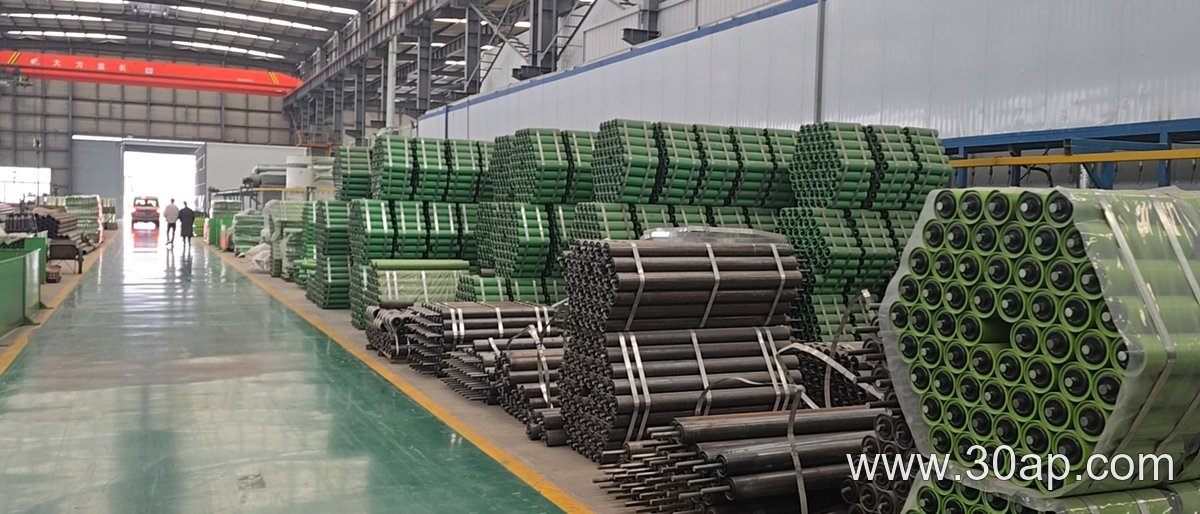
Idlers also work alongside other conveyor components. The conveyor bracket holds the idler frame in place, and the conveyor belt runs over the rollers. A conveyor pulley at the head or tail provides the drive and return. The idler is the quiet workhorse in between.
What a Buyer Should Check Before Ordering
- Confirm the belt width and the actual roll length needed for each position.
- Match the roller diameter to the load and speed, not to a catalog habit.
- Choose a bearing size and seal type that fit the site conditions.
- Decide between steel, rubber ring, nylon, or ceramic surfaces based on material abrasiveness and buildup.
- Check the trough angle and whether a forward tilt or self-aligning feature is required.
- Verify that the idler frame and conveyor bracket are compatible with the existing structure.
Spare parts planning also matters. Keeping a few common idler sizes on hand reduces downtime when a roller seizes or a bearing fails. A maintenance routine that checks for noisy rollers, uneven belt tracking, and material spillage will catch problems before they damage the belt.
Keeping Idlers in Good Working Order
Inspect idlers during scheduled shutdowns. Turn each roller by hand and listen for roughness. Look for damaged seals, missing end caps, or material wrapped around the shaft. Replace any idler that drags or wobbles, because a single bad roller can wear the belt and increase power consumption. Lubrication is usually sealed for life in modern idlers, but re-lubricable designs exist for heavy-duty service. Always follow the manufacturer’s instructions for the specific model.
A belt conveyor idler is a small part of a large system, yet its condition affects the whole line. By understanding the roller, the bearing, the seal, and the application, a buyer can select an idler that supports the belt reliably and keeps material moving.
What a 500mm Diameter Conveyor Pulley Actually Is
A 500mm diameter conveyor pulley is a cylindrical drum assembly that drives, redirects, or tensions a conveyor belt. In many bulk handling systems, this size sits in the middle range: large enough to handle substantial belt tensions and thick belt carcasses, yet still practical to mount on standard frame structures. When engineers talk about a Ø500 drum, they usually mean the pulley shell has a nominal outside diameter of 500 millimeters, with the final dimension depending on whether lagging is applied.
This product is not a single fixed item. It can be supplied as a drive pulley for the head of a conveyor, as a tail pulley at the loading end, or as a bending pulley that changes belt direction. Those roles are different, and a 500mm diameter conveyor pulley must be specified for the correct duty. A drive pulley transmits torque through the shaft and shell, while a bend pulley mainly guides the belt. Treating them as interchangeable often leads to premature wear or belt tracking problems.
How the Pulley Is Built
A typical Ø500 pulley consists of a cylindrical shell, two end discs, a hub, and a through shaft or stub shafts. The shell may be seamless pipe or rolled and welded plate. End discs are machined to fit the shaft and are welded or bolted to the shell. Shaft ends are keyed for coupling or driven by a gearbox arrangement.
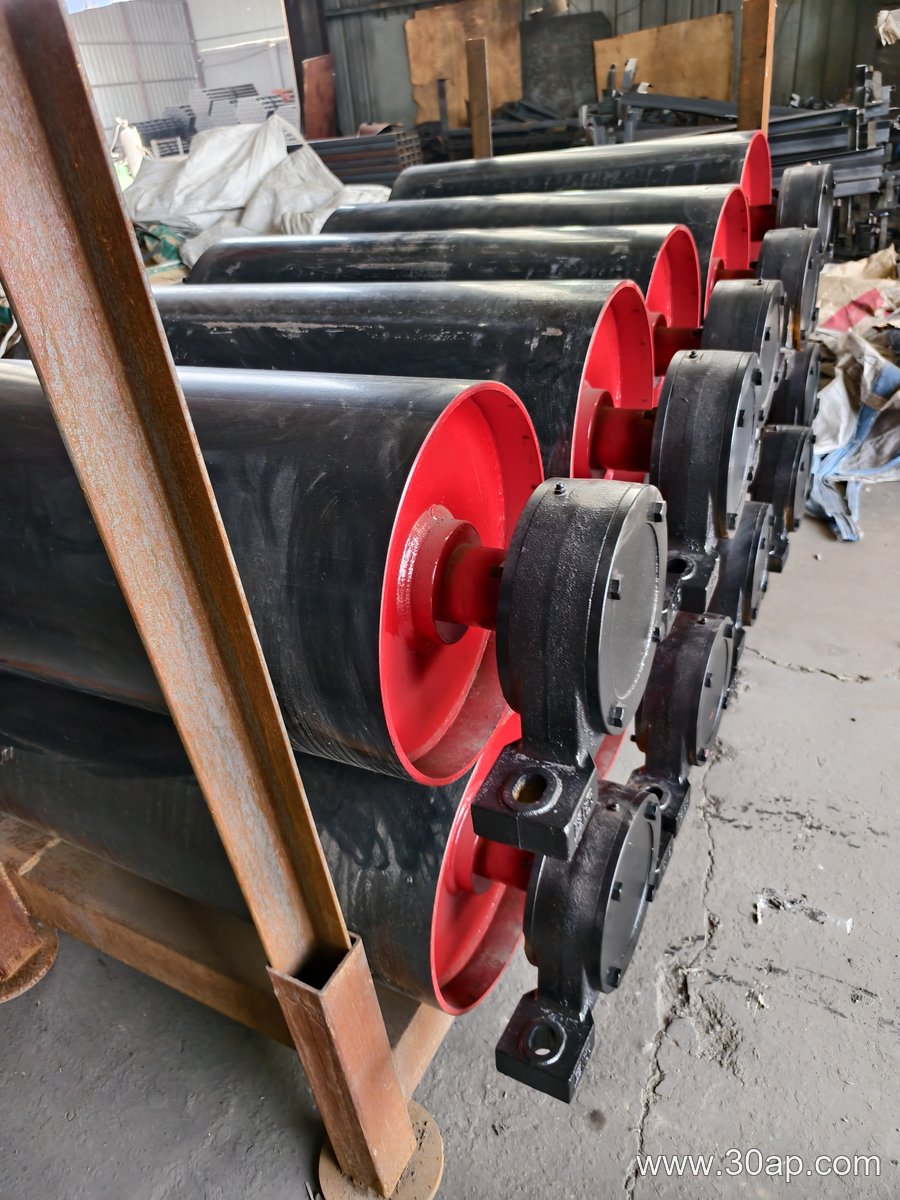
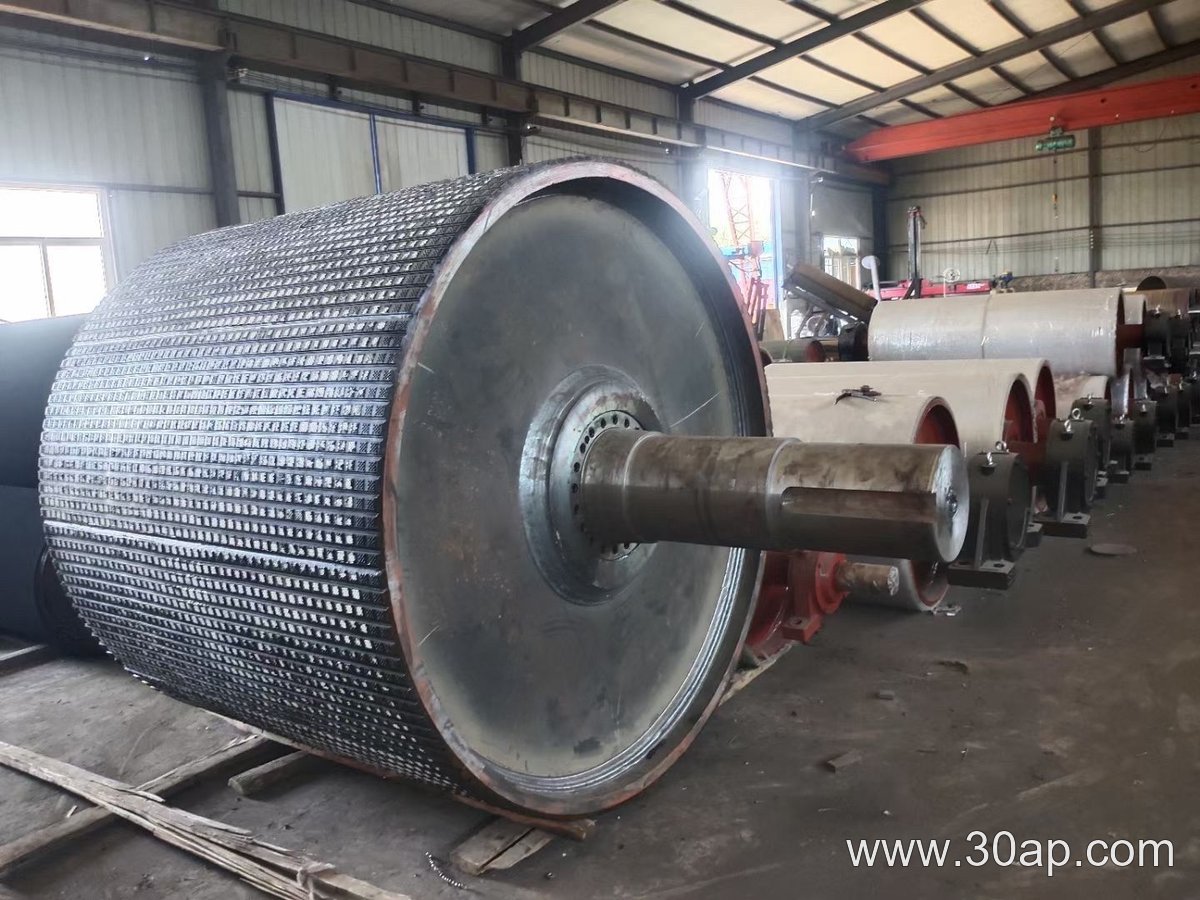
Surface treatment matters as much as the body. A conveyor pulley may be supplied plain, or covered with rubber lagging in thicknesses such as 8, 10, 12, 15, or 20 mm. Common lagging patterns include diamond, herringbone, and plain rubber. In abrasive or wet conditions, ceramic lagging can be used. The lagging increases friction between the drum and the conveyor belt, which is especially important on the drive pulley.
Bearings are usually mounted in pillow blocks or housed units on the conveyor bracket. The bracket must align with the shaft and carry both radial and axial loads. Sealing and lubrication choices depend on dust, moisture, and temperature at the site.
Where It Fits in a Conveyor System
You will see this size of drum in quarries, limestone mines, and aggregate crushing and screening lines. It also appears in cement plants handling clinker, in power station coal conveying, and in port bulk terminals. In a crushing circuit, a 500mm diameter conveyor pulley might serve as the head pulley on a discharge conveyor or as a bend pulley where the belt changes incline.
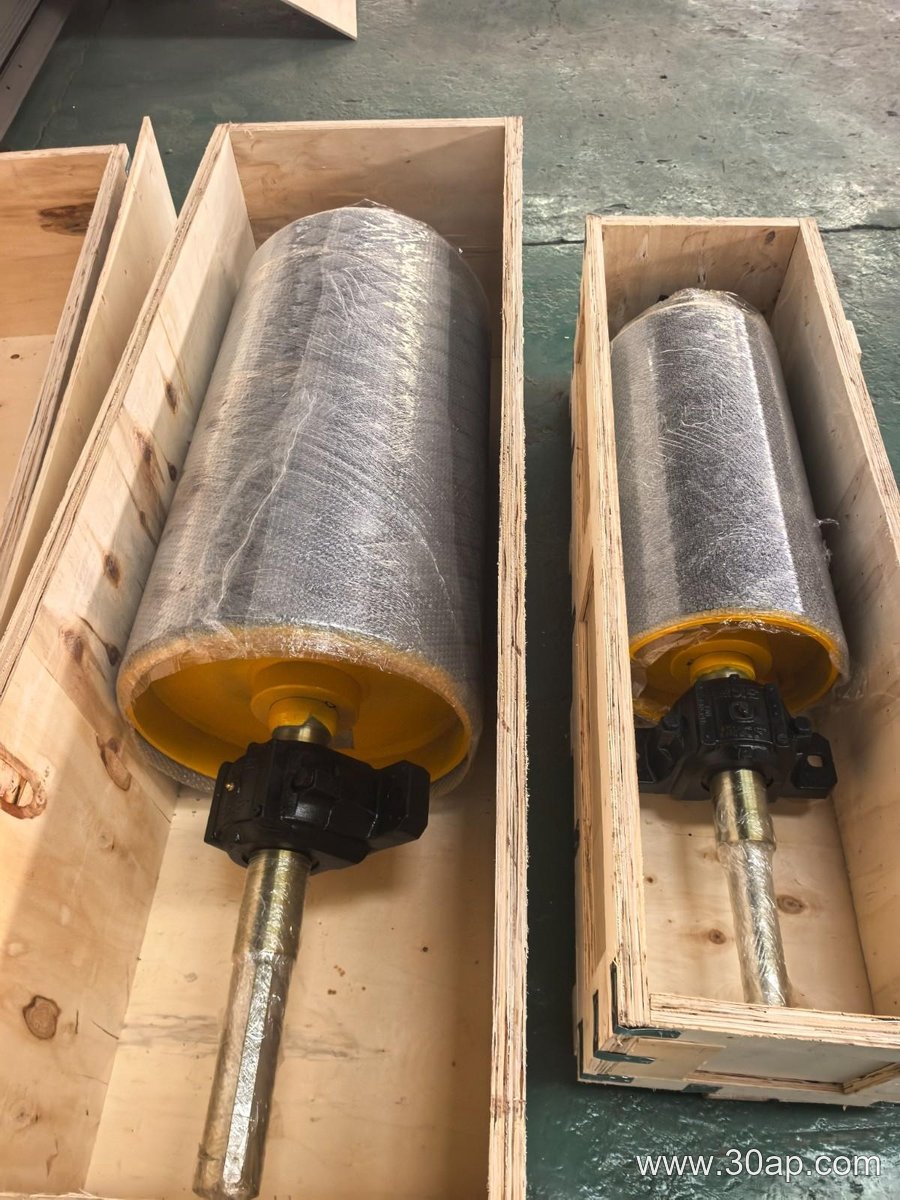
The choice between drive, tail, and bend duty changes the design. A drive pulley needs a larger shaft and stronger hub connection because it transfers motor torque. A tail pulley may use a similar shell diameter but a lighter shaft. A bend pulley is often smaller in face width and may not need lagging at all. So the same nominal 500mm diameter does not mean the same product across all positions.
Matching Belt Width and Pulley Face
Belt width is one of the first inputs when selecting a pulley. The pulley face is normally wider than the belt to allow for mistracking. For example, a B800 belt might use a face around 950 mm, while a B1200 belt commonly pairs with a face near 1400 mm. These are reference values, not fixed rules. A 500mm diameter conveyor pulley can be built with different face widths to suit B650, B800, B1000, or other belt sizes.
Do not assume that one belt width can only match one pulley diameter. A B800 conveyor might run a Ø500 drive pulley in one application and a different diameter in another, depending on belt speed, wrap angle, and tension. The shaft diameter is determined by torque and load, not by belt width alone. Common shaft sizes include Ø80, Ø100, Ø120, and Ø140, but the final value must come from the conveyor designer.
What Buyers Should Check Before Ordering
- Duty position: Confirm whether the pulley is for drive, tail, bend, or tensioning. Each has different load and torque requirements.
- Belt width and face: Provide the actual belt width and required face width, including any edge clearance.
- Lagging: Decide whether plain, rubber, or ceramic lagging is needed, and specify thickness and pattern if applicable.
- Shaft and bearing: Give the required shaft diameter, keyway, and bearing type based on the conveyor calculation.
- Environmental conditions: Mention dust, water, temperature, and chemical exposure so seals and coatings can be selected correctly.
Also consider maintenance access. A 500mm diameter conveyor pulley is heavy enough that lifting points and removal space should be planned. Check that the conveyor bracket and idler roller positions allow the belt to run centered without excessive edge pressure.
Installation and Tracking Notes
Alignment is critical. The pulley axis should be perpendicular to the belt centerline. Even a small skew can cause the belt to run to one side, wearing the edge and the lagging. After installation, run the conveyor empty and observe tracking before loading. Adjust take-up tension gradually.
Inspect lagging for wear, cuts, or glazing. Worn lagging reduces grip on a drive pulley and can lead to belt slip. Replace or re-lag when friction drops. Check bearings for temperature and noise, and keep the area around the pulley free of spilled material that can build up on the shell.
A 500mm diameter conveyor pulley is a robust but specification-sensitive component. When the duty, belt width, shaft load, and surface treatment are matched correctly, it supports reliable conveying in demanding bulk material applications.