Setting Up the Example
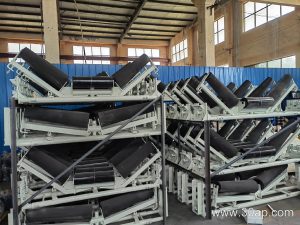
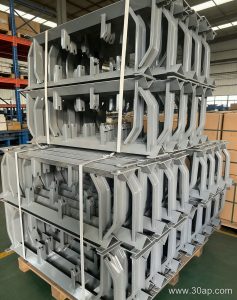
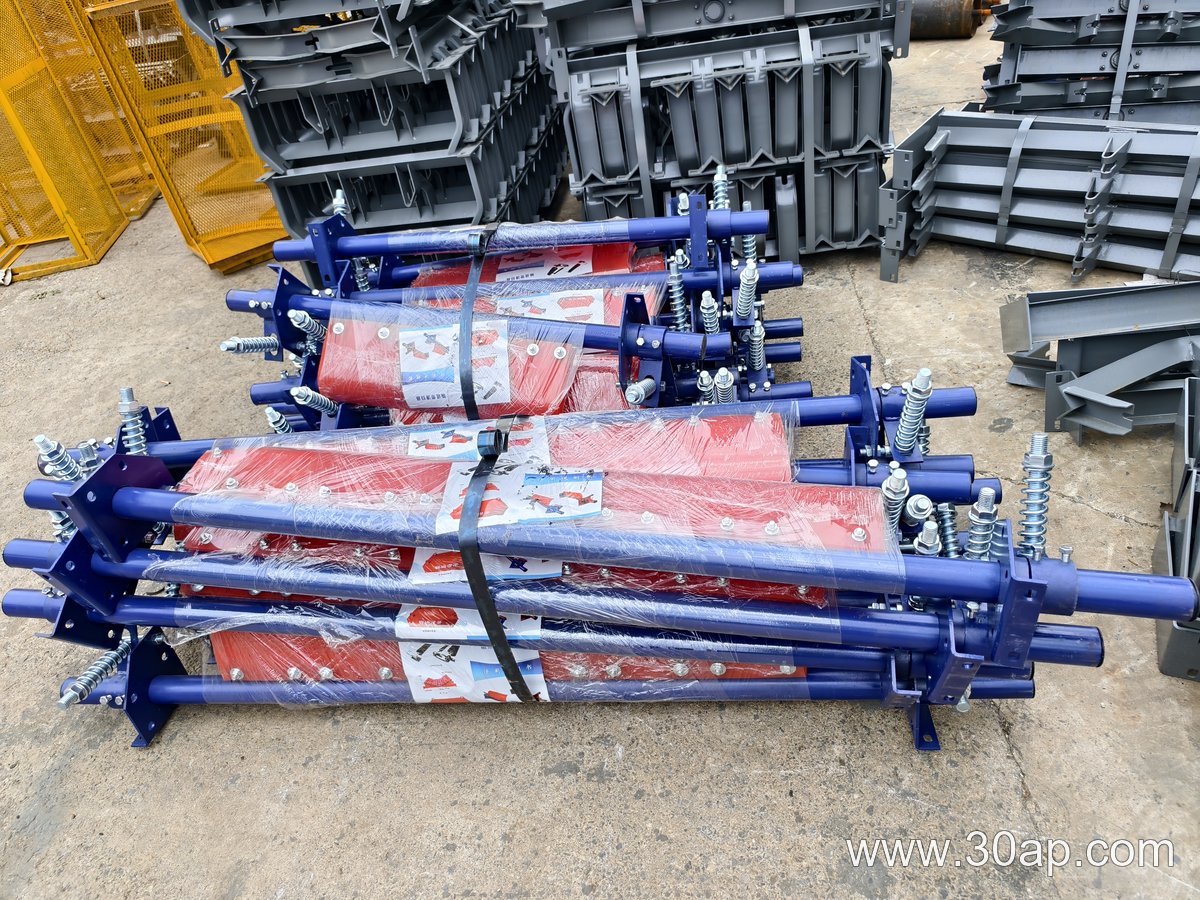
Assume a 900 mm belt carrying clinker at a hypothetical cement plant. We need to choose a conveyor bracket spacing along the carrying side. This is not a real project; values are illustrative only.
Assumptions and Method
- Idler load and belt weight estimated at 2.5 kN per bracket, hypothetical.
- Allowable bracket deflection set at 1 mm, a project-specific choice.
- Span calculated from simple beam deflection, then rounded to a practical module.
The result, 1.2 m spacing, suits a heavy-duty conveyor bracket with a bolted base. Verify with the frame supplier before ordering.
Preparing to Install a Conveyor Belt
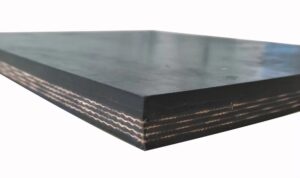
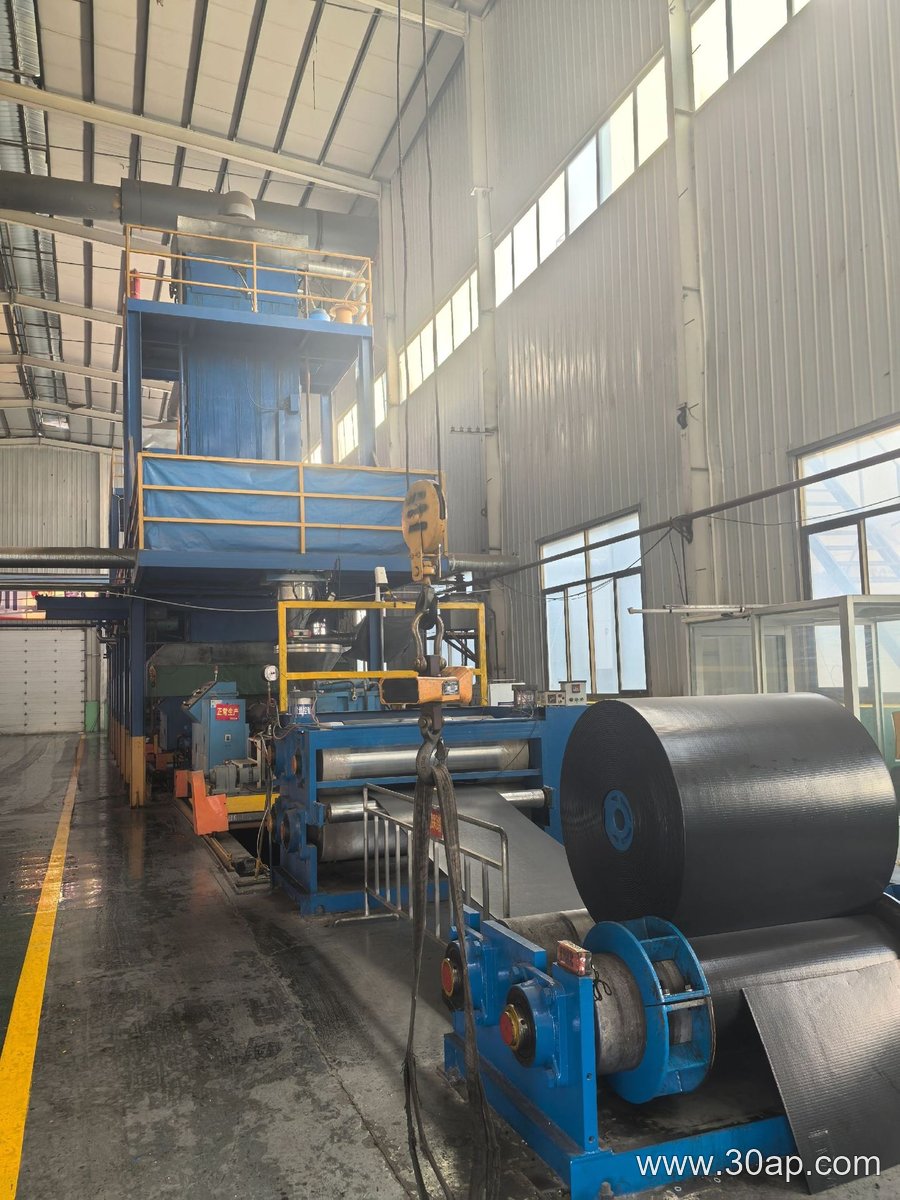
A common misconception is that a conveyor belt simply drops onto its pulleys and runs. In reality, poor preparation causes most tracking faults. Before mounting, verify that the structure, pulleys and idlers are square and level, and check that the belt’s stored condition matches the installation plan.
Mounting and Alignment
Pull the conveyor belt into position without dragging it over sharp edges. Clamp both ends, square them, and splice according to the manufacturer’s method. Alignment means centering the belt on the pulleys and adjusting take-up so tension is even across the width.
Commissioning Checks
- Run slowly and watch for drift at the head and tail.
- Check idler contact and skirt clearance.
- Confirm the belt does not rub on structure or chute walls.
In a cement plant, dust and heat make these checks more important, but the sequence stays the same.
Abrasion Resistance in a Wet Outdoor Idler Roller
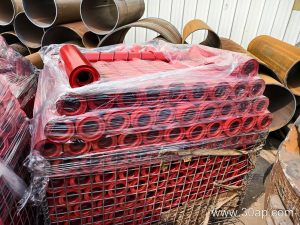
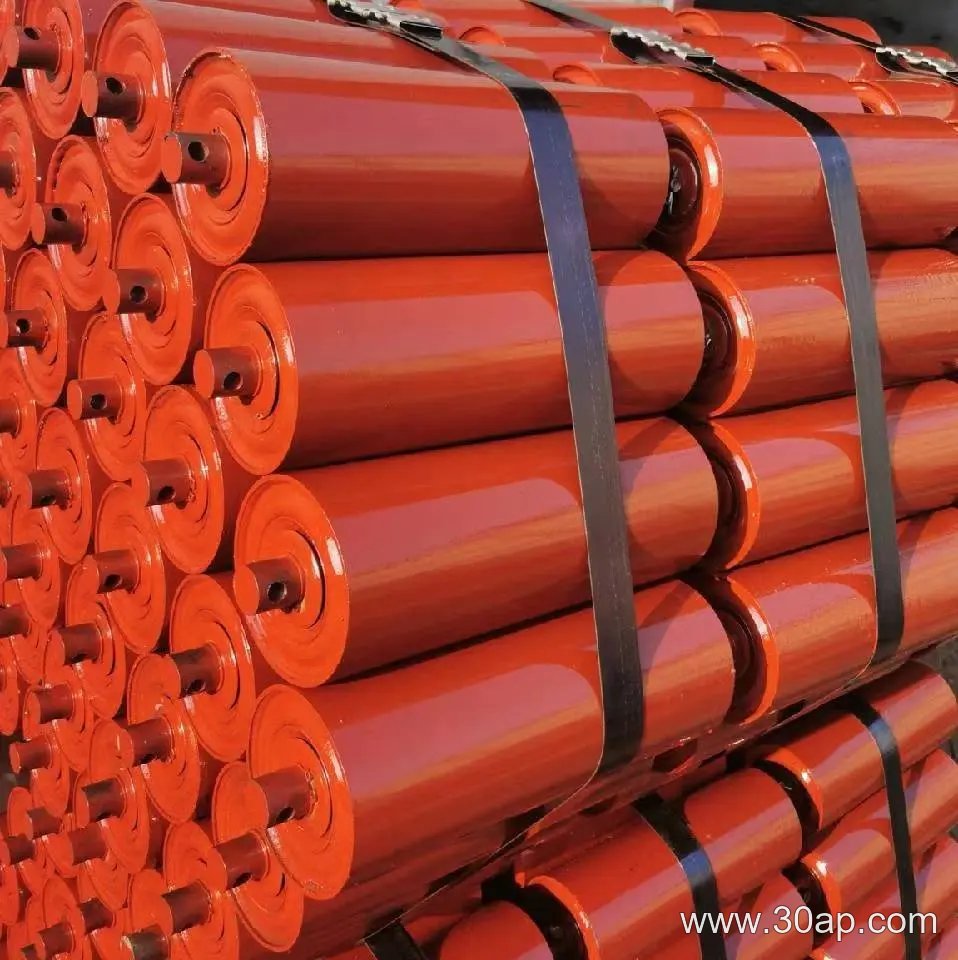
On a wet outdoor conveyor, an idler roller must shed grit and water while still turning freely. Abrasion resistance matters because slurry carries sharp fines into the shell and seal area, slowly wearing the surface and allowing belt sag.
Design Choices That Improve Wear Life
- Thicker shell wall at the contact zone resists grooving from abrasive fines.
- Hardened bearing housing faces reduce wear where grit enters.
- Seal geometry with a slinger path limits abrasive entry without excessive drag.
These are engineering trade-offs, not universal specifications. A heavier abrasion-resistant idler roller may add rotating mass and cost, so the duty cycle and belt speed should guide the final selection.
Which Conveyor Pulley Material Suits a Bulk Port Terminal?
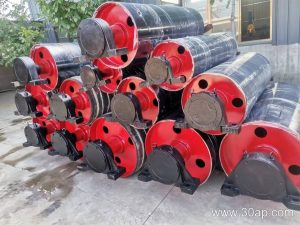
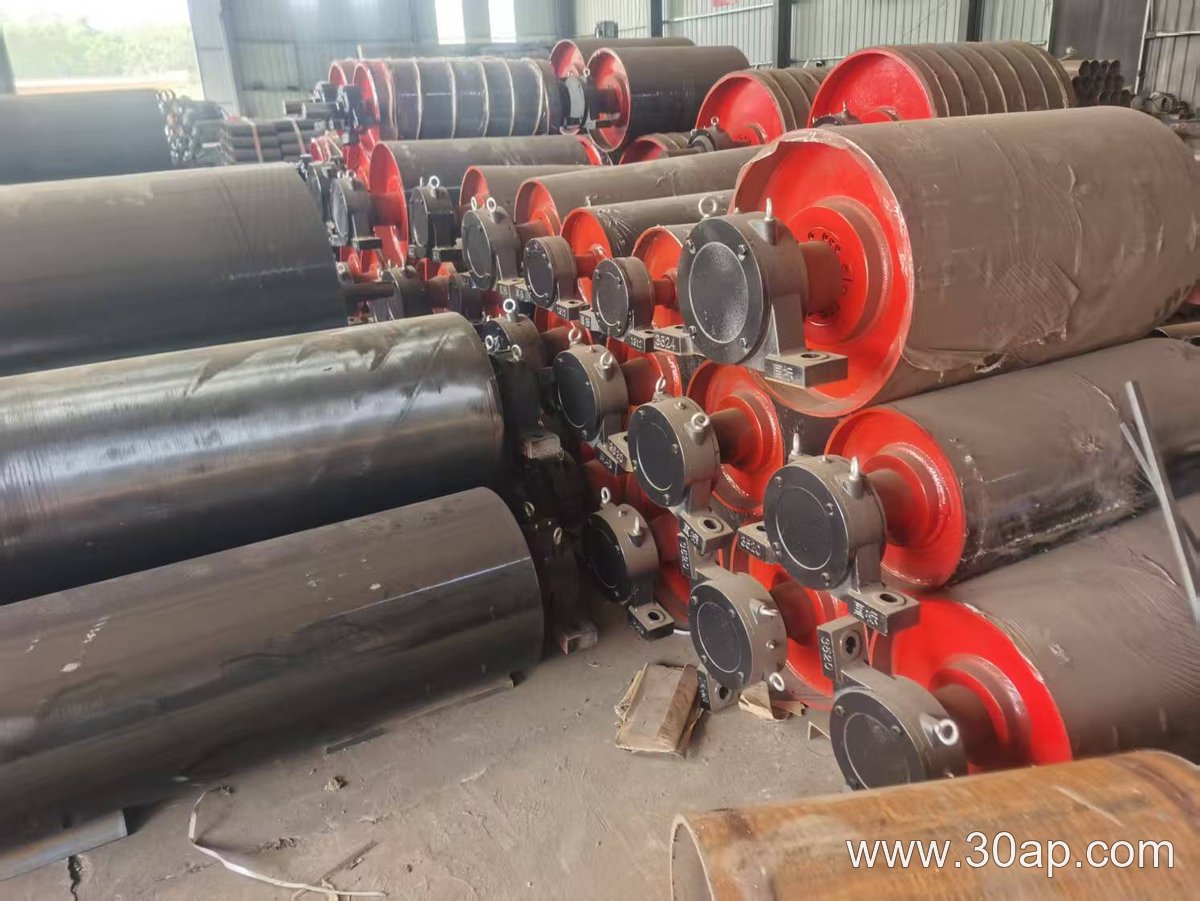
At a bulk-material port terminal, a conveyor pulley must resist salt spray, abrasive ore, and cyclic loads. The main material choices are carbon steel, stainless steel, and composite (FRP) shells. Each has distinct trade-offs.
Carbon Steel
Carbon steel is the default for conveyor pulley shells and shafts. It offers high strength at moderate cost, but requires protective coatings (e.g., epoxy or rubber lagging) to resist corrosion. Uncoated carbon steel in a marine terminal may corrode rapidly.
Stainless Steel
Stainless steel grades such as 304 or 316 provide superior corrosion resistance, especially against chlorides. However, they are more expensive, heavier, and can be more difficult to machine. Use stainless steel where washdown or salt exposure is constant and maintenance access is limited.
Composite Shells
Composite (FRP) conveyor pulley shells are lightweight and inherently corrosion-resistant. They reduce shaft load and resist chemical attack. Yet they offer lower stiffness and impact resistance than steel, so they suit lower-tension bend or take-up pulleys rather than high-torque drive pulleys.
Practical Trade-Offs
- Corrosion resistance: stainless > composite > coated carbon steel
- Strength & stiffness: carbon steel > stainless > composite
- Weight: composite < carbon steel < stainless
- Relative cost: stainless > composite ≈ carbon steel
Hypothetical example: For a 1,200 mm belt drive pulley in a salt-spray zone, a carbon steel shell with 316L stainless shaft and rubber lagging may balance cost and durability. For a washdown bend pulley, a composite shell could reduce weight and corrosion.