What a Lower Belt Tracker Does
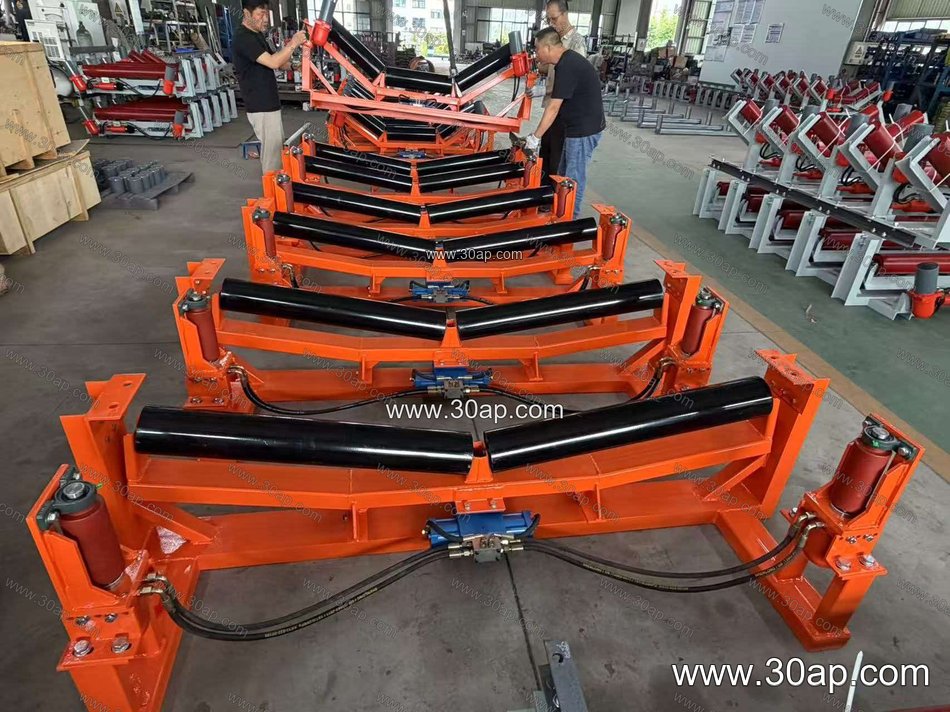
A lower belt tracker is a belt-centering device mounted on the return strand of a conveyor, after the material has been discharged. Its job is to correct or limit sideways drift of the conveyor belt before that drift reaches the tail pulley and turns into edge damage, spillage, or rubbing against the frame. In plants where the carry side already runs well, the return side is often where misalignment quietly develops, especially on long runs between the head and tail.
The device is sometimes called a return-side belt tracking idler or return belt trainer. These names describe the same product. It is not a drive pulley, tail pulley, or bend pulley, and it should not be specified as a substitute for any of them. Those pulleys transmit power, set belt path, and change direction; a tracker only influences belt position.
How the Unit Is Built
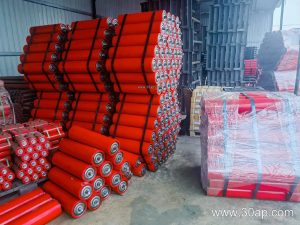
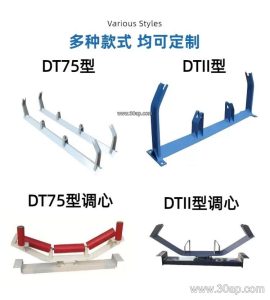
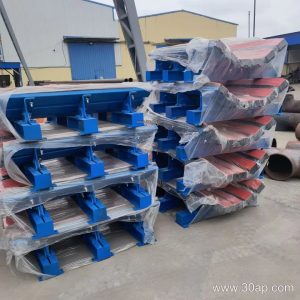
Most designs combine a pair of angled idler rollers with a pivoting frame, a central pivot shaft, and mounting brackets that bolt to the conveyor stringers. When the belt edge contacts a roller on one side, the frame swings slightly and the rollers steer the belt back toward the center. Some versions add a vertical guide roller at each edge, and heavier designs use reinforced bearings and a thicker shaft for dusty, high-load service.
- Frame: welded steel, painted or galvanized
- Rollers: steel or rubber-covered, often tapered or angled
- Pivot: central shaft with sealed bearings
- Mounting: bolt-on conveyor brackets matched to stringer spacing
- Options: edge guide rollers, wear liners, dust covers
The pivot and bearings are the parts that decide service life. In a cement plant or a quarry transfer point, fine grit and vibration work into every joint, so greasing points and seal quality deserve more attention than paint finish.
Where It Fits in the Conveyor
Typical locations include the return run behind the head pulley, before the tail pulley, and on long horizontal sections where the belt has room to wander. On a coal mining conveyor belt or an underground coal mining conveyor belt, the tracker must suit the flame retardant conveyor belt and the restricted frame space. At a power plant or steel plant, heat and dust may call for a different bearing arrangement than a port conveyor belt handling bulk material in open air.
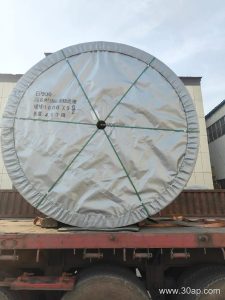
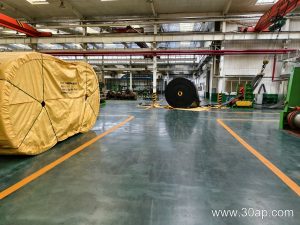
Return-side tracking matters most when the belt carries an EP conveyor belt or a multi-ply fabric core conveyor belt with slightly uneven splices, and when the load is discharged off-center. A steel cord conveyor belt behaves differently because it is stiffer, so the tracker should be selected with the belt construction in mind rather than by width alone.
Sizing and Selection Notes
Belt width is only the starting point. The roller length, shaft diameter, bracket hole spacing, and mounting height depend on the frame drawing, not on the belt width by itself. A 1000 mm or 1200 mm belt on one conveyor may use a very different tracker than the same width on another frame. Do not assume one belt width matches one pulley diameter, and do not derive a shaft size from belt width alone.
| Check item | Why it matters |
|---|---|
| Belt width and type | Roller length and contact area |
| Return strand height | Bracket and frame clearance |
| Belt speed and direction | Roller balance and steering response |
| Stringer spacing | Mounting hole pattern |
| Material and dust level | Bearing seals and lubrication plan |
| Belt condition | Splice quality and edge wear |
For a sand and gravel plant or a crusher conveyor belt line, a tracker that is too small for the impact and dust load will wear out quickly. For a food grade conveyor belt or a corrugated sidewall conveyor belt application, check that the tracker rollers and frame do not interfere with cleats or sidewalls.
Installation and Maintenance
Before fitting a lower belt tracker, stop the conveyor, isolate the energy source, and lock out startup. Check that the tail pulley is square, the idler roller frames are aligned, and the belt is not already damaged. A tracker cannot compensate for a crooked structure, a badly spliced belt, or material buildup on a return roller.
During operation, observe from a safe position only. Never touch moving rollers or the belt edge. After installation, record the belt position over several shifts, including empty and loaded running, because a tracker that looks correct when empty may behave differently under load. Keep the pivot free, inspect guide rollers for flat spots, and replace worn bearings before they seize.
Buyer Checklist
Ask for the frame drawing, roller dimensions, bearing type, and mounting hole layout. Confirm the return strand clearance and whether the conveyor is reversible. State the belt type, such as abrasion resistant conveyor belt, heat resistant conveyor belt, or flame retardant conveyor belt, along with width, speed, and tonnage. A clear drawing and accurate site data will prevent a return belt trainer from becoming another source of misalignment.