What a Ø127 Conveyor Idler Is
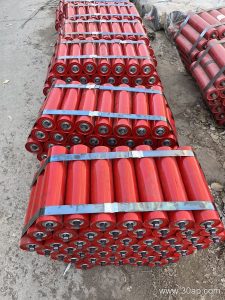
A Ø127 conveyor idler is a carrying roller with a nominal outside diameter of 127 mm, used to support and guide the conveyor belt along the load-carrying and return sides of a belt conveyor. The size sits in the middle-to-heavy range of idler diameters, which makes it a common choice on medium and large belt systems where the belt carries substantial material loads. In everyday workshop language, people call it a 127 idler roller or simply a Ø127 roller; both refer to the same product.
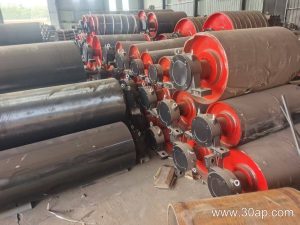
Because it is a rotating support rather than a drive component, the Ø127 conveyor idler should not be confused with a drive pulley, tail pulley or bend pulley. Those are conveyor pulleys that transmit motion or redirect the belt path, while the idler roller only carries the belt and its load. Mixing up these two families leads to wrong spare parts and poor maintenance planning.
Construction and Main Parts
A typical Ø127 conveyor idler consists of a steel tube shell, a shaft, bearing housings, bearings and a sealing arrangement. The shell is usually machined and balanced so it runs smoothly at operating speed. Seals are the detail that decides service life in dusty plants, because fine dust and water ingress are the usual causes of bearing failure.
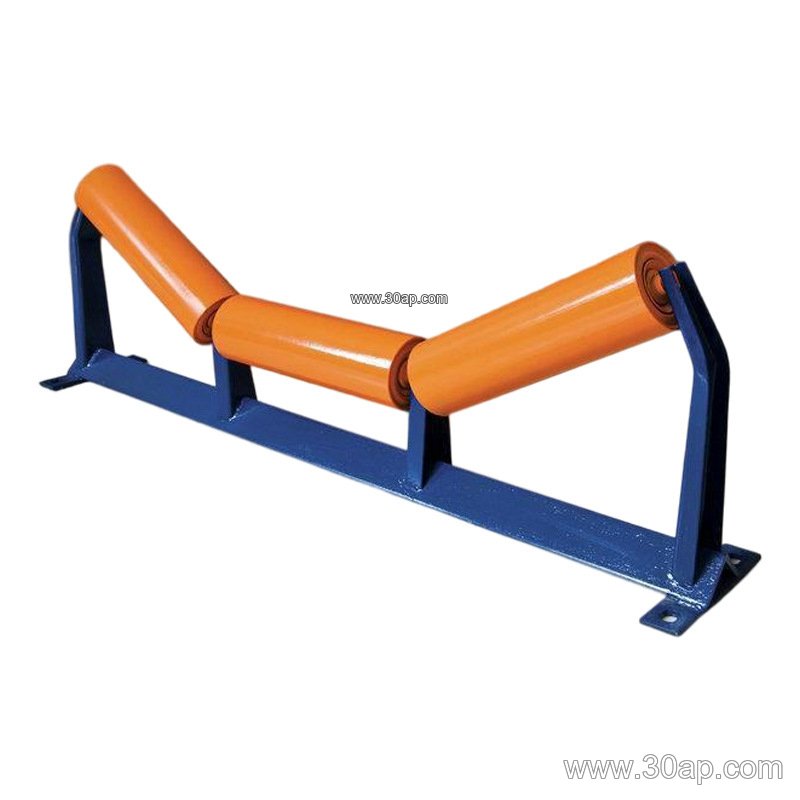
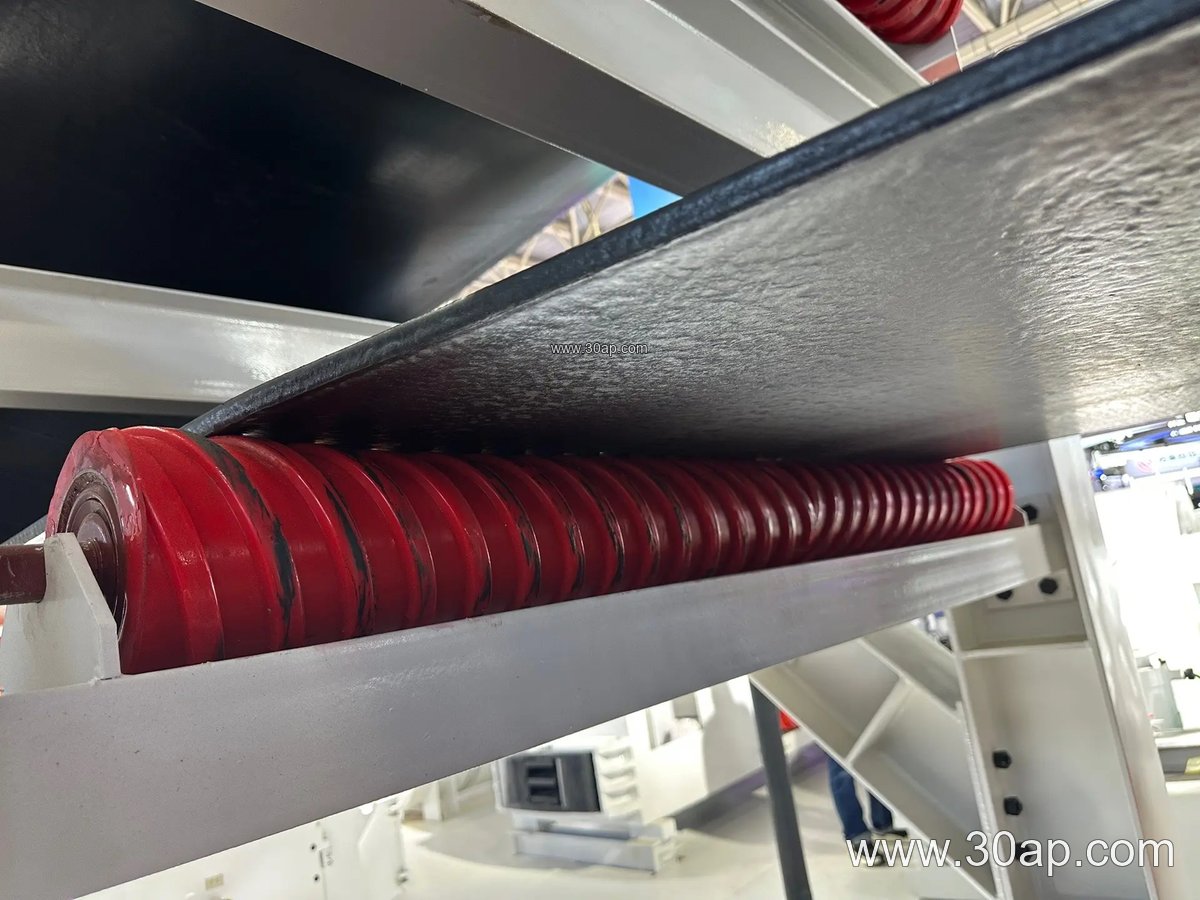
Surface forms vary with the duty. Plain steel shells suit general duties, while rubber rings or ceramic lagging can be added on impact or high-abrasion positions. Bearings commonly used in this diameter class include 6305, 6306, 6308 and 6310, but the exact bearing is selected by the idler manufacturer according to load rating and shaft design, not by diameter alone.
Where It Fits on the Conveyor
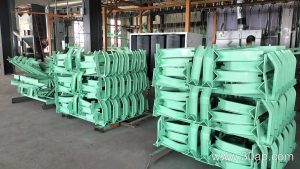
On the carrying side, Ø127 conveyor idlers are often arranged in three-roll troughing sets, with trough angles of 20, 30, 35 or 45 degrees depending on how much material containment the belt needs. Two-roll and single-roll arrangements also exist for special cases. On the return side, the same diameter may appear as a flat return roller or a V-type return roller.
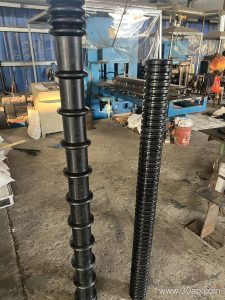
Impact zones below crushers and transfer chutes are a different matter. There, rubber-disc impact idlers are often preferred to absorb falling material energy, and a Ø127 plain idler would not be the first choice at the loading point itself. Similarly, self-aligning idlers with tapered or friction-tilting rolls are used to correct belt tracking, so they serve a different function from a standard carrying roller.
Typical Industries and Duty
The Ø127 conveyor idler appears across many bulk handling routes. In a limestone quarry or aggregate line, it carries crushed stone on long inclined conveyors. In a cement plant, it supports clinker and raw meal transport. In a coal washing plant or power station coal yard, it handles coal on wide belts, often paired with a flame retardant conveyor belt for safety. Iron ore and copper ore operations also use this diameter where the belt is wide and the load is heavy.
The matching belt often determines the idler layout. A heavy-duty mining conveyor belt, an abrasion resistant conveyor belt or a steel cord conveyor belt on a main haulage line will usually call for a robust idler set, while a short in-plant run may use a lighter fabric core conveyor belt with the same roller diameter. The idler and the belt should be selected together rather than as separate items.
Size Reference and Selection Notes
Roller length follows belt width, trough angle and roll arrangement. The values below are common examples for three-roll troughing sets and are not fixed pairings.
- B500: roll length about 200 mm
- B650: roll length about 250 mm
- B800: roll length about 315 mm
- B1000: roll length about 380 mm
- B1200: roll length about 465 mm
- B1400: roll length about 530 mm
- B1600: roll length about 600 mm
- B1800: roll length about 670 mm
- B2000: roll length about 750 mm
Side rolls and center rolls can differ in length, and the frame or conveyor bracket must match the chosen set. Buyers should confirm shaft diameter, bearing type, sealing class and surface form with the supplier, then check that the idler spacing suits the belt sag limit. A wider belt does not automatically mean one specific pulley diameter, and one belt width does not lock the conveyor to a single idler size.
Buyer Checklist
Before ordering, confirm the belt width, trough angle, roll arrangement, required roller diameter, shaft end design and environmental conditions such as dust, moisture, heat or oil. Ask for the seal construction and bearing designation, and check whether the idler is intended for carrying, return or transition duty. Spare parts should match the existing conveyor bracket and frame dimensions so replacement does not require modification. For abrasive or high-impact service, discuss whether rubber-covered or impact variants are more suitable than a standard steel-shell roller.