What a High-Friction Lagged Pulley Does
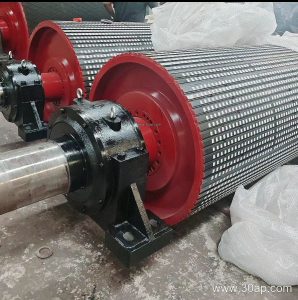
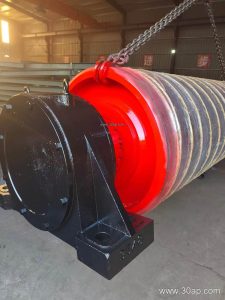
A high-friction lagged pulley is a conveyor pulley whose shell is covered with a rubber or ceramic lagging layer engineered to raise the coefficient of friction between the drum face and the conveyor belt. In practice, this is the same product many plants call a rubber lagged conveyor pulley or a friction-grip lagged drum. The lagging is not decoration: it changes how torque is transmitted, how much wrap the belt can hold before slipping, and how well the pulley sheds fines and moisture.
Drive pulleys are the usual home for this design, because the drive must transfer motor torque into the belt without slip. A tail pulley or bend pulley may also be lagged, but the duty is different and the friction requirement is lower. This article focuses on the high-friction lagged pulley as a drive-end component, with notes where other positions matter for comparison.
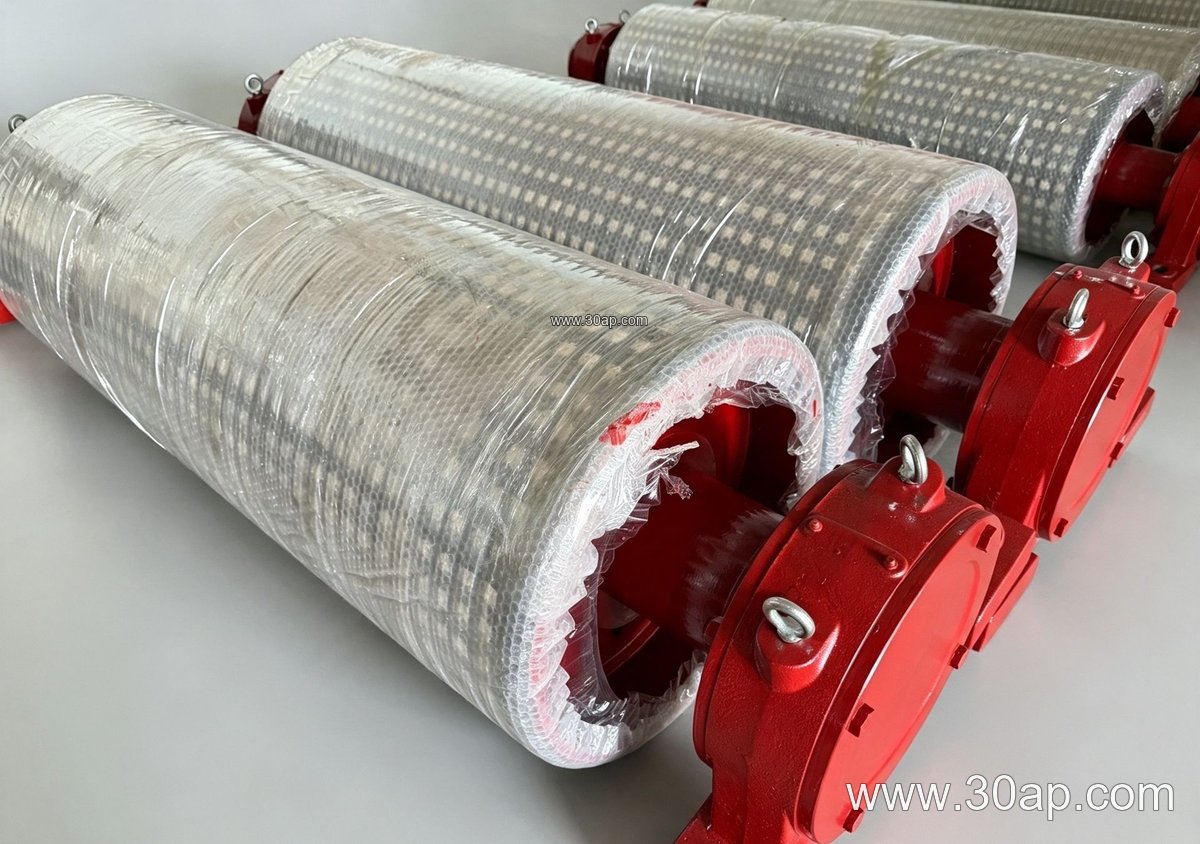
How the Lagging Is Built
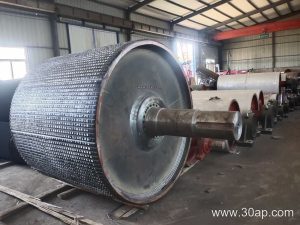
The core is a welded steel shell with machined end discs and a shaft sized by torque and bearing load, not by belt width alone. Lagging is applied in one of several ways:
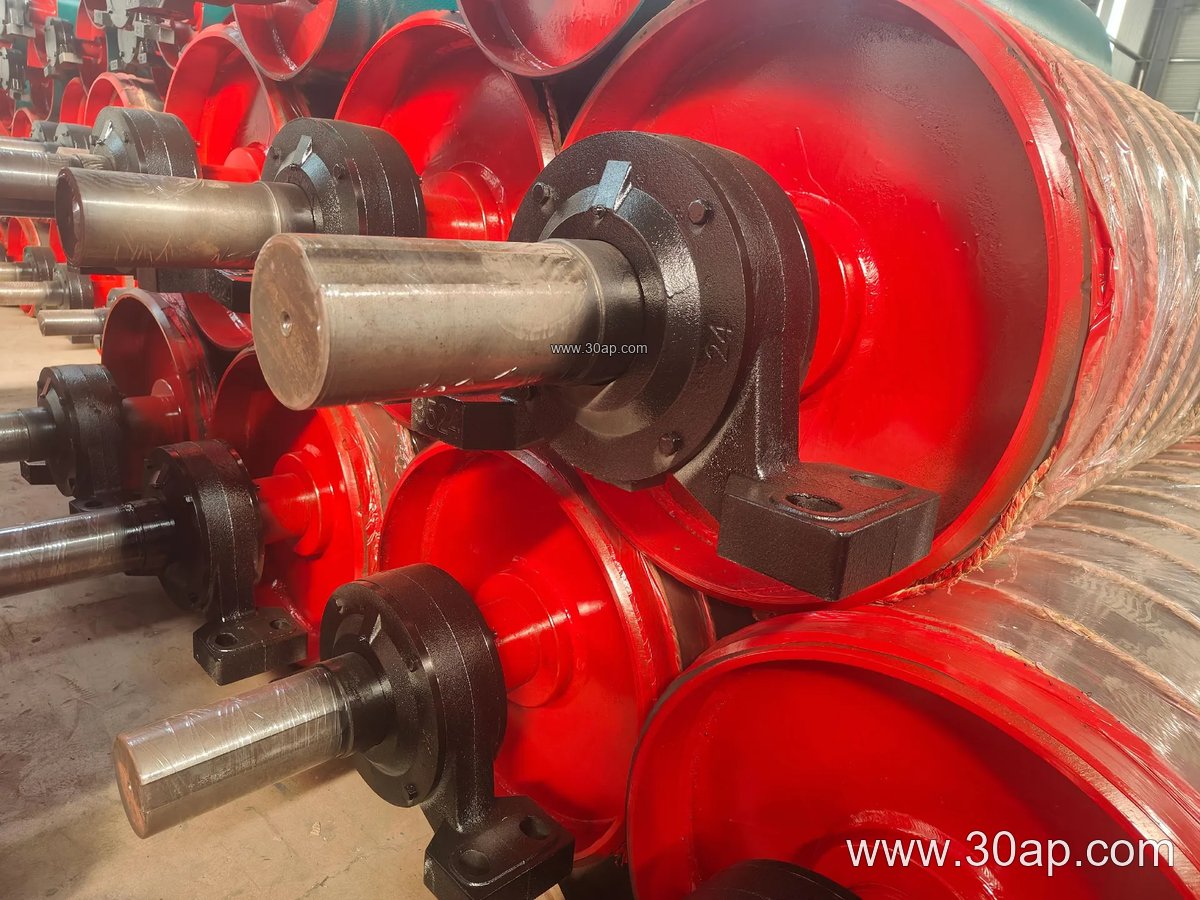
- Hot-vulcanized rubber — bonded under heat and pressure for heavy-duty grip and long wear life.
- Cold-bonded rubber — a practical option for replacements and moderate duty.
- Diamond or herringbone groove patterns — grooves channel water and fines away from the contact patch.
- Ceramic lagging — embedded tiles for high abrasion and wet, gritty service.
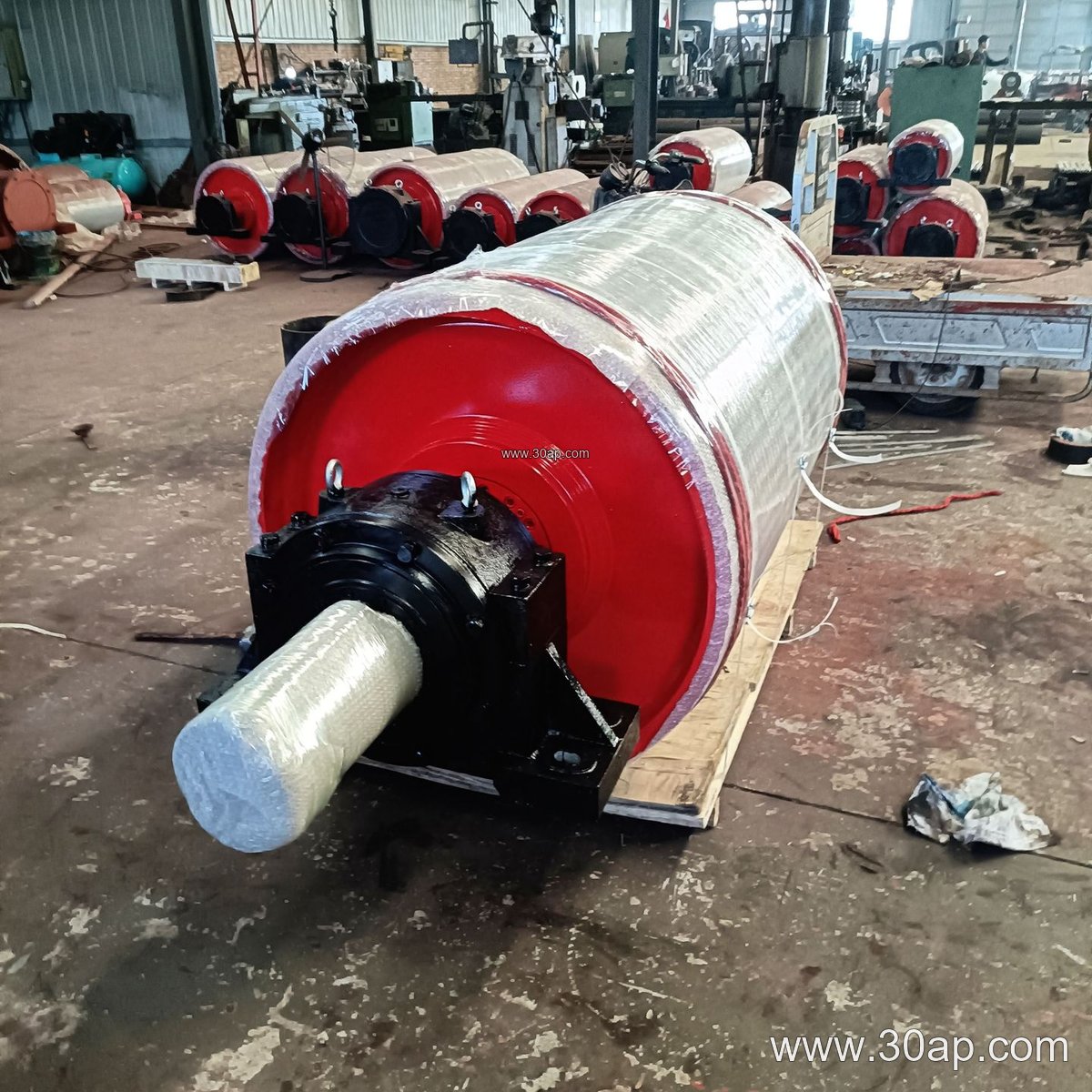
Common lagging thicknesses are 8, 10, 12, 15, and 20 mm. Thicker lagging suits larger diameters and higher tension; the exact figure should follow the pulley manufacturer’s design. Shell face width is normally a little wider than the belt, for example B800 with roughly 950 mm face, B1000 with about 1150 mm, and B1200 with about 1400 mm.
Where It Fits in the Plant
In a quarry or aggregate line, a high-friction lagged pulley on the head drive keeps a heavy Abrasion Resistant Conveyor Belt moving under wet, dusty conditions. In a coal preparation plant or power station coal yard, the same pulley type is often specified together with a Flame Retardant Conveyor Belt and a Mining Conveyor Belt to reduce slip on inclined sections. Cement plants handling clinker and limestone, iron ore and copper ore concentrators, and port bulk terminals all rely on lagged drive drums where starting torque is high and belt tension is significant.
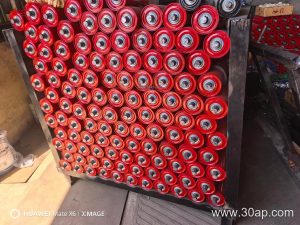
The pulley works as part of a system: the conveyor belt, idler roller sets, conveyor bracket frames, and the take-up all influence whether the lagging performs as intended. A lagged drum cannot compensate for poor take-up tension or a badly tracked belt.
Matching Pulley to Belt and Duty
Buyers should think in combinations rather than single numbers. A B800 × Ø500 drive pulley with 10 mm diamond lagging is a common arrangement, and B1200 × Ø1000 with 12–15 mm lagging appears on larger drives. There is no rule that one belt width matches only one diameter; the diameter follows wrap angle, belt speed, torque, and bearing selection. Shaft diameter is likewise calculated from load — typical values such as Ø80, Ø100, Ø120, or Ø160 should be confirmed against the drive design.
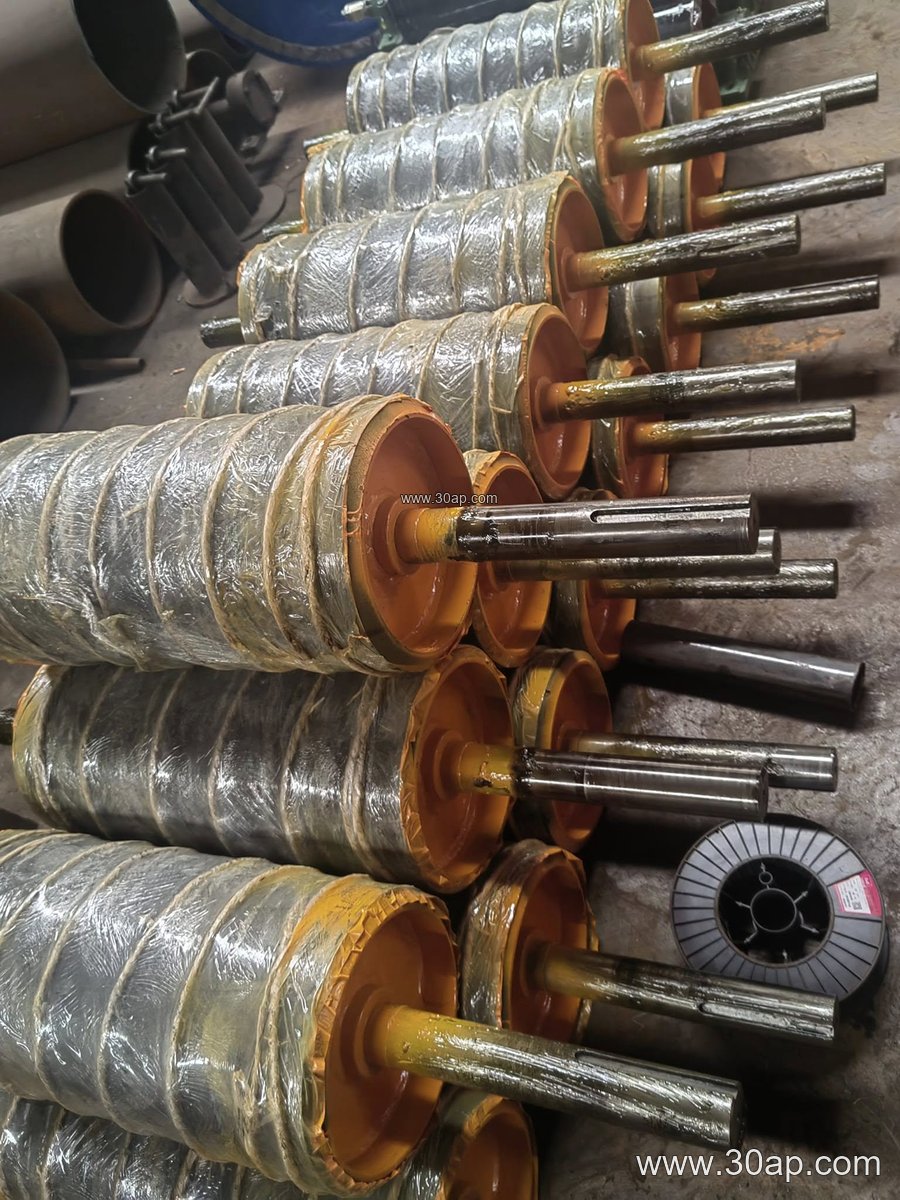
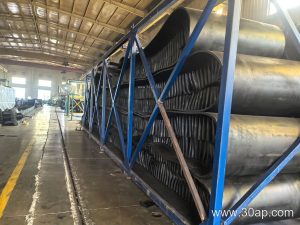
Belt construction matters too. An EP Conveyor Belt or Multi-Ply Fabric Core Conveyor Belt needs adequate tension to develop friction; a Steel Cord Conveyor Belt may need a larger drum diameter to limit bending stress in the cords. Where the belt carries hot material, a Heat Resistant Conveyor Belt paired with suitable lagging compound avoids premature breakdown of the rubber cover.
Buyer Checklist
- Confirm position: drive, tail, take-up, or bend — each has a different friction and wear profile.
- State belt width, belt type, and maximum operating tension, not just the drum size.
- Choose lagging pattern and thickness for the material: plain for clean dry service, grooved for wet or dusty conditions, ceramic for severe abrasion.
- Check that the pulley face width and shaft diameter suit the frame and bearing housings.
- Ask how the lagging is bonded and whether it can be replaced in the field.
- Plan inspection: worn or glazed lagging reduces grip long before the pulley fails.
For more on matched conveyor components, see the pulley and drum range at yonghangconveyor.com, and compare belt options such as EP200 Conveyor Belt or Flame Retardant Conveyor Belt before finalizing the drive specification.