What a Three-Roll Idler Bracket Does on a Conveyor
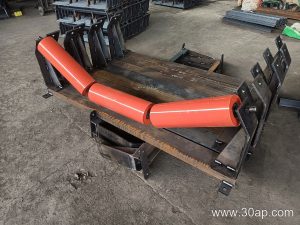
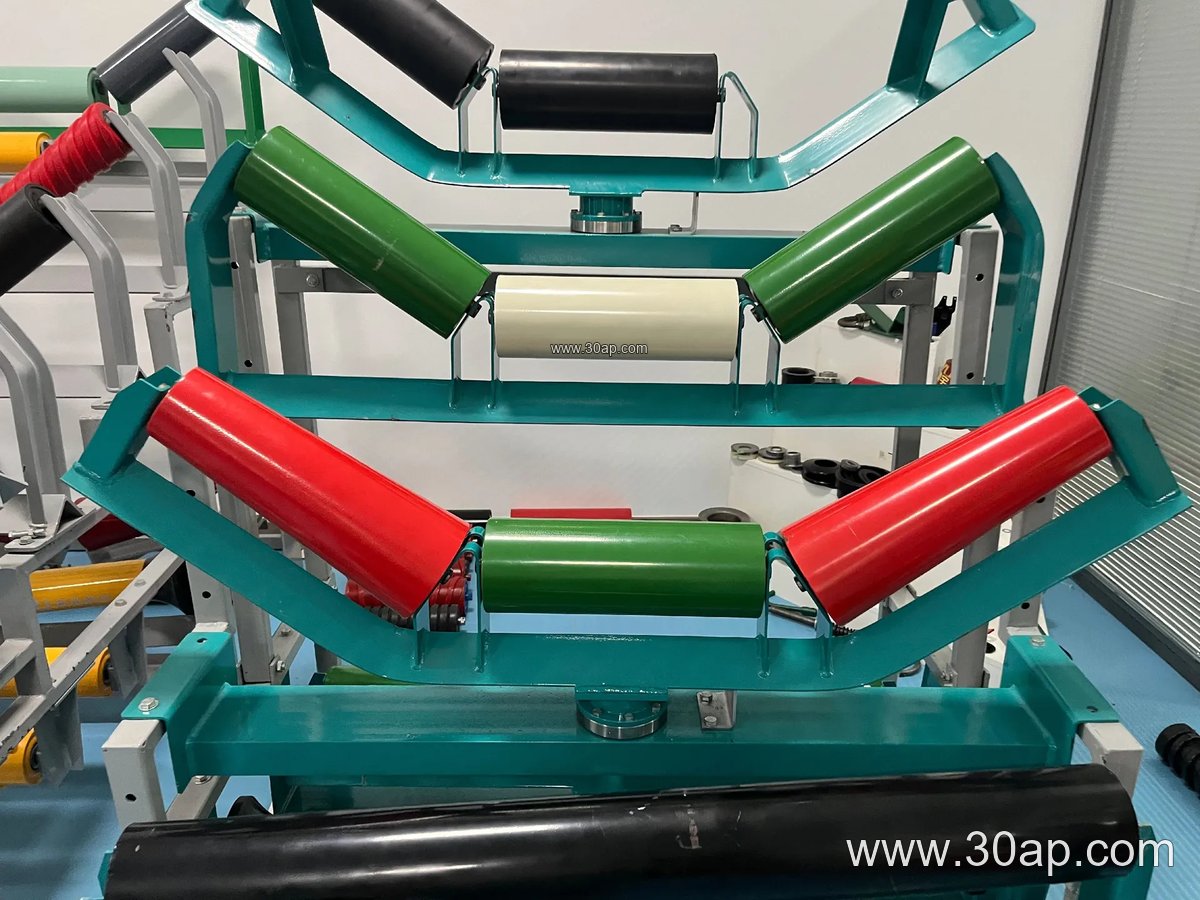
A three-roll idler bracket is the support frame that holds three idler rollers in a trough shape so a conveyor belt can carry bulk material without spilling. The center roll sits flat, while the two side rolls angle upward. That angled arrangement is what forms the trough and keeps loads like crushed stone, coal, or clinker centered on the belt. In a quarry or a cement plant, this bracket is one of the most common steel components along the carrying side of the conveyor.
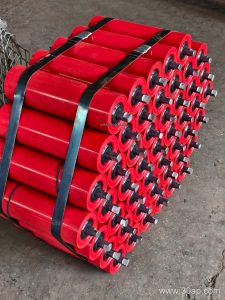
The same product is also called a troughing idler bracket or troughing frame. It is not a drive pulley, a tail pulley, or a bend pulley — those are separate components that transmit motion, tension the belt, or change its direction. The bracket simply positions and supports the idler rollers.
How the Bracket Is Built
Most three-roll idler brackets are fabricated from angle steel, channel steel, or folded steel plate. The two side arms are usually welded or bolted at a fixed trough angle, though adjustable designs allow the angle to be changed. The bracket includes mounting slots or holes so the idler roller shafts can be seated and secured. Crossbeam length and hole spacing are normally determined by belt width, trough angle, and roller diameter rather than being fixed numbers.
- Fixed troughing bracket — side arms welded at one angle
- Adjustable troughing bracket — angle can be changed across common settings
- Impact bracket — reinforced frame used under loading points
- Transition bracket — used where the belt moves from flat to trough
The bracket must match the roller shaft diameter and the belt width. A B800 frame with 35-degree arms and Ø108 rollers is a typical combination, and a B1200 frame with 45-degree arms and Ø133 rollers is another. These are examples only; the correct match comes from the conveyor design, not from a fixed rule.
Trough Angle and Roller Choice
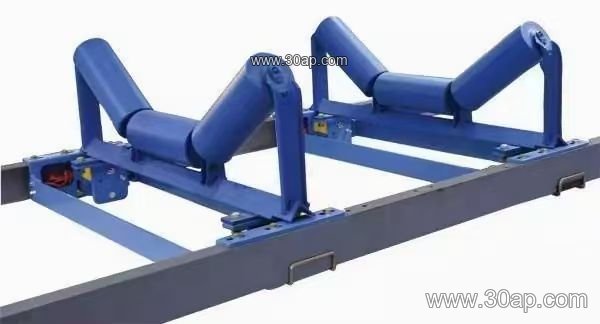
The trough angle affects how deeply the belt sits in the frame and how much material it can hold. Common angles are 20, 30, 35, and 45 degrees. A 30-degree or 35-degree bracket is widely used on EP conveyor belt lines handling aggregate, while deeper 45-degree frames suit high-capacity loading. The roller diameter should be selected together with belt width and load. A B650 frame may use Ø89 rollers, while a B1400 or B1600 frame often uses Ø133 or Ø159 rollers. Belt width and roller diameter are separate decisions, and one width does not force a single diameter.
Where Three-Roll Idler Brackets Are Used
These brackets appear wherever a troughed belt carries bulk material. In a coal washing plant or power station coal yard, they support the carrying run on a flame retardant conveyor belt. In a limestone quarry or sand and gravel line, they sit under an abrasion resistant conveyor belt moving crushed rock. In a cement plant, they carry clinker and raw meal on heat resistant conveyor belt sections where temperatures are elevated. Port terminals and bulk material conveyor belt systems also rely on them for ship loading and stockyard transfer.
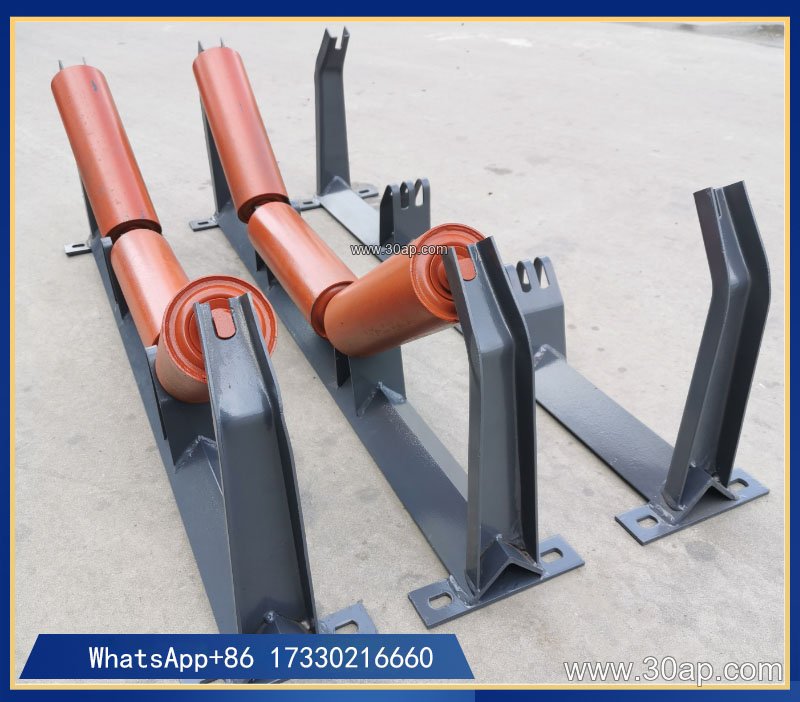
Underground coal mining conveyor belt installations use similar frames, often with anti-static conveyor belt and fire resistant conveyor belt to meet site rules. The bracket itself is selected for corrosion protection and structural strength, since dust, moisture, and heavy loads all affect service life.
Buyer Checklist Before Ordering
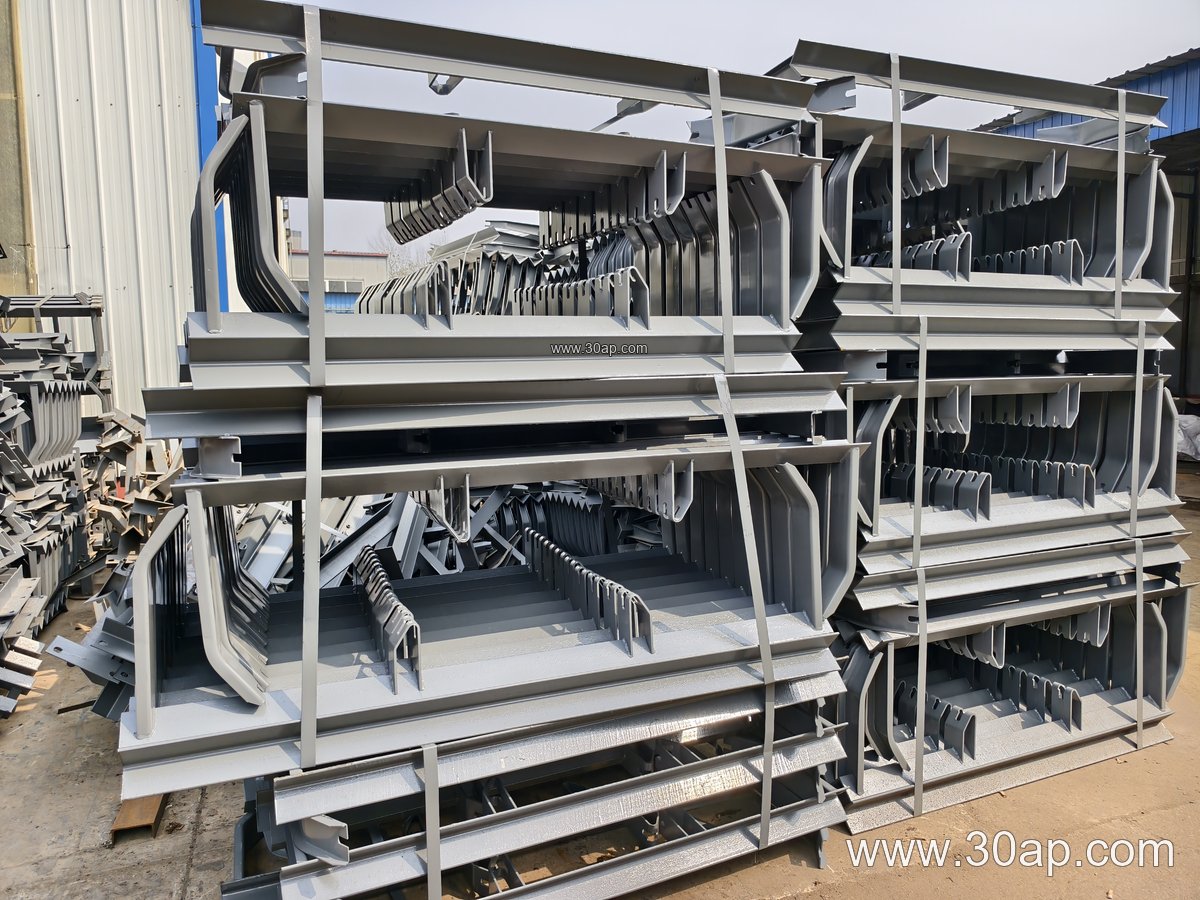
Confirm the belt width, trough angle, roller diameter, and mounting hole spacing first. Check whether the conveyor needs a fixed or adjustable frame, and whether an impact or transition bracket is required near the feed point. Ask about steel thickness, welding quality, and surface treatment such as painting or galvanizing. For high-abrasion duty, a heavy-duty mining conveyor belt line may need a thicker frame and stronger crossbeam.
Also verify that the bracket aligns with the idler roller shaft ends and that the frame height matches the existing conveyor stringer. If the conveyor uses a steel cord conveyor belt or a high strength conveyor belt, the frame load rating should reflect the belt tension and material weight. Small mismatches in hole spacing can cause roller misalignment and belt tracking problems.
Installation and Maintenance Notes
Mount the bracket squarely on the conveyor stringer and tighten fasteners evenly. Check that all three rollers sit in the frame without rocking, and confirm the trough angle matches the adjacent frames so the belt does not twist. During routine inspection, look for bent side arms, loose bolts, worn mounting holes, and corrosion. Replacing a damaged three-roll idler bracket early helps prevent roller misalignment and premature wear on the conveyor belt.
Keep spare frames on hand for high-wear sections, especially at loading points and transfer chutes. A properly matched bracket keeps the idler roller in position and lets the belt run smoothly through the whole conveyor line.