What a Three-Roll Idler Bracket Does
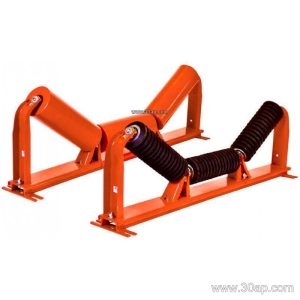
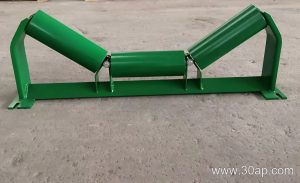
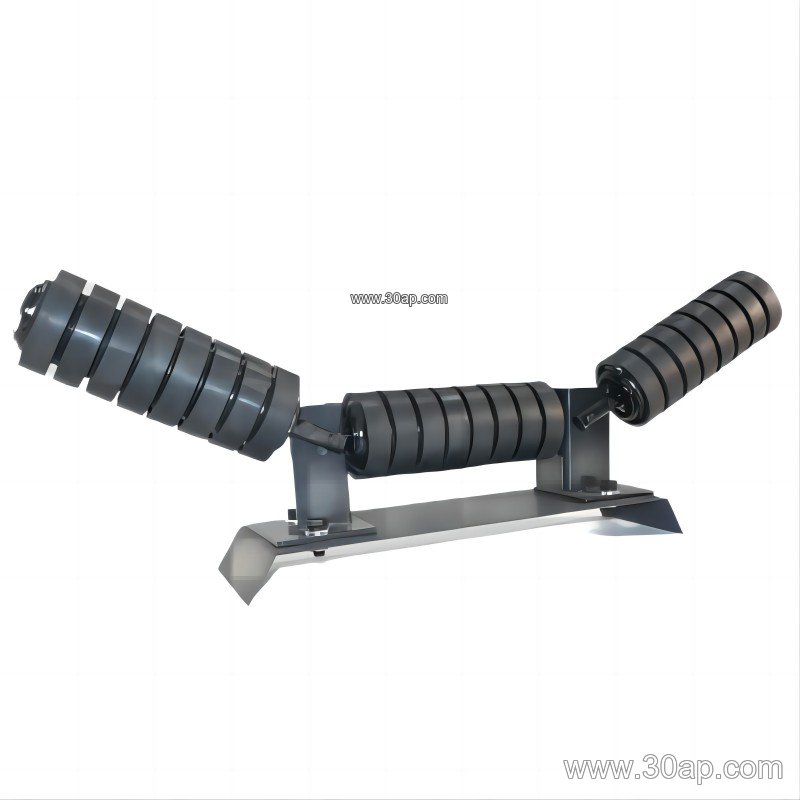
A three-roll idler bracket, often called a troughing idler bracket, holds the three rolls that give a conveyor belt its trough shape. The two side rolls angle upward while the center roll sits level, so bulk material stays centered on the belt. This bracket is a structural part, not a rotating part, but its alignment and strength directly affect how well the idler roller and conveyor belt work together. In quarry, coal washing, and cement plant service, a well-built bracket keeps the belt tracking straight and reduces spillage at transfer points.
Construction and Mounting
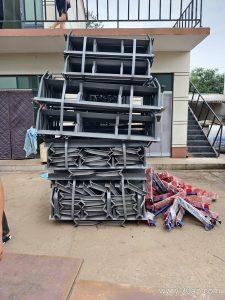
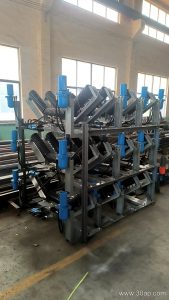
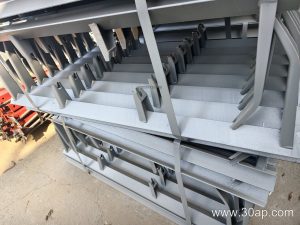
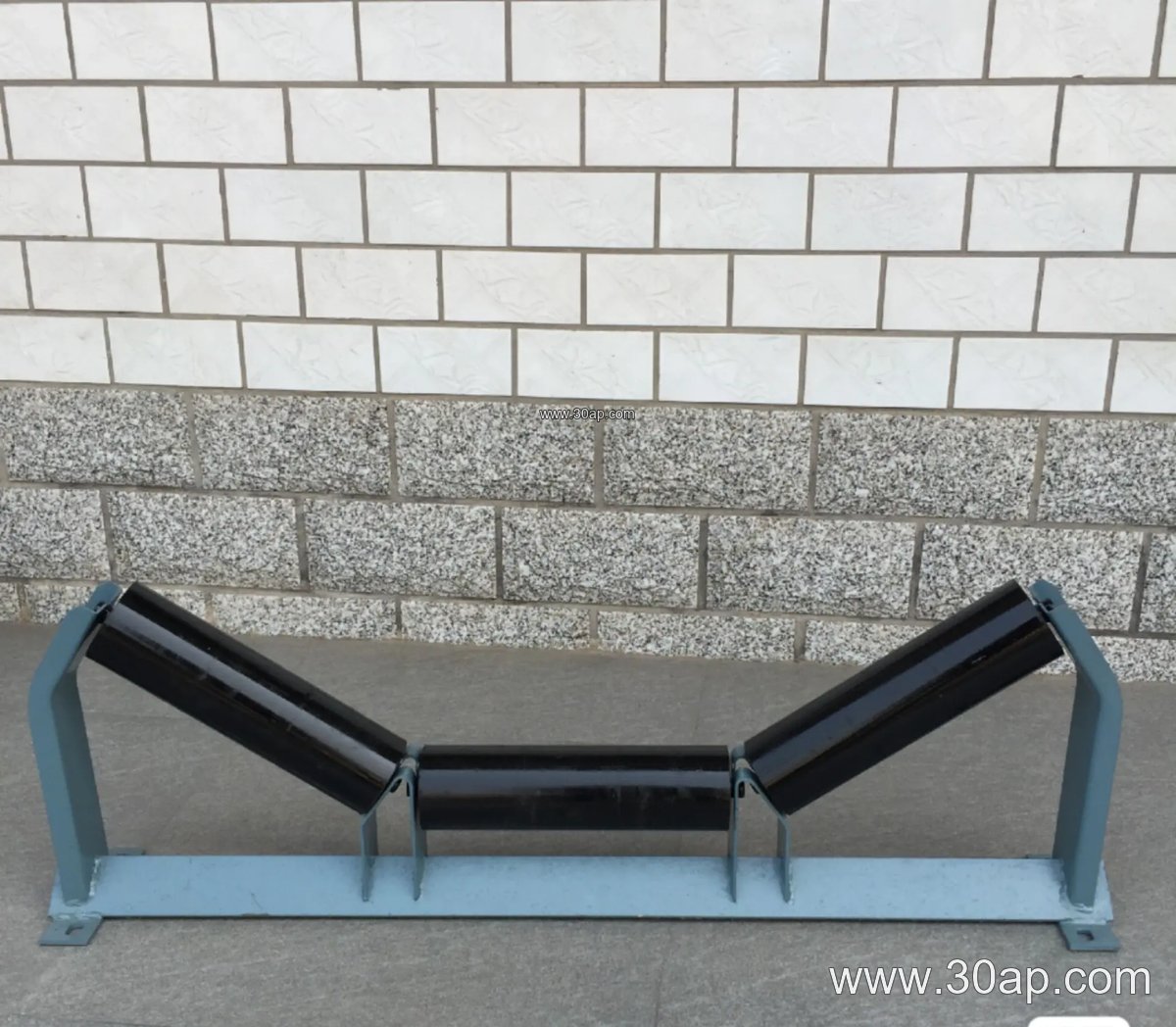
Most three-roll idler brackets are fabricated from angle steel, channel steel, or folded steel plate. The side arms carry slots or bolt holes that set the trough angle, and the base bolts to the conveyor frame stringer. Welded gussets add stiffness where the side arms meet the base. The bracket does not set belt width by itself; the crossbeam length and mounting hole spacing are usually matched to the frame design for a given belt width. A typical arrangement might be B800 with a 35 degree trough angle and Ø108 idler rollers, but other combinations are common depending on load and material.
Trough Angle and Roll Diameter Choices
Trough angle affects material containment and belt stress. Common angles are 20, 30, 35, and 45 degrees. A 20 degree bracket suits flatter belts and light material, while 45 degree brackets are often chosen for high-capacity stockpiling or transfer points where spillage control matters. Adjustable brackets let maintenance crews change the angle between these values without replacing the frame. Roll diameter should follow the belt and load, not a fixed rule. Common idler roller diameters include Ø89, Ø108, Ø133, Ø159, and Ø194. A heavy-duty mining conveyor belt with a thick cover may use larger rolls, while a smaller aggregate conveyor belt may use Ø89 or Ø108.
Where It Fits in the Conveyor Line
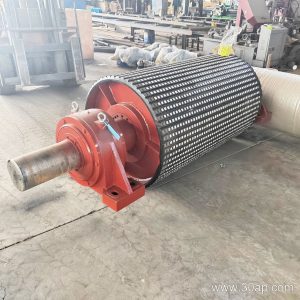
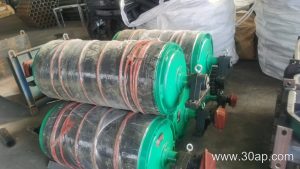
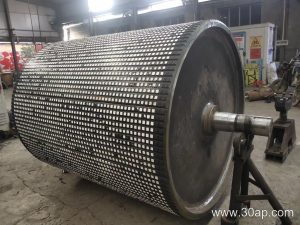
Three-roll idler brackets are used on the carrying side of a conveyor, typically from the tail loading zone to the head discharge. They are not the same as a conveyor pulley, which drives or redirects the belt. In a coal mining conveyor system, troughing brackets support the loaded belt through long runs, while return brackets handle the empty side. In a power plant coal handling line, the same bracket style may appear alongside a flame retardant conveyor belt or a heat resistant conveyor belt, depending on the material and environment. For steep inclines, a chevron conveyor belt or corrugated sidewall conveyor belt may be used, but the bracket still sets the trough profile for the carrying rolls.
Buyer Checklist
Before ordering, confirm the belt width, frame stringer spacing, trough angle, and roll diameter. Check whether the bracket is fixed or adjustable, and whether the mounting holes match the existing frame. Material and finish matter in wet or corrosive service, such as a wash plant or a fertilizer handling line. Ask for dimensional drawings that show the crossbeam length and hole spacing, because these vary with belt width and trough angle. A bracket that fits a B650 frame will not fit a B1200 frame without different crossbeam dimensions. Also consider the conveyor belt type in service: an abrasion resistant conveyor belt in a crusher line may call for a stiffer bracket than a food grade conveyor belt in a clean plant.
Maintenance and Replacement Notes
Inspect brackets for bent side arms, worn bolt holes, and loose welds during scheduled shutdowns. A misaligned three-roll idler bracket can cause the belt to run off center, which wears the idler roller and the belt edge. When replacing a bracket, keep the same trough angle and roll diameter unless the conveyor design is being changed. In dusty operations such as a limestone mine or a sand making plant, clean the bracket area so material buildup does not change the trough shape. Spare brackets should be stored by belt width and angle to avoid mix-ups during maintenance.