What a Three-Roll Idler Bracket Does
A three-roll idler bracket is the steel support assembly that carries the three-roll troughing idler set on the carrying side of a belt conveyor. It holds the center roll level and the two side rolls at an angle, forming the trough that keeps bulk material centered on the conveyor belt. In everyday plant language this part is also called a troughing idler frame or a three-roll idler support, and both names refer to the same item.
The bracket is not a wear part in the way a roller shell is, but it decides how well the idlers sit, how evenly the belt is supported, and how quickly a roller can be changed during maintenance. On a quarry conveyor or a power plant coal handling line, a poorly aligned frame shows up as belt edge wear, spillage, and short roller life.
How the Frame Is Built
Most three-roll idler brackets are fabricated from angle steel, channel steel, or folded steel plate. The two side arms are angled to match the trough angle, and the center seat is welded or bolted between them. Slotted or drilled mounting holes allow the idler shafts to be fixed at the correct spacing for the belt width and roll diameter.
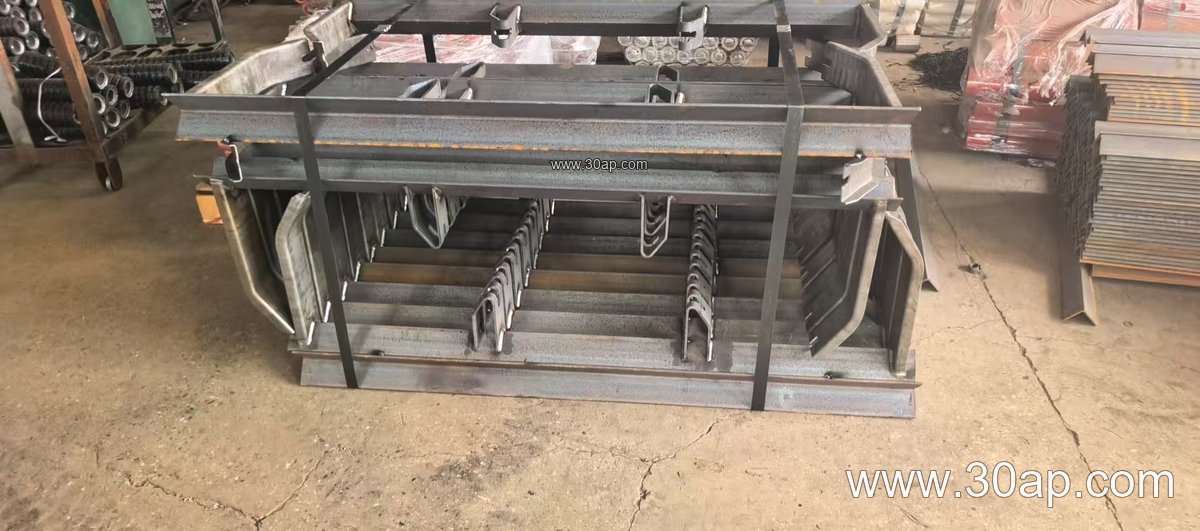
Common workshop practice includes:
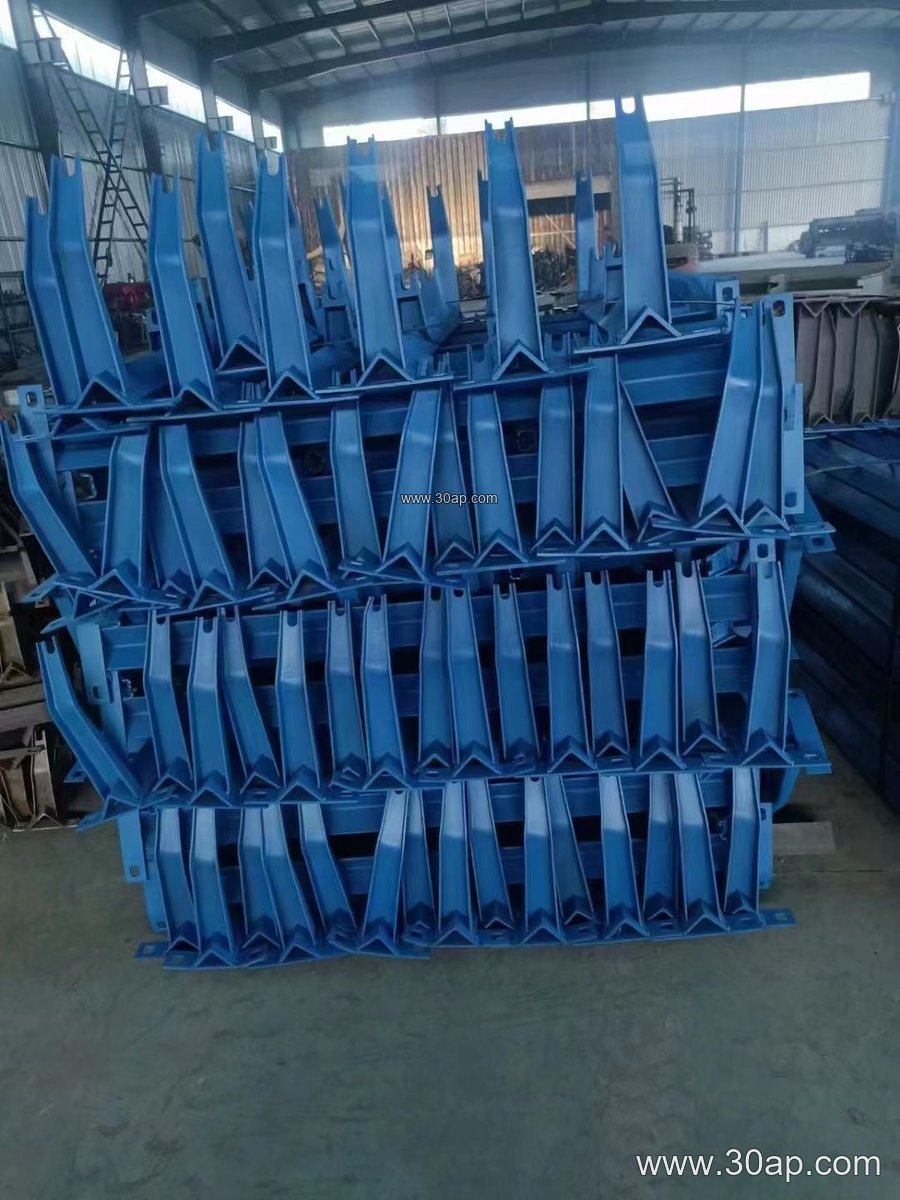
- Welded frame with drilled idler seats for fixed trough angles.
- Bolted or slotted arms for adjustable trough angles.
- Reinforced center sections for impact zones under crusher discharge.
- Hot-dip galvanized or painted finish for wet and dusty service.
Because installation hole spacing and crossbeam length change with belt width and trough angle, a bracket is normally ordered against the conveyor design rather than from a single universal dimension.
Trough Angle and Roll Diameter Selection
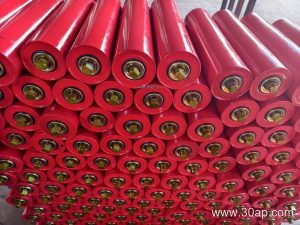
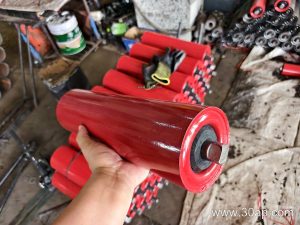
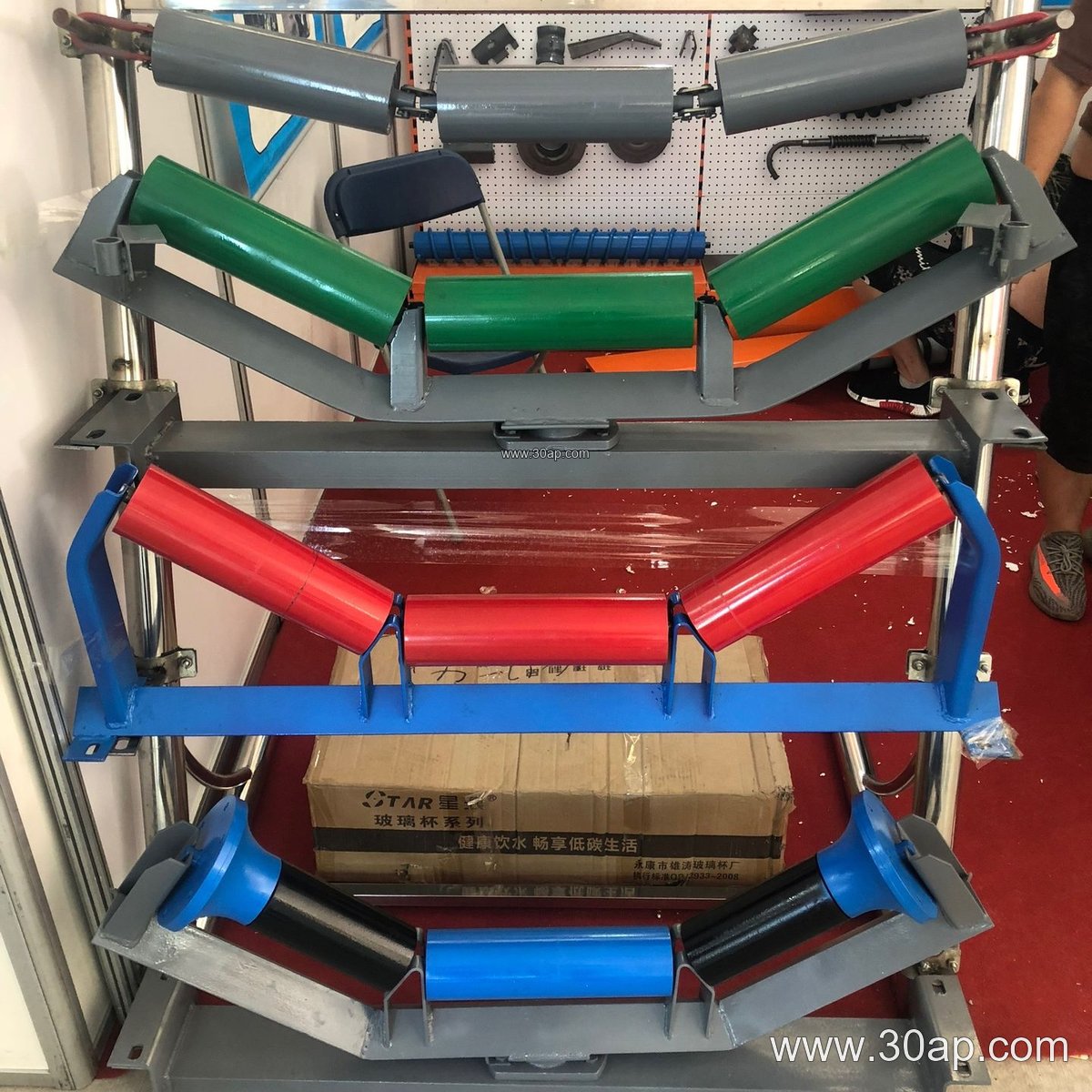
The trough angle and the idler roller diameter work together with the belt width. A wider belt carrying coarse rock usually needs a deeper trough to prevent material from rolling back, while a flatter trough suits fine material and lower capacities. Typical reference combinations include B800 with a 35 degree trough and Ø108 rolls, or B1200 with a 45 degree trough and Ø133 rolls, but these are examples only. The correct set depends on belt width, material lump size, capacity, and the conveyor designer’s calculation.
| Reference Item | Common Range |
|---|---|
| Belt width | B500, B650, B800, B1000, B1200, B1400, B1600, B1800, B2000 |
| Trough angle | 20, 30, 35, 45 degrees; adjustable frames cover several of these |
| Idler diameter | Ø89, Ø108, Ø133, Ø159, Ø194 |
| Frame material | Angle steel, channel steel, folded plate |
Forward-tilted frames, usually around 1.5 to 2 degrees, are sometimes used on the carrying side to help the belt self-center. They are a separate design choice and should not be confused with a V-return bracket on the return strand.
Where These Brackets Are Used
Three-roll idler brackets appear wherever a troughed belt runs: limestone and iron ore mines, aggregate crushing and screening lines, cement plants, and coal yards feeding a boiler. In a sand and gravel plant, the frames under the crusher discharge are often the first to need attention because of impact and dust. In a grain silo or fertilizer warehouse, a lighter frame with smooth edges is preferred to protect the belt cover.
The bracket works as part of a system. The conveyor belt rides on the idler rollers, the rollers sit in the frame, and the whole assembly is tied to the conveyor stringer. Matching a heavy-duty mining conveyor belt with properly rated brackets and rolls reduces vibration and keeps the belt tracking straight over long spans. Buyers sourcing through a supplier such as conveyorbeltsonline.com often order frames together with rolls and belts so the seat dimensions match.
Fixed or Adjustable, and What to Check Before Ordering
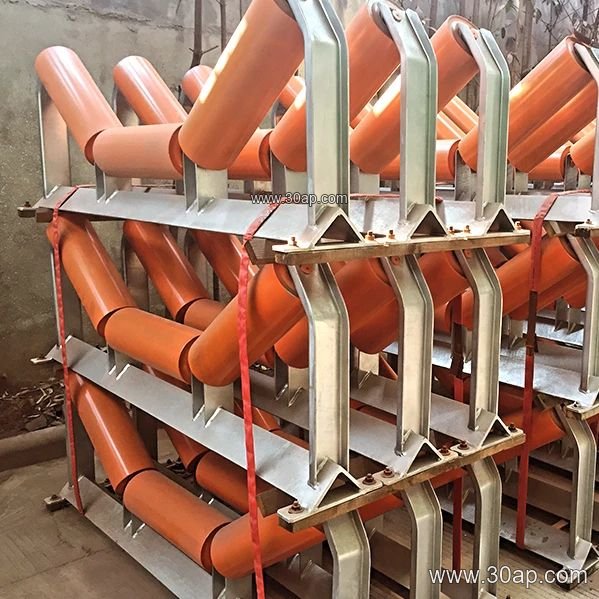
Fixed brackets are simple, rigid, and cost-effective where the trough angle is settled at the design stage. Adjustable brackets let maintenance teams fine-tune the trough angle after commissioning or when material changes, which helps on conveyors handling mixed loads. Transition brackets near the head and tail pulleys are a related subtype used to guide the belt from flat to troughed; they serve a different position and should not replace the standard carrying frame.
Before ordering, confirm the belt width, the required trough angle, the idler diameter, the mounting hole pattern, and the frame finish. Check whether the frame is for the carrying side or the return side, and whether impact or self-aligning features are needed. Ask for a drawing showing hole spacing rather than assuming a standard figure. For plants running abrasive ore or hot clinker, specify a frame that suits the environment and pair it with an abrasion resistant conveyor belt or heat resistant conveyor belt as the duty requires.
Good brackets are quiet, simple parts, but they keep the whole conveyor stable. Getting the frame, roll, and belt specification aligned at the buying stage saves far more time than correcting tracking faults later.