What a Bend Rubber Lagged Pulley Does
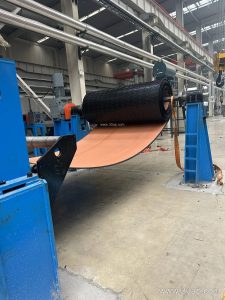
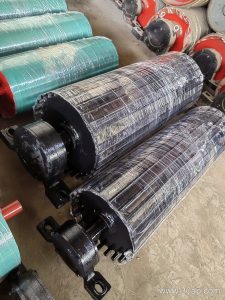
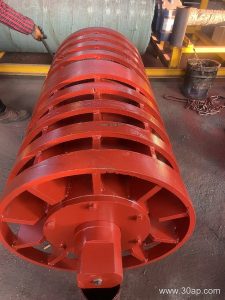
A bend rubber lagged pulley is a direction-changing conveyor pulley whose shell carries a rubber cover. It sits where the belt must turn around a corner in the conveyor profile, guiding the belt back toward the head or tail without driving the system. Because it is a bend pulley, it is not a drive pulley and not a tail pulley; those positions carry different loads and different design priorities. The rubber lagging on a bend pulley mainly protects the belt cover, improves grip between shell and belt, and reduces the chance of slip on the return side.
In a quarry, limestone plant, or ore handling line, several bend pulleys often appear along one conveyor, each turning the belt through a small angle. The rubber surface helps keep the belt tracking steadily, especially when the belt carries fines or dust that would otherwise polish a bare steel shell.
How the Pulley Is Built
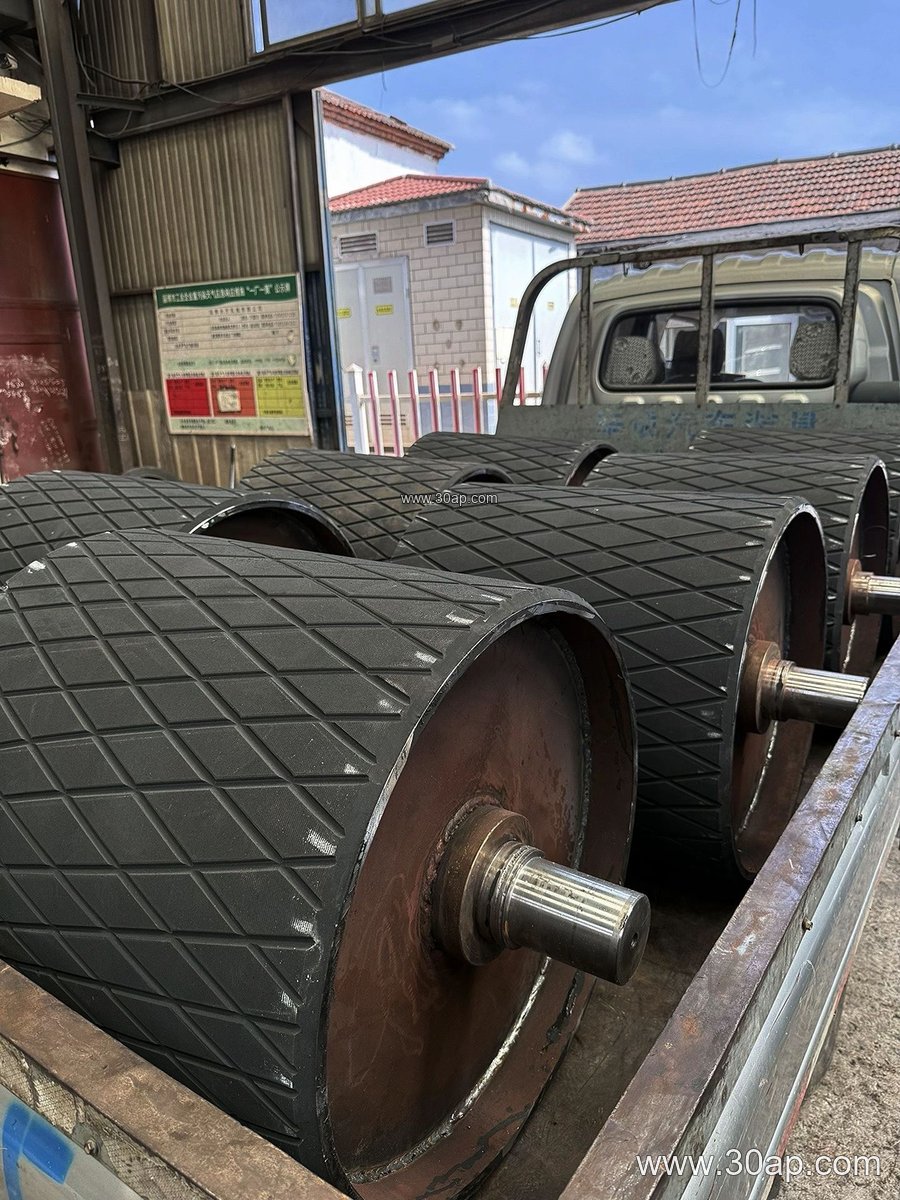
The core is usually a welded steel shell with end discs and a through shaft, machined so the drum runs true. Lagging can be applied in several ways: hot vulcanized rubber, cold bonded rubber, or cast rubber. Surface patterns include plain, diamond, and herringbone, and ceramic lagging is sometimes chosen where slip risk is high. Common lagging thicknesses are 8, 10, 12, 15, and 20 mm, selected according to belt tension and contact conditions.
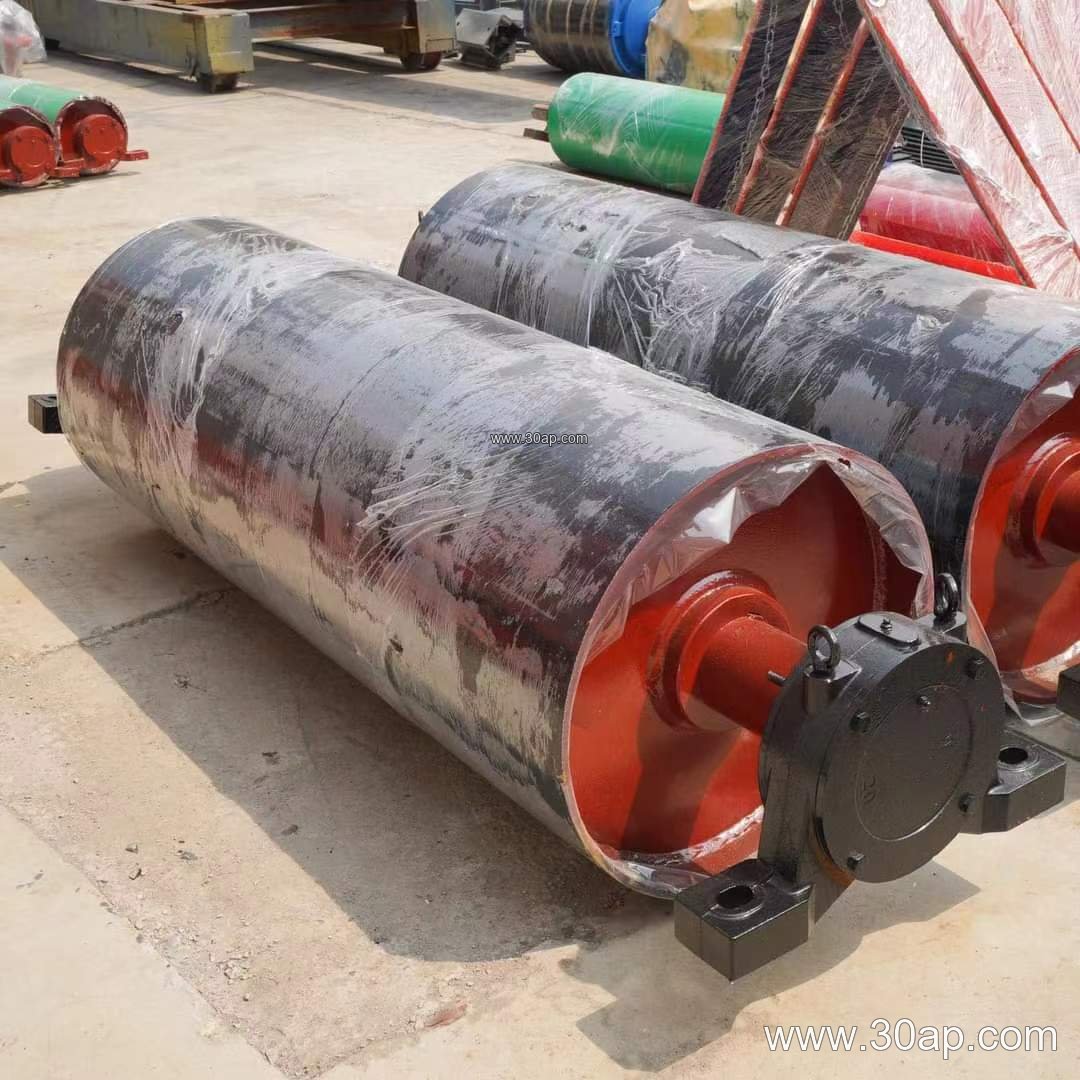
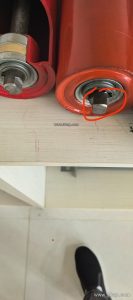
Shaft diameter is not decided by belt width alone. It follows the torque and radial load the pulley must carry, so a B800 pulley might use a shaft anywhere in a wide range depending on the conveyor layout. Buyers should give the belt width, pulley diameter, shaft diameter, face width, and lagging type as a package rather than asking for one figure in isolation.
Face Width and Diameter Combinations
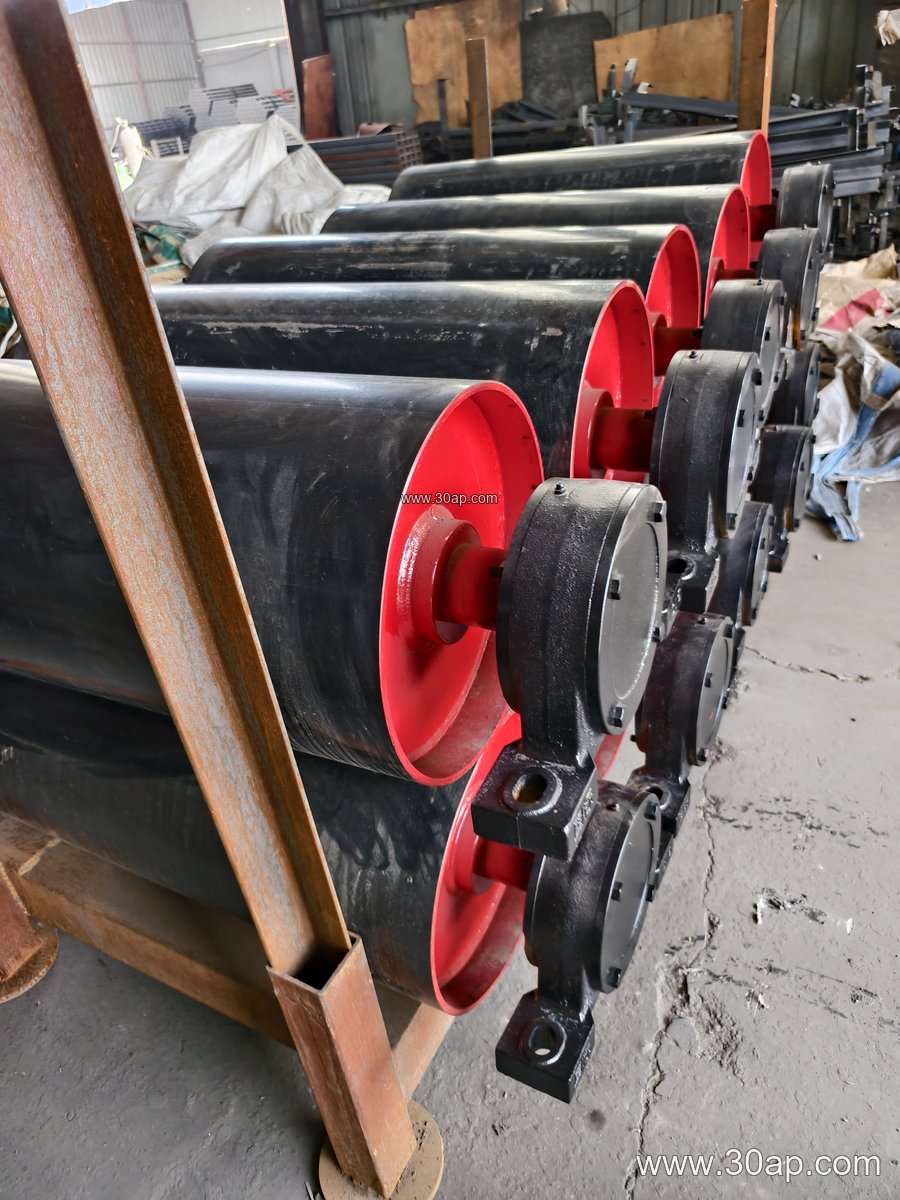
Pulley face width is normally a little wider than the belt, so the belt is fully supported and has room to run. Typical reference values are listed below. These are common practice figures, not fixed pairings, and the final size is set by the conveyor design.
- B400 belt with about 500 mm face width
- B500 belt with about 600 mm face width
- B650 belt with about 750 mm face width
- B800 belt with about 950 mm face width
- B1000 belt with about 1150 mm face width
- B1200 belt with about 1400 mm face width
- B1400 belt with about 1600 mm face width
- B1600 belt with about 1800 mm face width
Diameter choices commonly run from Ø200 up through Ø250, Ø315, Ø400, Ø500, Ø630, Ø800, Ø1000, and beyond where the belt path requires a larger radius. A B800 × Ø500 bend pulley and a B1200 × Ø1000 bend pulley are both normal combinations, but neither width locks the pulley to that diameter. Larger diameters reduce bending stress in the belt and suit high-tension routes; smaller diameters save space in tight transfer towers.
Where It Fits in the Conveyor
Bend pulleys are frequently used on the return strand, in take-up sections, and at profile changes where the belt must be redirected. On a coal handling conveyor feeding a power plant bunker, a bend pulley may turn the return belt upward toward a tensioning counterweight. In a sand and aggregate line, one or two bend pulleys may guide the belt around an obstacle before it reaches the discharge. They also appear in cement plant clinker transport, steel plant sinter lines, and port bulk terminals.
Because these pulleys turn rather than drive, matching them with the right belt matters. A heavy-duty mining conveyor belt with a thick cover tolerates more contact pressure, while a thinner fabric core conveyor belt may need a smoother lagging surface and a larger diameter to avoid sharp bending. Abrasion resistant conveyor belt grades are common where the return side still carries grit.
Buyer Checklist
Before ordering a bend rubber lagged pulley, confirm the belt width, pulley diameter, shaft diameter and material, bearing type, face width, lagging thickness and pattern, and whether the pulley is fixed or part of a take-up assembly. Ask how the lagging is bonded, since hot vulcanized covering generally gives a more durable bond than cold bonded rubber. Also confirm the balancing grade and the paint or corrosion protection needed for a washdown or coastal site.
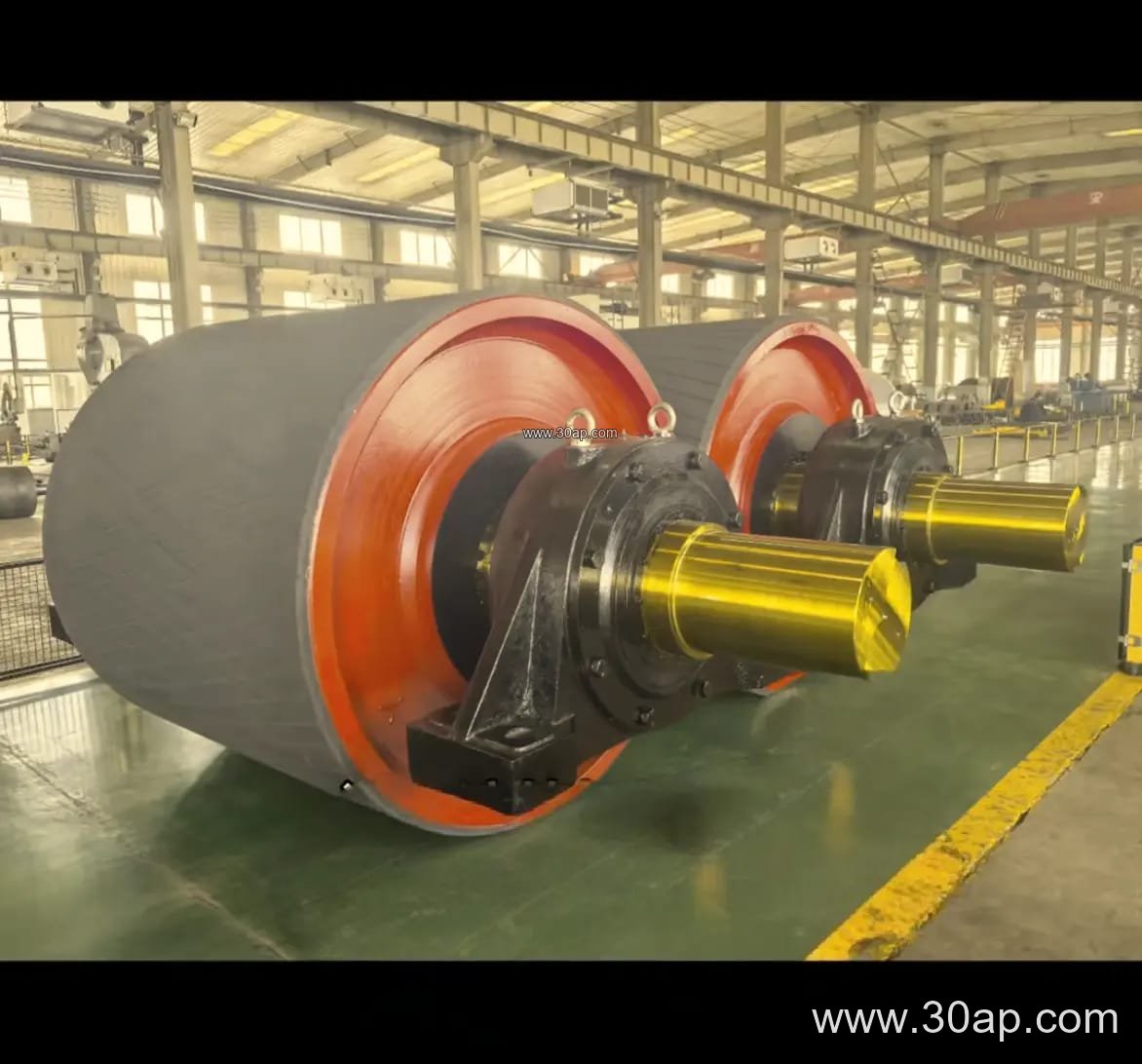
Installation checks are simple but important. Align the pulley square to the belt centerline, keep the conveyor bracket and frame level, and check that the belt does not contact the shell edges. Worn lagging shows as polished patches, cracks, or exposed shell; replacing it early protects the belt cover and avoids tracking problems.
Pairing With Belts and Components
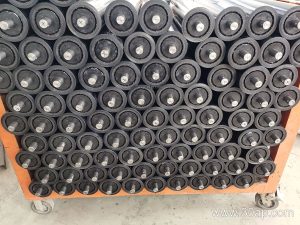
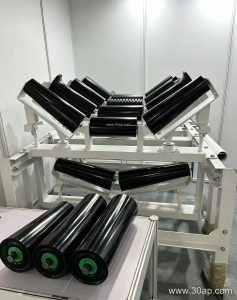
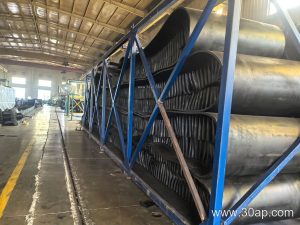
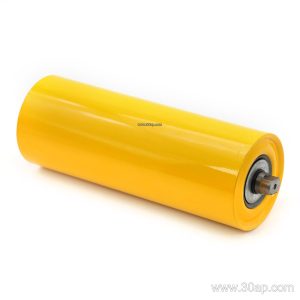
The pulley is only one part of the line. It works alongside the conveyor belt, idler roller sets, and conveyor bracket assemblies, and it should be selected together with them. On a long overland route, an EP conveyor belt or steel cord conveyor belt may require larger bend pulley diameters to keep belt bending stress low, while a short in-plant conveyor can use a more compact drum. Flame retardant conveyor belt and fire resistant conveyor belt grades are often specified underground, where lagging material should also be checked for consistent fire performance.
For any project, send the full conveyor data rather than a single dimension. That way the bend rubber lagged pulley is sized for the real belt path, the real tension, and the real environment, whether the site is a coal mine, a copper concentrator, or a cement grinding plant.