What a Fixed Conveyor Bracket Does
A Fixed Conveyor Bracket is the stationary support frame that holds a set of idler rollers in a defined position along a belt conveyor. Unlike an adjustable bracket, it is welded or bolted to a single geometry, so the trough angle, roller spacing and mounting height stay the same through the life of the installation. In a quarry, a cement plant or a power plant coal yard, this kind of rigid bracket is usually chosen where the belt line is straight, the load is predictable, and maintenance crews want fewer parts to check.
The bracket works together with the conveyor belt and the conveyor pulley. The belt carries the material, the rollers under it turn freely, and the bracket keeps those rollers at the correct profile. If the frame is weak or out of line, the belt will track badly, the edges will wear, and the roller bearings will fail early.
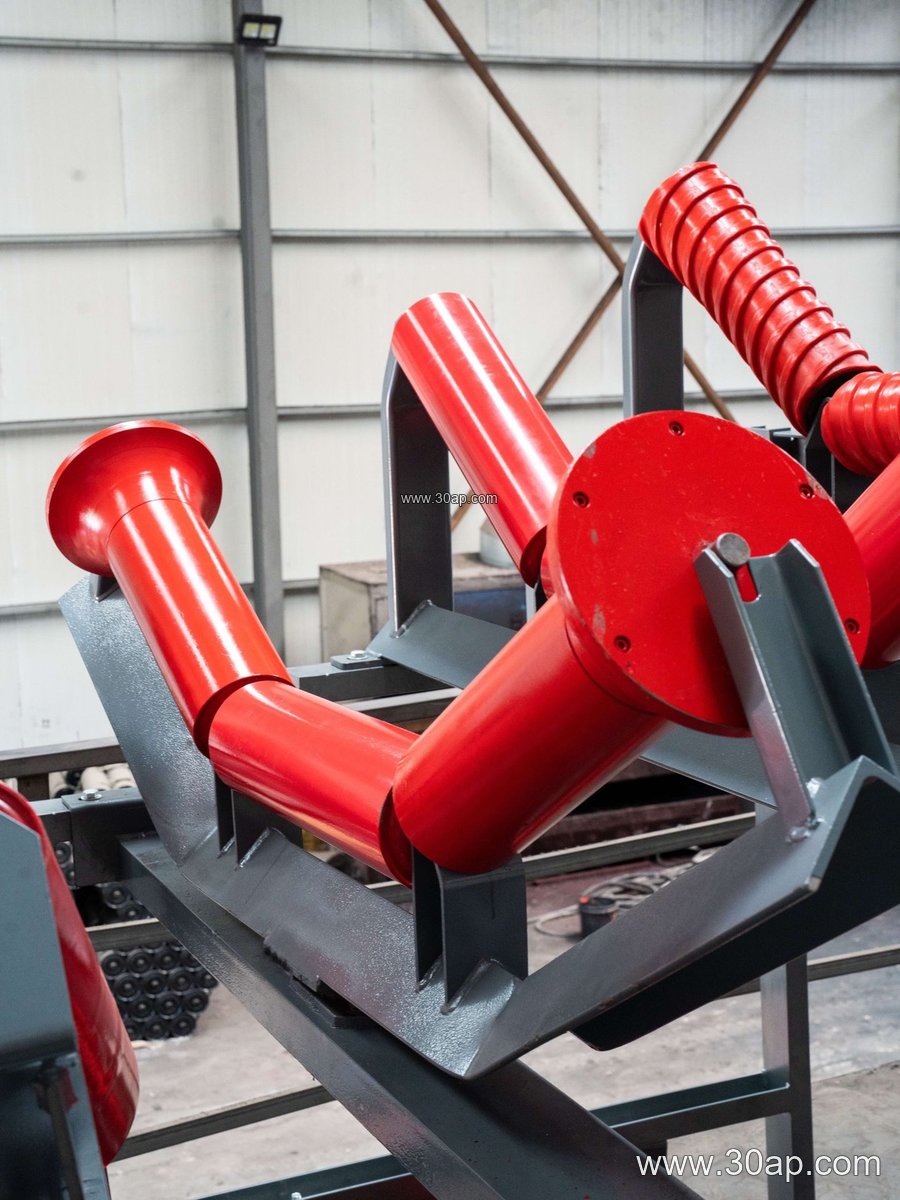
Construction and Common Forms
Most fixed brackets are fabricated from angle steel, channel steel or folded steel plate. A typical upper trough bracket carries two or three idlers at a set trough angle. A return bracket supports the belt on the return run, often as a flat or V-shaped arrangement. Impact brackets with rubber rings are used below transfer points, while self-aligning brackets are a separate family and are not a substitute for a fixed frame.
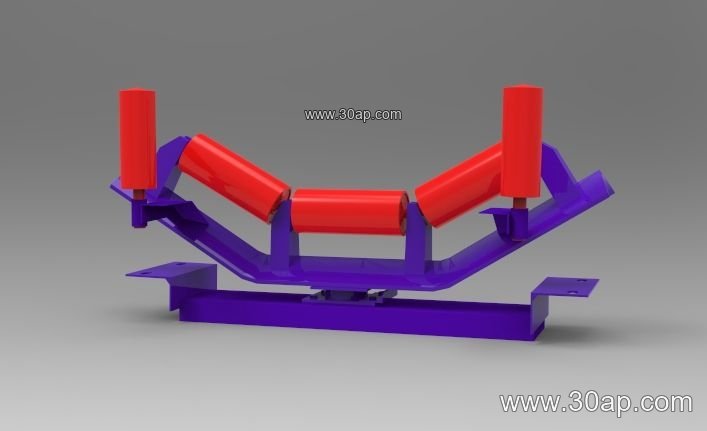
Fabricators usually drill mounting holes to match the cross beam and the roller shaft ends. Hole spacing and beam length change with belt width and trough angle, so they are determined by design rather than treated as a universal number.
Typical Reference Ranges
The table below shows common reference values; actual selection depends on the conveyor design, the material and the duty.
- Belt width: B500, B650, B800, B1000, B1200, B1400, B1600, B1800
- Trough angle: 20°, 30°, 35°, 45°
- Roller diameter: Ø89, Ø108, Ø133, Ø159, Ø194
- Material: angle steel, channel steel, folded plate
Possible combinations include B800 with a 35° trough and Ø108 rollers, or B1200 with 45° and Ø133. These are examples, not fixed pairings; one belt width can be matched with more than one roller diameter or trough angle depending on load and speed.
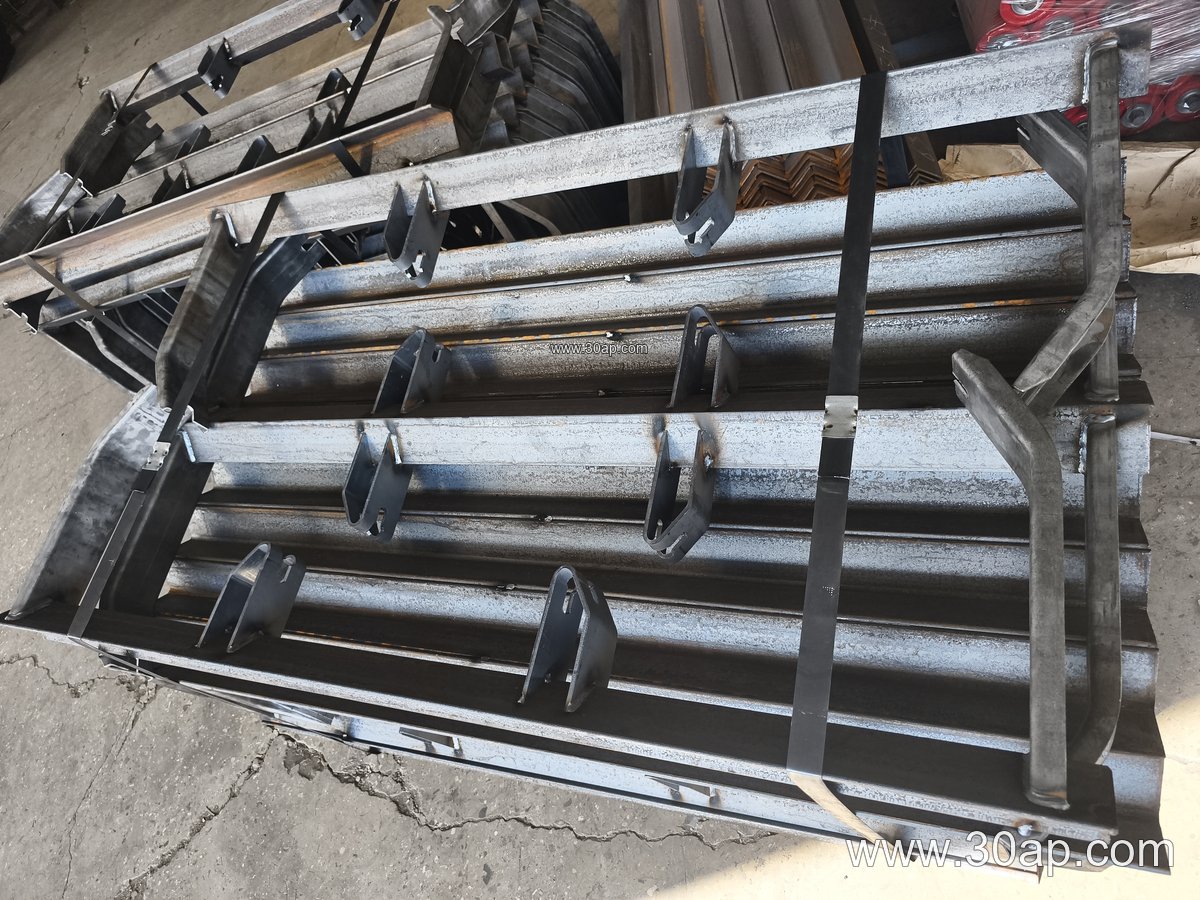
Where It Fits on the Line
Fixed brackets appear on the carrying run of a long overland conveyor, under the loading zone of a crusher conveyor, and on the return strand of a cement plant belt. In an underground coal mining conveyor, flame retardant conveyor belt and anti-static conveyor belt are often used, and the bracket must be robust enough for dusty, damp conditions. In a port or ship loading line, wide belts such as a 1800mm wide conveyor belt need heavier frames and larger rollers to keep sag under control.
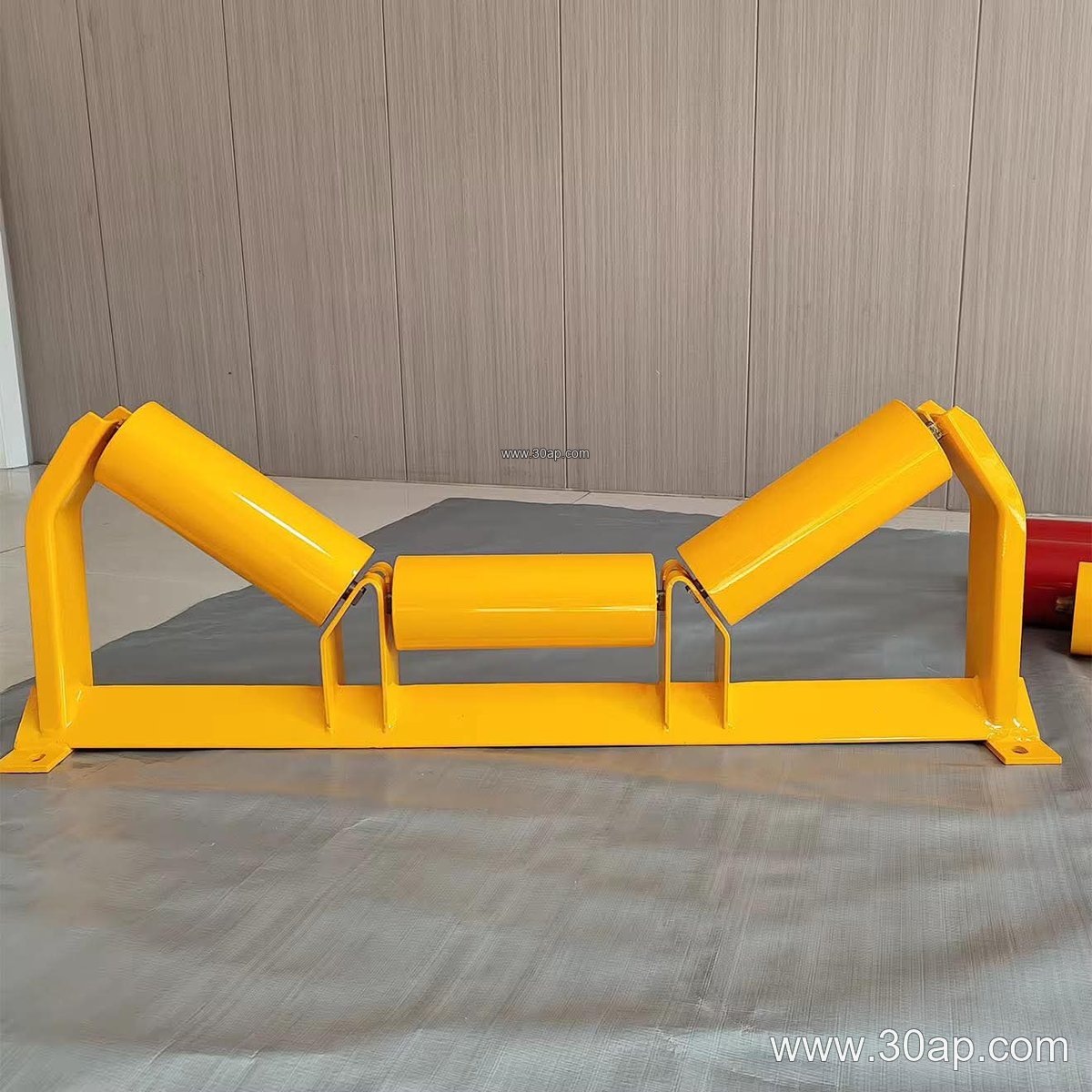
On a stockpile or aggregate conveyor belt line, the bracket is often paired with a rubber conveyor belt or an EP conveyor belt, while heavy-duty mining conveyor belt duties may call for steel cord conveyor belt and thicker frames. The bracket itself does not change the belt type; it only supports the rollers that carry it.
Buyer Checklist
Before ordering, confirm the belt width, the required trough angle, the roller diameter and the shaft end size. Ask for the mounting hole pattern and the cross beam length so the bracket matches the existing structure. Check the steel thickness and the welding quality, especially for impact and transition positions. State the environment: a heat resistant conveyor belt area may need a frame that tolerates higher temperature, and a corrosive fertilizer or chemical plant may need a coated finish.
Also decide whether a fixed frame is really the right choice. On a curved or movable conveyor, an adjustable bracket may be more practical; on a stable straight run, the fixed version gives simpler alignment and fewer settings to drift. Spare parts should be ordered by the same drawing number so that later replacements fit without redrilling.