What a High Temperature Conveyor Belt Does
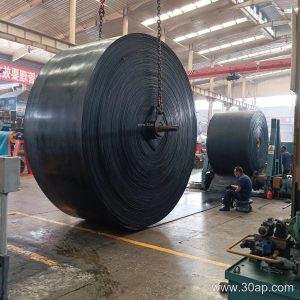
A high temperature conveyor belt is a heat resistant conveyor belt built to carry hot bulk materials without losing its cover, carcass strength, or dimensional stability. In cement plants, steel plants, power plants, and sintering or coke operations, material leaving a kiln, cooler, or furnace can still be hot enough to damage an ordinary rubber conveyor belt. The heat resistant conveyor belt uses a heat-stable cover compound and a carcass designed to limit shrinkage, hardening, and ply separation under continuous thermal load.
The same product is also described as a heat resistant conveyor belt, and both names refer to the same belt family. It is not the same as a flame retardant conveyor belt, which addresses fire propagation rather than hot material contact, although a belt can be designed to combine both properties when the application requires it.
How the Belt Is Built
Construction usually combines a fabric core or steel cord carcass with a heat resistant cover. Common carcass options include EP conveyor belt fabric (EP100 to EP2000), NN conveyor belt fabric, and steel cord conveyor belt constructions such as ST1000 to ST3150 where very high tension and long centers are involved. A multi-ply fabric core conveyor belt is common in medium-duty kiln and clinker lines, while heavy-duty mining conveyor belt and bulk material conveyor belt duties may favor higher-strength EP or steel cord designs.
- Heat resistant cover compound on the top side, with a thinner bottom cover
- Fabric plies or steel cords as the tension-bearing layer
- Skim and friction layers that resist heat aging between plies
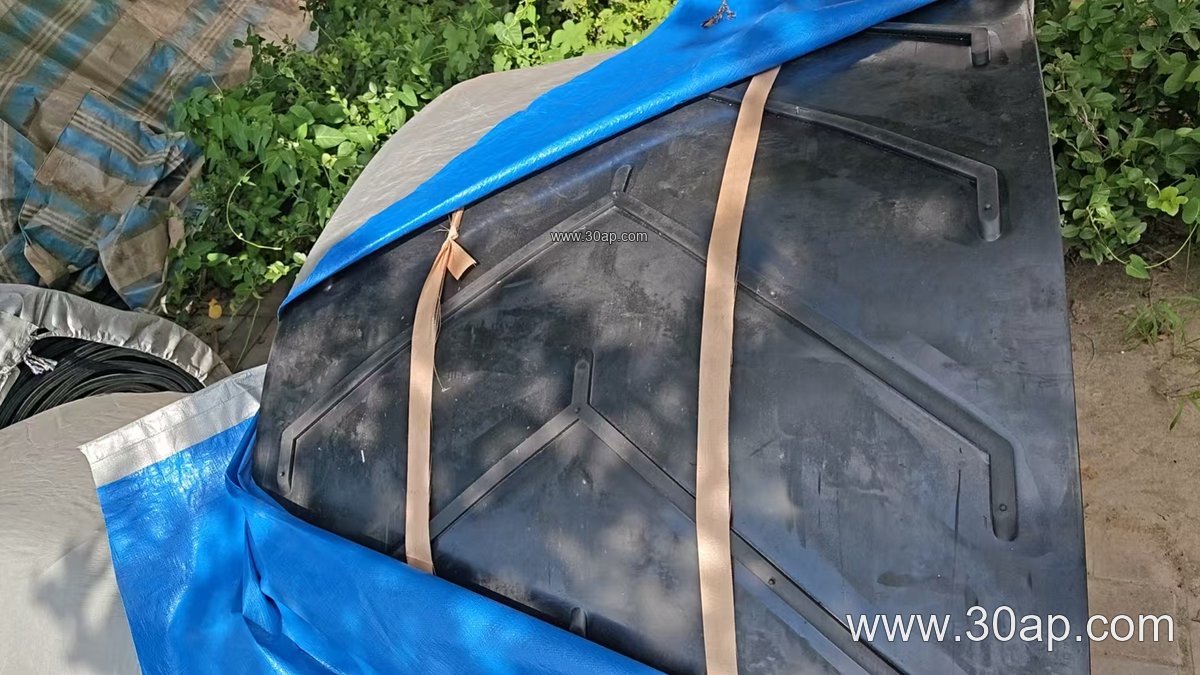
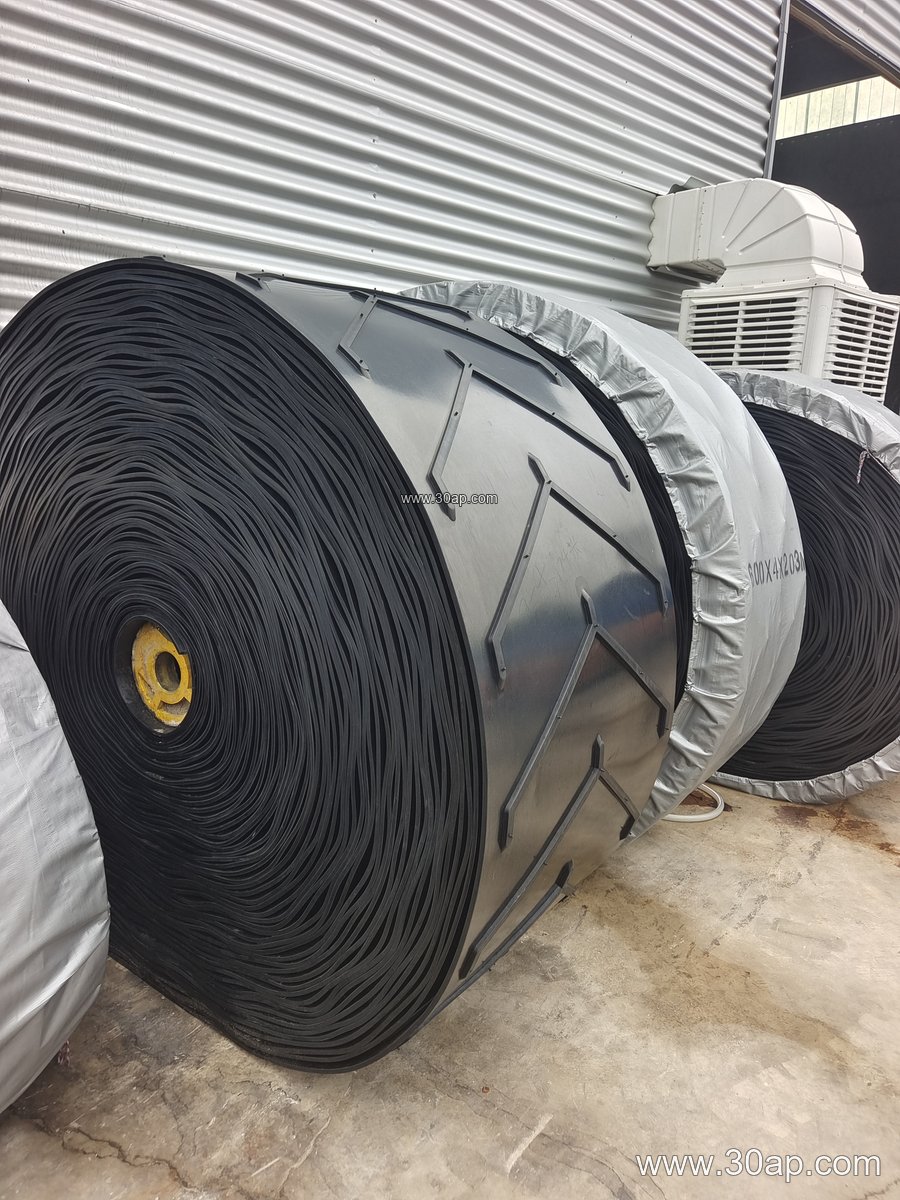
- Optional corrugated sidewall conveyor belt or skirted conveyor belt edges for steep inclines
Typical cover thickness combinations are 3+1.5, 4+2, 5+2, 6+2, and 8+3 mm, and carcass ply counts commonly range from 2 to 6 layers in fabric designs. These are reference values; actual construction is set by the conveyor design and the material temperature profile.
Where It Is Used
Heat resistant conveyor belts appear in cement plant clinker transport, steel plant sinter and coke handling, power plant ash and slag lines, and some quarry conveyor belt and crusher conveyor belt circuits where processed material stays warm. In mining conveyor belt systems, heat resistance may be combined with abrasion resistance for ore conveyor belt duty, or with oil resistance where hot material carries oily residue.
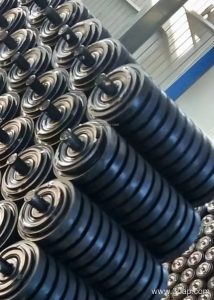
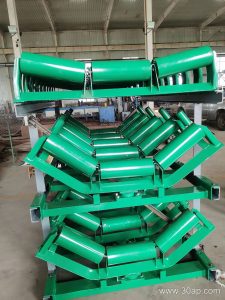
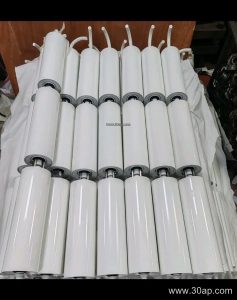
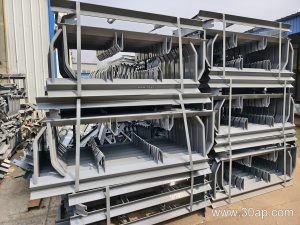
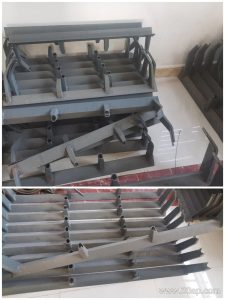
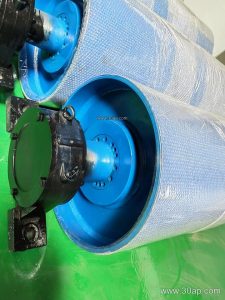
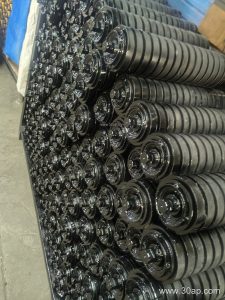
Supporting equipment matters as much as the belt. Idler roller selection, conveyor pulley alignment, and conveyor bracket condition all affect tracking and belt life. Drive pulleys, tail pulleys, and bend pulleys each have a distinct role and should not be treated as interchangeable. A worn conveyor pulley or misaligned idler roller can shorten the service life of even a well-built heat resistant belt.
Selection Points for Buyers
Buyers should confirm the material temperature, the contact pattern, and the cooling distance along the conveyor. A belt that works for warm clinker may not suit direct contact with hot sinter. Strength class, belt width, and cover thickness should follow the actual conveyor calculation.
| Parameter | Common Reference Range |
|---|---|
| Strength class | EP200 to EP2000, or ST1000 to ST3150 for steel cord |
| Belt width | B500, B650, B800, B1000, B1200, B1400, B1600, B1800, B2000 |
| Cover thickness | 3+1.5, 4+2, 5+2, 6+2, 8+3 mm |
| Carcass plies | Commonly 2 to 6 layers in fabric designs |
For hot, abrasive duties, an abrasion resistant conveyor belt cover may be requested alongside heat resistance. For underground coal mining conveyor belt applications, flame retardant conveyor belt and anti-static conveyor belt properties are often specified separately. Where belts run in cold climates, a cold resistant conveyor belt compound may be needed for start-up flexibility.
Installation and Maintenance Notes
Allow adequate transition distance so the belt is not forced around a small pulley while still hot. Check idler roller rotation and conveyor pulley lagging regularly, and keep conveyor brackets tight to avoid edge damage. Store spare belts away from direct sunlight and heat sources. During splicing, follow the belt maker’s heat resistant splice procedure, because heat-aged rubber can behave differently from standard rubber during vulcanizing.
For a full conveyor line, the belt works with conveyor pulleys, idler rollers, and conveyor brackets as one system; belt width should be matched to the pulley face and frame design rather than assumed from width alone. Reviewing the whole line helps a heat resistant conveyor belt deliver stable service in cement, steel, power, and mining operations.