What a Steel Plant Conveyor Belt Has to Handle
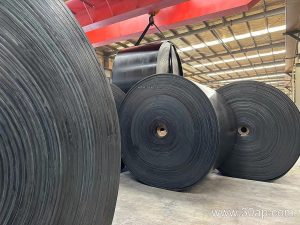
A steel plant conveyor belt works in one of the harshest material handling environments in heavy industry. Sinter, coke, limestone, iron ore, pellets, slag and hot briquettes move continuously between stockyards, crushers, screening stations and furnace feed points. Dust loads are high, spillage is common, and some lines run close to heat sources. The belt is only one part of the system, but it is the part that carries every tonne, so its construction and compound quality decide how long the line stays available.
The same plant usually needs more than one belt specification. A primary ore receiving line may call for a heavy-duty rubber conveyor belt with thick covers, while a fine additive line may run an EP conveyor belt with moderate tension ratings. Matching each line to its duty is more useful than standardising on a single specification.
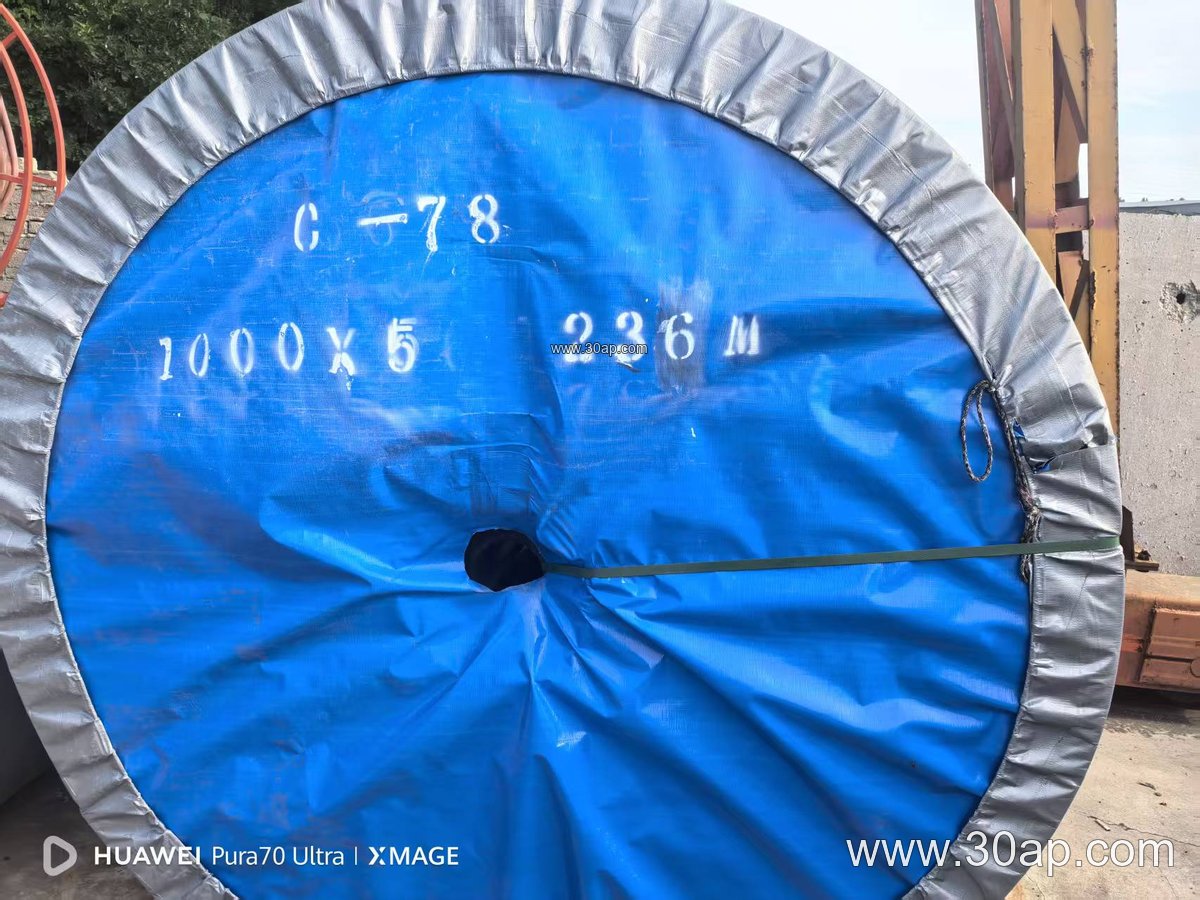
Construction of the Belt
The carcass carries tension; the covers protect the carcass. In steel plant service the carcass is usually one of two families.
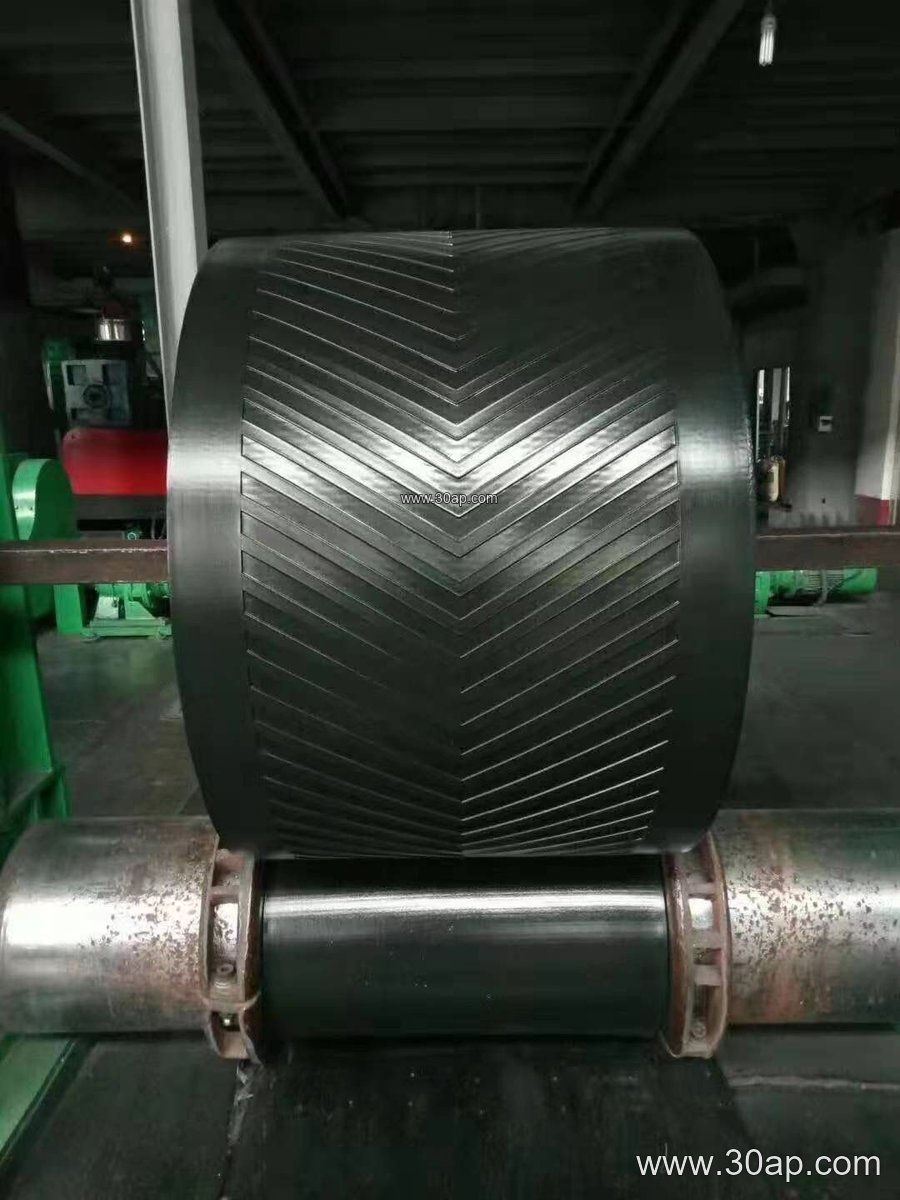
- Fabric core: EP conveyor belt (polyester warp, nylon weft) or NN conveyor belt (nylon both directions). Multi-ply fabric core conveyor belt with 2 to 6 plies is common for main lines and transfer belts.
- Steel cord: steel cord conveyor belt for long centre distances, high tonnage and low elongation requirements, often on ore yard and sinter feed lines.
Cover compounds are selected by the dominant attack. Abrasion resistant conveyor belt grades suit coke, sinter and ore; heat resistant conveyor belt grades suit hot sinter and clinker-adjacent duties; oil resistant conveyor belt grades suit oily scrap and some coke streams; flame retardant conveyor belt and anti-static conveyor belt grades are used where fire risk and dust ignition are concerns. A chevron conveyor belt or corrugated sidewall conveyor belt may appear on steep incline sections, but these are incline solutions rather than replacements for the flat main line.
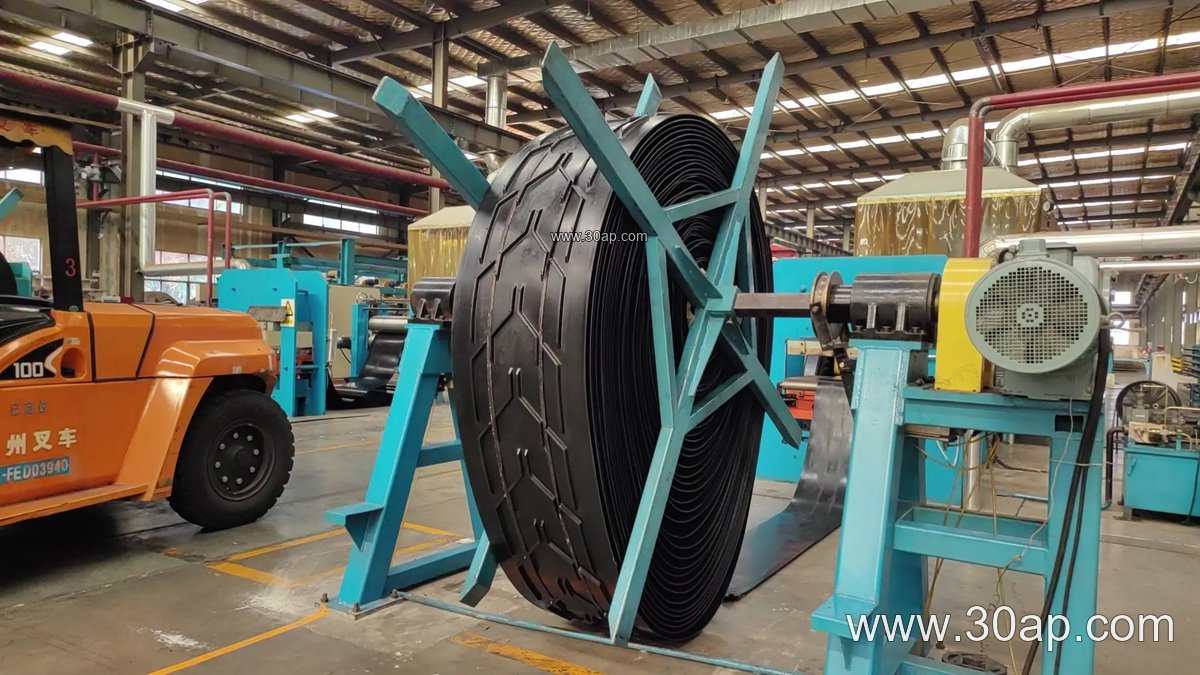
Typical Specifications and Reference Data
The values below are common reference ranges, not fixed rules. Final selection follows the conveyor design, lump size, incline, loading method and ambient conditions.
| Parameter | Common reference values |
|---|---|
| Fabric core grades | EP200, EP315, EP400, EP500, EP630, EP800, EP1000, EP1250 |
| Steel cord grades | ST1000, ST1250, ST1600, ST2000, ST2500 |
| Belt width | B500, B650, B800, B1000, B1200, B1400, B1600, B1800, B2000 |
| Cover thickness | 3+1.5, 4+2, 5+2, 6+2, 8+3 mm |
| Carcass plies | 2 to 6 layers for fabric core |
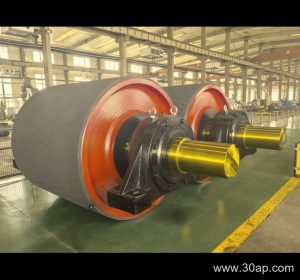
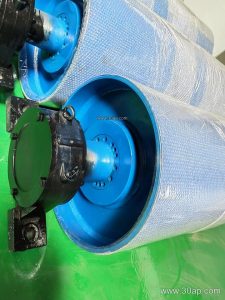
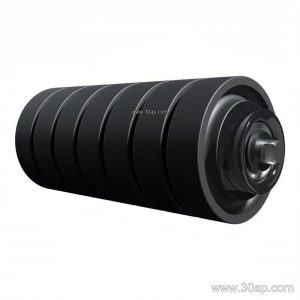
Width and pulley diameter are not locked together. A 1200mm wide belt may run on different pulley sizes depending on tension and shaft design, so the pulley specification should come from the conveyor designer, not from the belt width alone. Drive pulleys, tail pulleys and bend pulleys each have their own duty and should not be treated as interchangeable parts.
Where the Belt Fits in the Plant
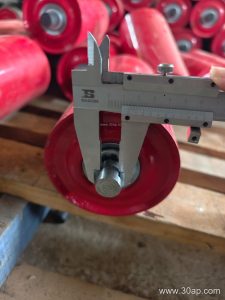
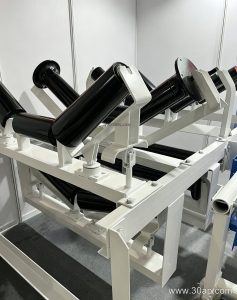
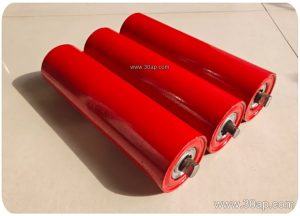
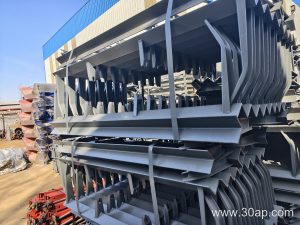
Steel plant layouts usually include ore yard receiving, sinter plant feed, coke handling, flux and additive transfer, blast furnace charging, slag handling and finished product movement. Belt conveyors link these areas with conveyor pulleys, idler rollers and conveyor brackets forming the supporting structure. In dusty sections, sealed idler roller bearings and well-aligned conveyor brackets reduce belt edge damage and tracking problems.
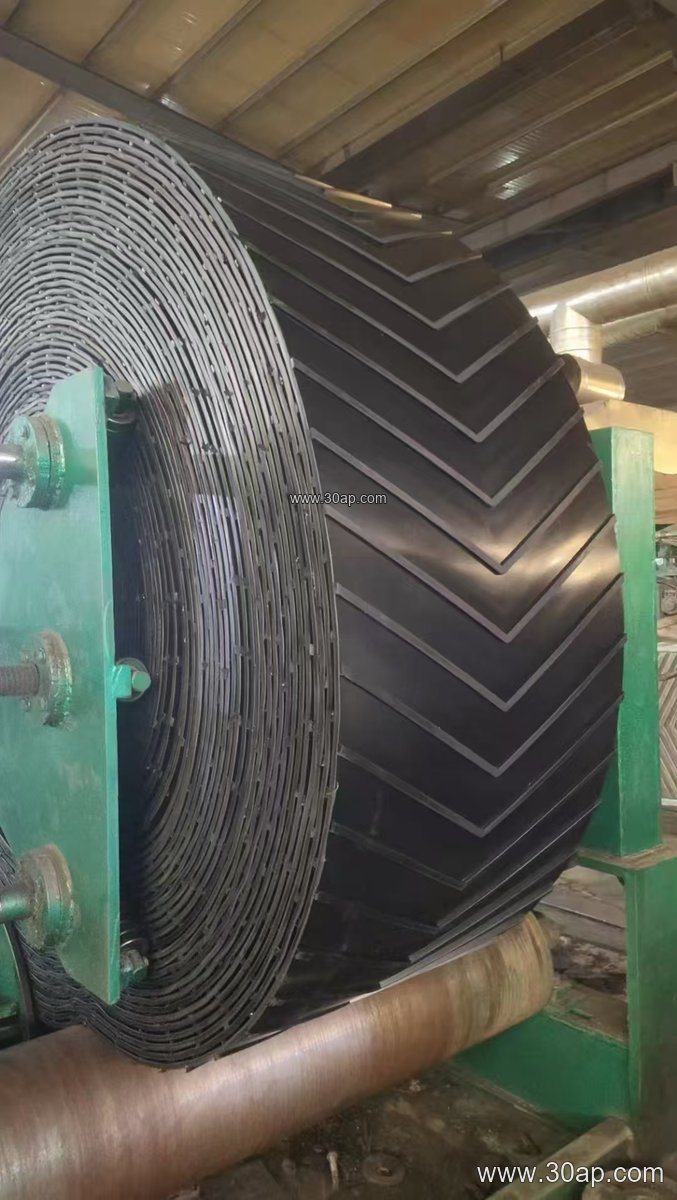
Similar belt specifications also appear in coal mining conveyor belt systems, quarry conveyor belt lines, cement plant conveyor belt circuits and power plant conveyor belt yards, but the steel plant mix of hot, abrasive and oily materials is distinctive. Where the same plant also handles coal, a flame retardant conveyor belt or fire resistant conveyor belt grade may be required on those specific lines.
Buyer Checklist
- Confirm the duty: material type, lump size, temperature, oil or chemical exposure, and whether the line is underground or enclosed.
- State the required tension grade and cover thickness rather than only the width.
- Ask how the belt will be joined. An endless conveyor belt supplied vulcanised avoids weak mechanical splices on critical lines.
- Check cold resistant conveyor belt or heat resistant conveyor belt grades if the plant sees seasonal or process temperature extremes.
- Confirm belt edge condition, because steel plant spillage and misalignment often damage edges before the cover wears out.
- Keep spare belt, pulley lagging and idler roller stock aligned with the actual line specifications.
For steel plant conveyor belt enquiries, send the line description, material handled, width, tension grade, cover thickness and splice method. That information lets a supplier propose a belt that matches the duty instead of a generic specification.