What an Adjustable Conveyor Bracket Does
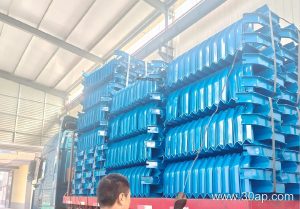
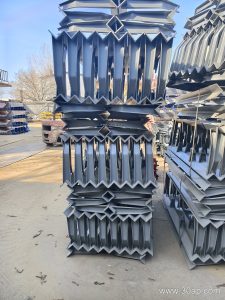
An adjustable conveyor bracket is a mounting frame that holds troughing idlers at a chosen angle. Instead of a fixed weld that locks the rolls in one profile, this bracket lets maintenance crews change the trough angle to suit the material and the belt. In a quarry or a coal preparation plant, the same frame can be set shallow for a wide, flat load or steepened for a deep trough that keeps lumpy rock centered. The bracket bolts to the conveyor stringer and carries the idler roller shaft in slotted or pivoting seats.
The product is also called an adjustable idler bracket or a variable-angle troughing bracket. It is not a drive pulley bracket, a tail pulley bracket, or a bend pulley bracket; those hold pulleys, not idlers, and are built for different loads. A fixed troughing bracket remains a separate item and is used where the angle never needs to change.
How the Bracket Is Built
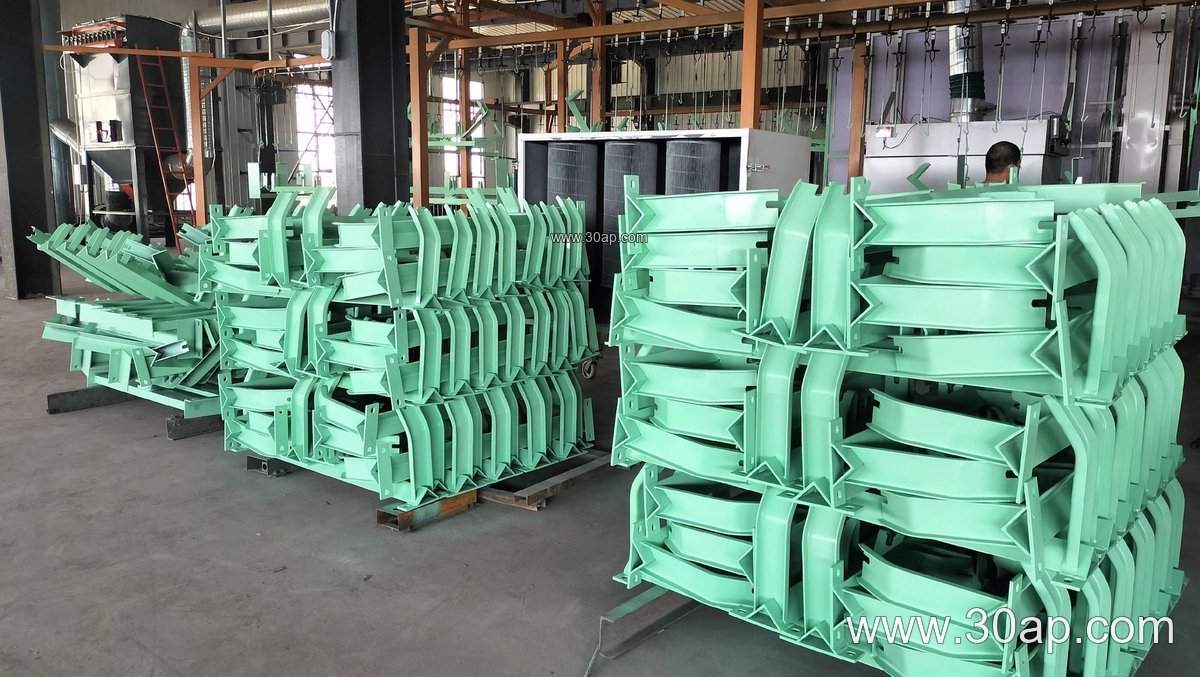
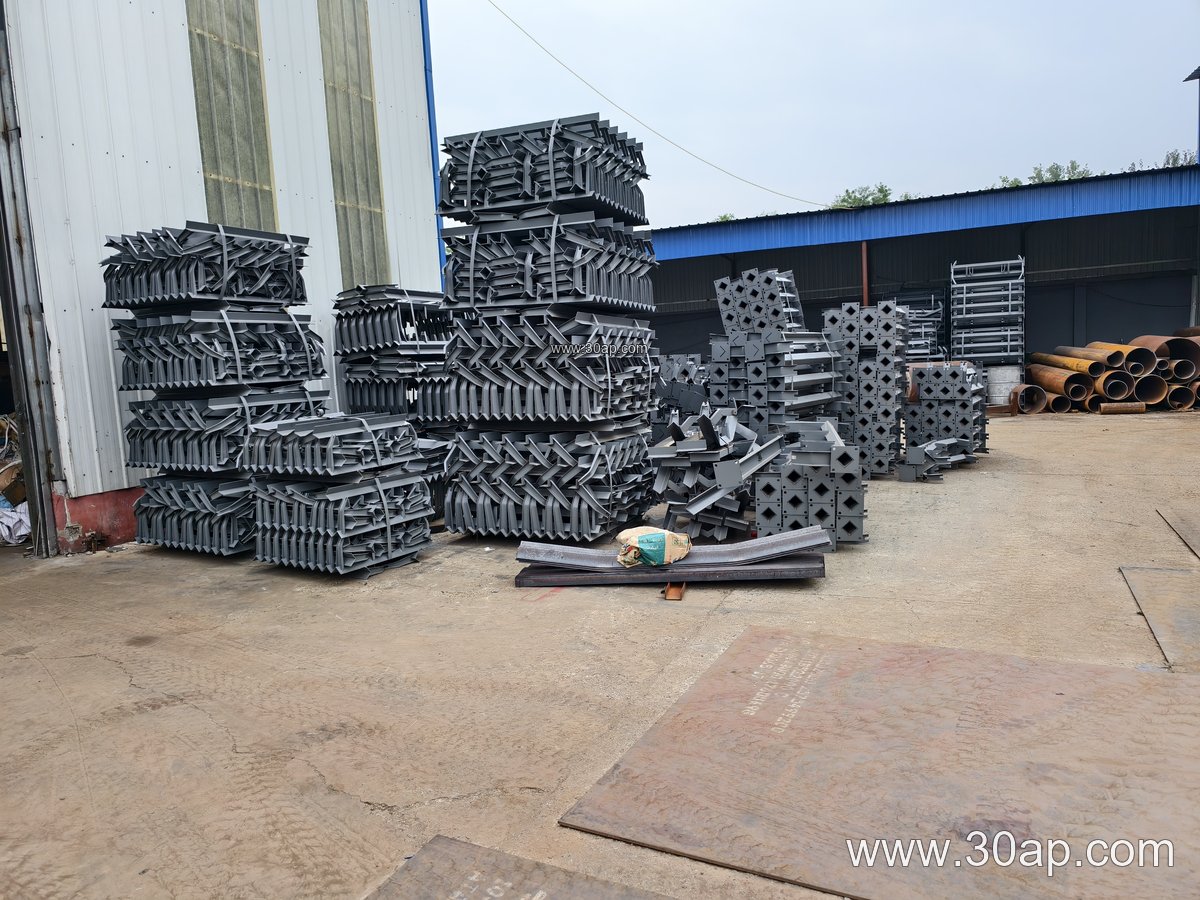
Most units are fabricated from angle steel, channel steel, or folded steel plate. The adjustable feature comes from a pivoting arm, a slotted hole pattern, or a set of index holes that lock the idler position. Common trough angles are 20, 30, 35, and 45 degrees, and a single bracket family may cover several of these by moving the pin or bolt. Forward tilt of about 1.5 to 2 degrees is sometimes built in to help training.
Because the frame must resist belt pull, impact, and vibration, the welds and bolt holes are usually sized for the duty. The mounting hole spacing and crossbeam length are not fixed numbers; they follow the belt width, the chosen trough angle, and the idler diameter. A buyer should confirm these dimensions against the actual stringer before ordering.
Where It Is Used
These brackets appear wherever the conveyor profile or the load changes. In a limestone mine, a transition bracket may be adjusted to ease the belt from a flat pulley into a 35 degree trough. In a cement plant, adjustable frames on the clinker line allow crews to tune the trough for a hot, abrasive load carried on a heat resistant conveyor belt. In a power plant coal yard, the same bracket type helps keep a flame retardant conveyor belt centered through transfer points.
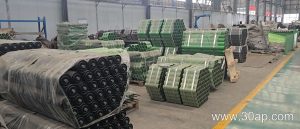
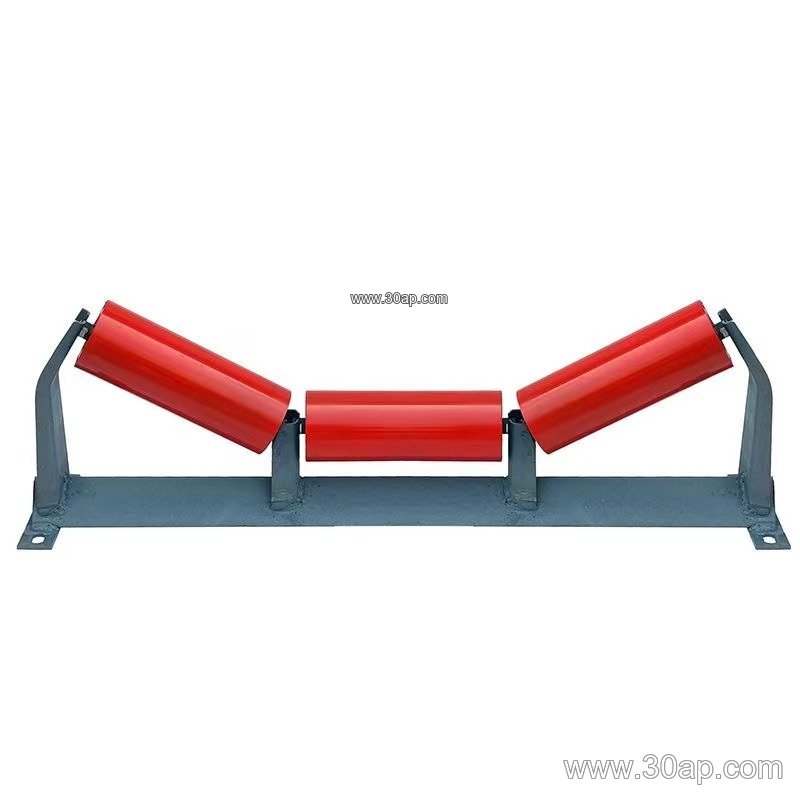
They are also found in sand and gravel lines, crushing and screening plants, and tunnel spoil handling. A typical installation uses a set of three brackets across the stringer to support the center roll and the two wing rolls. The bracket works together with the conveyor belt, the idler roller, and the conveyor pulley, but it does not replace any of them.
Matching Bracket, Belt, and Idler
The adjustable bracket is only one part of the troughing set. The belt width and the idler diameter must be considered together, and the bracket must be sized for both. A common combination might be B800 with a 35 degree trough and a Ø108 idler, or B1200 with a 45 degree trough and a Ø133 idler. These are examples, not fixed rules; a B650 frame may use a 30 degree setting with a Ø89 roll, and a wider B1400 or B1600 conveyor may run a different roll size. The bracket should be selected so the idler shaft fits the seat and the roll clears the belt edge.
Reference Dimensions
| Item | Common Range | Note |
|---|---|---|
| Belt width | B500 to B2200 | Frame length follows width |
| Trough angle | 20, 30, 35, 45 degrees | Adjustable within the bracket design |
| Idler diameter | Ø89, Ø108, Ø133, Ø159, Ø194 | Match the roll, not just the belt |
| Material | Angle steel, channel steel, folded plate | Finish depends on the site |
| Forward tilt | About 1.5 to 2 degrees | Where training is needed |
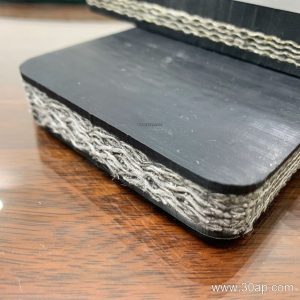
On a long overland line carrying iron ore or copper ore, a steel cord conveyor belt may need a stiffer trough and a larger roll. In a coal mine, a PVG conveyor belt or an underground mining conveyor belt may call for flame retardant properties and a bracket that can be adjusted without cutting the frame. A fabric core conveyor belt, such as an EP conveyor belt or NN conveyor belt, often runs on the same adjustable frames, but the trough angle is set to suit the belt stiffness and the load.
What a Buyer Should Check
- Stringer hole pattern and crossbeam length for the actual belt width.
- Idler shaft size and the seat or slot that holds it.
- Trough angle range needed for the material and belt type.
- Material thickness and finish for the site conditions.
- Whether a fixed bracket would be simpler where the angle never changes.
An adjustable conveyor bracket is a small part with a large effect on belt training and load retention. Used with the right idler roller and conveyor belt, it helps keep a conveyor pulley line running smoothly from the load point to the discharge.