What a Conveyor Vertical Roller Does
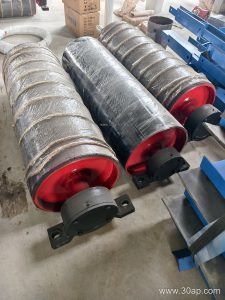
A conveyor vertical roller is a side-mounted roller that guides and supports the belt at points where the conveyor changes direction vertically or where the belt edge needs to be held in line. It is often called a vertical guide roller or vertical side roller in the same product family. Unlike a drive pulley or tail pulley, which transmit power and set belt tension, this roller is a small-diameter, free-turning component that contacts the belt edge or the belt surface at a defined angle. It is not a bend pulley, and it should not be confused with a conveyor pulley in general.
The vertical roller is common on steep or curving belt runs, at transfer points, and on conveyors with skirted or corrugated sidewall belts where edge control matters. It works together with the conveyor belt, idler roller sets, conveyor brackets, and the main conveyor pulley to keep the belt tracking correctly and to reduce edge damage.
Construction and Typical Running Fit
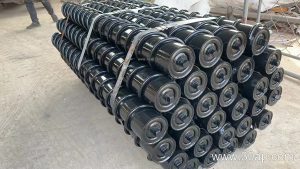
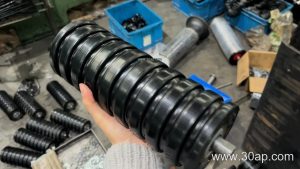
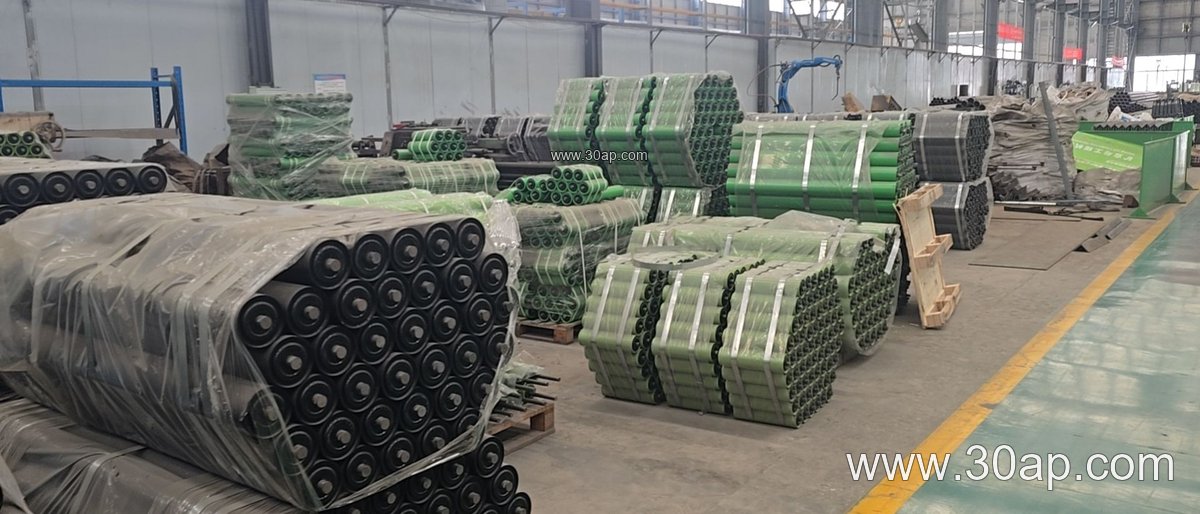
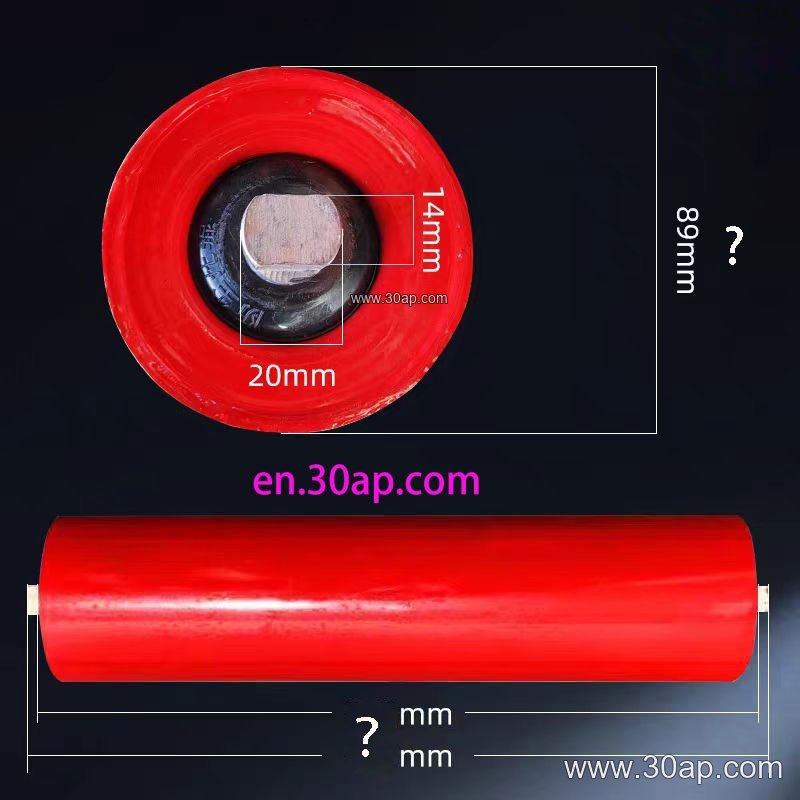
Most vertical rollers are built around a steel tube body with a sealed bearing housed at each end or in a central hub. The roller face may be plain steel, nylon, or covered with a rubber ring for grip and wear resistance. Bearing sizes commonly range from 6204 to 6310, but the correct bearing depends on load, speed, and shaft design rather than on roller diameter alone. Typical roller diameters in this family are Ø63, Ø76, Ø89, Ø102, Ø108, and Ø127 mm; larger diameters are used where the belt edge load is higher. Roller length is set by the belt width and mounting position, not by a single fixed rule.
The mounting bracket and shaft arrangement are part of the selection. A vertical roller is usually fixed to a conveyor bracket with an adjustable slot so the roller can be positioned at the required angle and gap to the belt. Sealing quality matters in dusty environments, and a labyrinth seal with grease retention is often preferred in coal mining, quarry, and cement plant service.
Where It Fits on the Conveyor
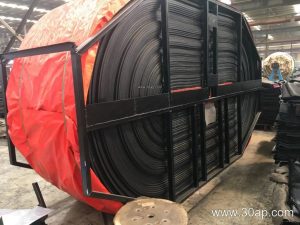
Vertical rollers are found on both surface and underground installations. In an underground coal mining conveyor, they help control the belt at gate roads and steep sections. In a quarry or aggregate line, they are used at crusher discharge and transfer chutes where the belt can wander. In a power plant coal handling system, a vertical roller may sit near the head or tail area to guide the belt edge before it reaches a conveyor pulley. They are also used on pipe conveyor belt and corrugated sidewall belt systems, where the belt profile needs lateral support.
On long overland lines carrying iron ore or copper ore, vertical rollers are often placed at intervals along curves. They are not a replacement for troughing idlers or return rollers; those carry the belt load, while the vertical roller performs a guiding and edge-support function. On a steel cord conveyor belt run, the same principle applies, but the bracket and roller must be sized for the higher belt tension and stiffness.
Selection Points for Buyers
Buyers should confirm the belt width, the belt type, and the mounting position before choosing a vertical roller. Belt widths such as B500, B650, B800, B1000, B1200, and B1400 are common, and the roller length and bracket offset are set to suit the actual belt edge position. The table below gives reference examples only; final dimensions should follow the conveyor design.
| Reference item | Common example | Note |
|---|---|---|
| Roller diameter | Ø76, Ø89, Ø108, Ø127 mm | Selected by load and space |
| Belt width | B650, B800, B1000, B1200 | Match to conveyor design |
| Bearing | 6205, 6305, 6306, 6308 | Not fixed by roller diameter |
| Surface | Steel, nylon, rubber ring | Rubber ring for grip and wear |
| Mounting | Adjustable bracket | Set angle and gap on site |
Also check the belt construction. An EP conveyor belt, NN conveyor belt, or multi-ply fabric core belt has different edge stiffness from a steel cord belt, so the roller contact pressure and gap should be reviewed. In hot or oily service, a heat resistant conveyor belt or oil resistant conveyor belt may need a different roller cover. In food or clean service, a food grade conveyor belt is usually paired with smooth, non-marking rollers. For heavy abrasive duty, an abrasion resistant conveyor belt with a rubber-covered roller face is a practical combination.
Installation and Maintenance Notes
- Set the roller so it touches the belt edge lightly; excessive pressure causes edge wear and belt tracking problems.
- Check alignment after any conveyor pulley change or belt splice, because a new endless conveyor belt can sit differently.
- Inspect seals and bearings at the same interval as the idler roller sets; a seized vertical roller can damage the belt edge quickly.
- Keep spare brackets and rollers for critical transfer points, especially in coal mining conveyor and quarry conveyor duty.
- Record the roller position and angle so replacement parts match the original setup.
A conveyor vertical roller is a small part, but it protects the belt edge and supports stable tracking on demanding routes. Matching the roller to the belt width, belt type, and bracket layout is the key to reliable service in mining, cement, power, and bulk material handling plants.