What a Diamond Grooved Lagged Pulley Is
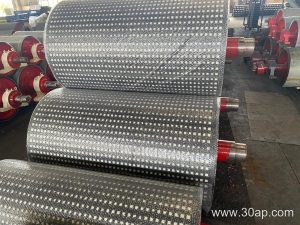
A diamond grooved lagged pulley is a conveyor pulley whose shell is covered with a rubber lagging that has a diamond-shaped groove pattern. This pattern is also called diamond lagging or rhombic grooving. The pulley itself may be a drive pulley, a tail pulley, or a bend pulley, but the diamond grooved lagging is the feature that defines this product. It is used to improve grip between the pulley and the conveyor belt, especially where the belt is exposed to wet, muddy, or dusty conditions. Industries such as quarrying, coal washing, cement plants, and power plants often specify this surface form for pulleys that need extra traction without excessive belt wear.
How the Diamond Groove Is Built
The lagging is usually applied as a rubber sheet with molded diamond grooves. Common application methods include cold bonding and hot vulcanizing. The groove pattern helps channel water and fine particles away from the contact surface, which reduces slip and improves belt tracking. The rubber compound can be selected for abrasion resistance, oil resistance, or flame retardancy depending on the site. Typical lagging thicknesses are 8 mm, 10 mm, 12 mm, 15 mm, and 20 mm. The diamond pattern is most effective on drive pulleys and tail pulleys where slip risk is highest, but it can also be used on bend pulleys in wet or dirty service.
Where It Fits in a Conveyor System
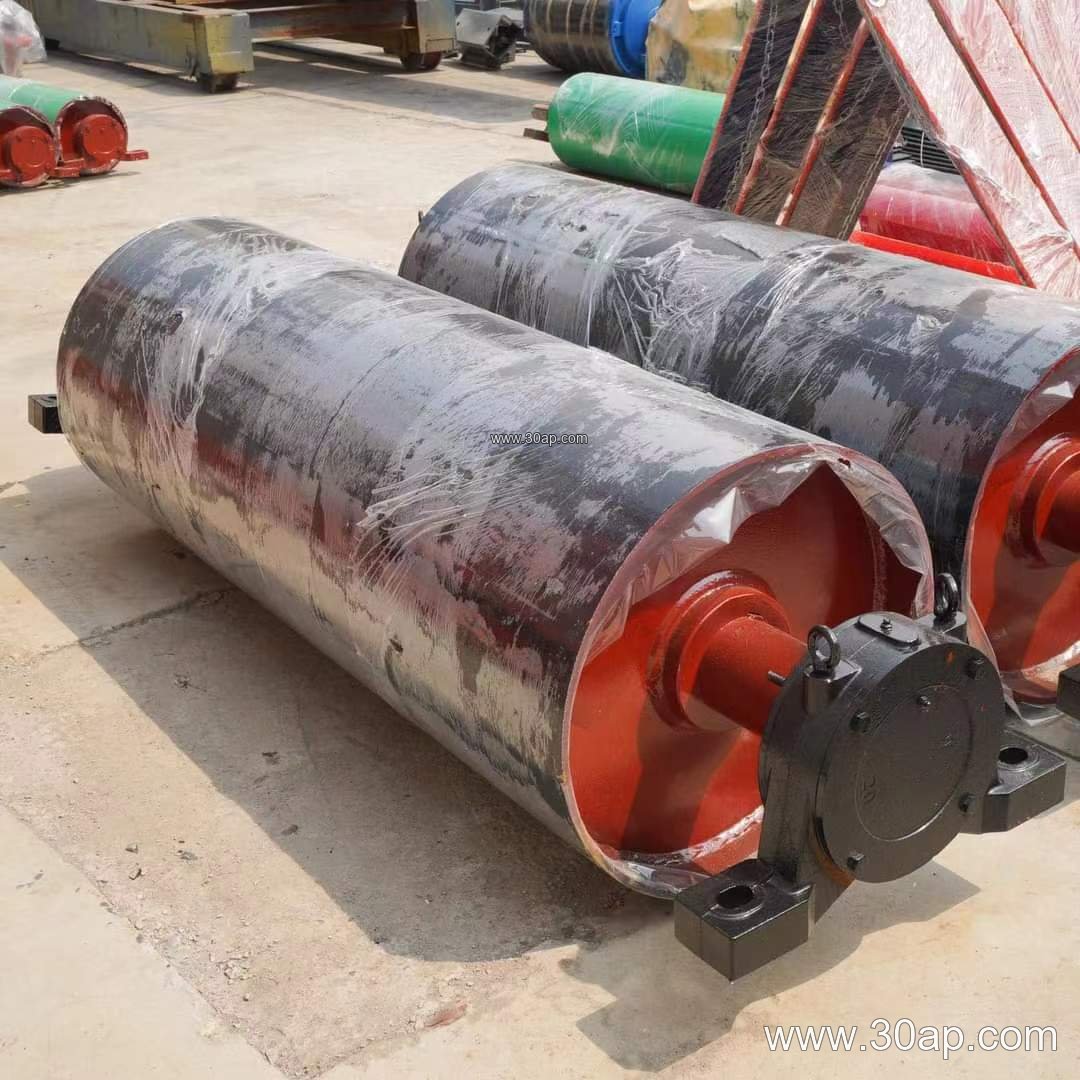
This pulley is not a replacement for every pulley in the line. Drive pulleys transmit power and benefit from diamond grooved lagging when the belt is wet or contaminated. Tail pulleys, also called return or bend pulleys depending on position, may use the same surface to reduce material buildup and improve belt tracking. In a coal mining conveyor or a limestone quarry line, the drive pulley often runs with a flame retardant conveyor belt or an abrasion resistant conveyor belt, and the lagging pattern must suit the belt cover. For a long overland conveyor using a steel cord conveyor belt, the drive pulley may need a heavier lagging thickness and a larger diameter to handle torque. The diamond groove does not change the pulley’s role; it only changes the contact surface.
Common Sizes and Configuration Notes
Pulley dimensions are selected by the conveyor designer. The table below gives reference combinations that appear in project discussions; they are not fixed rules, and a single belt width can match more than one pulley diameter.
| Belt Width | Typical Pulley Face Width | Example Diameter Range | Typical Lagging Thickness |
|---|---|---|---|
| B800 | about 950 mm | Ø500 to Ø800 | 10 to 15 mm |
| B1000 | about 1150 mm | Ø630 to Ø1000 | 12 to 15 mm |
| B1200 | about 1400 mm | Ø800 to Ø1250 | 12 to 20 mm |
| B1400 | about 1600 mm | Ø1000 to Ø1400 | 15 to 20 mm |
| B1600 | about 1800 mm | Ø1250 to Ø1600 | 15 to 20 mm |
Shaft diameter is determined by torque and load, not by belt width alone. Common shaft sizes include Ø80, Ø100, Ø120, Ø140, and Ø160, but the final value must come from the pulley design calculation. The diamond grooved lagged pulley can be supplied as a drive pulley, a tail pulley, or a bend pulley; these are different positions and should not be interchanged without checking the conveyor layout.
Buyer Checklist for Diamond Grooved Lagged Pulleys
- Confirm the pulley position: drive, tail, or bend. Each has a different load profile.
- Check the conveyor belt type and cover grade. A rubber conveyor belt, an EP conveyor belt, or a fabric core conveyor belt may need different lagging hardness.
- Specify the lagging thickness and groove depth. Thicker lagging is not always better; it must match the pulley diameter and belt tension.
- Ask for the pulley face width and shaft diameter as a combined design, not as separate guesses.
- For dusty or wet service, consider diamond grooved lagging on the drive pulley and plain lagging on non-drive pulleys where slip is not a concern.
- Check compatibility with conveyor idler roller and conveyor bracket dimensions so the pulley fits the existing frame.
In a sand and gravel plant or a cement plant, the diamond grooved lagged pulley is often chosen for the head drive because the belt carries moisture and fines. In a power plant coal handling system, a flame retardant conveyor belt may be paired with a diamond lagged drive pulley to reduce slip during startup. The same surface form can be used on a tail pulley to shed material, but the groove pattern should be specified clearly on the purchase drawing. For any conveyor pulley order, state the belt width, pulley diameter, face width, shaft diameter, lagging type, and groove pattern. A diamond grooved lagged pulley is a practical choice when traction and material shedding matter, but it should be selected as part of the whole conveyor design.