What a High-Capacity Trough Idler Does on a Conveyor
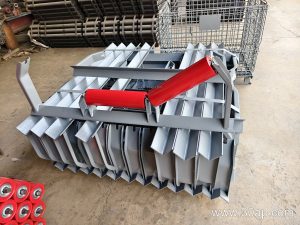
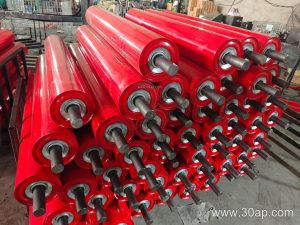
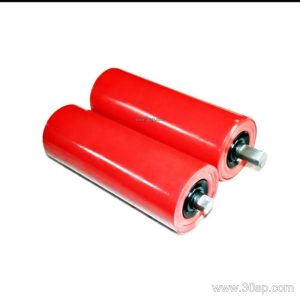
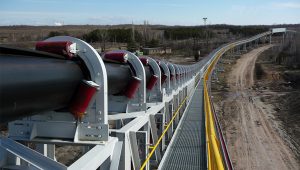
A high-capacity trough idler is the carrying roller assembly that supports the loaded side of a conveyor belt and forms it into a trough. In heavy-duty conveying, this troughing idler must handle a deep material bed, high belt tension and continuous shock from lumpy feed. The assembly is usually built as a three-roll trough set, with two side rollers angled upward and a center roller running flat. The trough angle, roll diameter and bearing selection together decide how well the idler carries ore, clinker or aggregate without premature failure.
The same product is also called a heavy-duty troughing idler or high-load trough roller. These are accurate alternative names for the carrying idler in a trough configuration, not for return rollers or pulleys.
Construction Details That Matter
A high-capacity trough idler differs from a standard troughing roller mainly in wall thickness, bearing size and seal quality. Common roll diameters for this duty range from Ø108 and Ø127 up to Ø159, Ø178 and Ø194, with larger sizes used where belt widths and lump sizes are high. The roller shell is typically steel tube, while nylon, ceramic or rubber rings may be specified for special wear or buildup conditions.
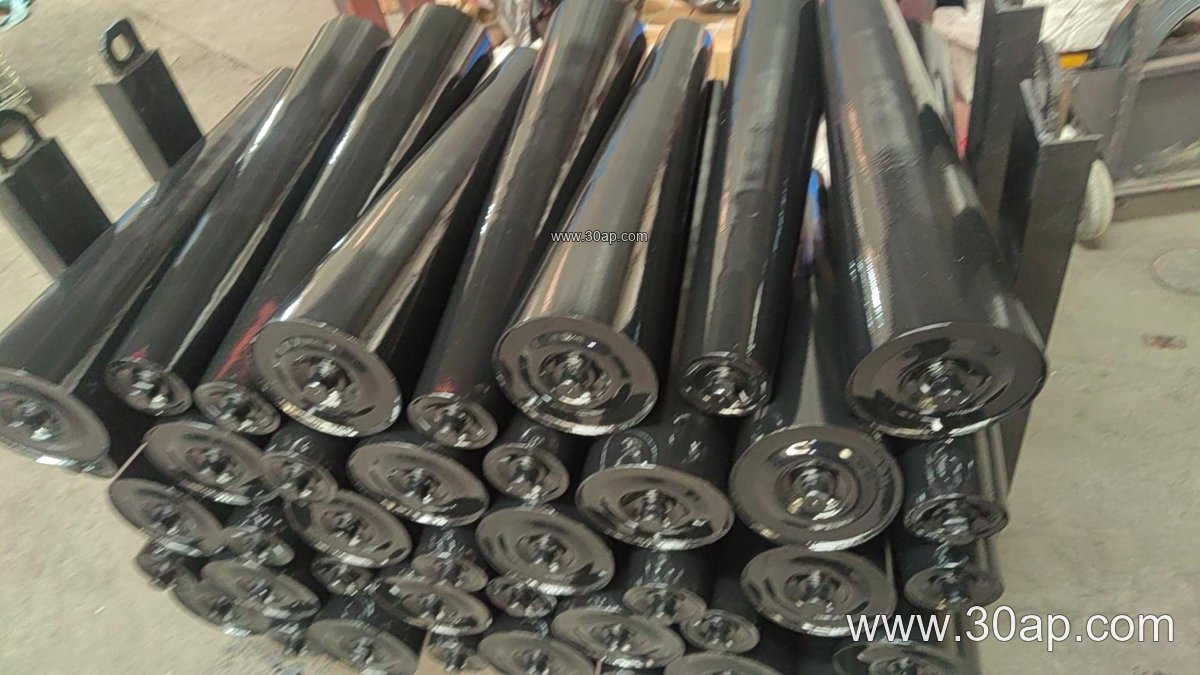
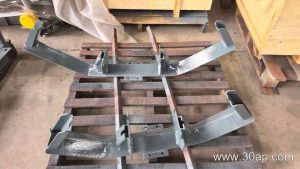
Bearings are usually selected from 6205, 6305, 6306, 6308 or 6310 series depending on load and speed; a given bearing is not tied to one roll diameter. Sealing is critical in dusty plants, and labyrinth or multi-stage seals help keep fines out of the bearing cavity. The idler shaft, bearing housing and bracket interface should be matched to the conveyor frame so the trough set sits squarely under the belt.
Common Sizes and Arrangements
Trough idler dimensions follow belt width, trough angle and roll arrangement. The table below gives common reference values, not fixed supply commitments.
| Belt width | Typical roll length (three-roll trough) | Common trough angles |
|---|---|---|
| B500 | about 200 mm | 20°, 30°, 35° |
| B650 | about 250 mm | 20°, 30°, 35° |
| B800 | about 315 mm | 30°, 35°, 45° |
| B1000 | about 380 mm | 30°, 35°, 45° |
| B1200 | about 465 mm | 35°, 45° |
| B1400 | about 530 mm | 35°, 45° |
| B1600 | about 600 mm | 35°, 45° |
| B1800 | about 670 mm | 35°, 45° |
| B2000 | about 750 mm | 35°, 45° |
Side rolls and center rolls can differ in length, and the final figure is set by design. Trough angles of 20° to 45° are common; a steeper angle increases material capacity but raises belt stress at the edges.
Where Heavy Trough Idlers Are Used
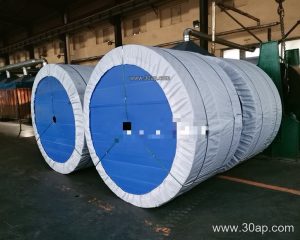
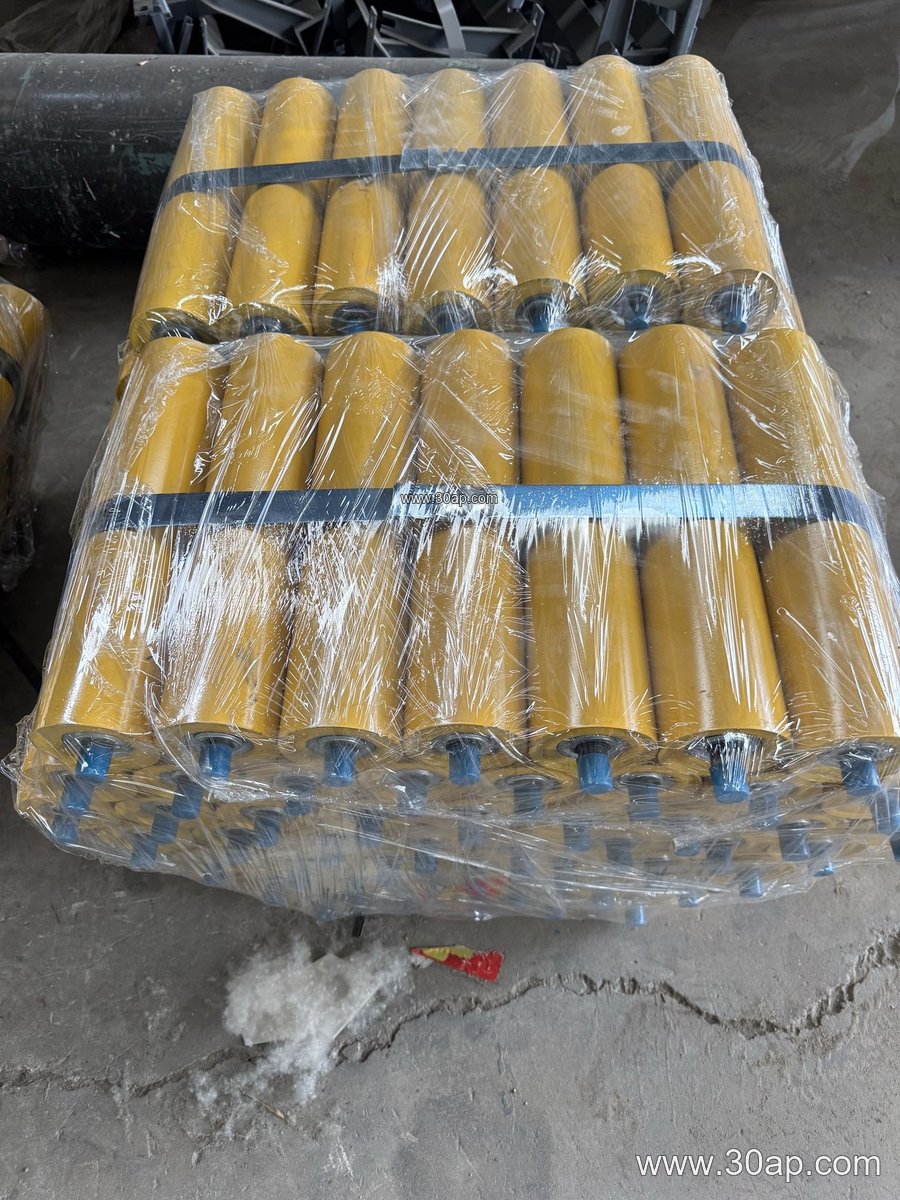
These idlers are common in iron ore and copper ore handling, where a steel cord conveyor belt carries dense, abrasive material. They also appear in coal preparation plants and power plant coal yards, often paired with a flame retardant conveyor belt for safety. In cement plants, a heat resistant conveyor belt may run alongside high-capacity trough idlers on clinker lines, while quarry and aggregate operations rely on abrasion resistant conveyor belt grades to match the roller’s wear life.
In sand and gravel lines, a multi-ply fabric core conveyor belt or EP conveyor belt is frequently supported by three-roll trough sets. For long overland runs, an NN conveyor belt or high strength conveyor belt may be used, and the trough idler spacing must be checked against belt sag and material load.
Buyer Checklist
- Confirm belt width and trough angle before choosing roll length; do not assume one belt width matches one roll diameter.
- Check the load per idler, belt speed and lump size to select bearing series and shell thickness.
- Match the idler bracket to the existing conveyor frame; conveyor bracket dimensions vary between manufacturers.
- Specify seal type for dusty or wet conditions, especially in underground mining conveyor belt installations.
- Review roller surface options: plain steel, nylon, ceramic or rubber rings, depending on buildup and impact.
- Keep spare trough idlers for wear points near transfer chutes and crusher discharge.
For a complete conveyor, the high-capacity trough idler works with the conveyor pulley, conveyor belt and frame. Buyers should compare the troughing idler against the return idler roller and transition idler only where the duty differs, since these are separate components with separate roles. A well-matched trough idler set reduces belt edge wear and keeps bulk material centered on the line.