What Is an Adjustable Conveyor Bracket?
An adjustable conveyor bracket is a support component that holds idler rollers at a variable troughing angle on a belt conveyor. Unlike a fixed bracket welded or bolted at a single angle, this bracket allows maintenance crews to change the trough profile to suit different materials and loading conditions. In a quarry, a cement plant, or a power plant coal yard, the same conveyor may handle lumpy rock, fine dust, or wet aggregate. Being able to tune the trough angle helps keep the belt centered and reduces spillage without replacing the entire idler frame.
The bracket is often called an adjustable idler bracket or a variable-angle troughing bracket. It is not a drive pulley, tail pulley, or bend pulley; those are separate conveyor pulleys with different roles. The adjustable bracket belongs to the idler support family, together with fixed troughing brackets, transition brackets, and return brackets.
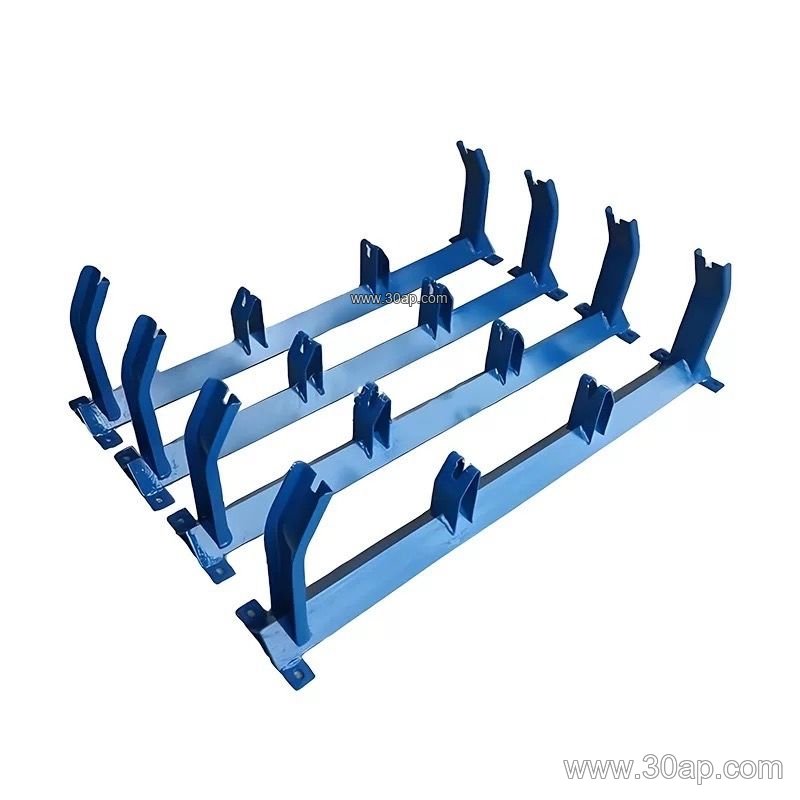
How the Bracket Is Built
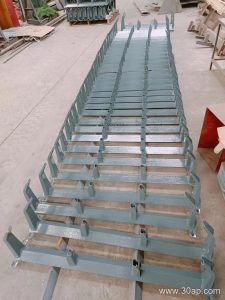
Most adjustable conveyor brackets are fabricated from angle steel, channel steel, or folded steel plate. The design includes a base beam, one or more pivoting arms, and a locking mechanism such as slotted holes, a sector plate, or a set of index holes. The idler roller sits in a cradle or saddle on the moving arm. By loosening the bolts and rotating the arm, the operator can set the side idler angle between common values such as 20, 30, 35, and 45 degrees. The center idler usually stays flat, while the two wing idlers carry the belt edges.
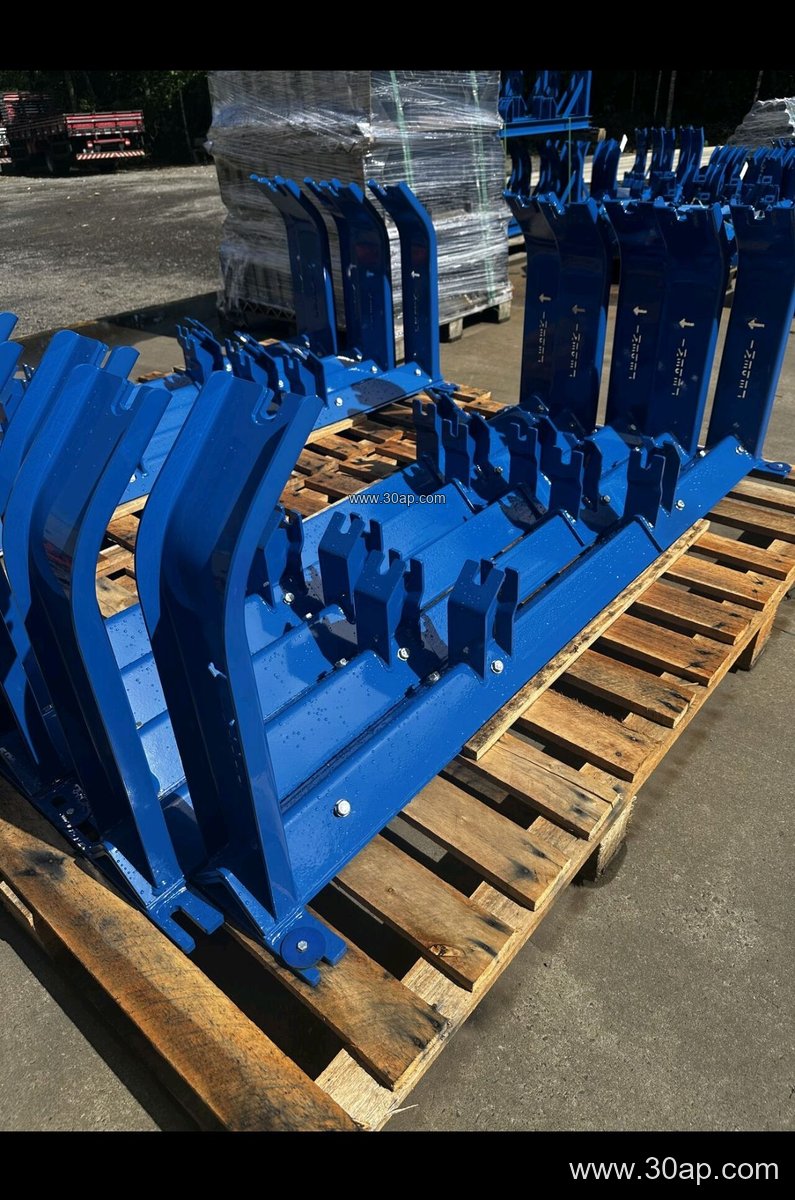
For a B800 belt running at 35 degrees with Ø108 idlers, the bracket is sized to match the belt width and roller diameter. A wider B1200 conveyor might use a 45-degree setting with Ø133 rollers. The mounting hole spacing and crossbeam length are determined by belt width and trough angle, so they should be confirmed with the conveyor design rather than assumed. The bracket material and bolt grade should match the surrounding frame, especially in dusty or corrosive areas.
Where It Fits on the Conveyor
Adjustable brackets are typically installed on the carrying side of the conveyor, in the troughing idler section. They may also appear at transition zones where the belt changes from flat to troughed, or on short conveyors that handle several products. In a sand and gravel line, operators may increase the trough angle when running wet sand to prevent drift. In a limestone mine, a steeper angle can help contain coarse rock. The bracket works together with the conveyor belt, idler roller, and conveyor pulley to keep the belt tracking correctly.
Some plants use adjustable brackets on mobile or reconfigurable conveyors. Others use them only where material characteristics change seasonally. They are less common on long overland conveyors with a fixed profile, where welded fixed brackets are simpler and cheaper.
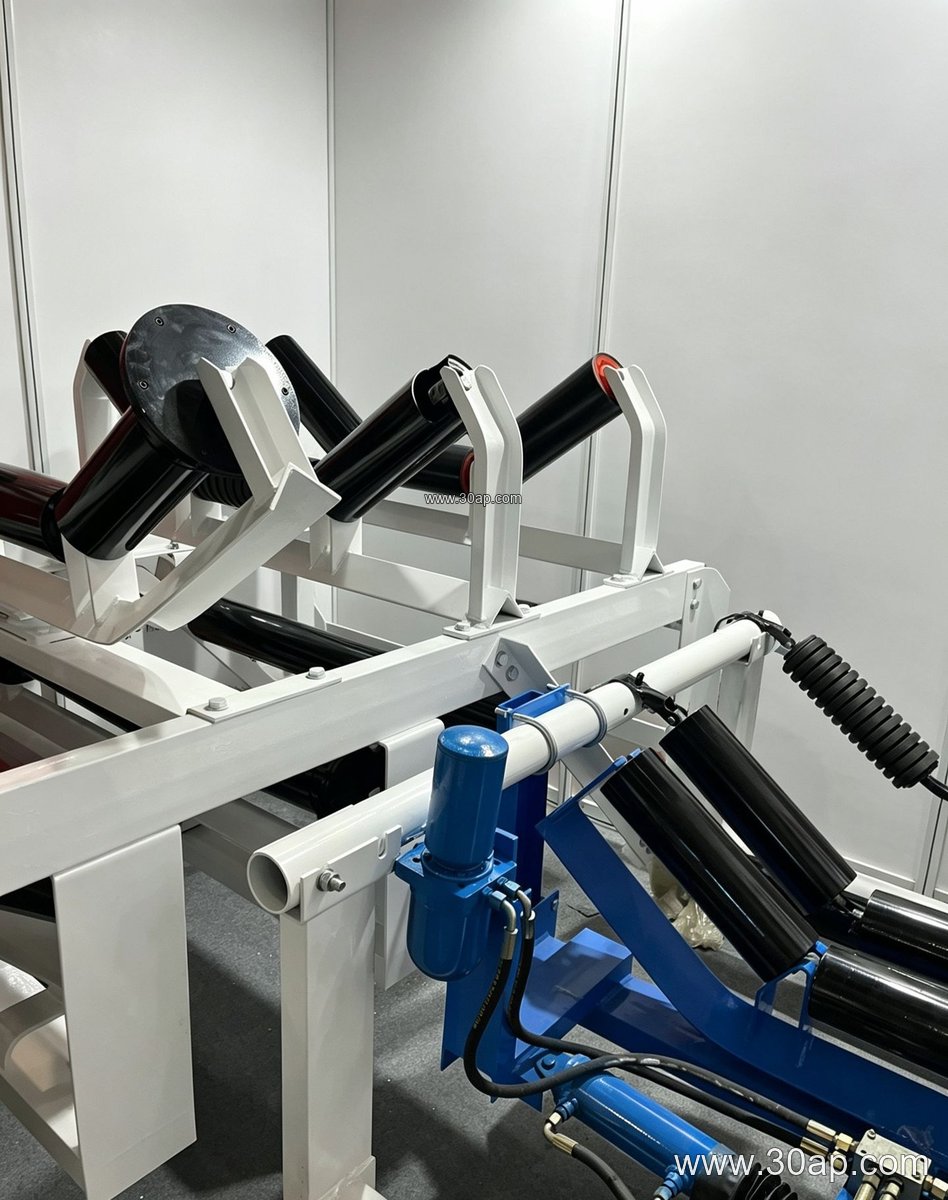
Adjustable vs Fixed Brackets
A fixed troughing bracket sets one angle for the life of the installation. It is rigid and economical. An adjustable bracket adds flexibility but introduces bolts and moving joints that need periodic inspection. The choice depends on how often the conveyor duty changes. For a coal mining conveyor that handles one product, a fixed bracket may be sufficient. For a crushing and screening plant that switches between fine and coarse aggregate, the adjustable version can save downtime.
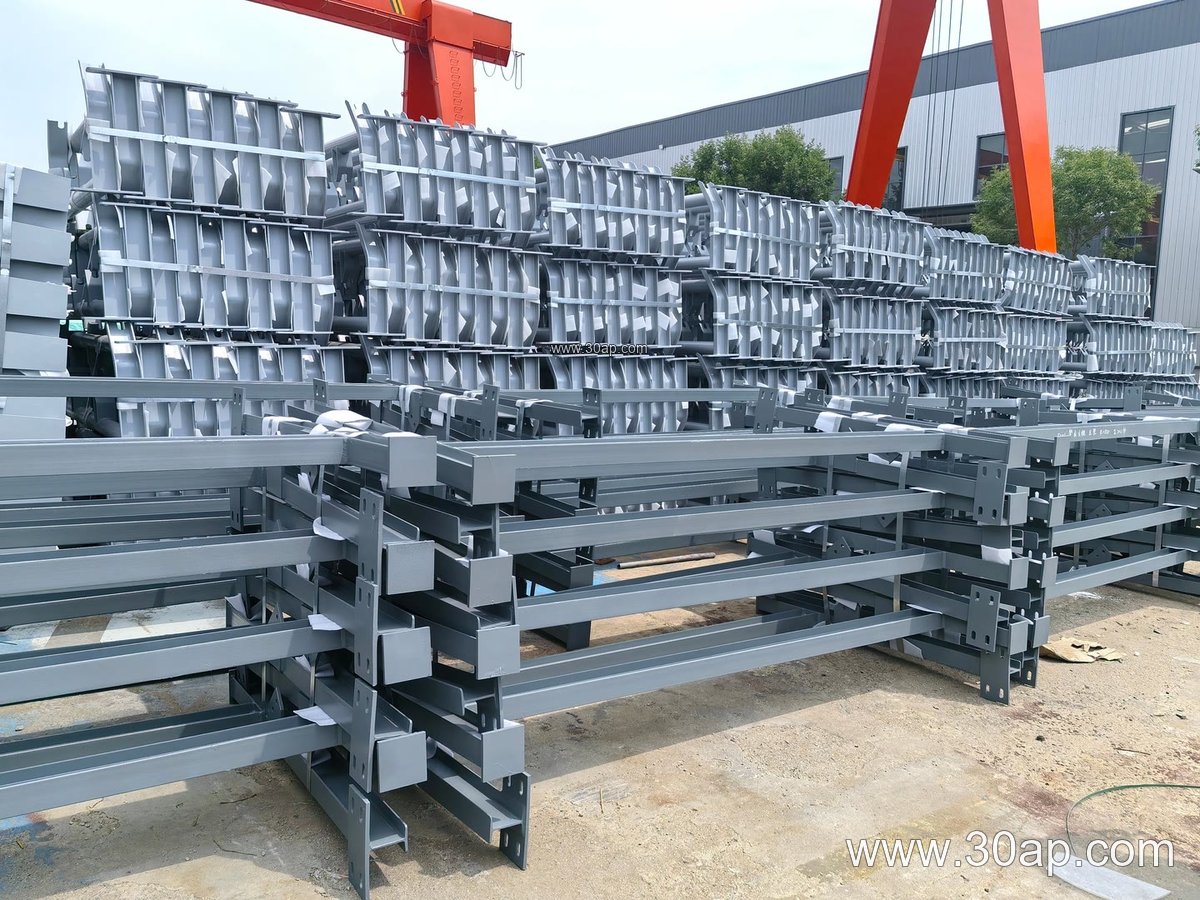
- Fixed bracket: single angle, fewer parts, lower maintenance.
- Adjustable bracket: variable angle, more setup options, check bolts regularly.
- Both types must match the idler roller diameter and belt width.
Selection Tips for Buyers
Start with the belt width and the idler diameter you already use. Common belt widths include B500, B650, B800, B1000, B1200, B1400, B1600, and B1800. Roller diameters often fall in the range of Ø89, Ø108, Ø133, Ø159, and Ø194. The trough angle should suit the material: 20 to 30 degrees for fine or light material, 35 to 45 degrees for lumpy or high-capacity loads. Do not assume that one belt width only matches one roller diameter; the conveyor designer pairs them based on load and speed.
Ask for the bracket drawing with hole spacing and arm travel. Confirm the steel grade and surface treatment. If the conveyor uses a flame retardant conveyor belt or a heat resistant conveyor belt, the bracket should still be checked for clearance and thermal effects. In a food or chemical plant, consider whether the bracket needs a painted or galvanized finish.
Maintenance Notes
Inspect pivot bolts and locking pins during scheduled shutdowns. Dust from a coal mining conveyor or a cement plant can seize a joint if it is not cleaned. Check that the idler roller spins freely and that the belt does not rub the bracket arms. If the trough angle is changed, recheck belt tracking and skirt rubber clearance. A well-maintained adjustable conveyor bracket helps the conveyor belt, idler roller, and conveyor pulley work together with less spillage and longer belt life.