What a Ceramic Pulley Is
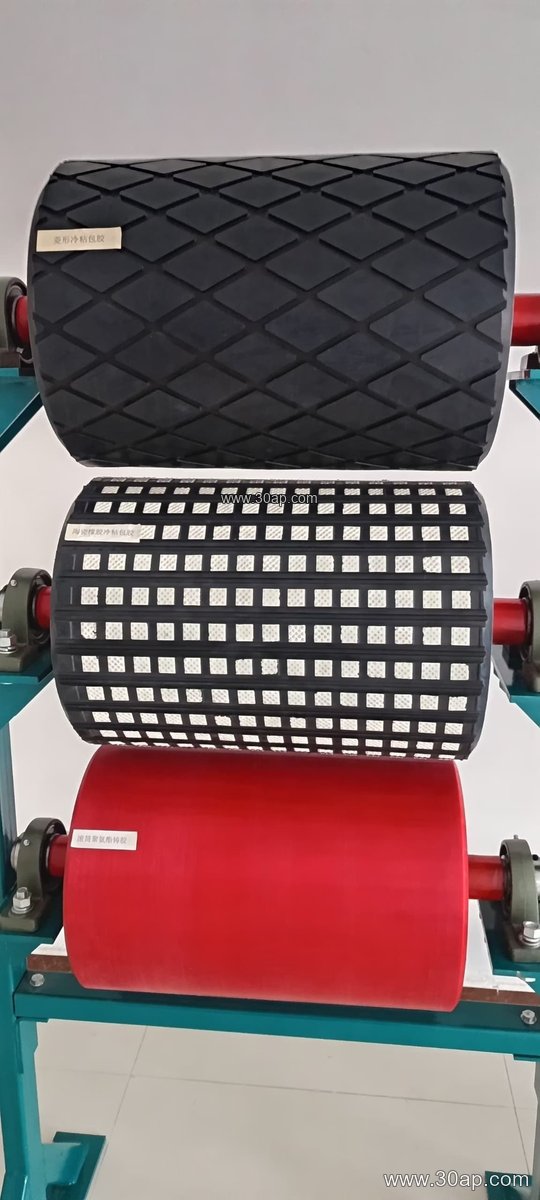
A ceramic pulley is a conveyor pulley whose shell is fitted with ceramic lagging instead of plain rubber or a bare steel face. In practice, most people mean the lagged drive pulley at the head of a conveyor, though the same ceramic surface can be applied to a bend pulley or a tail pulley where slip and wear are a problem. The ceramic tiles are set in a rubber or polymer backing, bonded to the drum, and left slightly proud of the backing so the belt rides on hard, gritted pads rather than on smooth rubber.
The result is a surface that keeps friction in wet, muddy or dusty conditions, and that resists the polishing action of fine abrasive material. On a busy aggregate line or a coal handling system, that difference shows up as less belt slip and a longer interval between relagging jobs.
How the Ceramic Surface Is Built
The usual construction is a rubber lagging sheet with embedded ceramic tiles, applied to a machined shell. Tiles are commonly square or rectangular, sometimes with a dimpled or raised pattern, and they are spaced so water and fines can escape between them. Bonding methods include hot vulcanization, cold vulcanized adhesive systems, and bolt-on or weld-on tile strips. Thickness of the lagging is typically chosen from a range such as 8, 10, 12, 15 or 20 mm, with the ceramic layer adding hardness at the surface.
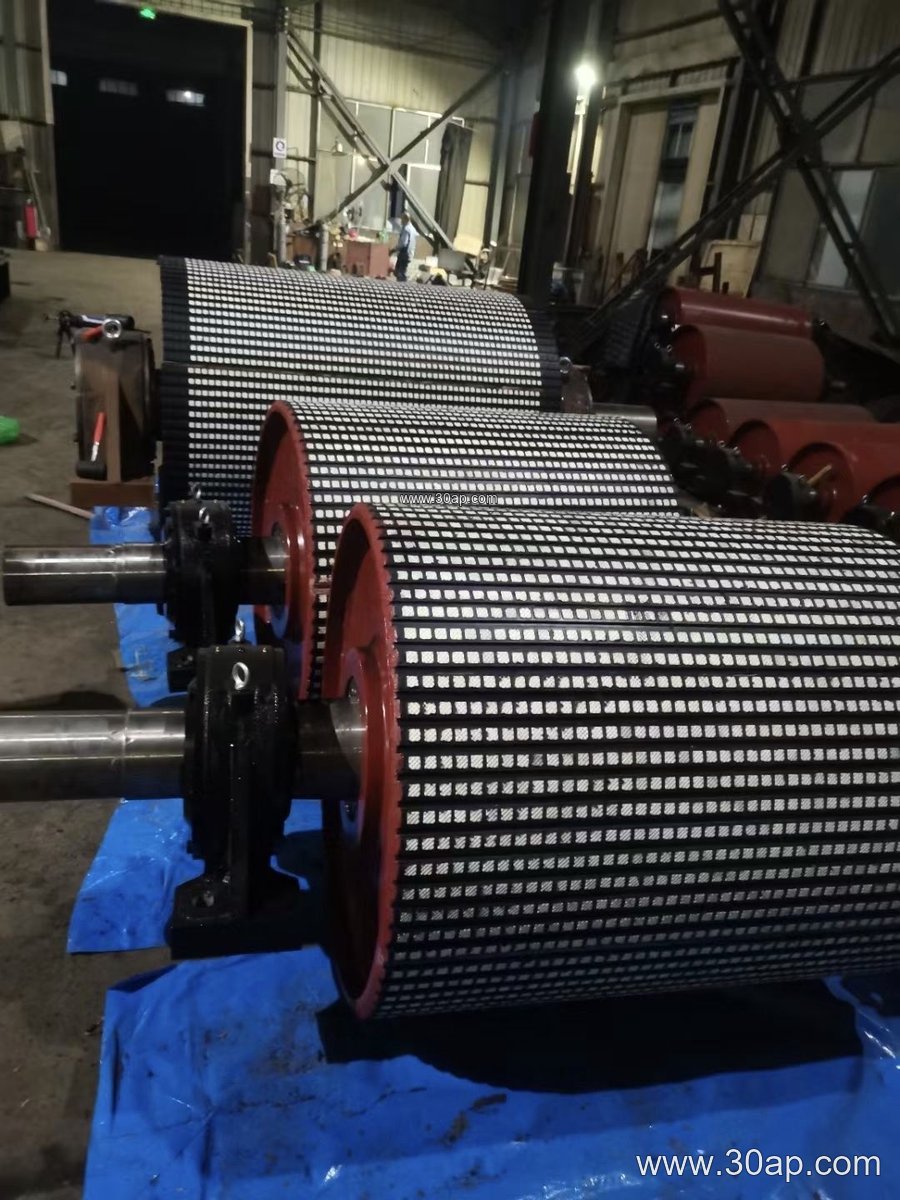
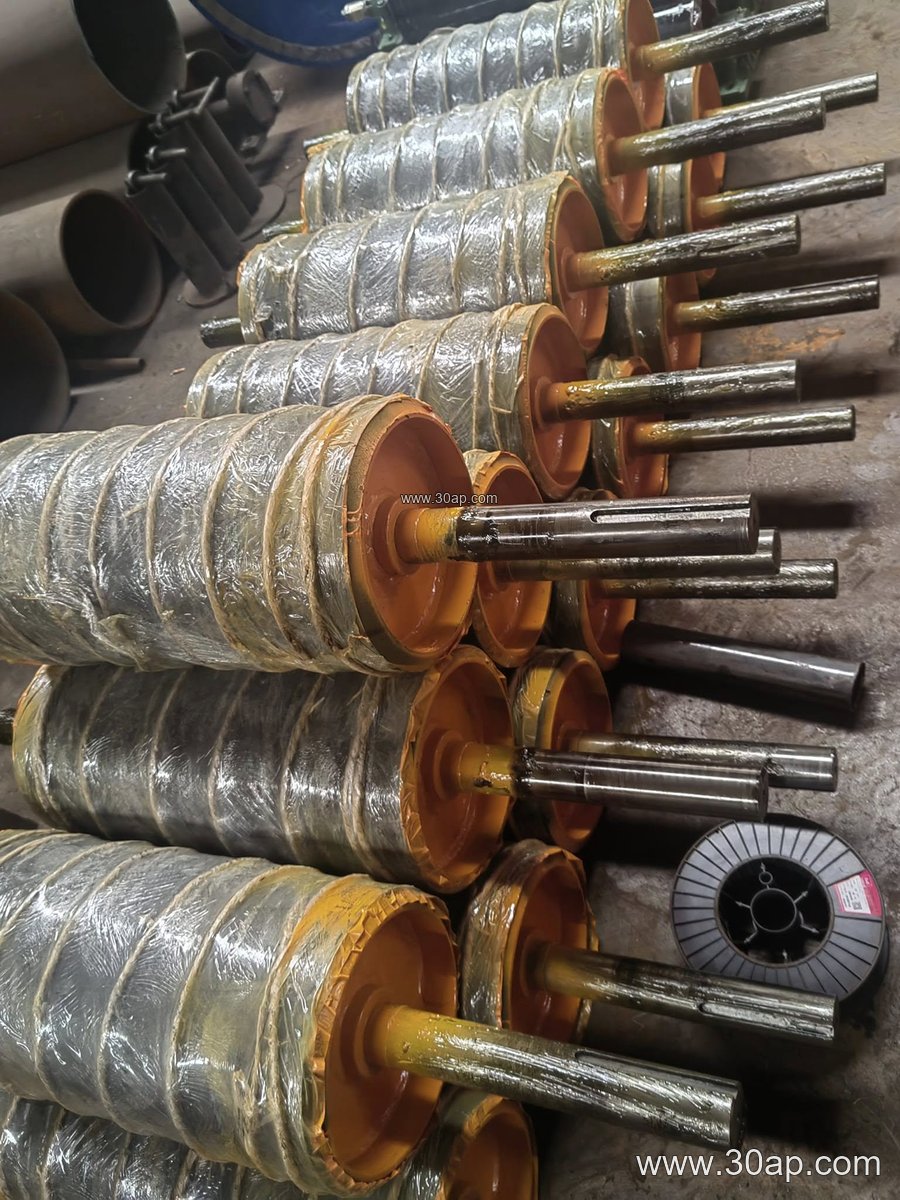
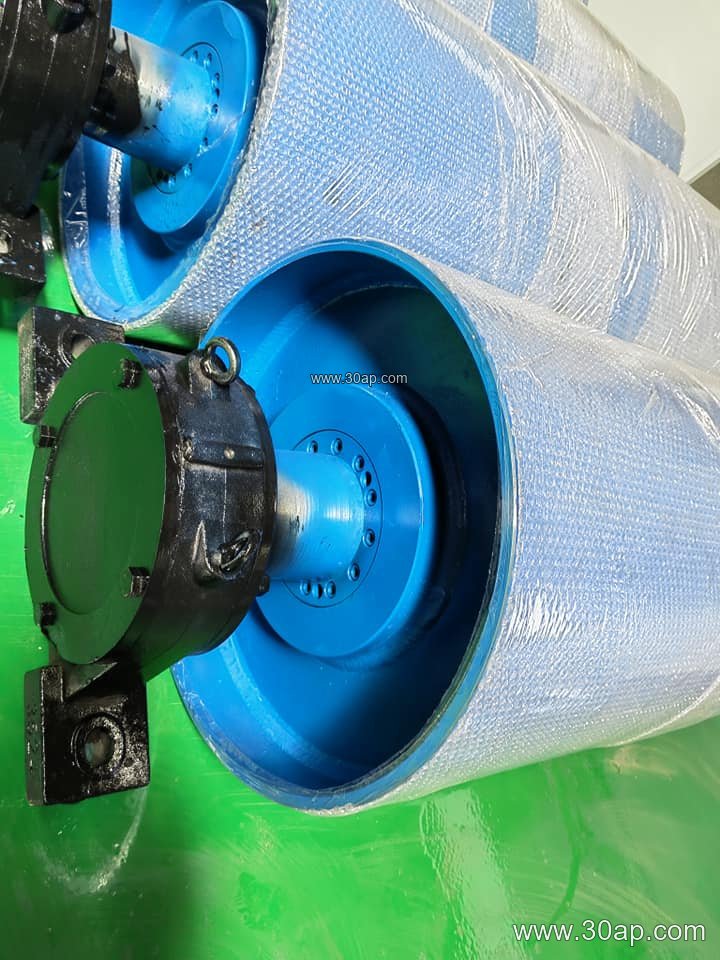
Because the shell carries the full belt tension and torque, the drum itself is a fabricated or cast steel unit with a shaft sized by torque and load, not by belt width alone. Common shaft diameters run from about Ø50 up to Ø200 mm on larger units, and the pulley diameter may be Ø200, Ø315, Ø500, Ø800, Ø1000 or larger depending on belt speed and wrap angle.
Where It Fits in a Conveyor
The strongest case for ceramic lagging is the drive pulley, where torque has to pass into the belt. A tail pulley or bend pulley usually needs less grip, and a plain rubber or grooved lagging may be enough there. Where a conveyor runs in wet or oily conditions, or handles material that coats the belt, the ceramic face helps the drive keep traction without over-tensioning.
Typical duty locations include:
- Primary crushing and screening plants in a quarry or limestone mine
- Coal handling and wash plants, where fines and moisture reduce friction
- Cement plant clinker and raw meal conveyors
- Power plant coal yards and port bulk terminals
- Iron ore, copper ore and other heavy mineral lines
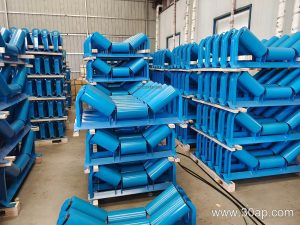
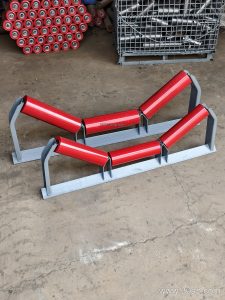
On these conveyors the pulley works alongside the belt, the idler roller sets and the conveyor bracket frames, so the lagging choice should match the belt cover grade. An abrasion resistant conveyor belt or a heavy-duty mining conveyor belt will tolerate a harder lagging surface better than a thin, soft cover.
Matching the Pulley to the Belt
Belt width and pulley face width are related but not identical. The shell face is normally a little wider than the belt, for example a B800 belt on a roughly 950 mm face, or a B1200 belt on a face near 1400 mm. Diameter is a separate decision: a B800 conveyor might run a Ø500 drive pulley, while a B1200 conveyor may use Ø1000, but the pairing depends on belt speed, wrap angle, torque and the belt’s own minimum pulley diameter requirement.
Belt construction matters too. A steel cord conveyor belt or a high strength conveyor belt needs a larger minimum pulley diameter than a thin fabric core belt, and a pipe conveyor belt or corrugated sidewall belt has its own demands. When specifying, give the belt type, width, speed and drive power rather than a single dimension.
Buyer Checklist
Before ordering, confirm the pulley position, the shell diameter and face width, the shaft diameter and bearing type, and the lagging pattern. Ask whether the ceramic lagging is hot vulcanized or cold bonded, and whether tiles are replaceable. For a conveyor pulley in a dusty quarry or a coal mining conveyor, check that the lagging grooves will not pack with fines.
Also review the belt: a flame retardant conveyor belt for underground use, an oil resistant conveyor belt near gearboxes, or a heat resistant conveyor belt near clinker coolers each place different demands on the pulley surface. Keep spare lagging sheets on hand, and inspect tile loss at each shutdown, since missing tiles concentrate load on the remaining ones.
Used with the right belt and maintained properly, a ceramic pulley is a practical way to hold drive traction in wet, abrasive bulk handling work.