What a Conveyor Idler Frame Does on the Line
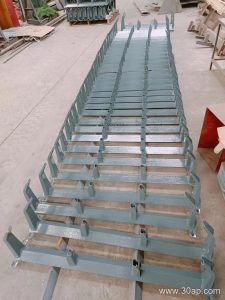
A conveyor idler frame is the structural element that holds idler rollers in the correct position under or above the conveyor belt. It carries the rollers, keeps them at the designed trough angle, and transfers the load of the belt and material into the conveyor stringer or support structure. In a quarry, a cement plant, or a power plant coal yard, the frame is the quiet workhorse that decides how evenly the belt sits and how long the rollers last.
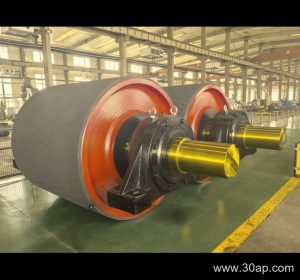
Buyers often treat the frame as a simple bracket, but it is a load-bearing component. A well-made frame keeps the belt centered, reduces edge damage, and lets the idler roller spin freely. On the same conveyor, the upper trough frame and the lower return frame do different jobs, and neither should be confused with the conveyor pulley at the drive or tail end.
How the Frame Is Built
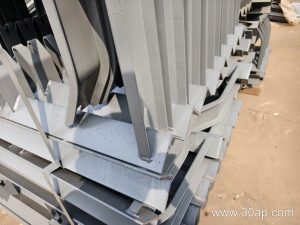
Most frames are fabricated from angle steel, channel steel, or folded steel plate. The crossbeam length and the mounting hole spacing are determined by belt width, trough angle, and the roller diameter selected for the duty. There is no single fixed hole pitch that fits every conveyor, so the frame is usually matched to the actual idler and stringer layout.
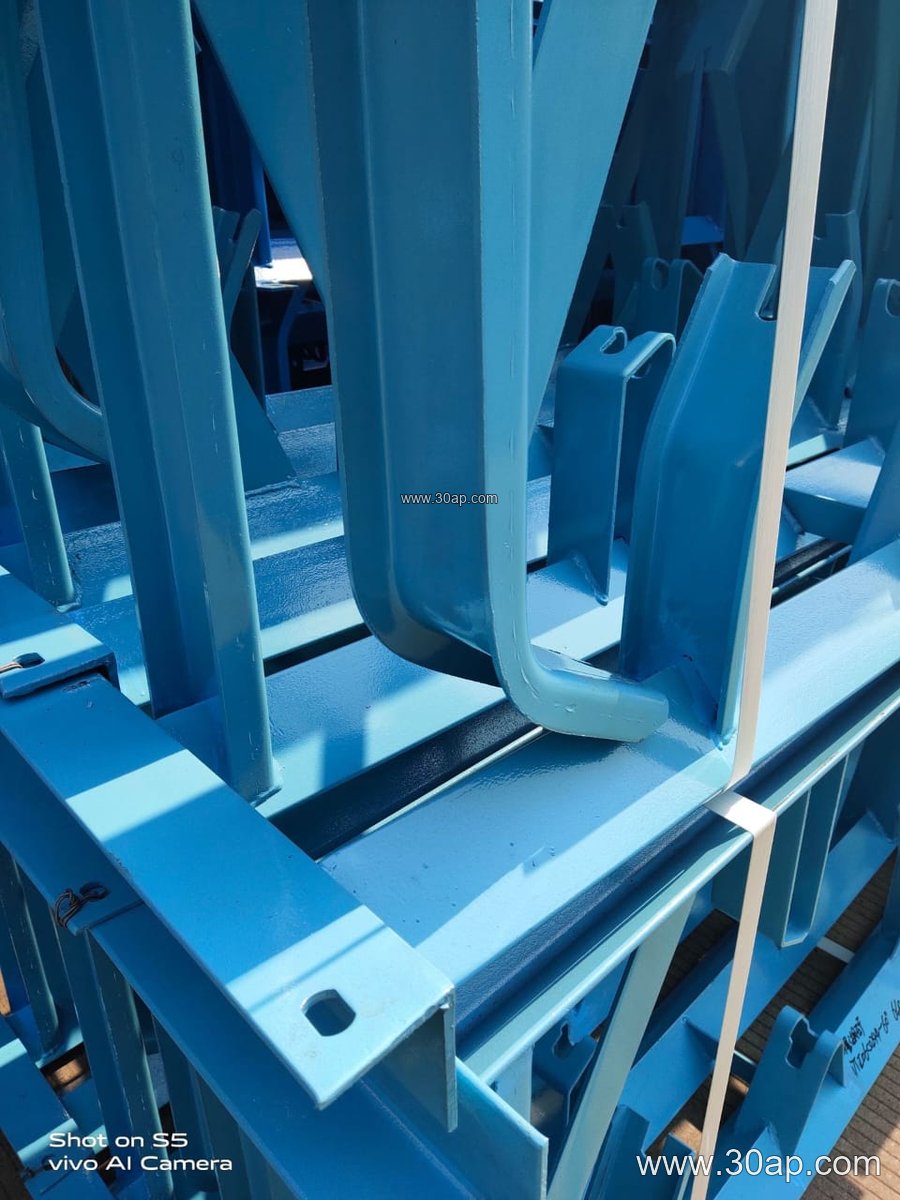
The common forms include trough frames, transition frames, return frames, V-return frames, impact frames, self-aligning frames, forward-leaning frames, and adjustable frames. An adjustable frame allows the trough angle to be set within a range, which helps when a belt needs fine tuning after installation. Forward-leaning frames usually carry a small tilt of about 1.5 to 2 degrees to help center the belt.
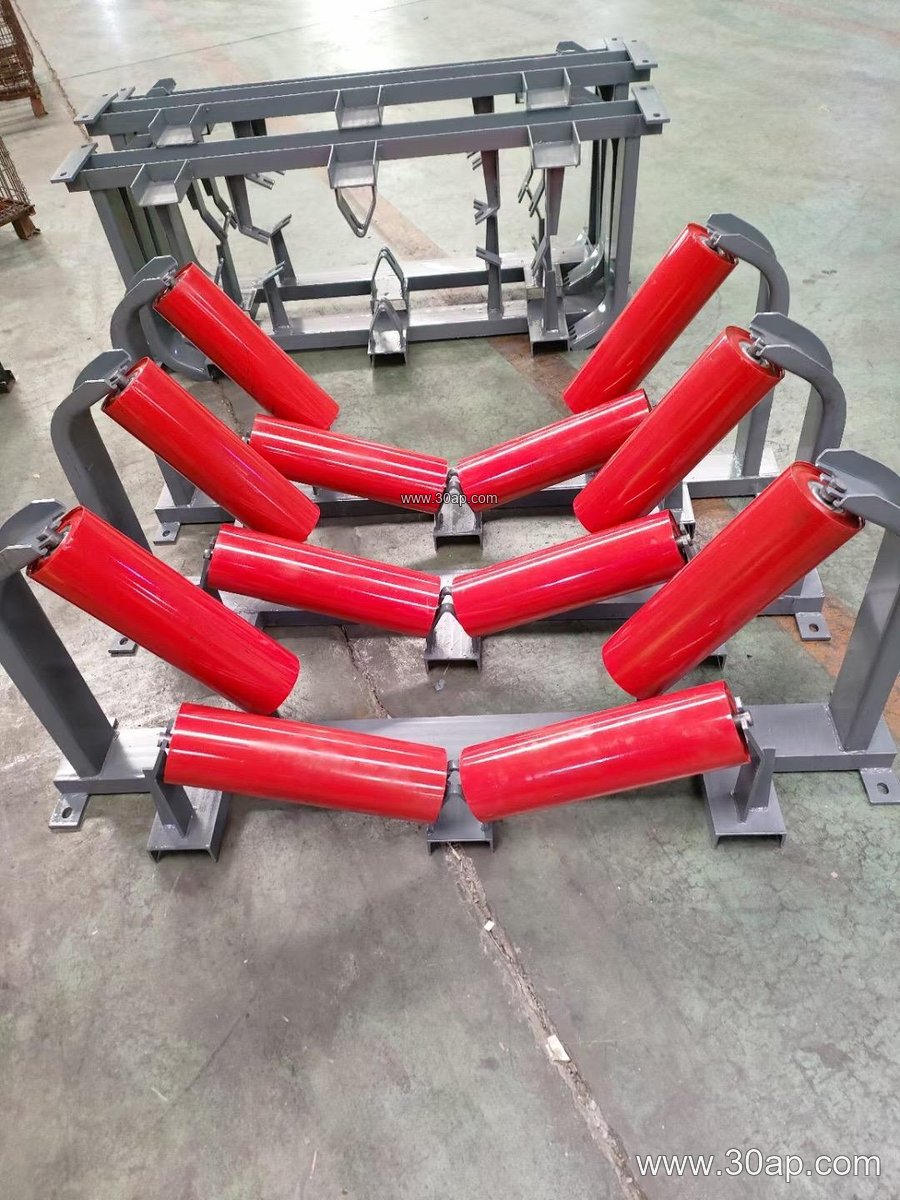
- Trough frames hold three rollers in a trough shape for the carrying side.
- Return frames support the belt on the return side, often with one flat roller or a V arrangement.
- Impact frames use cushioning rollers under the loading point to absorb material drop energy.
- Self-aligning frames correct belt drift on long conveyors.
Matching Frame, Belt, and Roller
A frame is only as good as the combination it holds. Belt width, trough angle, and roller diameter should be chosen together. Typical reference combinations include B800 with a 35 degree trough and Ø108 rollers, B1200 with a 45 degree trough and Ø133 rollers, or B650 with a 30 degree trough and Ø89 rollers. These are examples, not fixed rules; a B1000 belt may run at 30 or 35 degrees depending on the material and the design.
The roller diameter range commonly runs from Ø89 to Ø194. Frames should be ordered with the hole spacing that matches the selected idler roller, because a mismatch leads to poor seating and premature wear. When the conveyor carries an abrasive bulk material, a heavy-duty frame of channel steel is often preferred over a lighter folded-plate design. On a coal mining conveyor belt or an iron ore line, the frame and roller set should be robust enough for continuous loading.
Where These Frames Are Used
Frames appear wherever a conveyor belt runs over rollers. In a limestone mine or a stone crushing plant, they support the belt through the crushing and screening circuit. In a cement plant, they carry clinker and raw meal on long inclined conveyors. In a port or ship loading system, they keep wide belts stable at high tonnage. In a coal-fired power plant, they sit under the coal conveyor belt from the stockyard to the bunker.
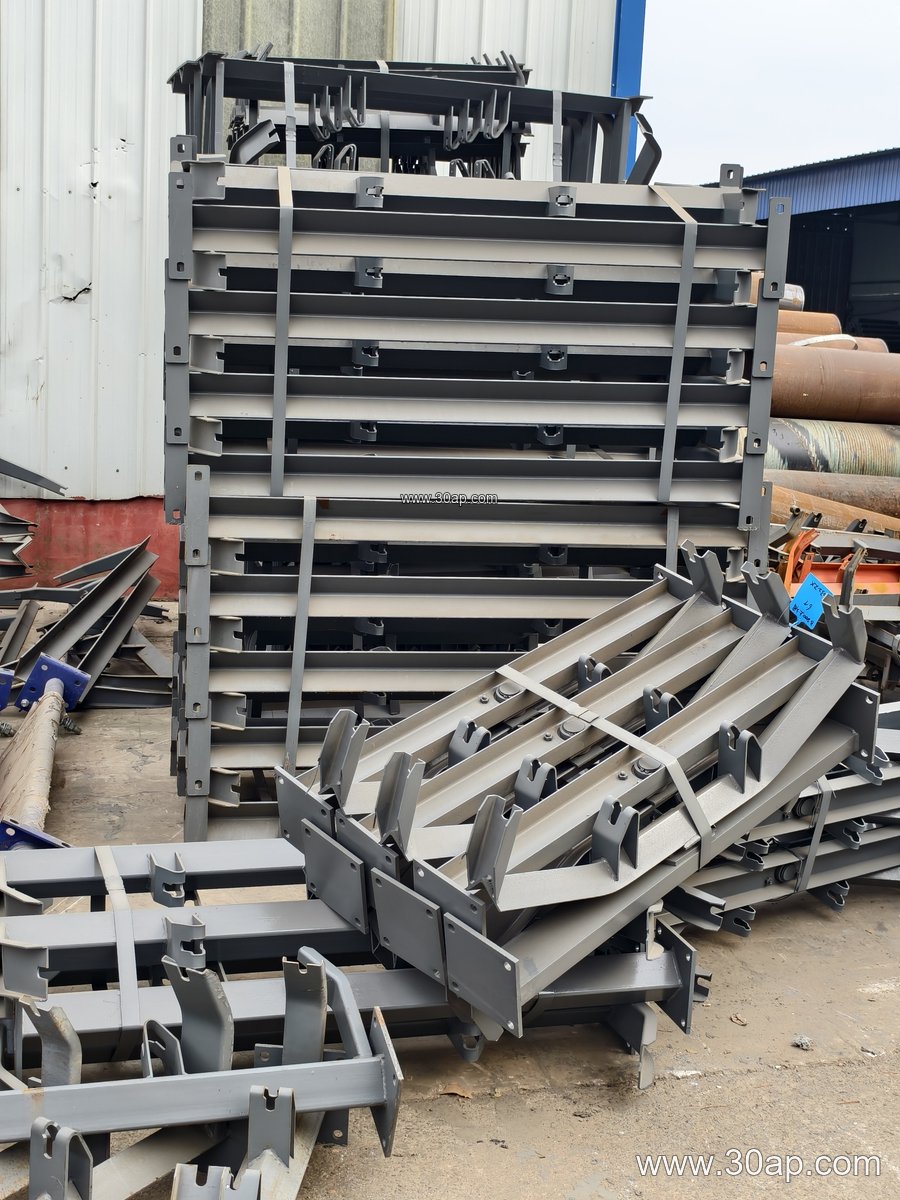
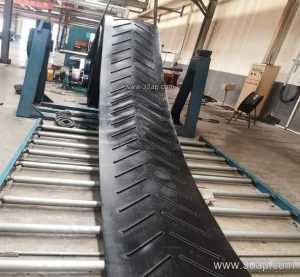
The frame also works with the conveyor bracket that fixes it to the stringer, and with the conveyor pulley at the head or tail of the line. The belt itself may be a rubber conveyor belt, an EP conveyor belt, or a steel cord conveyor belt, and the frame design should suit the belt stiffness and the load it carries.
Buyer Checklist
Before ordering, confirm the belt width, the required trough angle, the roller diameter, and the mounting hole spacing. Check whether the frame is fixed or adjustable, and whether it is for the carrying side, the return side, or a loading point. Ask for the material and finish, since a dusty or wet plant needs a frame that will not corrode quickly. Specify the quantity by position on the conveyor, not just by total count.
For a reliable match, share the conveyor layout and the idler roller drawing with the frame supplier. A frame that fits properly keeps the belt tracking, protects the belt edges, and extends the service life of the whole conveyor system.