What an Iron Ore Conveyor Idler Does
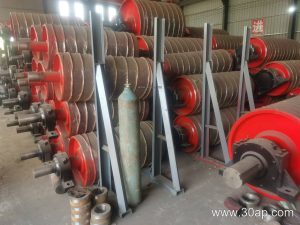
An iron ore conveyor idler is the rotating roller that supports and guides the conveyor belt along the carrying and return sides of a bulk handling system. In a typical iron ore conveyor, these idlers are mounted on a sturdy frame at regular intervals, forming a trough that keeps the belt aligned and prevents material spillage. Because iron ore is dense, abrasive, and often sharp-edged, the idler must be built to withstand heavy loads and constant wear. This article explains how these idlers are constructed, where they are used, and what buyers should consider when specifying them for mining, port, or steel plant applications.
Construction and Key Components
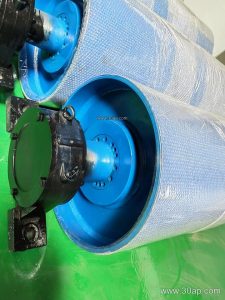
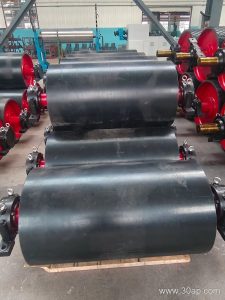
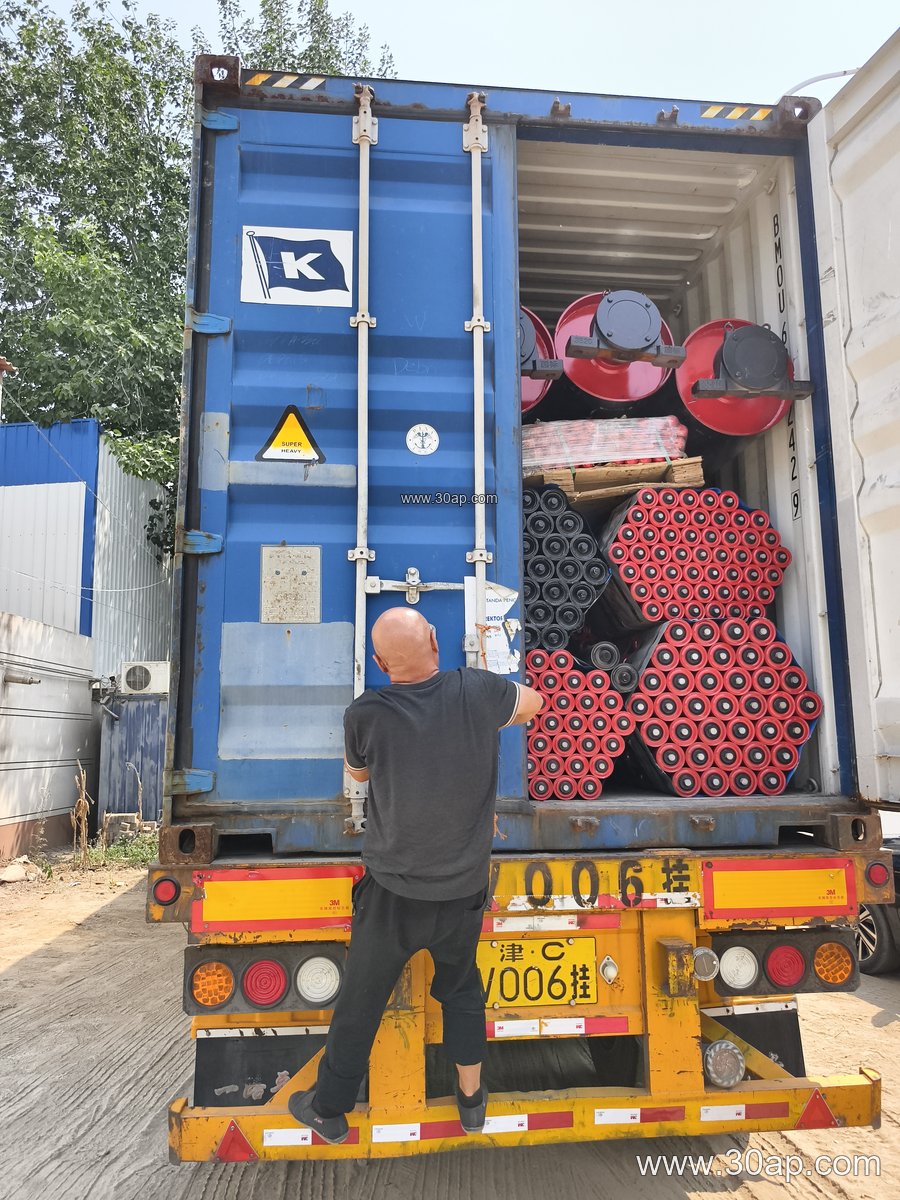
A typical iron ore conveyor idler consists of a steel tube shell, bearing housings, a shaft, and sealing arrangements. The shell is often made from seamless or welded steel pipe, and for abrasive service, it may be fitted with a rubber lagging or ceramic coating to extend life. Bearings are usually deep-groove ball bearings or tapered roller bearings, selected according to load and speed. Common bearing sizes in this range include 6204, 6205, 6305, 6306, 6308, and 6310, though the final choice depends on the specific idler diameter and duty. The sealing system is critical in iron ore applications, where fine dust and moisture can quickly destroy bearings. Labyrinth seals, contact seals, and grease retention features are common. The shaft is typically machined from carbon steel and may be plated or coated for corrosion resistance.
Common Types and Arrangements
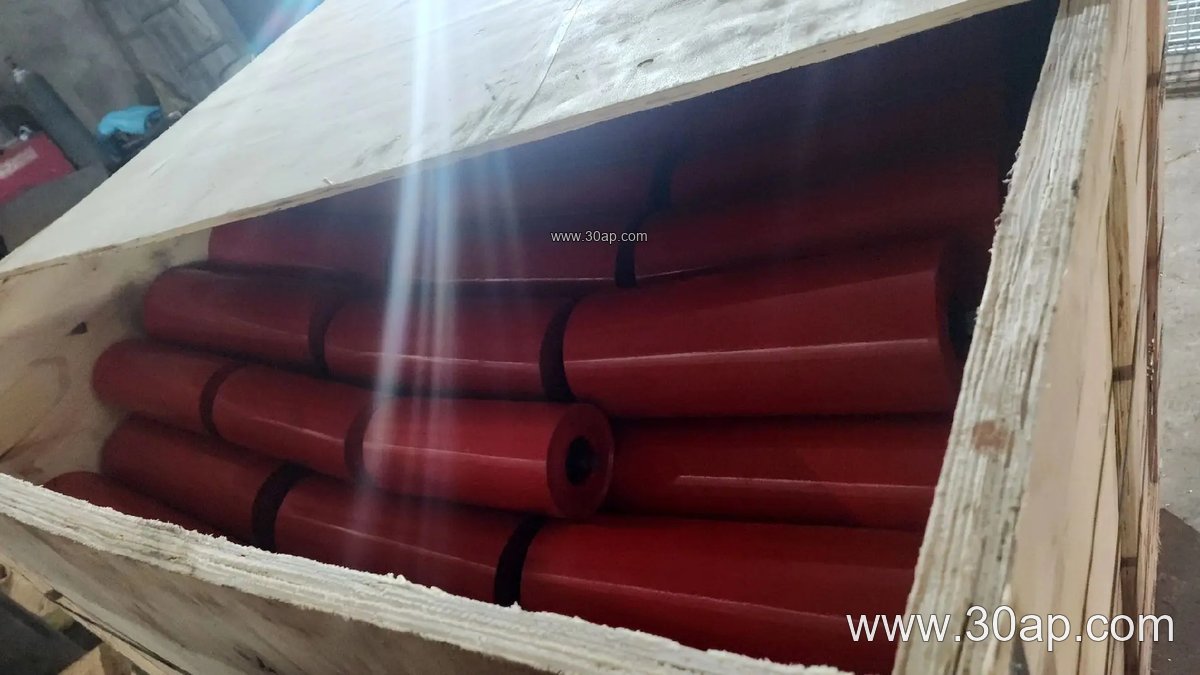
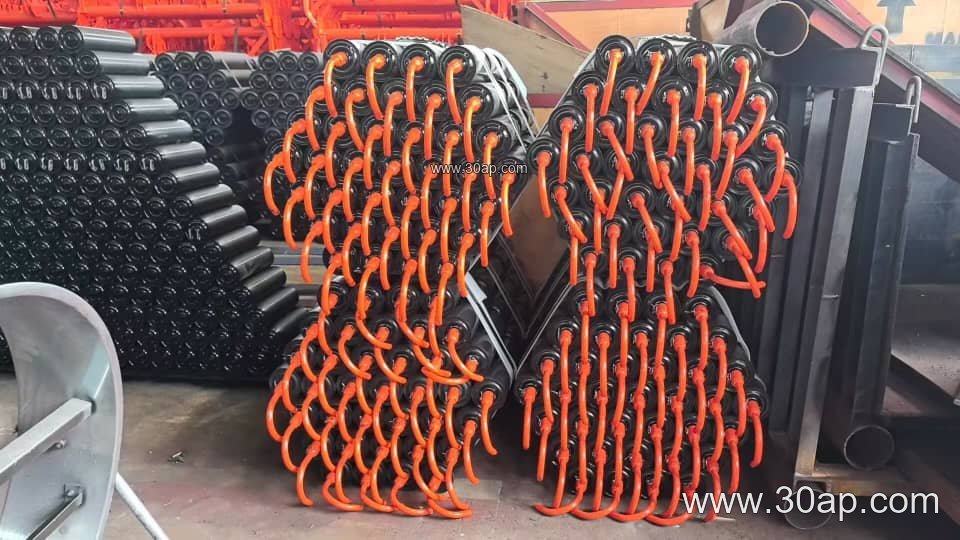
Iron ore conveyor idlers are supplied in several configurations to match the belt width and the load profile. Troughing idlers are the most common on the carrying side, often arranged as a three-roll set with a trough angle of 20, 30, 35, or 45 degrees. For transition zones near the tail pulley or at loading points, transition idlers with smaller trough angles help the belt make a smooth change. On the return side, flat return idlers or V-return idlers support the empty belt. Impact idlers, sometimes with rubber rings, are used under loading chutes where the ore drops onto the belt. Training idlers, including friction and tapered types, help keep the belt centered. The table below gives common examples of idler diameters and roll lengths for different belt widths; these are reference values, not fixed combinations.
| Belt Width | Common Idler Diameter (mm) | Typical Roll Length for 3-Roll Trough (mm) |
|---|---|---|
| B500 | 63, 76, 89 | 200 |
| B650 | 76, 89, 102 | 250 |
| B800 | 89, 102, 108 | 315 |
| B1000 | 102, 108, 127 | 380 |
| B1200 | 108, 127, 133 | 465 |
| B1400 | 127, 133, 159 | 530 |
| B1600 | 133, 159, 178 | 600 |
| B1800 | 159, 178, 194 | 670 |
Note that side rolls and center rolls can differ in length, and the final dimensions are determined by the conveyor design. Idler rollers are often specified with a shaft diameter that matches the bracket and bearing housing, but shaft size should not be assumed from belt width alone.
Where Iron Ore Conveyor Idlers Are Used
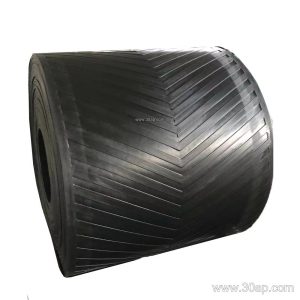
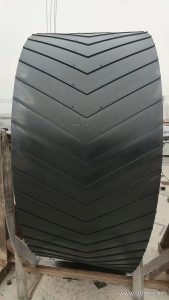
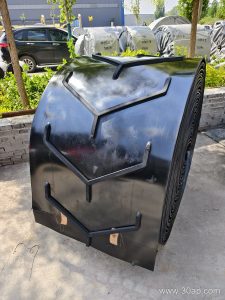
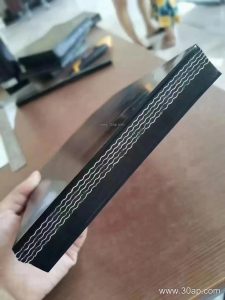
These idlers are found in iron ore mines, crushing and screening plants, and steel plant raw material yards. They also appear in port terminals where iron ore is loaded or unloaded, and in sinter plants that prepare burden for blast furnaces. In each setting, the idler must handle the specific material characteristics: lump ore may require impact-resistant rolls at transfer points, while fine concentrate demands good sealing against dust. The conveyor belt itself may be a heavy-duty mining conveyor belt, such as an abrasion resistant conveyor belt or a steel cord conveyor belt, and the idler must be compatible with the belt’s load and speed. For example, a high abrasion resistant conveyor belt paired with well-sealed idlers reduces the risk of premature wear on both components.
Selection and Maintenance Tips
Buyers should consider the belt width, belt speed, material lump size, and operating environment when choosing iron ore conveyor idlers. In dusty or wet conditions, sealed-for-life idlers with multi-stage labyrinth seals are often preferred. For high-load areas, larger diameter idlers with tapered roller bearings may be used. Regular inspection of idler rotation, shell wear, and bearing temperature helps prevent belt damage and downtime. Maintaining proper belt tension and alignment also extends idler life. When replacing idlers, match the mounting dimensions and ensure the bracket and frame are in good condition. Keep a stock of common sizes to reduce delays, but avoid assuming that one idler size fits all belt widths.
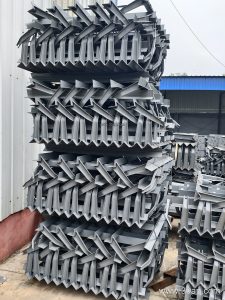
For more information on conveyor components, including idler roller, conveyor pulley, and conveyor bracket options, consult your supplier with the specific duty conditions.