What a Conveyor Bracket Assembly Does
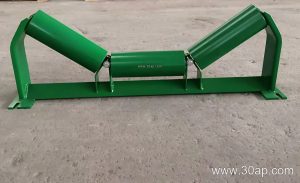
A conveyor bracket assembly is the structural link between the conveyor frame and the rotating components that carry the belt. In most plants it is the part that holds the idler roller at the correct height, angle and spacing, so the conveyor belt runs smoothly instead of sagging or drifting. The assembly usually combines a cross beam, mounting plates, angle or channel steel supports and bolts that fix the idler in place.
Because the bracket assembly is a support product rather than a wear part, it is easy to overlook during maintenance planning. Yet a loose or misaligned bracket can cause belt mistracking, edge damage and premature idler failure. For anyone working with a quarry conveyor belt or a cement plant transfer line, the bracket assembly is worth understanding in detail.
How the Assembly Is Built
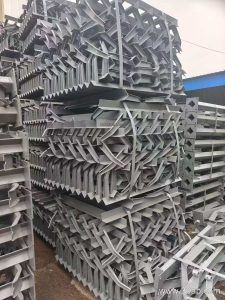
Fabrication typically starts with angle steel, channel steel or folded steel plate. The frame is welded or bolted into a rigid unit, then drilled to match the idler shaft and the conveyor structure. Surface treatment such as painting or galvanizing helps the assembly resist dust and moisture in outdoor installations.
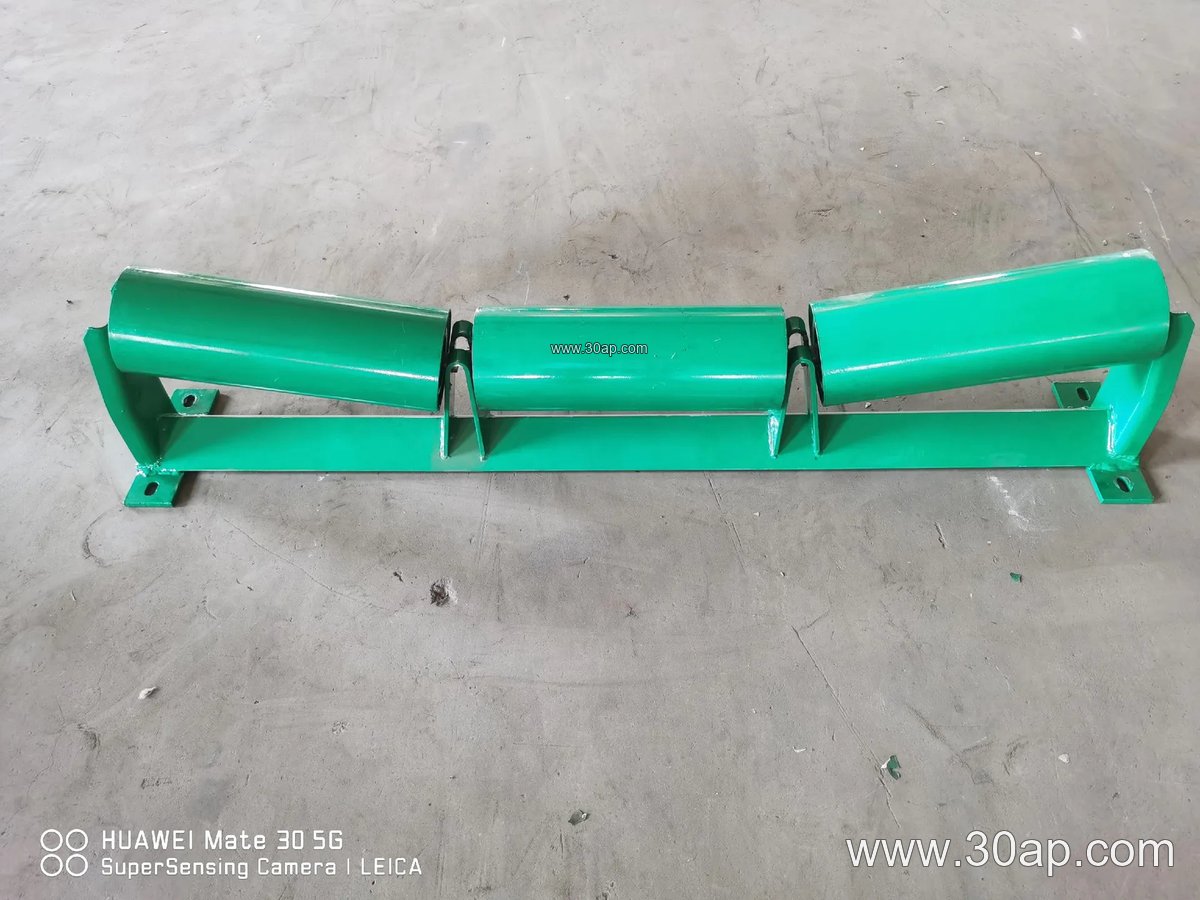
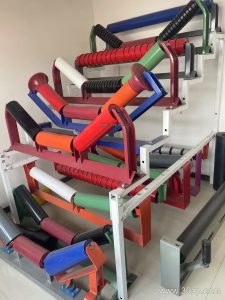
A complete assembly may include several bracket variants on one conveyor:
- Trough brackets that set the trough angle of the carrying idlers
- Transition brackets near pulleys and loading points
- Return brackets and V-return brackets under the belt
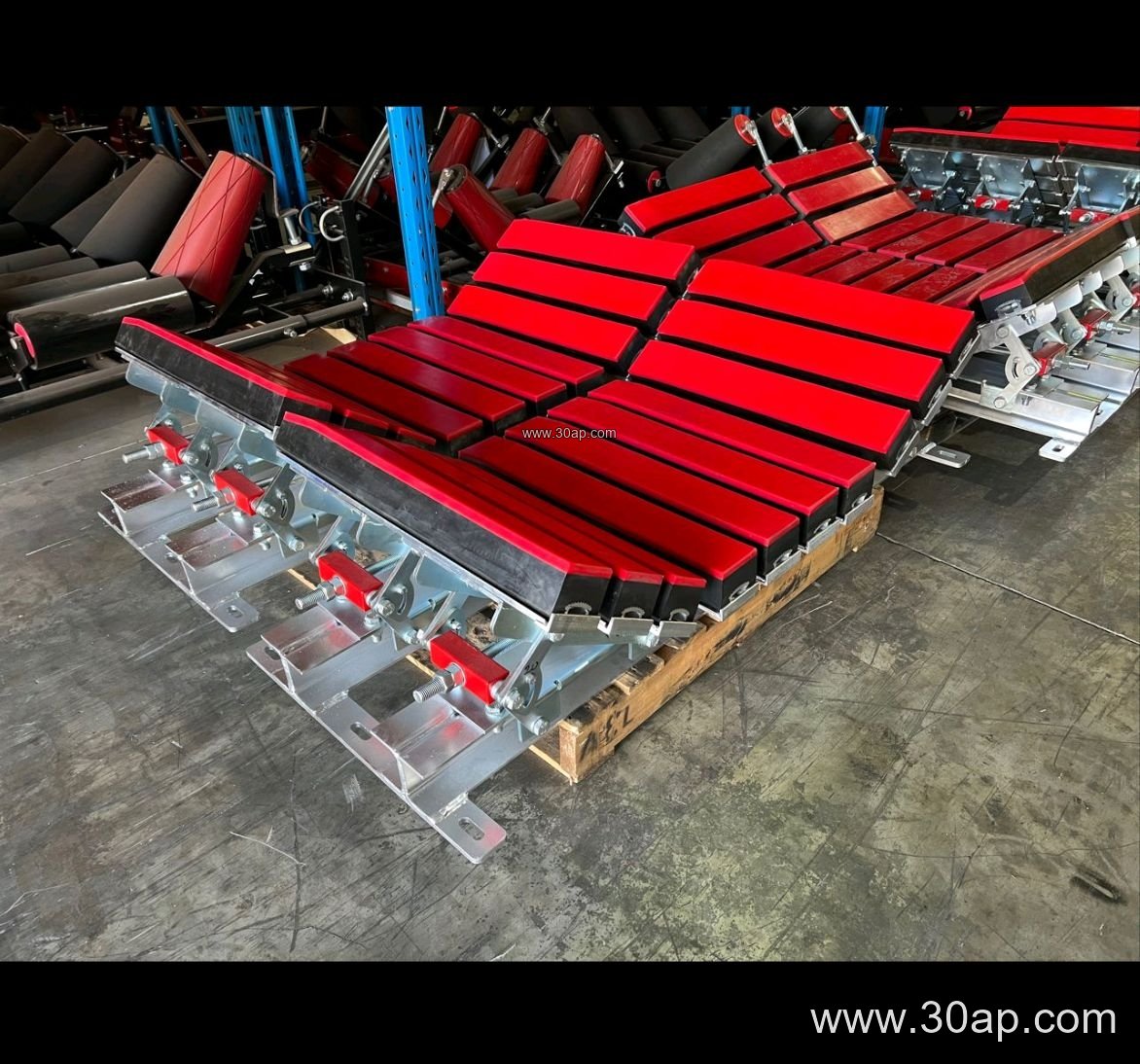
- Impact brackets at transfer chutes
- Self-aligning brackets for tracking control
- Adjustable brackets that allow the trough angle to be changed
Common materials are angle steel, channel steel and folded steel plate. The bracket is normally matched to the belt width and the idler diameter used on that conveyor.
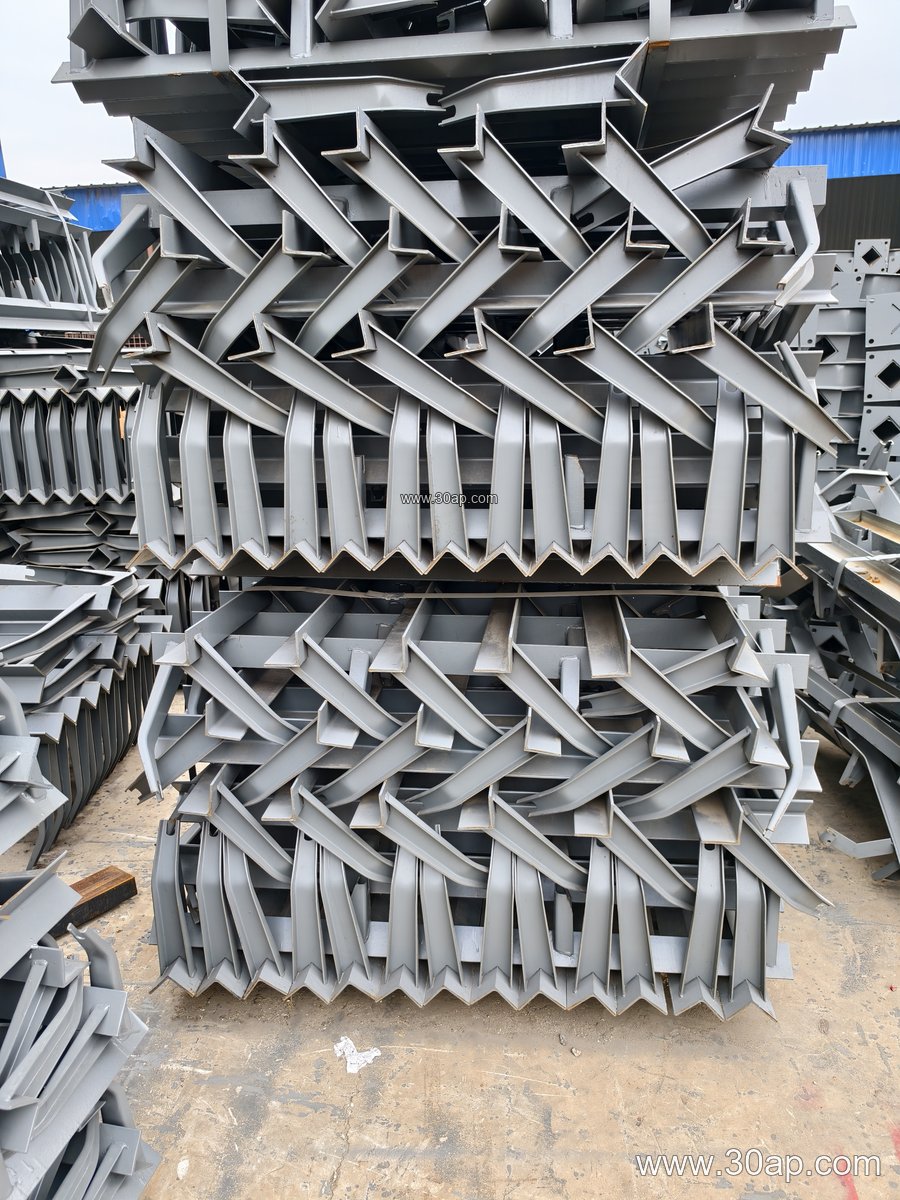
Where These Assemblies Are Used
Bracket assemblies appear wherever a belt conveyor moves bulk material. In a limestone mine or crushing and screening line, trough brackets keep the belt in a stable U shape under heavy rock loads. In a power plant coal handling system, return brackets support the belt on its lower run and help control dust accumulation. Aggregate plants, fertilizer granulation lines and grain silos use similar layouts, often with lighter bracket sections.
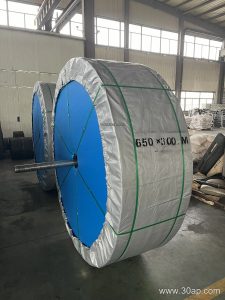
The belt itself may be a rubber conveyor belt, an EP conveyor belt or a steel cord conveyor belt, depending on load and distance. A heavy-duty mining conveyor belt generally needs a stiffer bracket assembly than a light aggregate conveyor belt, because the idler load and impact forces are higher.
Matching Bracket, Belt Width and Idler Diameter
Selection starts with belt width, trough angle and idler diameter. These three values are related but not fixed in a one-to-one way. A B800 belt may run with a 30 degree or 35 degree trough, and the idler diameter is chosen from load and speed rather than belt width alone. Typical reference values are shown below.
Reference combinations for planning
| Belt width | Trough angle | Idler diameter | Typical bracket role |
|---|---|---|---|
| B500 | 20 to 30 degrees | Ø89 | Light carrying support |
| B650 | 30 degrees | Ø89 to Ø108 | General trough bracket |
| B800 | 30 to 35 degrees | Ø108 | Trough and transition brackets |
| B1000 | 35 degrees | Ø108 to Ø133 | Main line carrying support |
| B1200 | 35 to 45 degrees | Ø133 | Heavy trough bracket |
| B1400 | 35 to 45 degrees | Ø133 to Ø159 | High capacity trough bracket |
| B1600 | 35 to 45 degrees | Ø159 | Mining and port duty |
| B1800 | 45 degrees | Ø159 to Ø194 | Heavy-duty support |
| B2000 | 45 degrees | Ø194 | Wide belt support |
These values are common references, not mandatory pairings. Hole spacing and beam length change with belt width and trough angle, so the assembly should be confirmed against the conveyor drawing.
Adjustable Versus Fixed Brackets
Fixed brackets are simple and rigid, and they suit lines where the trough angle never changes. Adjustable brackets allow the operator to set the trough angle between positions such as 20, 30, 35 or 45 degrees, which is useful when the belt material or loading pattern changes. Forward-leaning brackets, often set at about 1.5 to 2 degrees, are a separate design used for tracking rather than trough adjustment. A buyer should not treat these as interchangeable; the drive pulley, tail pulley and bend pulley each have their own alignment needs, and the bracket type must match the position on the conveyor.
Buyer Checklist
- Confirm belt width, trough angle and idler diameter before ordering.
- Ask for the mounting hole pattern and beam length, since these follow the conveyor design.
- Check whether the assembly is fixed or adjustable, and whether a forward-leaning version is needed.
- Match the bracket material and finish to the environment, such as wet washing plants or dusty coal yards.
- Plan spare brackets for impact and transition zones, where loads are highest.
Whether the line handles iron ore, clinker or grain, a correctly specified conveyor bracket assembly keeps the idlers aligned and the belt running true. More conveyor component guidance is available at www.beltsupply.com for belt, idler roller and pulley selection.