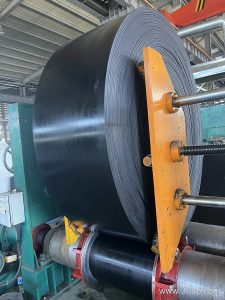
What a Turning Pulley Does
A turning pulley is the drum that redirects a conveyor belt as it travels around a circuit. In many conveyor layouts it sits at a bend point, guiding the belt through a change of direction so the system can fit a tight plant footprint or reach a transfer tower. Buyers often call this same component a bend pulley, and the two terms describe one product: a drum that changes belt direction without driving the belt forward. It should not be confused with the drive pulley at the head, the tail pulley at the loading end, or a tension pulley that takes up slack. Each of those has its own job, and mixing them up at the specification stage leads to the wrong shaft, bearing or lagging choice.
The turning drum is usually a plain cylindrical shell with a shaft, hubs, bearing housings and a lagged or bare surface. Because it only redirects, the loads it sees are mostly belt tension and wrap angle rather than high torque. That difference matters when you compare a turning pulley with a drive pulley: the drive unit must transmit power through friction, while the turning drum mainly carries the belt around its arc. A conveyor pulley used at a bend point can therefore be lighter than a head drive, but it still needs a straight, true-running shell so the belt tracks evenly.
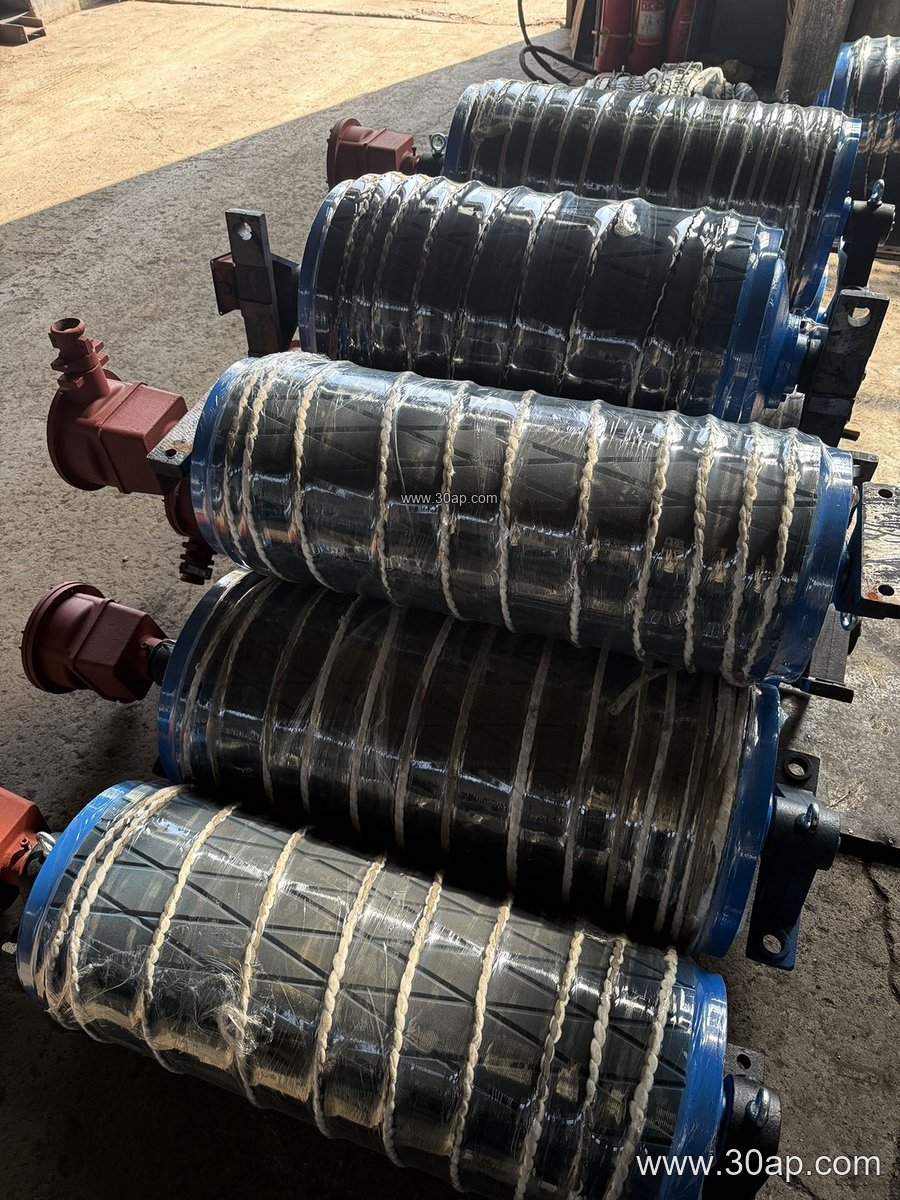
Construction and Surface Options
The shell is commonly rolled steel, machined at the ends and welded to the shaft or hub assembly. Bearings are selected for the radial load and the shaft is sized by torque and load, not by belt width alone. Surface finish depends on the belt and the environment. Plain finish is common where the belt back is clean and dry. Rubber lagging in 8, 10, 12, 15 or 20 mm thickness improves grip and protects the shell, while diamond or herringbone patterns help shed water and fines. Ceramic lagging is chosen where abrasive dust is heavy. For a turning position, the lagging is often plain rubber rather than the heavy drive pattern, because slip is not the main concern and a smooth cover reduces belt wear.
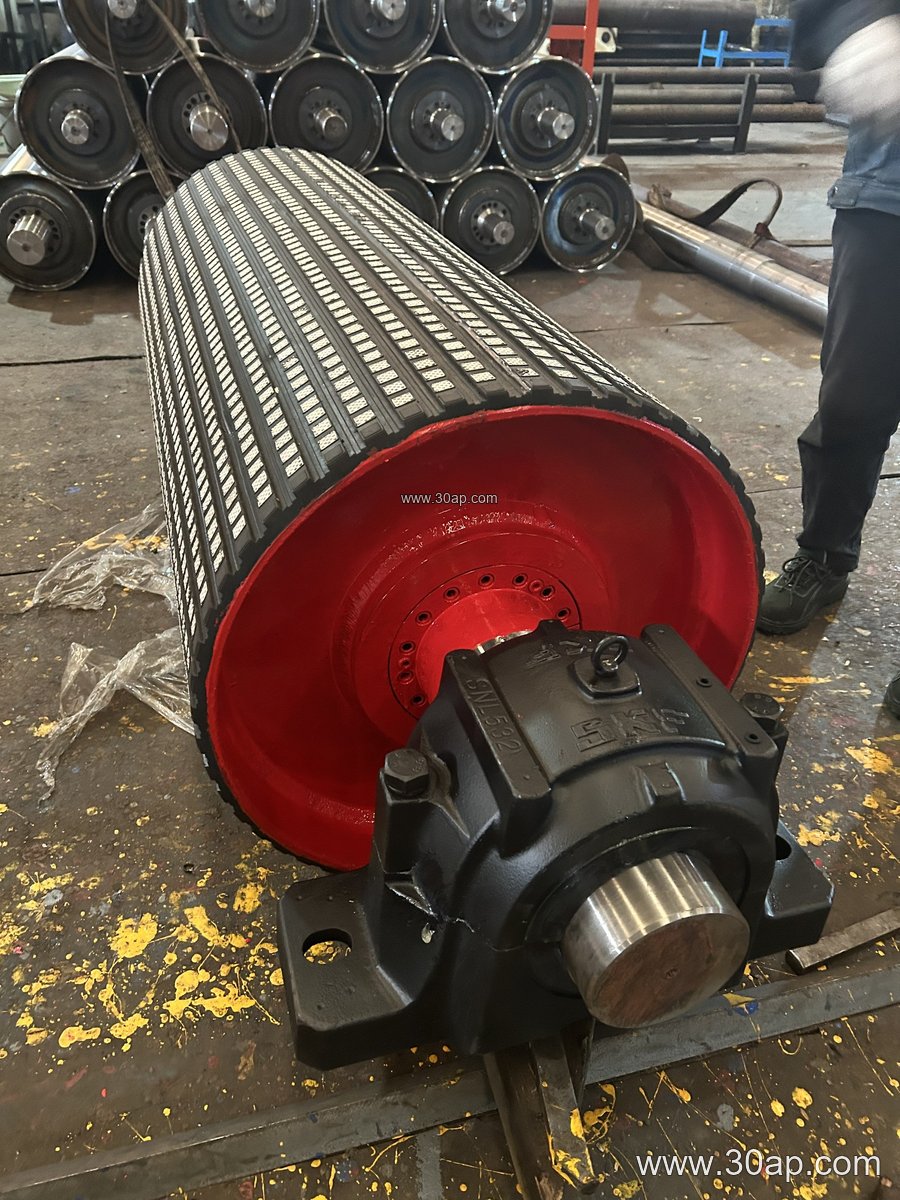
Common sizes are expressed as belt width and drum diameter, for example B800 x Ø500 or B1400 x Ø800. Face width is normally a little wider than the belt, so a B1000 belt usually runs on a drum face around 1150 mm. Diameter is set by the belt’s minimum bend radius and the wrap angle, so the same belt width may work with different drum diameters depending on layout. Shaft diameters such as Ø80, Ø100 or Ø120 are determined by the load case, not by a fixed rule from belt width.
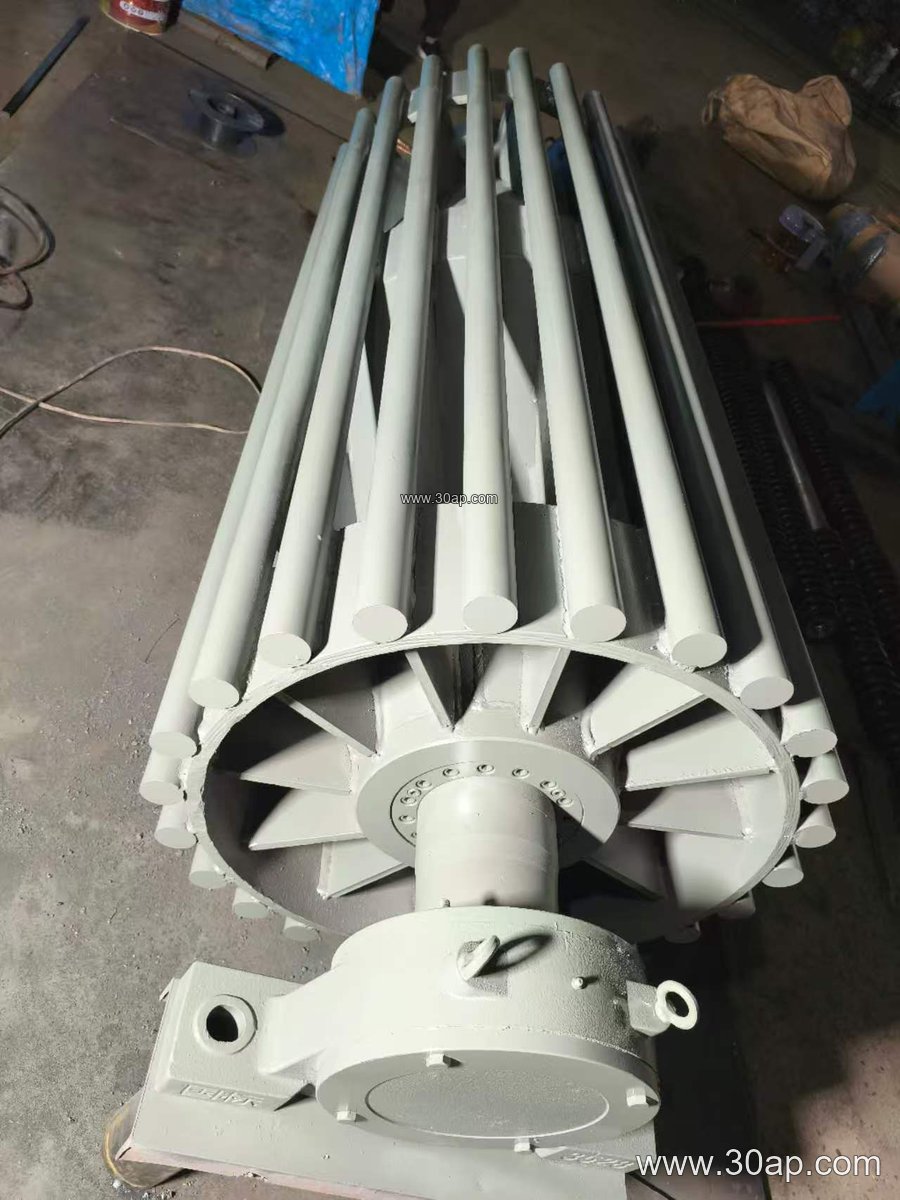
Where It Fits in a Plant
In a quarry or aggregate line, a turning pulley often reroutes the belt after a screens or crusher discharge so the conveyor can turn toward the stockpile. In a coal preparation plant or a power station coal yard, it helps route the belt around a transfer house where space is tight. The drum works with the conveyor belt, the idler roller sets that support the carry and return strands, and the conveyor bracket that holds the bearing housings in line. In dusty service, the area around the turning drum should be checked for buildup, because material packed against the shell can pull the belt off line.
Where the belt is heavy, a steel cord conveyor belt or a thick multi-ply fabric core belt needs a larger bend radius, so the turning drum diameter grows. Lighter belts, such as an EP conveyor belt or NN conveyor belt, can often use a smaller drum, but the belt manufacturer’s minimum pulley diameter should always be confirmed. In food or clean handling, a smooth rubber or plain surface may suit better than an aggressive pattern. For abrasive ore duties, an abrasion resistant conveyor belt paired with a well-protected drum face gives longer service.
Selection and Maintenance Notes
- Confirm the wrap angle and belt path; a larger angle increases load on the shell and bearings.
- Match the drum face width to the belt, allowing a small margin on each side.
- Choose lagging by environment: plain for clean return runs, rubber for general grip, ceramic for heavy abrasion.
- Check shaft and bearing capacity against the actual tension, not against belt width alone.
- Keep the drum level and square to the belt centerline so the belt does not drift.
During inspection, look for worn lagging, loose bolts, grease leakage and shell runout. A turning pulley that runs out of true can cause edge damage on the belt and uneven wear on the idler roller nearby. Replacing lagging before the shell wears through is usually cheaper than replacing the whole drum. For a layout review, note the belt width, drum diameter, shaft size and surface type, then compare them with the conveyor frame and the conveyor bracket dimensions. That simple record helps keep a spare drum ready without stopping the line for a long search. More conveyor component references can be found at ppkj.com turning pulley and ppkj.com conveyor pulley.