What a Mining Idler Does on the Line
A mining idler is the rotating support that carries the conveyor belt and the material load along the length of a conveyor. In a quarry, a coal washing plant, or an iron ore transfer station, the belt may run hundreds of metres between the head and tail, and the idlers are what keep it from sagging, tracking off line, or wearing out too quickly. The idler roller itself is a simple assembly, but the way it is built and placed decides how much power the drive needs and how often maintenance crews have to walk the line.
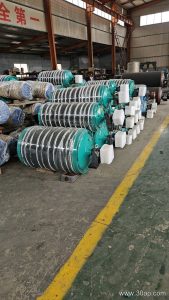
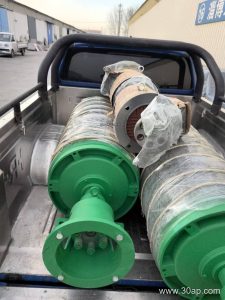
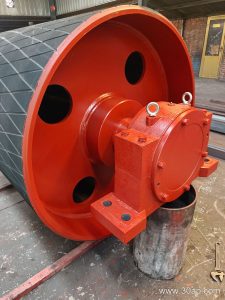
The idler works together with the conveyor pulley, the conveyor bracket, and the belt. If any one of these is mismatched, the whole section suffers, so buyers usually look at the idler as part of a system rather than a stand-alone part.
Construction Details That Matter
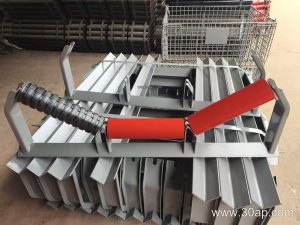
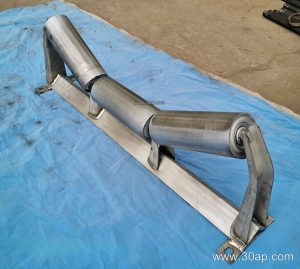
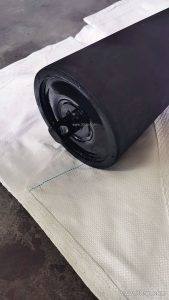
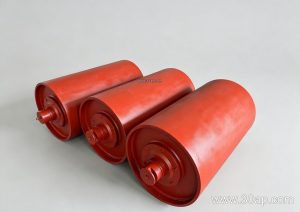
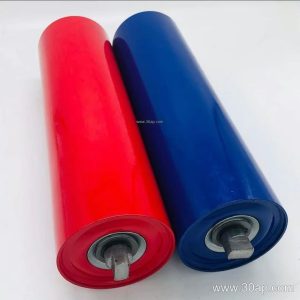
A typical troughing idler has a steel tube shell, a shaft, bearing housings, and a sealing arrangement at each end. Roller diameters in common use range from about Ø63 mm on small belts up to Ø219 mm on very wide, heavy lines. The shell may be plain steel, nylon-coated, ceramic-covered, or fitted with rubber rings for impact zones. Bearings are usually deep-groove ball types such as 6204, 6205, 6305, 6306, 6308, or 6310, chosen by load and speed rather than by belt width alone.
Sealing is where cheap and good idlers separate. Dust, fines, and wash-down water are the main enemies in a sand and gravel plant or a cement plant, so a labyrinth seal with a grease-filled cavity lasts far longer than a simple lip seal. Buyers should ask about seal type, grease retention, and shell wall thickness before comparing prices.
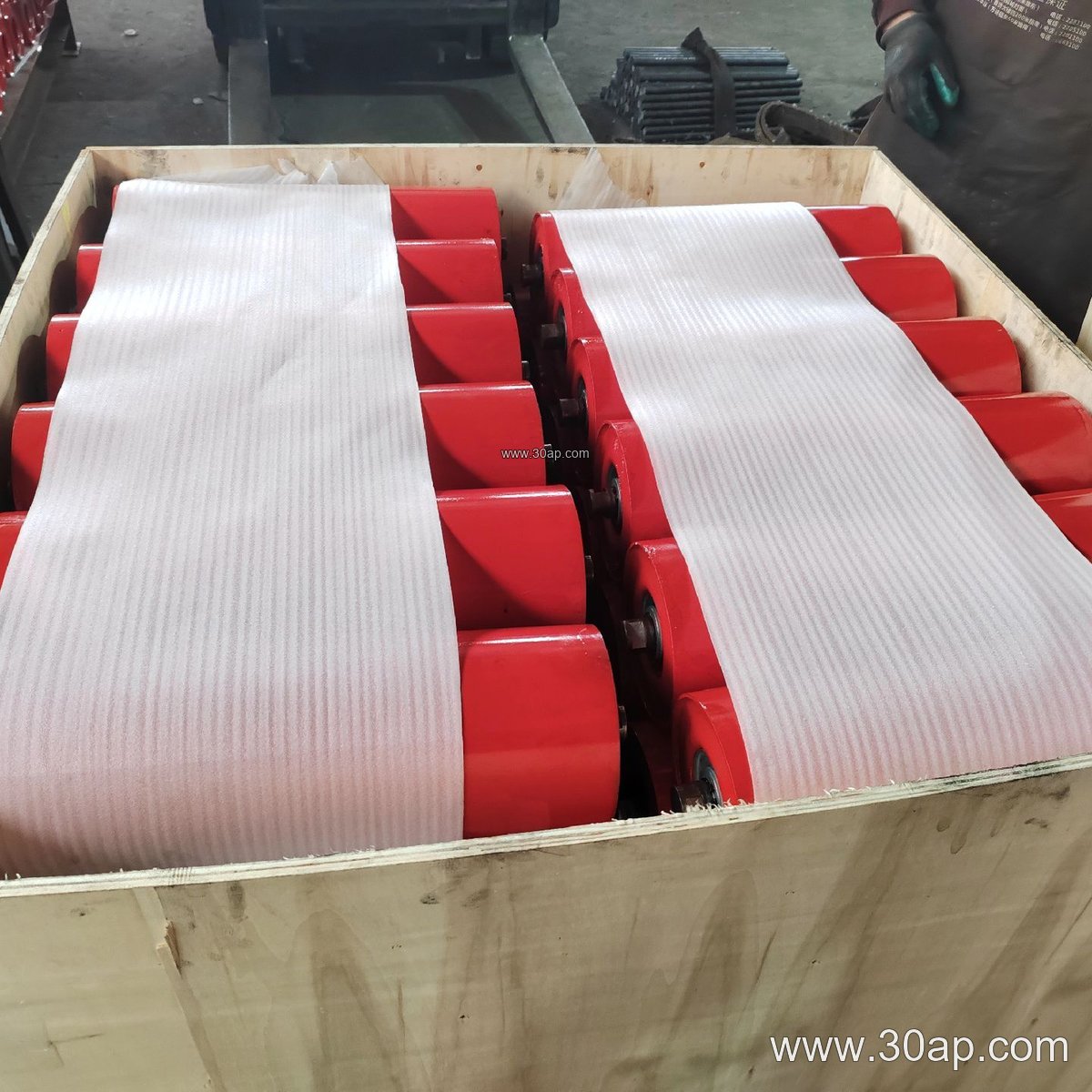
Common Configurations and Reference Dimensions
Troughing sets are normally supplied as single-roll, two-roll, or three-roll assemblies, with trough angles of 20, 30, 35, or 45 degrees. Return sides use flat or V-shaped rolls, while impact and transition positions call for cushion rolls or rubber-ring rolls. The table below gives common reference values only; actual roll length depends on belt width, trough angle, and frame design.
- B500 belt, three-roll trough: roll length about 200 mm
- B650 belt, three-roll trough: roll length about 250 mm
- B800 belt, three-roll trough: roll length about 315 mm
- B1000 belt, three-roll trough: roll length about 380 mm
- B1200 belt, three-roll trough: roll length about 465 mm
- B1400 belt, three-roll trough: roll length about 530 mm
- B1600 belt, three-roll trough: roll length about 600 mm
- B1800 belt, three-roll trough: roll length about 670 mm
- B2000 belt, three-roll trough: roll length about 750 mm
Side rolls and centre rolls can differ, and a wide belt does not automatically fix one pulley diameter or one shaft size. Those choices come from the conveyor design, not from a catalogue rule. Matching a 1200 mm or 1500 mm wide belt to an idler set should always follow the frame drawing.
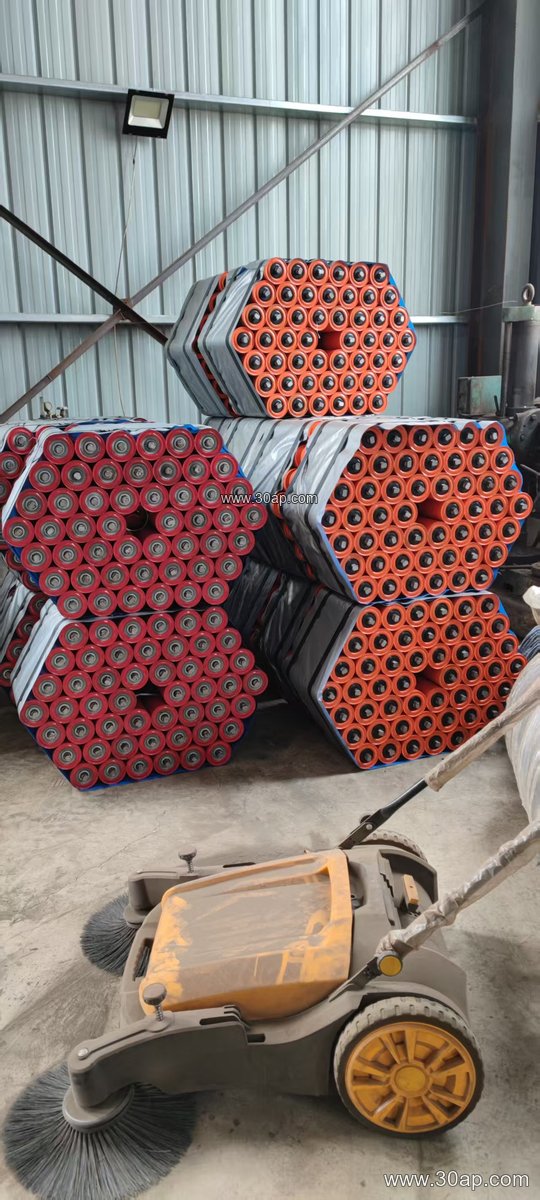
Where These Rollers Are Used
In a limestone quarry or an aggregate crushing and screening line, troughing idlers dominate the carrying side because they shape the belt into a trough and hold a deep material bed. The return side usually uses flat or V-return rolls to support the empty belt. In a coal handling plant or power station coal yard, flame retardant and anti-static requirements often shape the belt choice, and the idler must run smoothly to avoid frictional heat. A copper ore or gold mining operation may prefer heavier shells and larger bearings where lump size and shock loading are high.
The belt that runs over these rollers matters too. A heavy-duty mining conveyor belt, an abrasion resistant conveyor belt, or a steel cord conveyor belt all behave differently on the same idler set, and a belt with a chevron or corrugated sidewall profile needs clearance checks at the transition. In a cement plant, heat resistant conveyor belt grades may be needed near the kiln area, while a port or ship loading conveyor belt handles high tonnage and demands well-aligned idlers to avoid edge damage.
Buyer Checklist Before Ordering
Start with the belt width and the belt type, then confirm the trough angle, roll diameter, and frame fixing centres. Ask whether the position is carrying, return, impact, or transition, because a cushion roll and a standard troughing roll are not interchangeable. Check the sealing system, bearing brand or grade, and shell thickness. For dusty or wet sites, specify grease type and re-lubrication interval. Finally, keep spare rolls in the most wear-prone sizes so a single failed idler does not stop the whole line.
Well-chosen idlers reduce belt wear, cut energy use, and keep a mining conveyor running between planned shutdowns.