What a Conveyor Trough Idler Does on the Line
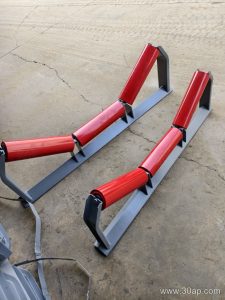
A conveyor trough idler is the carrying-side roller set that shapes a flat conveyor belt into a shallow trough, so loose material stays centered instead of spilling over the edges. In most bulk handling plants the troughing idler is the most numerous component on the whole conveyor, which makes its condition a daily concern for maintenance teams. A single three-roll assembly is often simply called a trough idler or carrying idler, and the same product family includes two-roll and single-roll versions for narrower belts or lighter duties.
The trough shape matters because a loaded belt behaves differently from an empty one. When a rubber conveyor belt is pressed down by stone, clinker or wet coal, the side rollers support the wings of the belt and keep the load profile stable. If the trough idlers are worn, seized or misaligned, the belt starts to wander, the skirt rubber wears unevenly, and spillage builds up under the structure.
How the Assembly Is Built
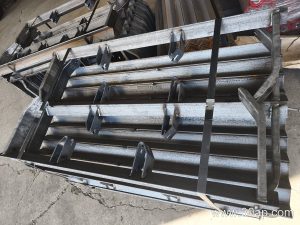
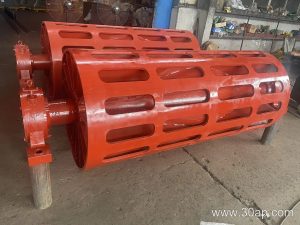
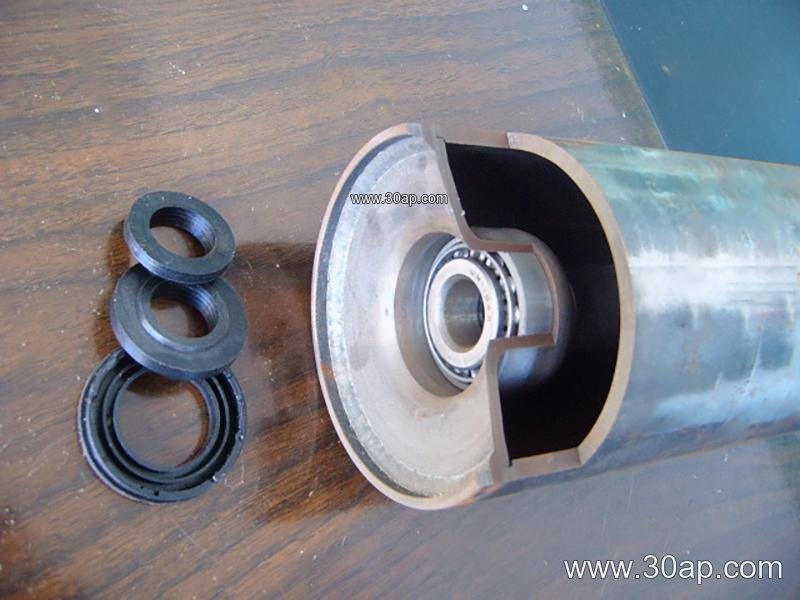
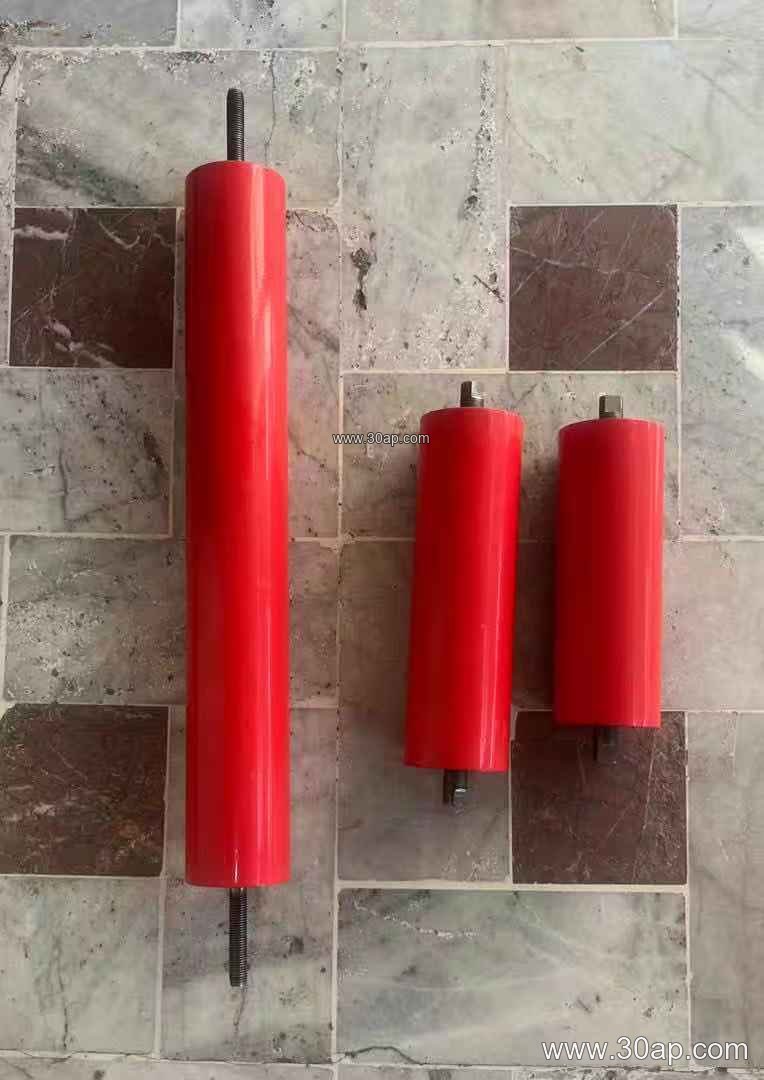
A typical trough idler set consists of three rollers mounted in a steel frame, often fixed to a conveyor bracket that bolts onto the stringer. Each roller has a steel tube shell, a shaft, bearing housings at both ends, and a sealing arrangement that keeps dust and water away from the bearings. Roller shells are commonly supplied in steel, nylon, ceramic or with rubber rings, and the choice usually follows the material being carried.
- Shell material: steel tube for general duty, nylon for lighter and quieter running, ceramic or rubber rings where build-up or impact is a problem
- Bearing sizes: 6204, 6205, 6305, 6306, 6308 and 6310 are common, matched to roller diameter and load rather than to belt width alone
- Roller diameters: Ø63, Ø76, Ø89, Ø102, Ø108, Ø127, Ø133, Ø159, Ø178, Ø194 and Ø219 mm appear across light to heavy-duty ranges
- Trough angles: 20, 30, 35 and 45 degrees are the usual options, with 35 degrees widely used in aggregate and cement lines
The roller length is not a single number. It changes with belt width, trough angle and the number of rolls in the set. As a rough reference, a three-roll troughing set might use roller lengths near 200 mm on a B500 belt, 315 mm on B800, 465 mm on B1200 and 600 mm on B1600, but the side rollers and centre roller can differ and the final figure is set by the conveyor design.
Where Troughing Idlers Are Used
These carrying rollers appear wherever a belt moves dry bulk material. In a quarry or stone crushing line they sit under a heavy-duty mining conveyor belt loaded with crushed rock. In a cement plant they carry clinker and raw meal, and in a power plant coal yard they support the coal conveyor belt between the transfer tower and the bunker. Sand and gravel plants, iron ore and copper ore handling, fertilizer granulation lines and port ship loaders all rely on the same principle.
The material on the belt also decides which belt specification works alongside the idlers. A steel cord conveyor belt may run over the same troughing frames as a multi-ply fabric core belt, but the load per roller and the required roller diameter differ. Abrasion resistant conveyor belt grades are common in quarry and ore duty, while flame retardant conveyor belt and fire resistant conveyor belt grades are usual in coal mining conveyor belt and underground coal mining conveyor belt service. Heat resistant conveyor belt is chosen where sinter or cement clinker arrives warm, and oil resistant conveyor belt helps where lubricated or coated material is handled.
Roller Diameter, Belt Width and Trough Angle
Buyers often ask which roller diameter suits a given belt width. There is no single fixed pairing. A wider belt with a heavy load usually needs a larger shaft and bearing, but the decision comes from the actual load, belt speed, idler spacing and sag limits. The table below shows how the main parameters are usually expressed in enquiries.
| Parameter | Typical expression | Note |
|---|---|---|
| Roller diameter | Ø89, Ø108, Ø127, Ø133, Ø159 mm | Selected from load and belt speed |
| Belt width | B650, B800, B1000, B1200, B1400, B1600 | Roller length follows width and trough form |
| Trough angle | 20°, 30°, 35°, 45° | Steeper angles suit finer, free-flowing material |
| Roller set | Single, two-roll, three-roll trough | Three-roll is the common carrying arrangement |
| Bearing | 6205, 6305, 6306, 6308 | Matched to shaft and duty |
A steeper trough angle increases the material cross-section and can raise capacity, but it also increases the load on the side rollers and can cause fines to press into the belt edges. That is why a 45 degree set is not automatically better than a 30 degree set. Forward-leaning rollers, usually about 1.5 to 2 degrees, are used mainly for self-aligning or training idlers, not for every carrying position.
Selection and Maintenance Notes
When specifying trough idlers, give the belt width, the belt type, the material, the capacity, the belt speed and the idler spacing. Mention whether the line handles sharp rock, wet coal or hot clinker, because that changes the shell and seal choice. Ask for the roller length and shaft diameter as designed for the frame, not as a guess from belt width.
On site, check for seized rollers, flat spots, missing end caps and material build-up on the shell. A worn trough idler set can damage a fabric core conveyor belt or an EP conveyor belt far faster than most operators expect, and it also adds drag and power draw. Greaseable designs need a planned greasing interval, while sealed-for-life rollers should be replaced as a unit. Keep a small stock of the most used diameters and lengths; a line stopped by one failed carrying roller costs more than the part.