What the Four-Roll Idler Bracket Does
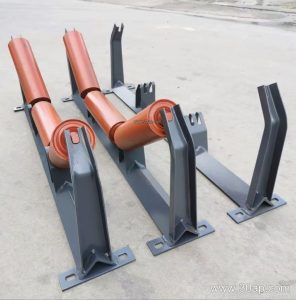
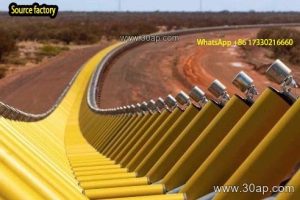
On a loaded conveyor line, the belt does not always sit neatly on three rollers. Wide belts, heavy lump loads, and long spans between frames can push the belt edges down and let material shift toward the centre. A four-roll idler bracket solves this by carrying the belt on four rollers instead of three, giving the trough a wider, flatter support profile with better load distribution. The bracket is the steel frame that holds those four idlers at the correct angles and keeps them aligned with the belt path.
This support is part of the troughing side of a conveyor, and it works alongside the conveyor belt, the idler rollers, and the conveyor pulley at the head or tail. It is not a pulley component and should not be confused with drive, tail, or bend pulley assemblies.
How the Bracket Is Built
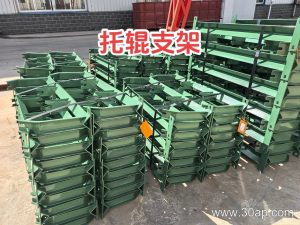
Most four-roll idler brackets are fabricated from angle steel, channel steel, or folded steel plate. The frame has two outer inclined arms and two inner positions, so four idlers form a shallow, wide trough. The outer rolls carry the belt edges, while the inner rolls support the centre of the load.
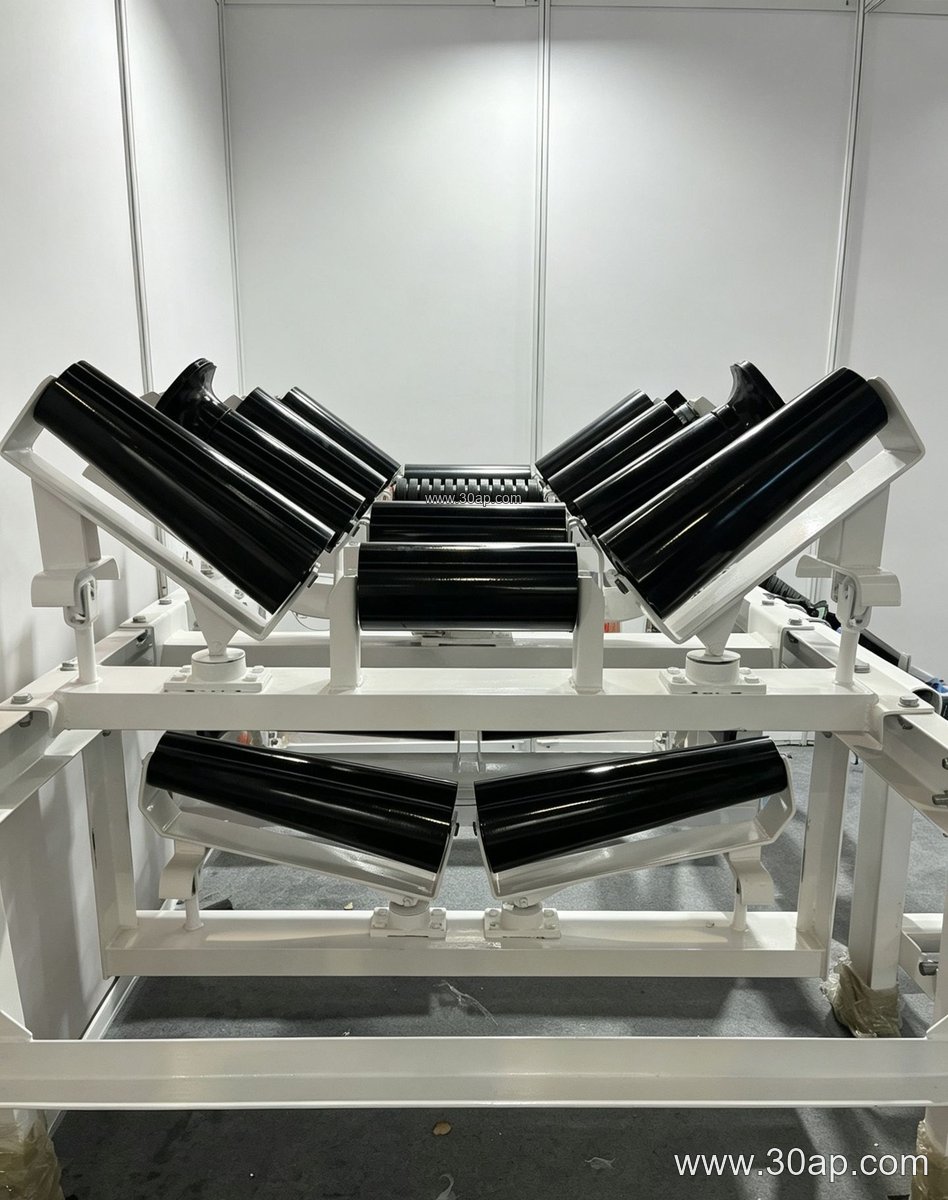
Common build details include:
- Welded or bolted cross beams with mounting slots for the idler shafts
- Trough angles typically selected from 20, 30, 35, or 45 degrees, depending on belt width and material
- Roller diameters usually matched to the belt and load, such as Ø89, Ø108, Ø133, Ø159, or Ø194
- Adjustable versions that allow the trough angle to be changed on site
Mounting hole spacing and beam length change with belt width and trough angle, so the frame is normally made to the conveyor design rather than chosen from one fixed size.
Where It Fits in the Conveyor Line
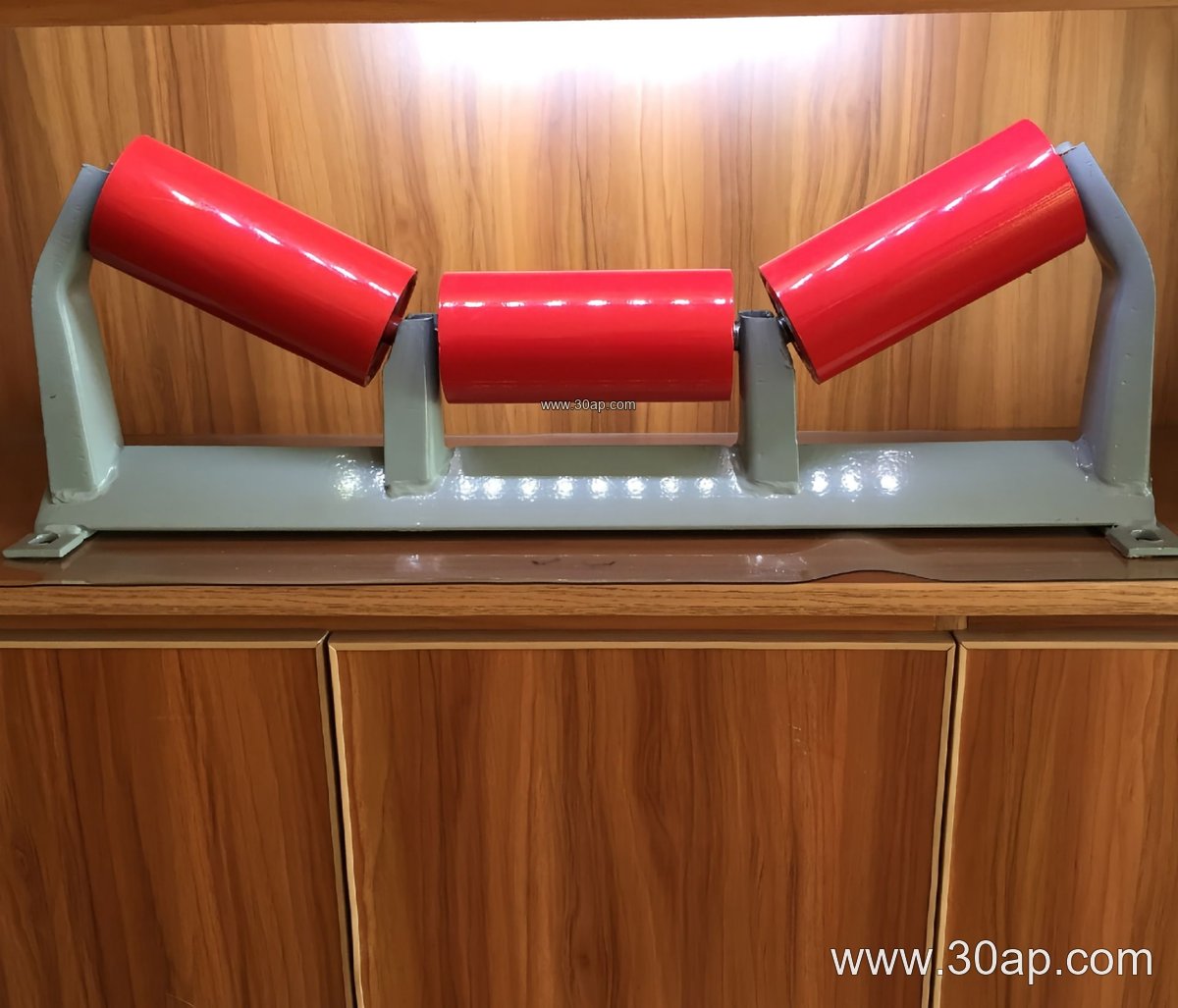
A four-roll idler bracket is often used on wide belts and on lines where material is dumped onto the belt with some impact. In a quarry or stone crushing line, it helps keep a heavy aggregate load centred before the belt reaches a crusher conveyor. In a coal handling system at a power plant or wash plant, it supports a steady coal stream and reduces edge sag on long runs.
It can also appear in cement plants, iron ore terminals, and port ship loading lines where a broad, stable trough is needed. The bracket works with the idler roller set and the conveyor belt, while separate frame types handle the return side, such as a V-return bracket or a flat return bracket.
Matching the Bracket to Belt and Roller Size
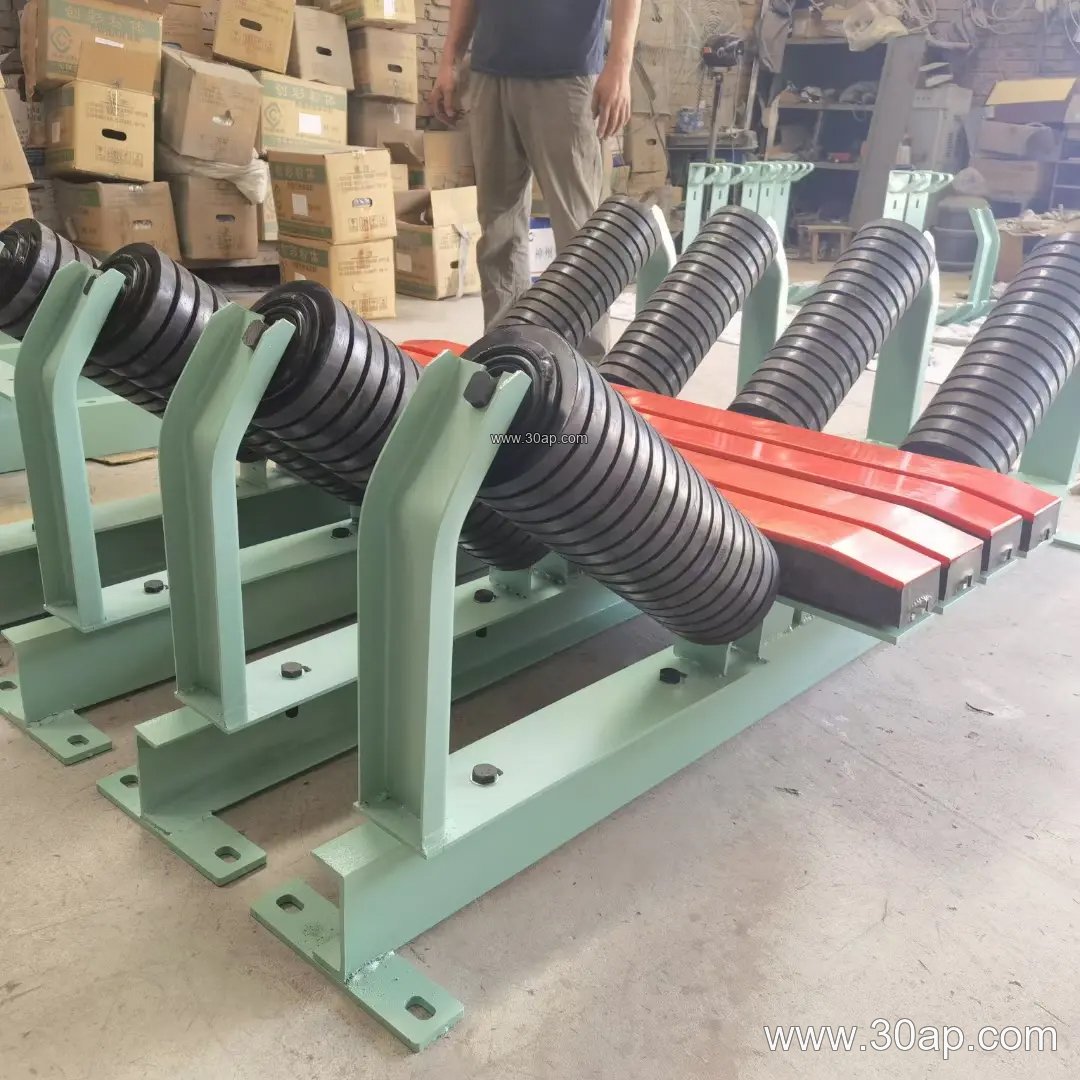
Buyers should treat belt width, trough angle, and roller diameter as a design combination. A B800 belt at 35 degrees with Ø108 rollers is a common arrangement, and a B1200 line at 45 degrees with Ø133 rollers is another. These are examples, not rules; the same belt width can work with different angles and roller sizes depending on load and speed.
| Reference Item | Common Examples | Note |
|---|---|---|
| Belt width | B500, B650, B800, B1000, B1200, B1400, B1600, B1800 | Frame length follows belt width |
| Trough angle | 20°, 30°, 35°, 45° | Adjustable brackets allow changes |
| Roller diameter | Ø89, Ø108, Ø133, Ø159, Ø194 | Selected by load and belt speed |
| Frame material | Angle steel, channel steel, folded plate | Depends on duty and environment |
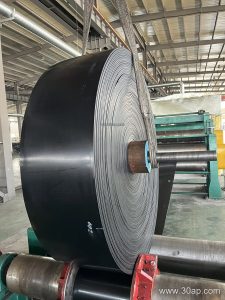
On abrasive duty, such as a high abrasion resistant conveyor belt carrying rock, the bracket should be sturdy enough to hold alignment under vibration. In a coal mine, a flame retardant conveyor belt may be used, and the bracket still needs correct grounding and clearance for the idler rolls. For long overland lines, an EP conveyor belt or steel cord conveyor belt may need a wider trough, and the four-roll frame can provide that support without over-compressing the belt edges.
Selection and Maintenance Points
Check the bolt pattern against the idler shaft ends before ordering. Confirm the trough angle range, especially if the line may be adjusted later. Look at weld quality, paint or galvanizing for wet or dusty sites, and whether the bracket is fixed or adjustable.
During service, inspect for loose bolts, bent arms, and worn idler seats. A misaligned four-roll frame can cause belt edge wear and material spillage, so realignment after idler replacement is worthwhile. For buyers comparing support options, the four-roll idler bracket is a practical choice where a standard three-roll trough gives too little centre support for the belt and load.