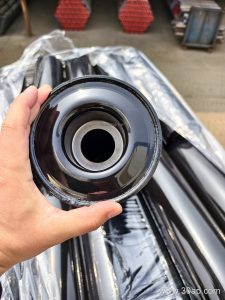
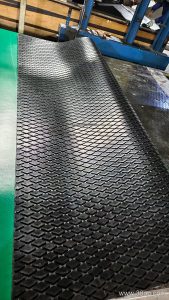
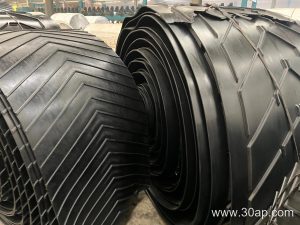
What a Wear-Resistant Lagged Pulley Does
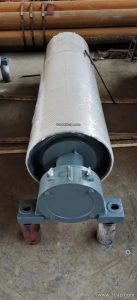
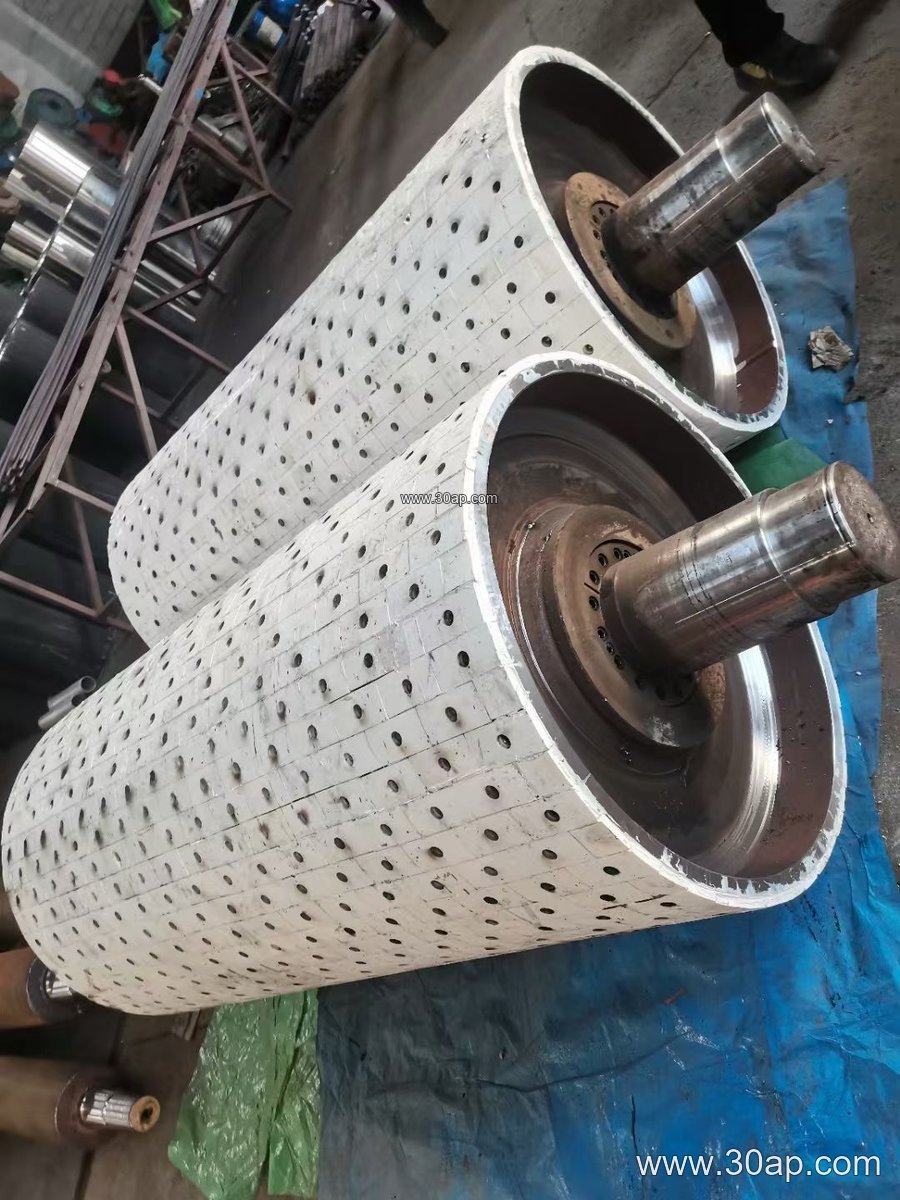
A wear-resistant lagged pulley is a conveyor pulley whose shell is covered with a durable rubber or ceramic layer before it enters service. That covering, called lagging, protects the steel drum from abrasive material and raises friction between the drum and the conveyor belt. In a quarry or a cement plant, where grit and clinker dust are part of daily operation, this protection can make the difference between a pulley that runs for years and one that needs resurfacing every season.
The same product is also described as a rubber-lagged conveyor pulley or a lagged drum pulley. It remains the drive, tail, bend or tension drum it was designed to be; the lagging is a surface treatment, not a new pulley type.
How the Lagging Is Built
Most wear-resistant lagged pulleys use one of three surface forms. Hot-vulcanized rubber is bonded to the shell under heat and pressure for a strong, seamless joint. Cold-bonded rubber is applied with adhesive and is easier to renew on site. Ceramic tiles set in a rubber matrix suit the most abrasive duty, such as iron ore or copper ore handling.
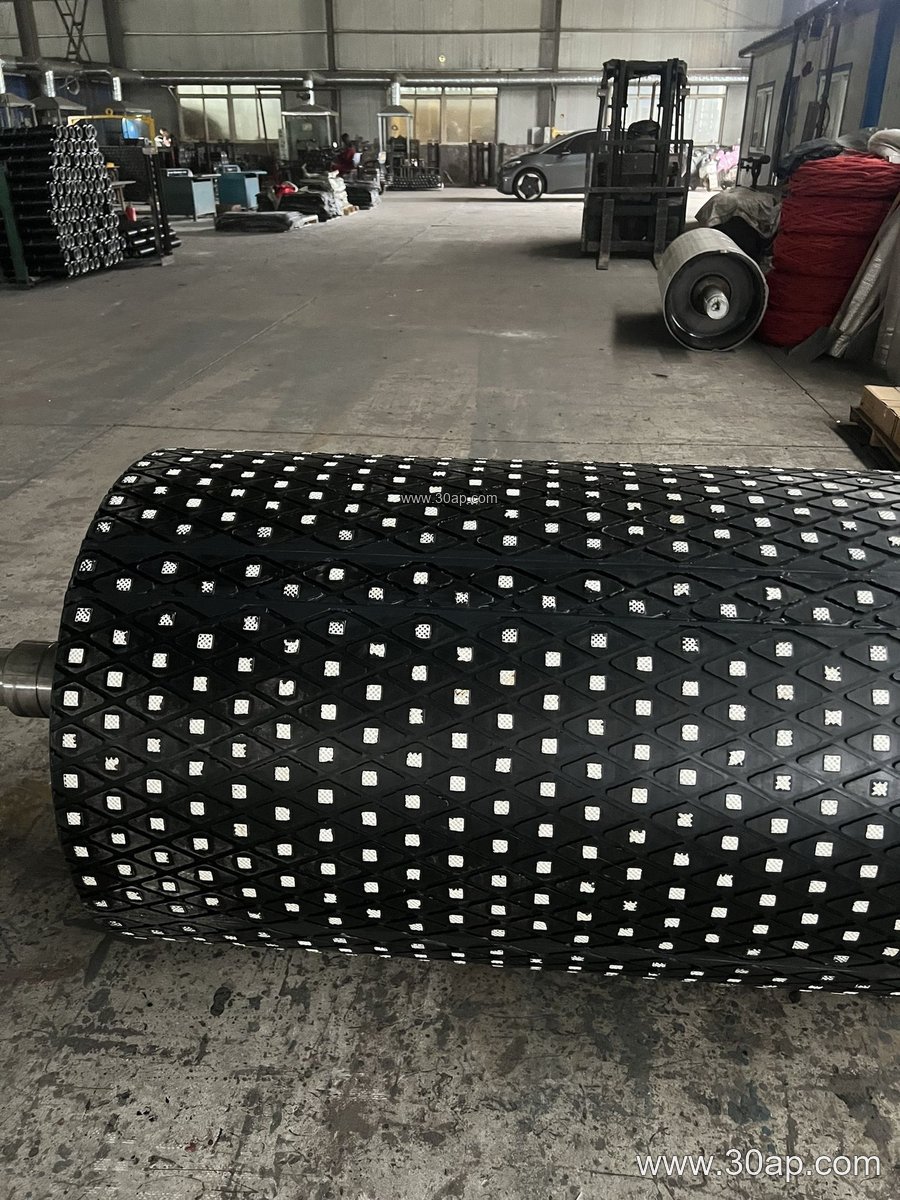
Common lagging thicknesses are 8, 10, 12, 15 and 20 mm. The pattern matters too: plain rubber gives even grip, diamond lagging sheds water and fines, and herringbone grooves push material toward the edges. The table below shows typical reference values.
| Parameter | Common Reference Values |
|---|---|
| Belt width B | B400, B500, B650, B800, B1000, B1200, B1400, B1600, B1800, B2000 |
| Pulley diameter | Ø200, Ø250, Ø315, Ø400, Ø500, Ø630, Ø800, Ø1000, Ø1250, Ø1400 |
| Lagging thickness | 8, 10, 12, 15, 20 mm |
| Surface form | Plain, diamond, herringbone, ceramic |
| Shaft diameter | Ø50 to Ø200, determined by torque and load |
Where It Fits on the Conveyor
Location changes the job. At the head end, a drive pulley must transmit full torque without slip, so a diamond or herringbone lagging is often chosen. A tail pulley sees the return side of the belt and is exposed to carryback, making a wear-resistant lagged pulley valuable there as well. Bend and tension pulleys work with lower wrap angles, so lagging mainly protects the shell and keeps the belt tracking.
Because drive, tail and bend pulleys are not interchangeable, the lagging specification should be matched to the position. A drive drum on a heavy-duty mining conveyor belt carrying crushed rock will usually need thicker lagging than a bend pulley on the same line.
Working With the Belt
Lagging and belt quality go together. An abrasion resistant conveyor belt with a tough cover resists cutting, while a properly lagged drum keeps the belt from slipping under load. In coal mining conveyors, flame retardant conveyor belt and fire resistant conveyor belt grades are common, and the pulley lagging should be selected with the same fire-conscious approach.
Where the belt carries hot clinker or sinter, a heat resistant conveyor belt may be used, and the pulley should sit far enough from the hot zone. For long overland lines, a steel cord conveyor belt or an EP conveyor belt with high strength may pull against the drive drum, so the lagging must handle the resulting traction demand.
Buyer Checklist
- Confirm the pulley position: drive, tail, bend or tension.
- Match the lagging form to the material: ceramic for ore, diamond for wet or dusty duty, plain for general service.
- Check that the shell width suits the belt, for example B800 with a shell near 950 mm or B1200 with about 1400 mm.
- Ask how the lagging is bonded and whether it can be renewed on site.
- Verify shaft diameter against calculated torque, not belt width alone.
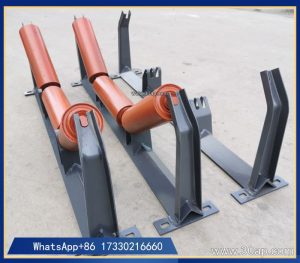
A wear-resistant lagged pulley is a small part of the conveyor but a large factor in uptime. Paired with quality conveyor belt, idler roller and conveyor bracket components, it keeps quarries, cement lines and power plant coal yards moving with less downtime.