What a Heavy-Duty Conveyor Pulley Does on a Tough Line
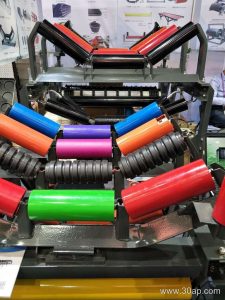
In a quarry, a coal preparation plant, or a cement clinker circuit, the conveyor pulley is the point where the belt changes direction and receives its driving force. A heavy-duty conveyor pulley is built for those positions where tonnage is high, starts are frequent, and the material is abrasive. It works together with the conveyor belt, the idler roller sets, and the conveyor bracket to keep a bulk material line running without constant attention. Where the belt is a heavy-duty mining conveyor belt or a high abrasion resistant conveyor belt, the pulley behind it must be equally rugged.
Construction and Surface Options
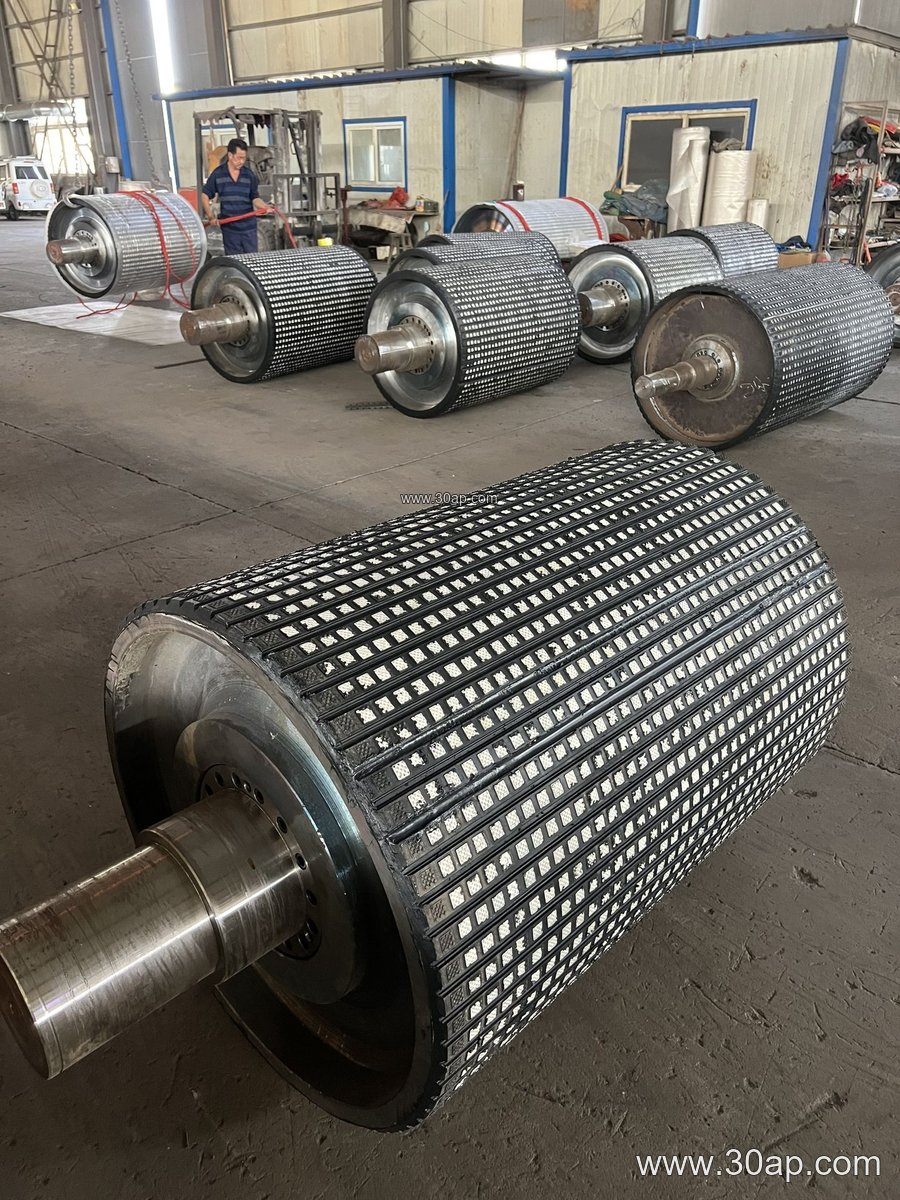
The core is normally a welded steel drum with end discs and a shaft sized by torque and load, not by belt width alone. Common shaft diameters run from Ø50 to Ø200, but the final figure comes from the drive calculation. Drum diameters such as Ø500, Ø630, Ø800, Ø1000, or Ø1250 appear in heavy service, and the pulley face width usually exceeds the belt width.
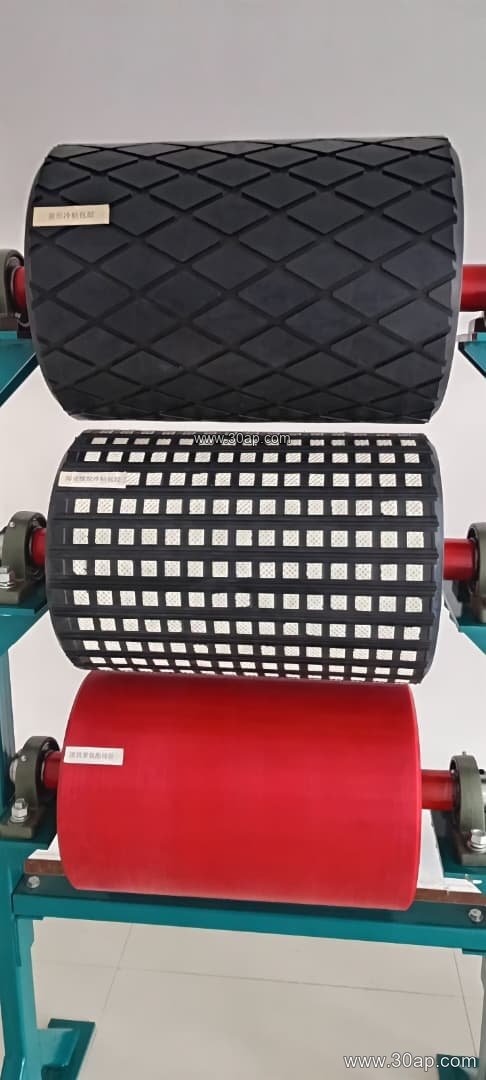
Surface treatment is where a heavy-duty conveyor pulley earns its life. Plain face is fine for some non-drive positions, while drive pulleys rely on lagging for grip. Options include cast rubber, cold-bonded rubber, hot-spliced rubber, diamond lagging, herringbone lagging, and ceramic lagging, with lagging thickness commonly 8, 10, 12, 15, or 20 mm.
| Belt width (B) | Typical pulley face width | Example combination |
|---|---|---|
| B800 | approx. 950 mm | B800 × Ø500 |
| B1200 | approx. 1400 mm | B1200 × Ø1000 |
| B1400 | approx. 1600 mm | B1400 × Ø800 |
| B1600 | approx. 1800 mm | B1600 × Ø1250 |
| B2000 | approx. 2200 mm | B2000 × Ø1400 |
These pairs are examples, not fixed rules. A wider belt does not force one diameter, and the shaft size must always be confirmed by the drive designer.
Where It Sits in the Conveyor
Position matters. A head or drive pulley transmits power and needs lagging with good friction; a tail pulley at the loading point sees impact and fines; a bend or take-up pulley handles tension and tracking. A heavy-duty conveyor pulley may be specified for any of these duty points, and each has a different balance of shell thickness, bearing size, and surface form. In a crushing and screening section, a bend pulley with a plain face often sits ahead of a transfer point, while the drive pulley behind the head carries the full load.
The belt itself also shapes the choice. A steel cord conveyor belt or an EP conveyor belt with a multi-ply fabric core needs a pulley diameter that respects its bending radius. Flame retardant conveyor belt and fire resistant conveyor belt grades are common underground, where a spark or friction heat source is a real risk, and the pulley lagging should be selected with the same care.
Matching Pulley, Belt, and Frame
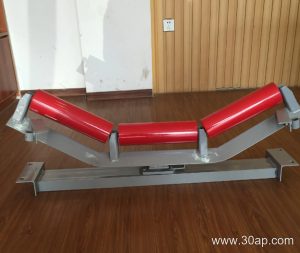
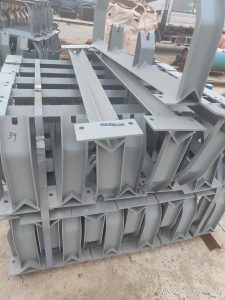
A heavy-duty conveyor pulley rarely works alone. The conveyor bracket must carry the bearing load, the idler roller spacing should support the belt between stations, and the belt grade should suit the material. In a power plant coal yard or a port bulk terminal, a rubber conveyor belt with good abrasion resistance is normal; in a fertilizer or grain silo, a food grade conveyor belt may be needed instead. The pulley face, lagging, and crown should be agreed with the belt supplier so tracking and grip work together.
What a Buyer Should Confirm
- Belt width and the actual pulley face width, plus the required drum diameter.
- Shaft diameter and bearing type, confirmed from the torque and radial load.
- Lagging type and thickness, matched to the drive duty and material.
- Whether the position is head, tail, bend, take-up, or snub, since the duty differs.
- Balance, runout, and welding quality for high-speed or high-tension lines.
For a heavy-duty conveyor pulley, the cheapest mistake is treating it as a simple steel drum. Get the surface form, shaft size, and bearing selection right, and the whole conveyor line in a mine, cement plant, or aggregate yard will run more smoothly.