What a Herringbone Grooved Lagged Pulley Does
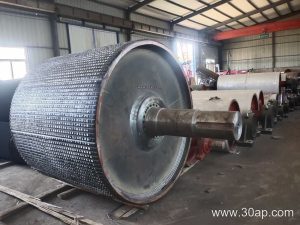
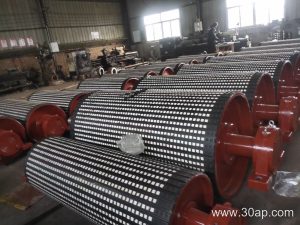
A herringbone grooved lagged pulley is a conveyor pulley whose shell is covered with rubber lagging cut in a V-shaped chevron pattern. The rubber layer raises friction between the pulley face and the conveyor belt, while the angled grooves channel water, fine dust and mud away from the contact zone. In a quarry, a limestone mine or a stone crushing line, that drainage matters as much as the extra grip, because a wet belt can slip on a smooth drum even when tension looks correct.
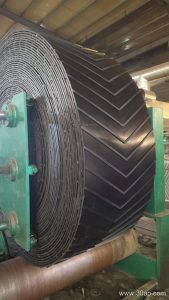
The herringbone groove direction is the key detail. The V pattern points toward the center of the pulley face, so the lagging tends to push the belt gently toward the middle of the drum instead of toward one edge. This is why the pattern is often chosen for drive positions on a belt conveyor that carries abrasive bulk material. It is still a drive pulley in function, not a tail or bend pulley, and it should be specified as such.
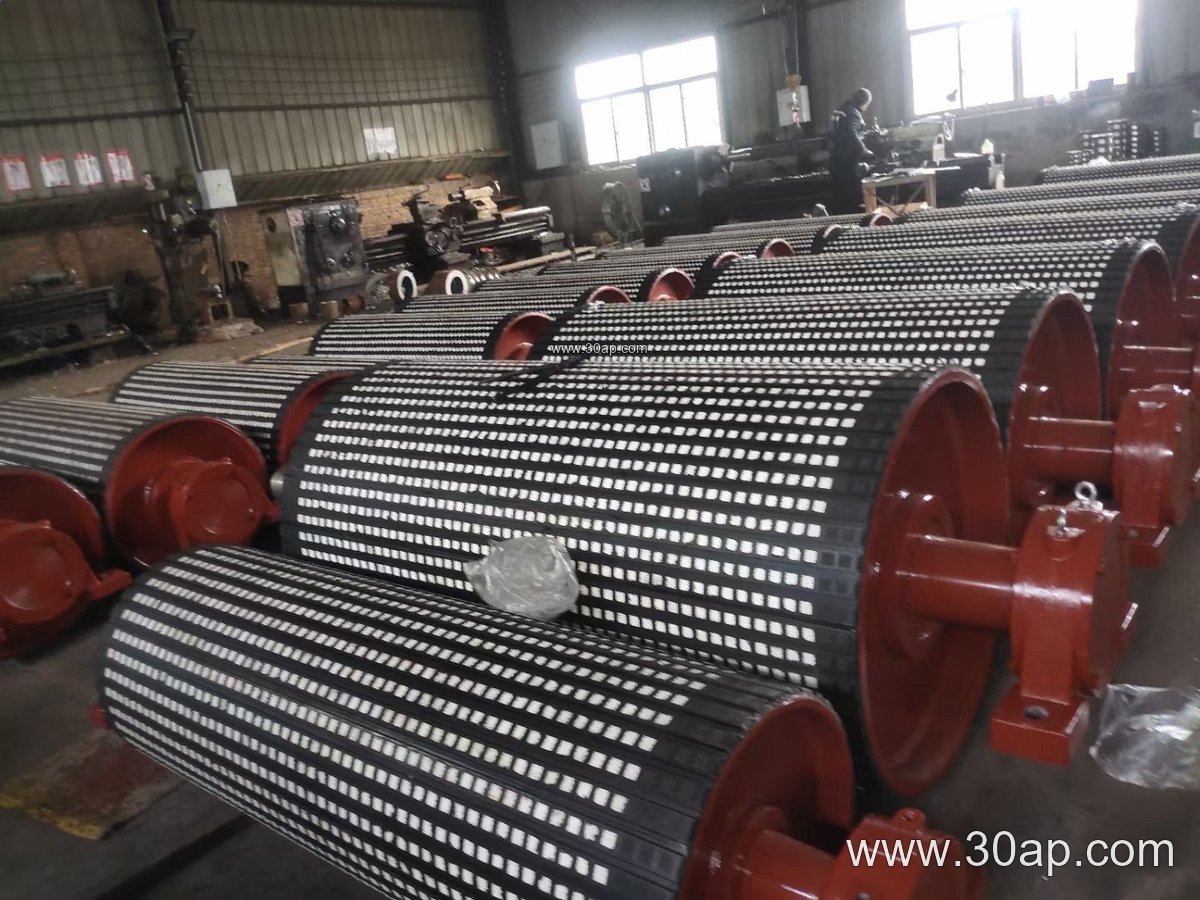
Construction and Surface Options
The base is a welded steel shell with shaft, hubs and end discs sized to the torque and radial load of the conveyor. Lagging is usually bonded to the shell by hot vulcanization, which gives a strong, continuous bond; cold-bonded rubber is also used where the drum can be handled easily. Grooves are cut after bonding, so the chevron depth and pitch stay uniform across the face.
Common lagging thicknesses are 8, 10, 12, 15 and 20 mm, with thicker covers used where impact and abrasion are severe. The groove pattern is not the only surface form: plain lagging, diamond lagging and ceramic lagging also exist, and each suits a different duty. Diamond lagging is a reasonable comparison for general dry service, while ceramic tiles are chosen for extreme abrasion. For wet, gritty conditions where both traction and self-cleaning are needed, the herringbone grooved lagged pulley is often the practical answer.
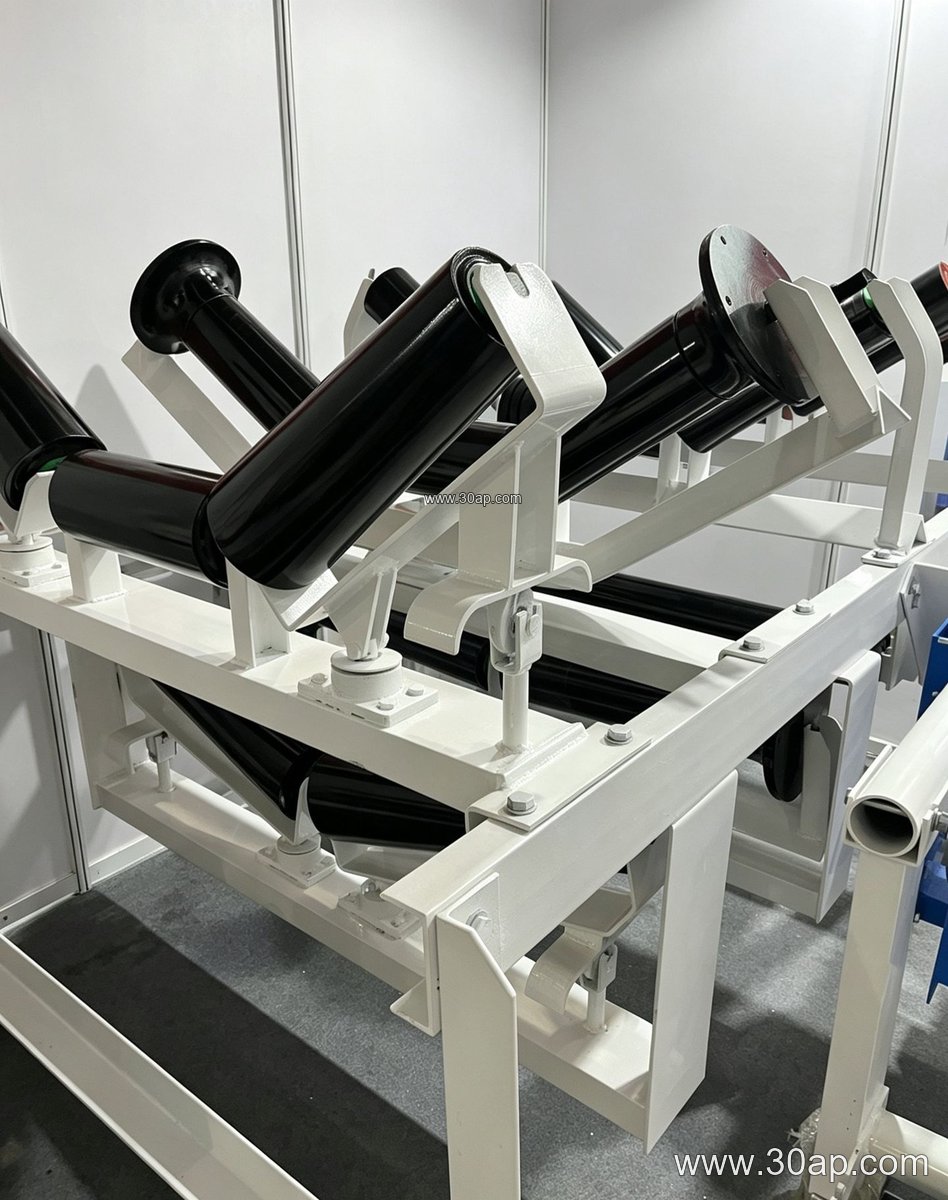
Typical Duty Points
These pulleys are frequently used at the head or drive station of a conveyor in a cement plant clinker line, a coal washing plant, a power plant coal yard or an iron ore transfer point. They also appear on the drive of a crusher conveyor belt where fines and moisture collect under the belt. In a port bulk terminal, the same drum may sit on a ship loading conveyor that sees salt air and rain.
Other positions have their own names and should not be confused with the drive role: a tail pulley turns the belt at the return end, a bend pulley changes direction, and a take-up pulley maintains tension. A herringbone grooved lagged pulley can be supplied for some of these positions, but the selection logic and the load case differ.
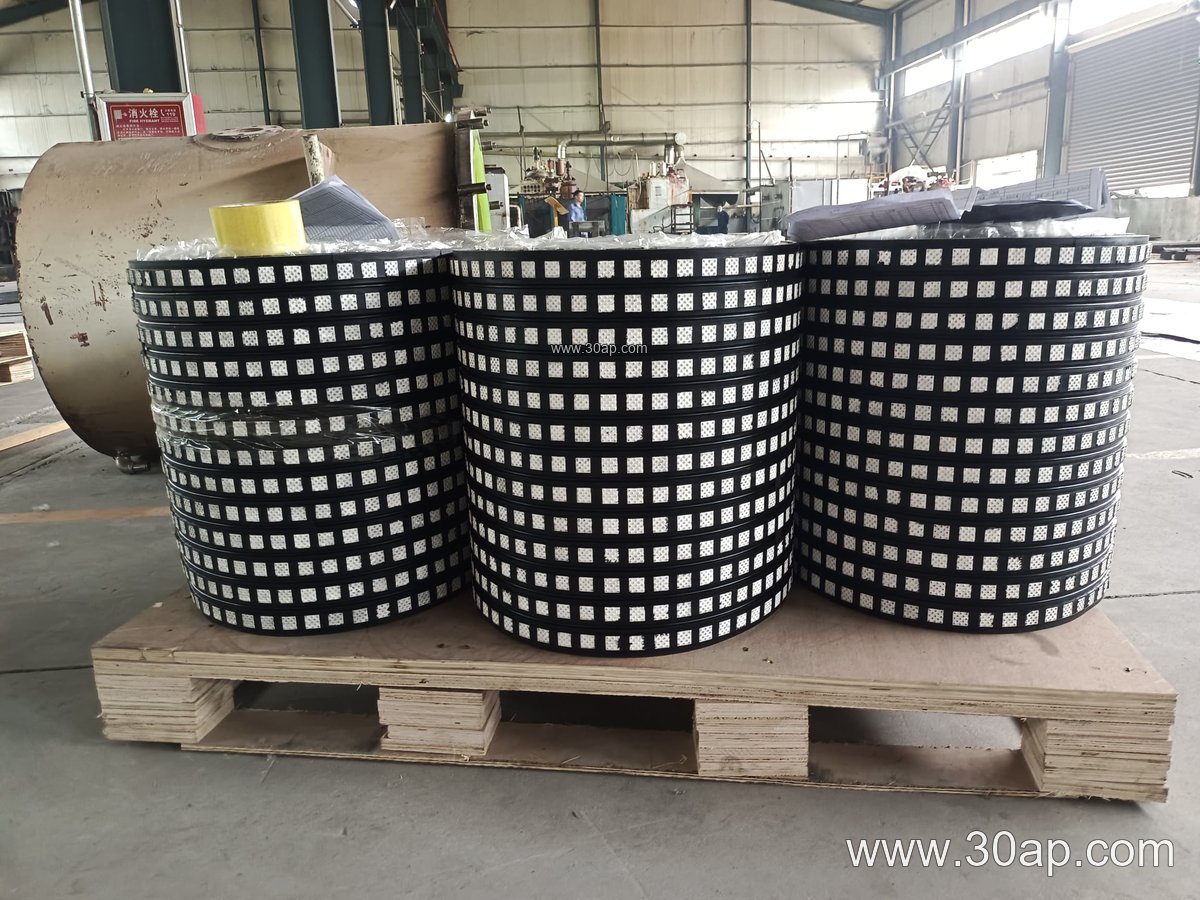
Matching the Pulley to Belt and Layout
Face width normally exceeds belt width so the belt is fully supported. Some common combinations are shown below; these are reference examples, not fixed pairings, and the final diameter is set by torque, belt tension and wrap angle.
| Belt width | Typical face width | Example pulley size |
|---|---|---|
| B800 | about 950 mm | B800 x Ø500 |
| B1200 | about 1400 mm | B1200 x Ø1000 |
| B1400 | about 1600 mm | B1400 x Ø800 |
Shaft diameter is determined by torque and bearing load, not by belt width alone. Common shaft sizes run from Ø50 to Ø200 mm, and the same drum diameter may carry different shaft ends on different conveyors. A buyer should provide belt width, belt type, motor power, belt speed, wrap angle and the material being carried. Mentioning whether the belt is an EP conveyor belt, an NN conveyor belt or a steel cord conveyor belt helps the supplier judge the required friction and the risk of belt damage.
Buyer Checklist
- State the pulley role clearly: drive, head, tail, bend or take-up. The chevron lagging does not change the role.
- Confirm lagging thickness and groove pattern, and ask whether hot vulcanized bonding is used.
- Check that face width and drum diameter suit the belt and the conveyor bracket arrangement.
- Review shaft size, keyway and bearing type against the actual load case.
- For dusty or wet plants, confirm that the groove design drains freely and does not pack with fines.
Inspection during service is simple: look for worn groove edges, rubber lift at the shell edge, and material packed in the chevrons. A worn herringbone grooved lagged pulley loses grip gradually, so checking it alongside the conveyor belt, idler roller and conveyor bracket condition keeps the whole line running predictably. For more conveyor pulley and belt component information, visit www.morningconveyor.com.