What the Conveyor Tail Pulley Does
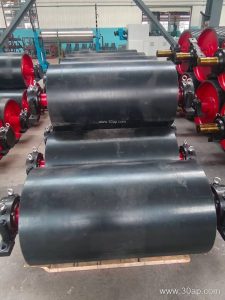
At the return end of a belt conveyor, the conveyor tail pulley closes the loop. It supports the belt as it comes back from the head, helps maintain tension, and works with the take-up system to keep the belt running true. In a quarry or a sand and gravel line, this pulley often sits in a dusty, abrasive environment, so its construction and surface treatment matter as much as its diameter. Unlike a drive pulley, which transmits power, or a bend pulley, which changes belt direction, the tail pulley is primarily a guiding and tensioning component. It is not interchangeable with those other subtypes, and specifying one should never be based on another’s dimensions.
Construction and Surface Options
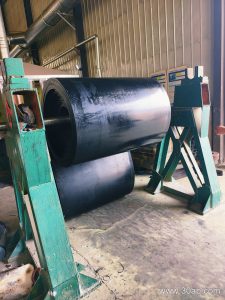
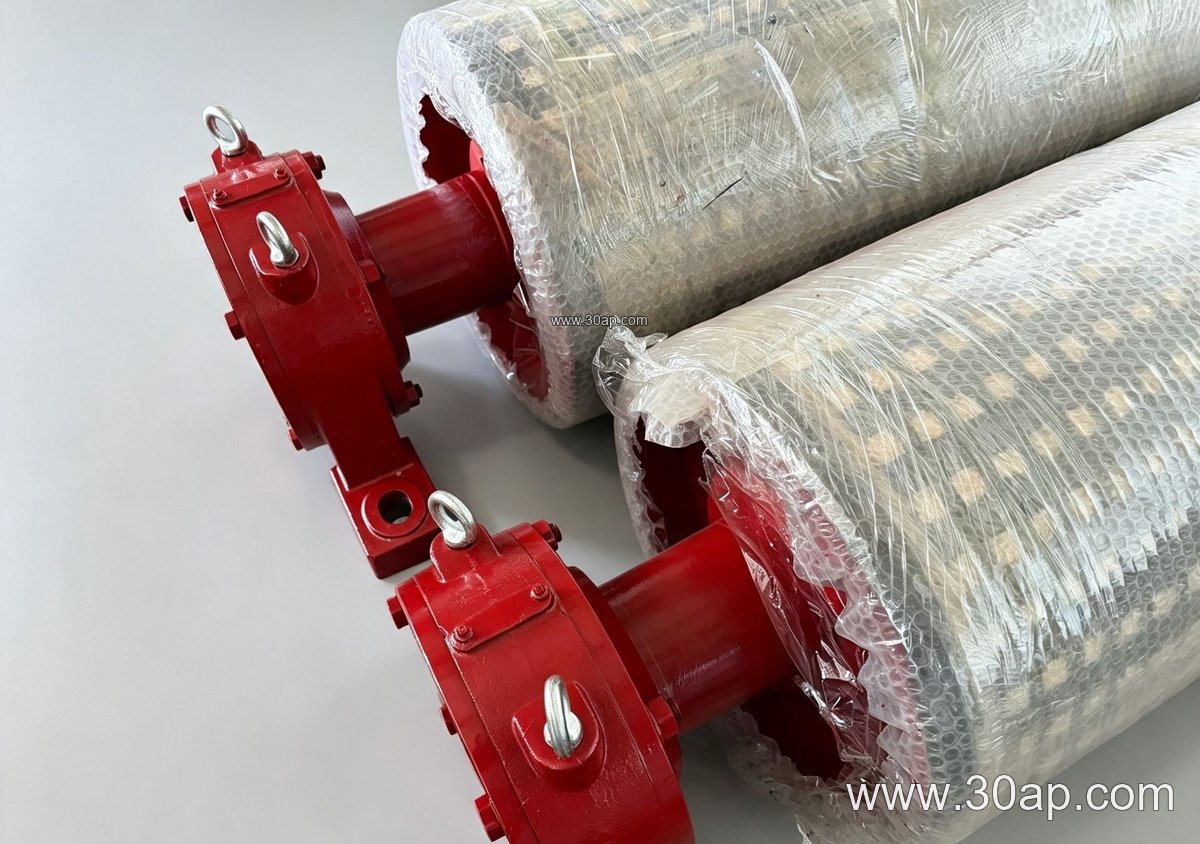
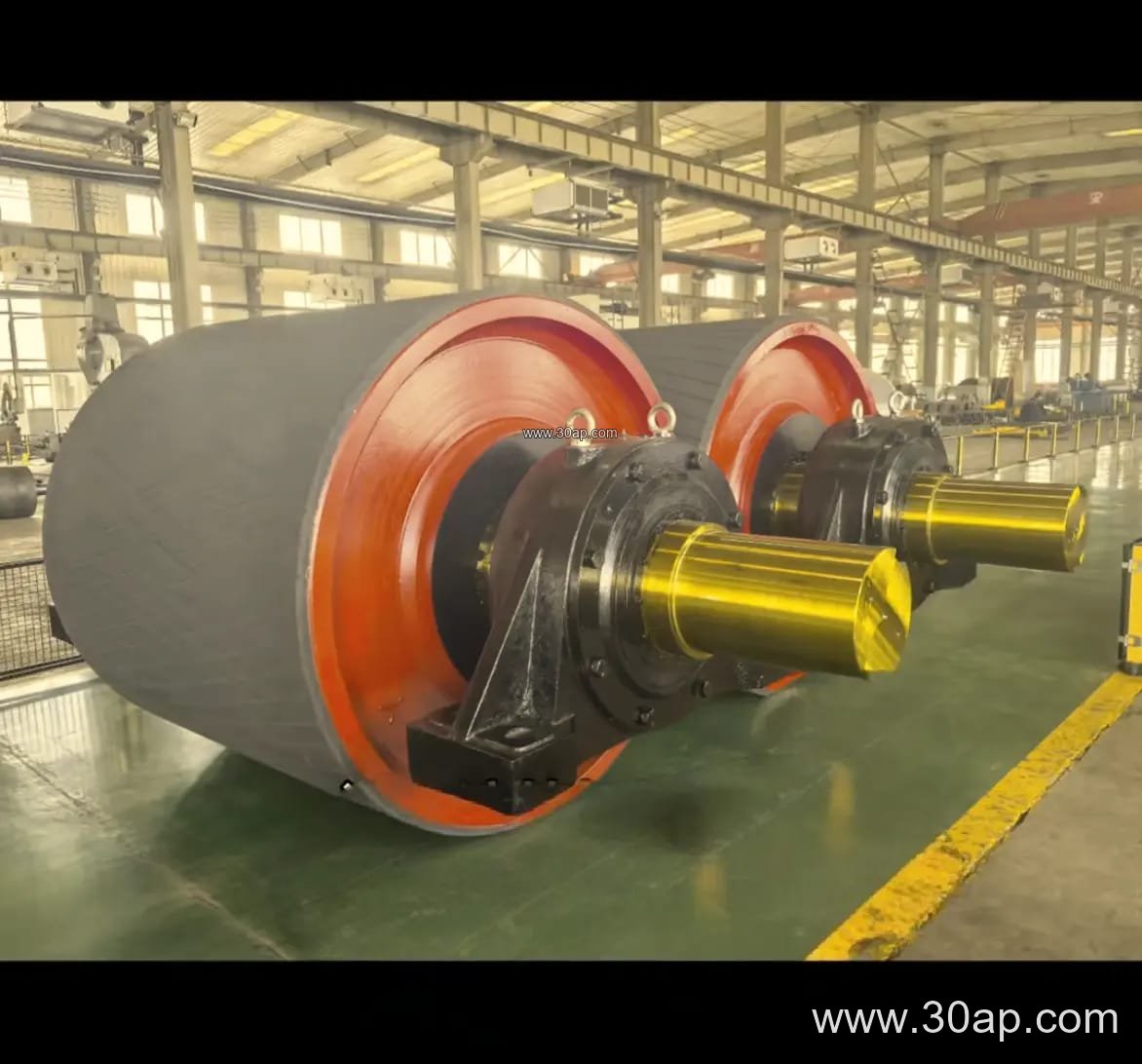
A typical conveyor tail pulley is built around a steel drum with welded end discs and a through shaft. The shell may be plain or covered with rubber, ceramic, or other lagging to improve grip and protect the belt. Common surface forms include smooth, cold-bonded rubber, hot-spliced rubber, diamond grooved, herringbone grooved, and ceramic lagging. Lagging thickness is often 8, 10, 12, 15, or 20 mm, selected according to belt speed, load, and material characteristics. The pulley face width is usually slightly wider than the belt; for example, a B800 belt may run on a pulley with roughly 950 mm face width, and a B1200 belt on about 1400 mm. These are reference relationships, not fixed rules, and the final combination depends on the conveyor design.
Common Reference Dimensions
| Belt Width (B) | Typical Pulley Face Width | Common Diameter Range |
|---|---|---|
| B500 | ~600 mm | Ø200–Ø400 |
| B650 | ~750 mm | Ø250–Ø500 |
| B800 | ~950 mm | Ø315–Ø630 |
| B1000 | ~1150 mm | Ø400–Ø800 |
| B1200 | ~1400 mm | Ø500–Ø1000 |
| B1400 | ~1600 mm | Ø630–Ø1250 |
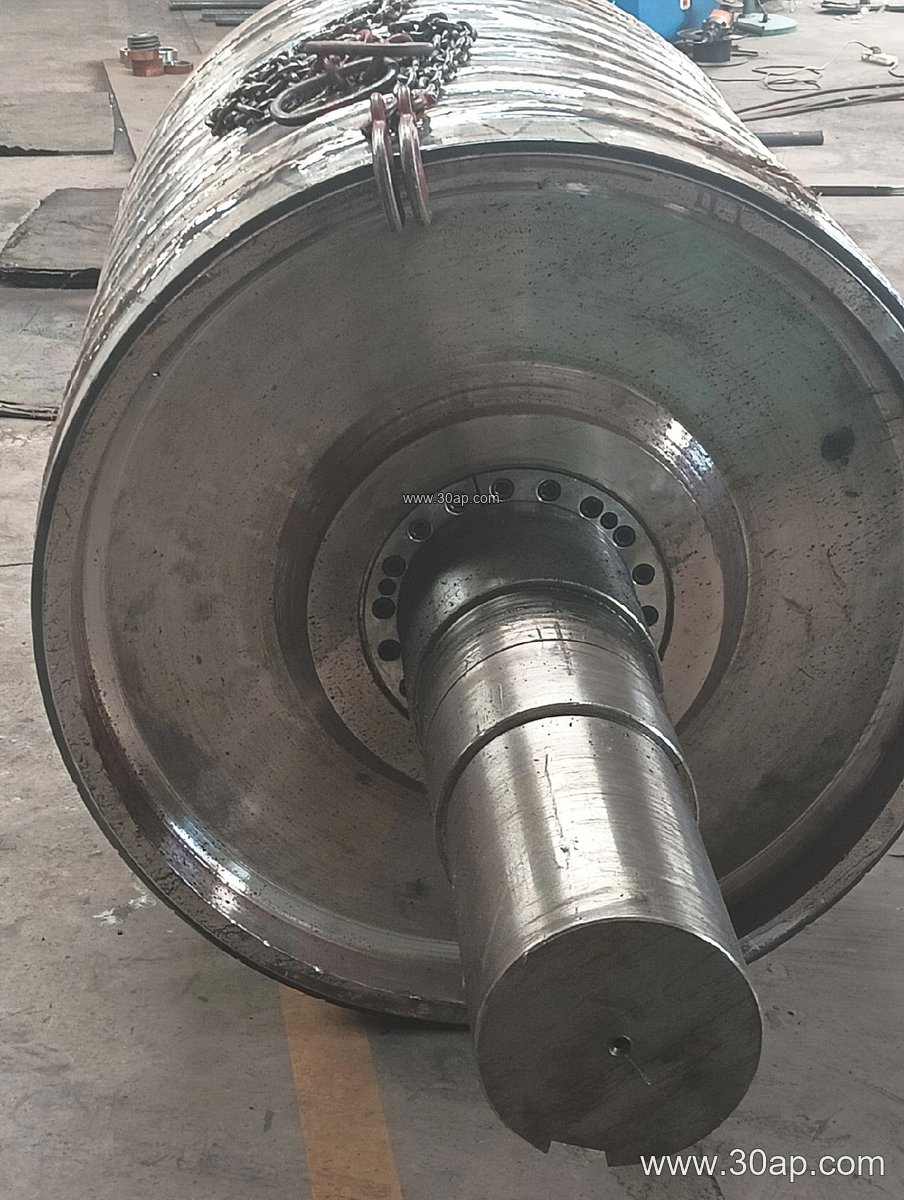
Shaft diameters are determined by torque and load, not by belt width alone. Common shaft sizes include Ø50, Ø60, Ø70, Ø80, Ø90, Ø100, Ø120, Ø140, Ø160, Ø180, and Ø200. A heavy-duty mining conveyor belt carrying iron ore may require a larger shaft than a lighter aggregate conveyor belt of the same width. Always confirm shaft size with the pulley manufacturer based on actual conveyor tensions.
Where It Fits in the System
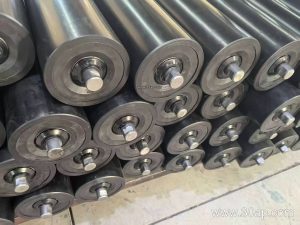
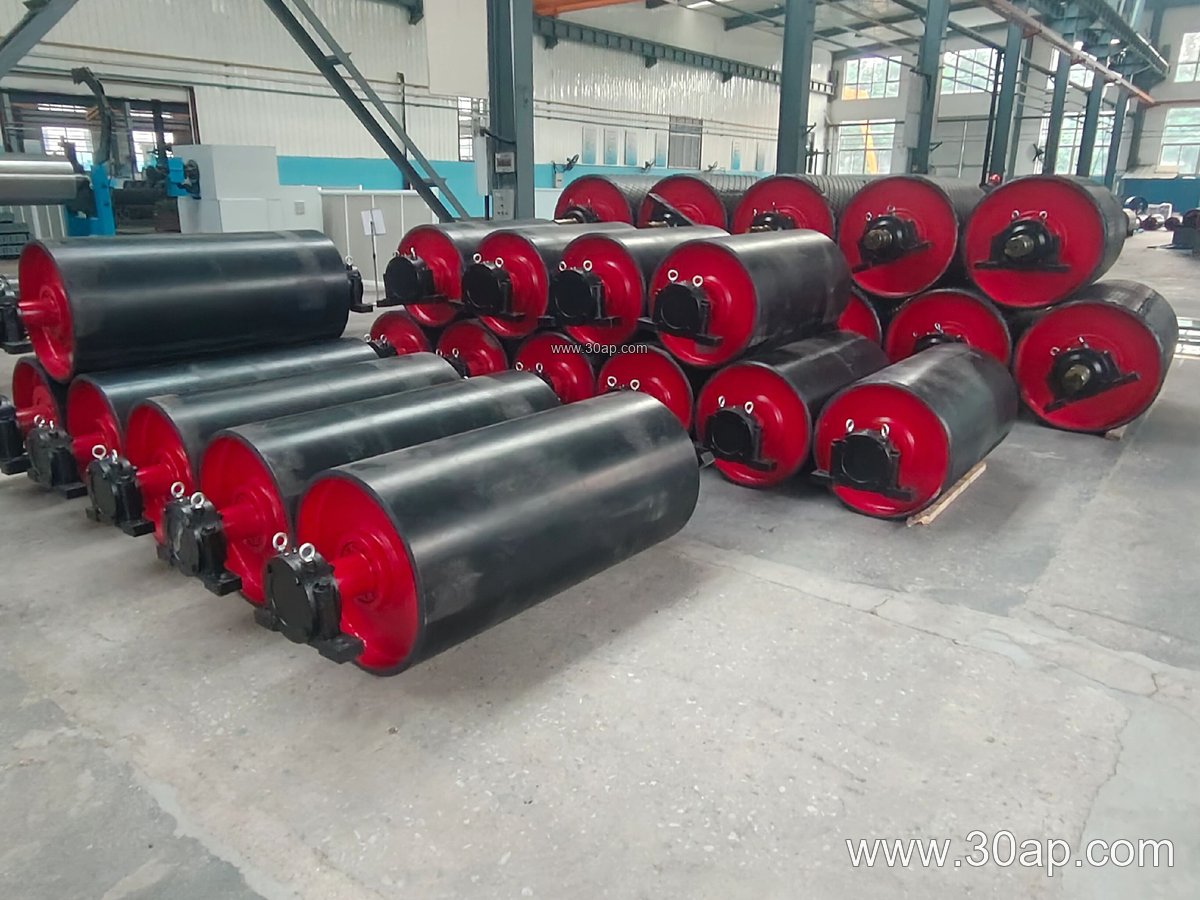
The tail pulley is found in almost every bulk material handling circuit. In a coal mining conveyor belt system, it helps keep the belt aligned as it returns from the discharge point. In a cement plant, it may be paired with a heat resistant conveyor belt on clinker lines or a flame retardant conveyor belt in coal handling. At a port loading facility, a wide conveyor tail pulley with a 1800 mm face width might support a steel cord conveyor belt moving at high speed. The pulley also works alongside conveyor idler rollers and conveyor brackets, which support the belt along the carry and return sides. A properly aligned tail pulley reduces edge wear and extends the life of the conveyor belt, whether it is an EP conveyor belt, a fabric core conveyor belt, or a multi-ply fabric core conveyor belt.
Selection and Maintenance Notes
Buyers should consider belt width, belt type, expected tension, and environmental conditions. For abrasive materials such as quartzite or sinter, a ceramic or diamond lagging may be preferred to reduce slip and wear. In cold climates, a cold resistant conveyor belt may be used, and the pulley should be checked for low-temperature brittleness of the lagging. In food or chemical applications, an oil resistant or acid resistant conveyor belt may be present, and the pulley surface should be compatible with washdown and cleaning. Regular inspection of the lagging, shaft, and bearing housing helps prevent unexpected downtime. Misalignment at the tail pulley often shows as belt edge fraying or uneven wear on the idler roller and pulley surface. Keeping the tail pulley clean and properly tensioned is a simple way to protect the entire conveyor system, from the crusher conveyor belt to the ship loading conveyor belt.
For more information on compatible conveyor components, visit our site at www.example.com/conveyor-tail-pulley or explore our range of conveyor pulleys and conveyor brackets.