What a Three-Roll Idler Bracket Does on a Conveyor
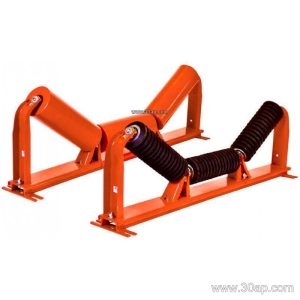
A three-roll idler bracket is the steel support that holds the three-roller troughing set under the carrying side of a conveyor belt. It positions the centre roll flat and the two side rolls at an angle, forming the trough that keeps bulk material centred. In a quarry, cement plant, or power plant coal yard, this bracket is the interface between the conveyor frame and the idler rollers, and it directly affects belt tracking and material spillage. The same assembly is often called a troughing idler bracket or three-roller support bracket; these names refer to the same product, and the subtype qualifiers stay with it. Drive pulleys, tail pulleys, and bend pulleys are separate components and are not part of this bracket.
Construction and Mounting Details
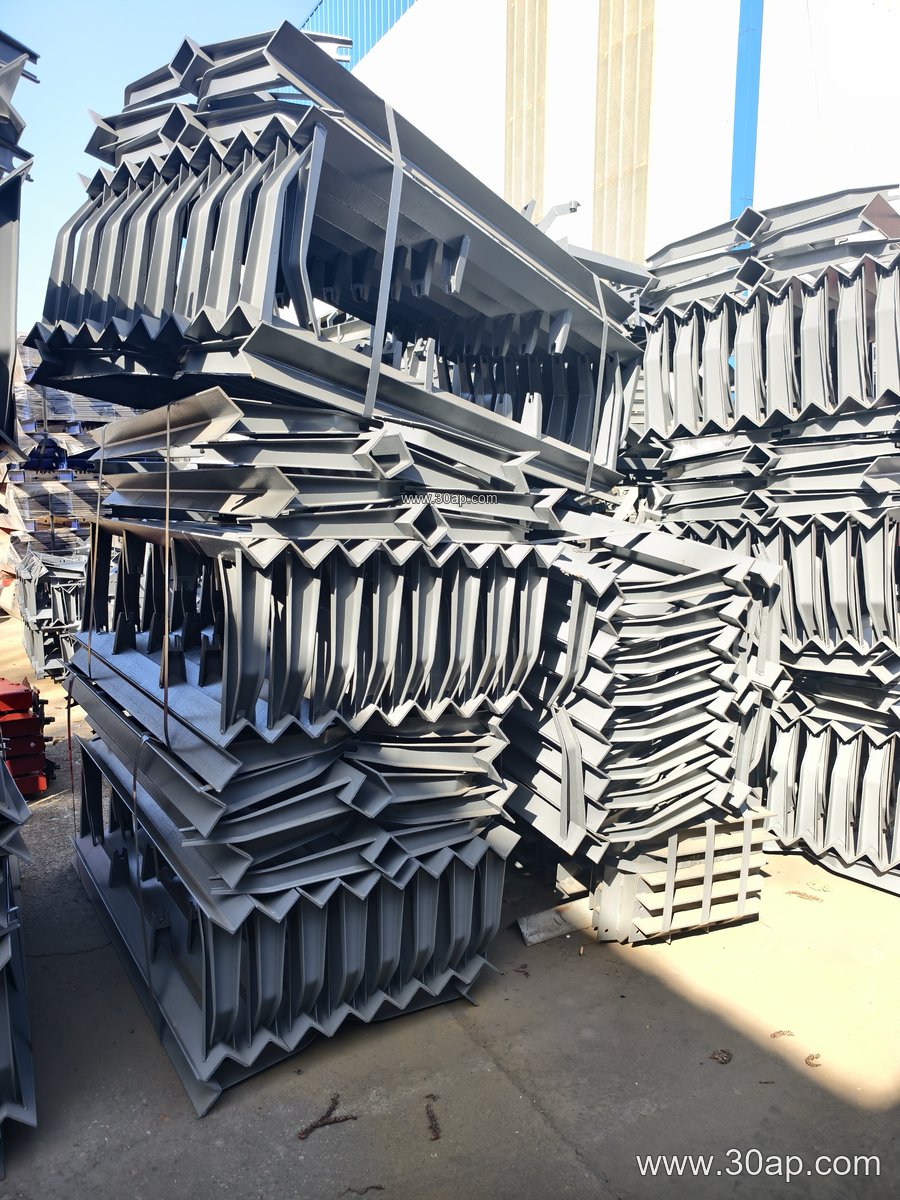
Most three-roll idler brackets are fabricated from angle steel, channel steel, or folded steel plate. The side arms are set to a trough angle, and the base is drilled to match the conveyor frame. Installation holes and crossbeam length usually vary with belt width and trough angle, so a B800 bracket is not interchangeable with a B1200 unit without checking dimensions.
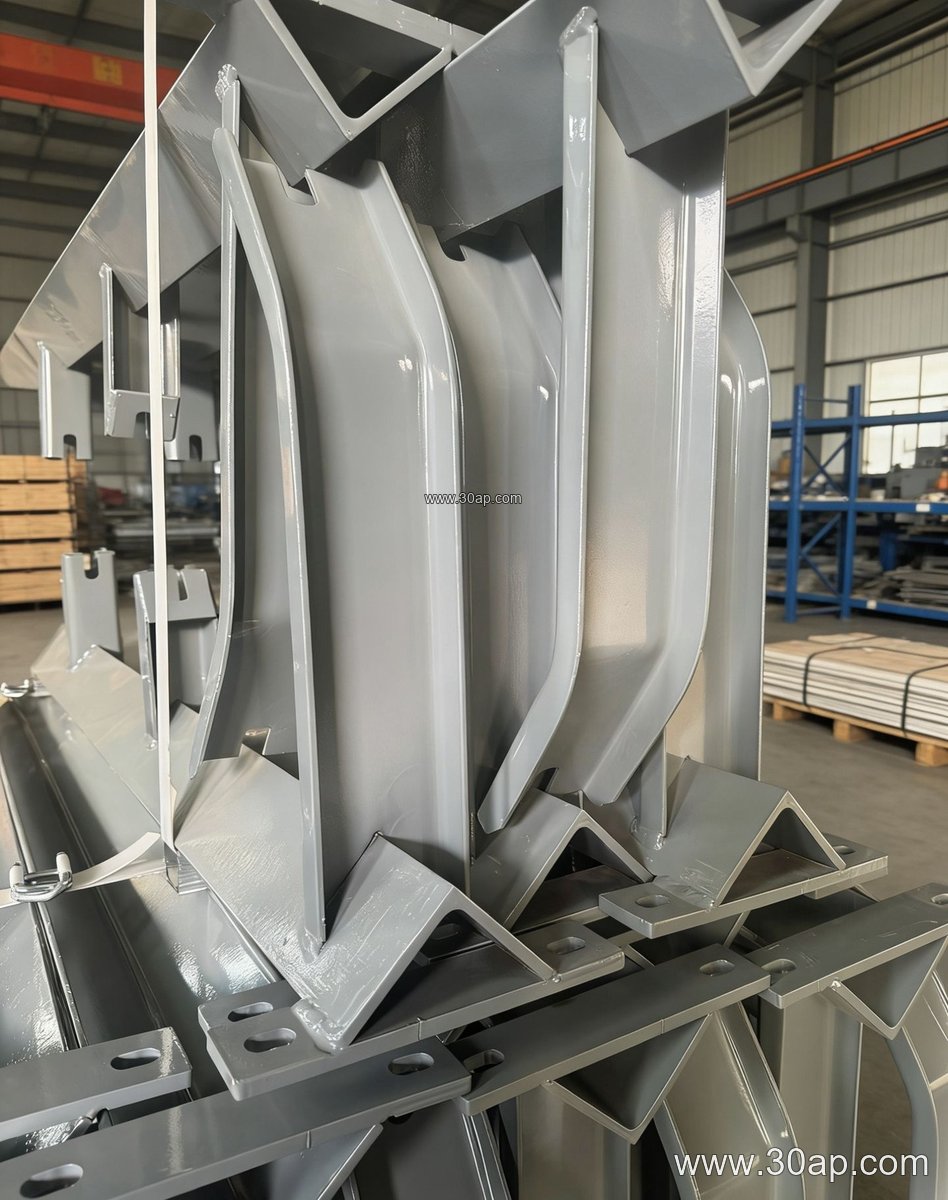
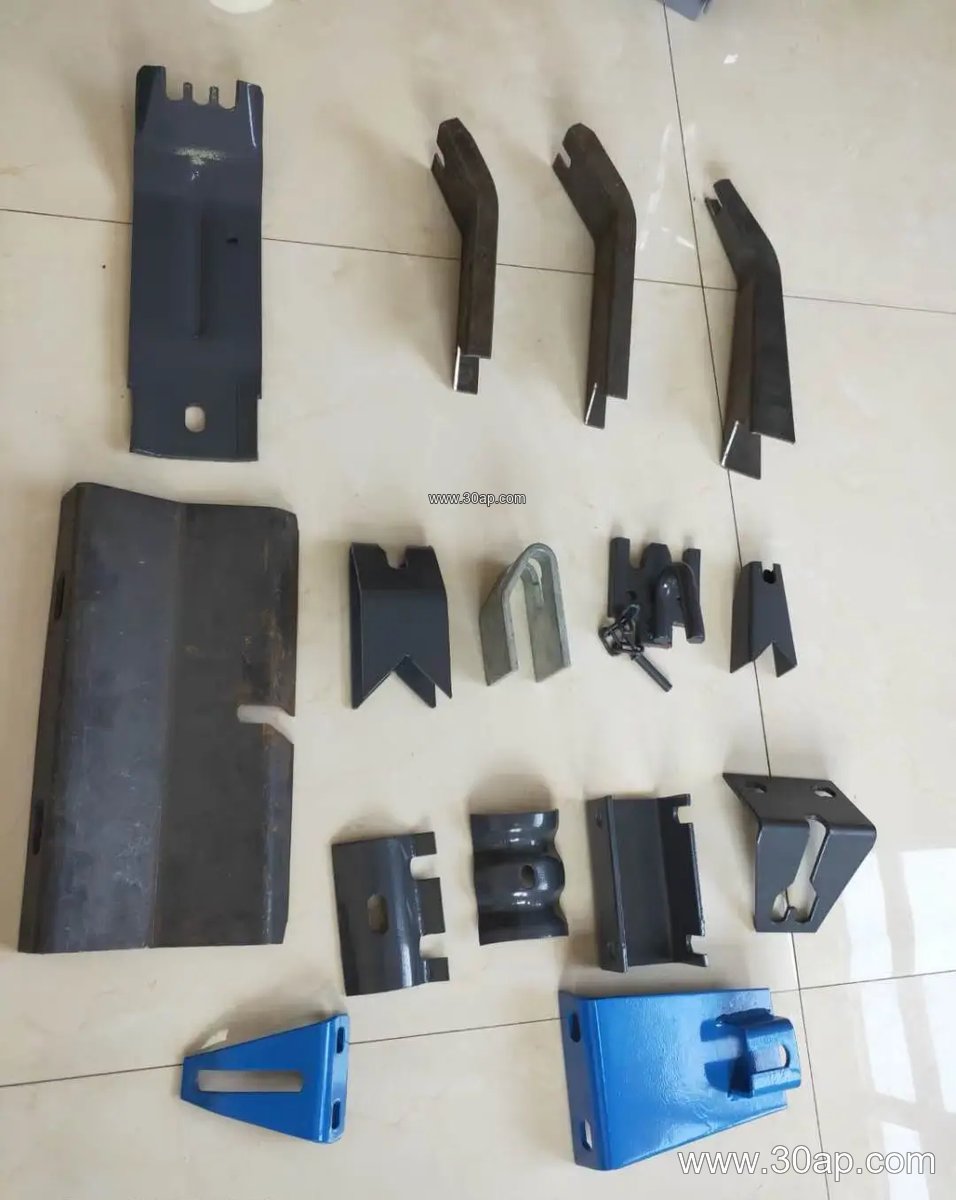
- Common trough angles: 20°, 30°, 35°, and 45°.
- Adjustable brackets allow the side arms to be set between these angles.
- Forward-leaning brackets often tilt the side rolls about 1.5° to 2° for better belt centring.
- Fixing methods include bolted clamps and welded frame connections.
Surface treatment is typically painted or galvanized to resist dust and moisture. In a coal preparation plant or a limestone quarry, dust build-up around the bracket base is normal, so easy access for cleaning matters as much as structural strength.
Matching Belt Width, Trough Angle, and Roll Diameter
Buyers often ask how to pair belt width with roll diameter and trough angle. There is no single rule that fixes one belt width to one roll diameter. A B650 conveyor may run 30° troughing with Ø89 rolls, while a B1200 conveyor in an iron ore operation may use 35° or 45° troughing with Ø133 or Ø159 rolls. The following table shows common reference combinations, not mandatory specifications.
| Belt width | Trough angle | Roll diameter | Typical bracket style |
|---|---|---|---|
| B500 | 20°–30° | Ø89 | Fixed troughing bracket |
| B650 | 30° | Ø89–Ø108 | Fixed or adjustable |
| B800 | 30°–35° | Ø108–Ø133 | Adjustable troughing bracket |
| B1000 | 35° | Ø133–Ø159 | Forward-leaning bracket |
| B1200 | 35°–45° | Ø133–Ø159 | Heavy-duty fixed bracket |
| B1400 | 35°–45° | Ø159–Ø194 | Adjustable or transition bracket |
| B1600–B1800 | 35°–45° | Ø159–Ø194 | Heavy-duty troughing bracket |
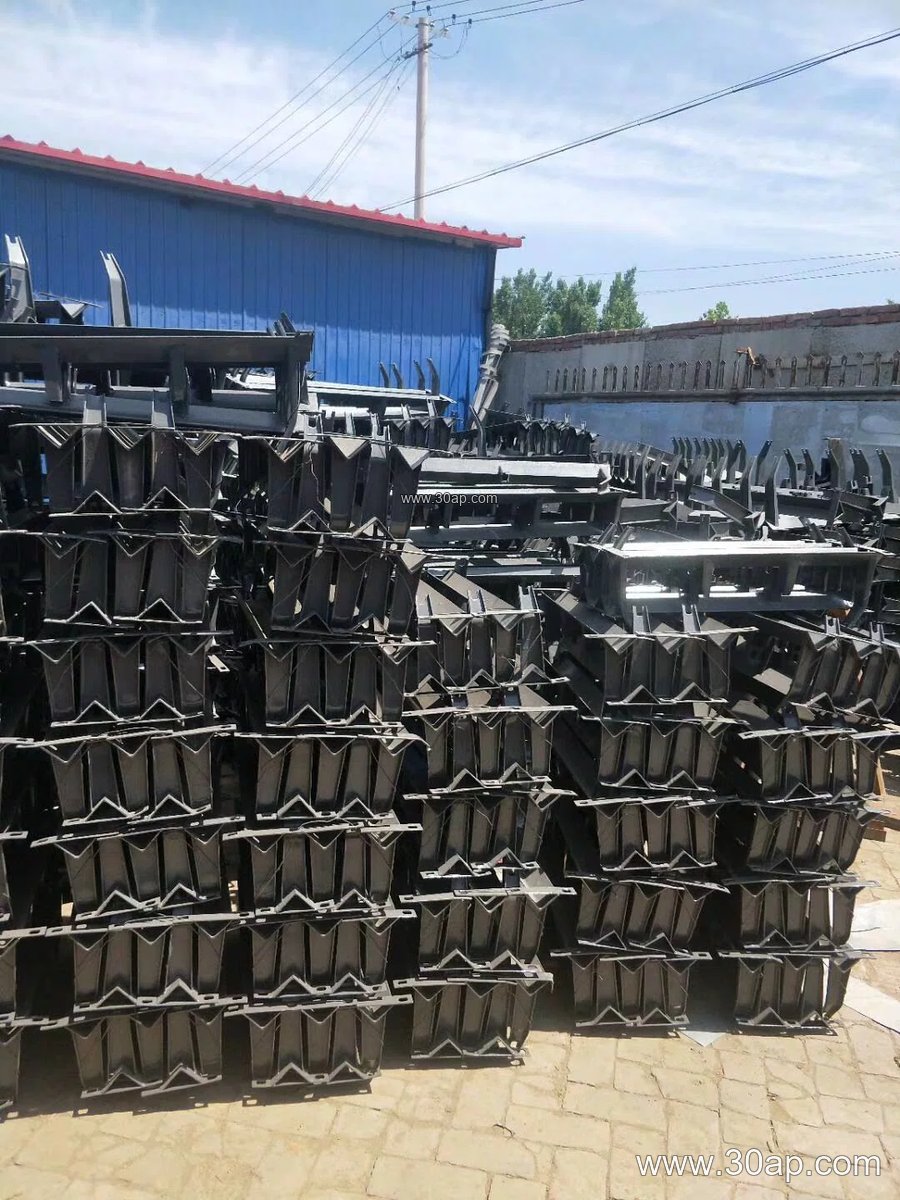
Transition brackets are used near the tail pulley, where the belt changes from flat to troughed. Impact brackets with rubber cushions are common under crusher discharge points and in aggregate conveyor lines. Return brackets and V-return brackets support the belt on the return side and are a different subtype, not a replacement for the three-roll carrying bracket.
Where It Fits in Different Industries
In a sand and gravel line, three-roll brackets keep abrasive aggregate centred on an abrasion resistant conveyor belt. In a cement plant, they support clinker and raw meal transport, often alongside heat resistant conveyor belt sections near the kiln. Underground coal mining relies on flame retardant conveyor belt and fire resistant conveyor belt, with brackets mounted on frames that must tolerate dusty, damp conditions. Port bulk terminals handling iron ore or copper ore use heavy-duty brackets matched to wide conveyor belt widths and large roll diameters. In each case, the bracket works together with the idler roller, the conveyor pulley, and the belt to maintain a stable trough profile.
Buyer Checklist Before Ordering
Confirm the belt width, the required trough angle, and the roll diameter first. Then check the frame hole spacing and the crossbeam length, because these are not universal. Ask whether a fixed or adjustable bracket suits the maintenance plan; adjustable types help when the same conveyor line handles different materials. For dusty or wet sites, specify the surface finish and consider how easily the bracket can be cleaned. Finally, match the bracket to the belt type in use, whether that is EP conveyor belt, steel cord conveyor belt, or a multi-ply fabric core conveyor belt. A bracket that fits the frame but not the roll set will cause poor belt tracking and uneven wear.