What a Herringbone Grooved Lagged Pulley Is
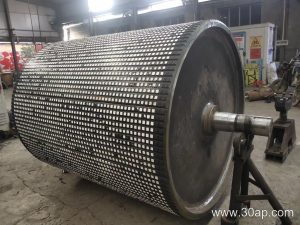
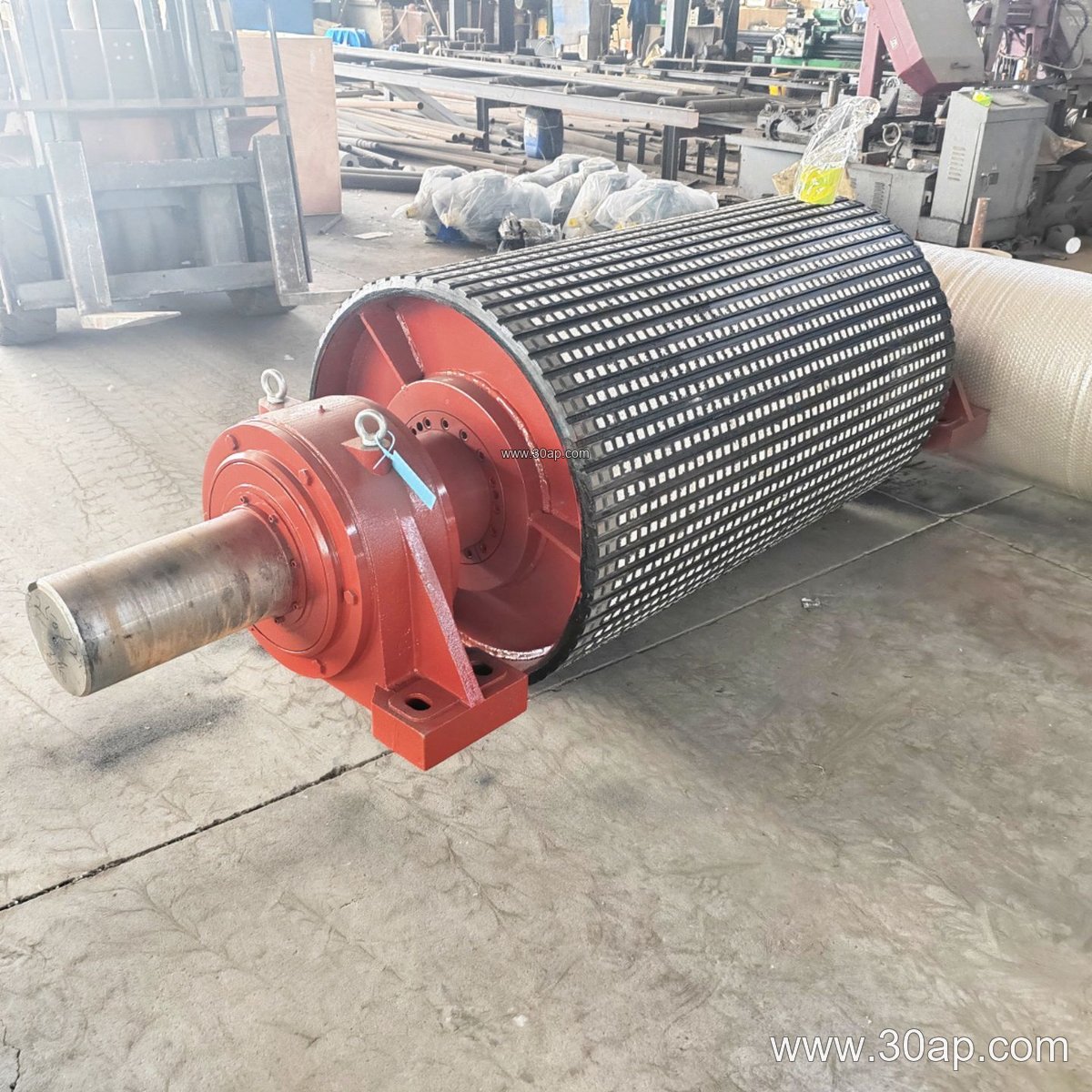
A herringbone grooved lagged pulley is a conveyor pulley whose outer surface carries a rubber lagging with a V-shaped herringbone groove pattern. This pattern is machined or molded into the lagging to improve grip and help clear debris. It is often referred to as a herringbone lagged drum or a herringbone grooved drum pulley. The herringbone groove design is a subtype of grooved lagging, distinct from plain lagging or diamond lagging. It is typically used on drive pulleys, but can also be specified for other positions where extra traction and self-cleaning are needed.
Construction and Groove Geometry
The pulley body is usually a welded steel drum with end discs and a shaft. Lagging is applied by hot vulcanization, cold bonding, or casting, in thicknesses commonly 8, 10, 12, 15, or 20 mm. The herringbone grooves are cut into the rubber after application or formed during molding. The grooves run in a V pattern that points in the direction of belt travel, so that water, fine dust, and sticky material are pushed toward the edges instead of being trapped under the belt. This self-cleaning action is the main reason for choosing a herringbone grooved lagged pulley over a plain lagged one in wet or muddy conditions.
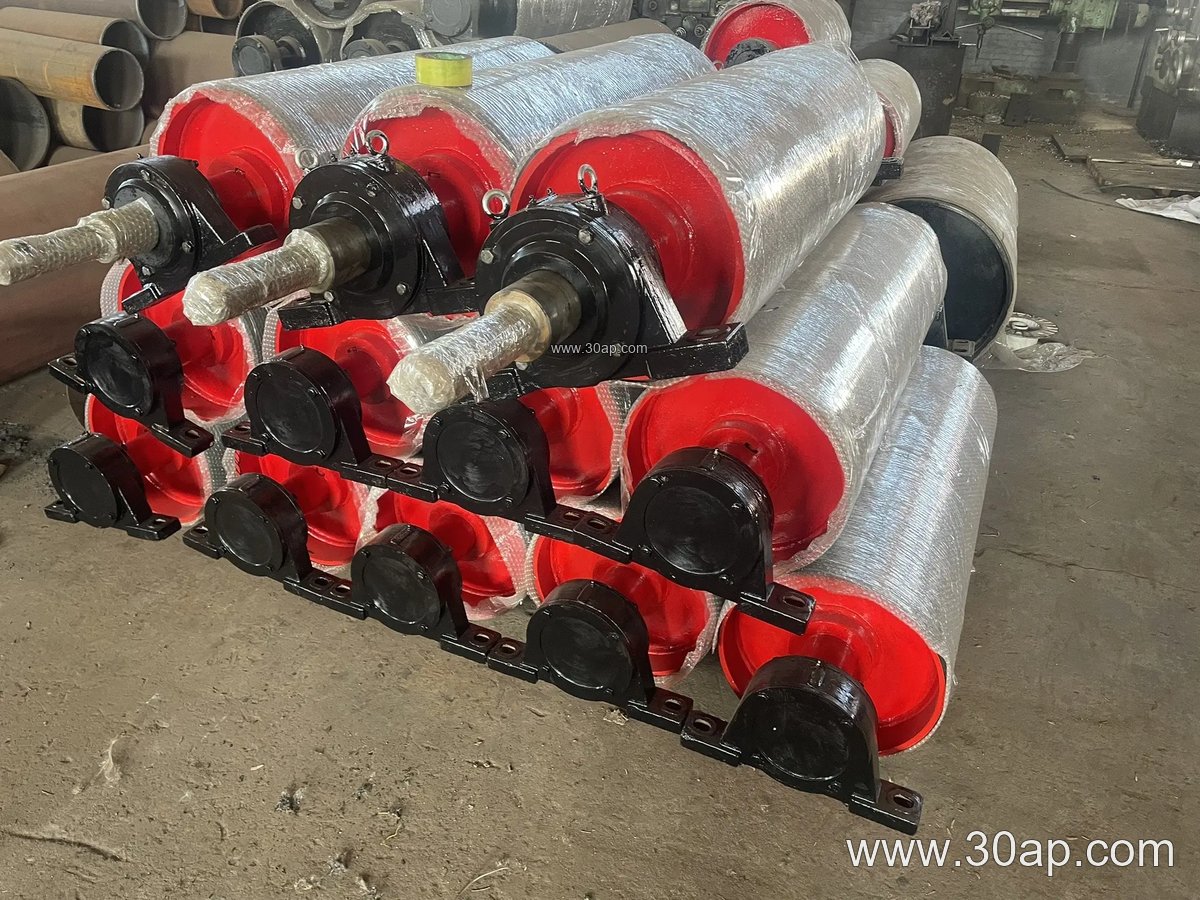
Common surface forms for comparison include plain rubber, diamond lagging, and ceramic lagging. Diamond lagging also offers drainage but with a different pattern; ceramic lagging provides high wear resistance but less flexibility in groove design. The herringbone pattern is particularly effective when both traction and cleaning are required.
Where It Fits in a Conveyor
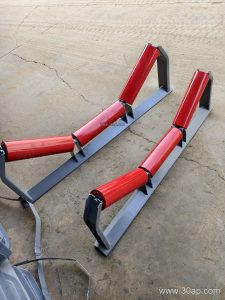
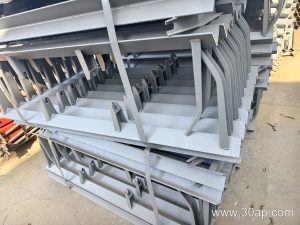
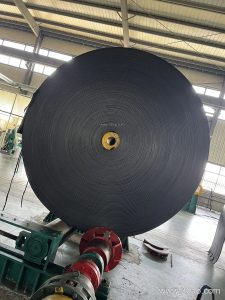
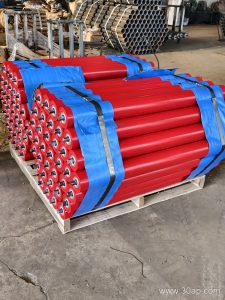
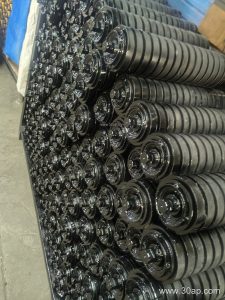
This pulley is most often installed as a drive pulley at the head of the conveyor, where it transmits power to the belt. It can also be used as a tail pulley or a bend pulley in special cases, but the drive position is the primary application. In mining, coal preparation plants, cement plants, power plant coal handling, and aggregate quarries, a herringbone grooved lagged pulley helps maintain grip on a conveyor belt that may be wet or carry fine particles. It works together with idler rollers and conveyor brackets to keep the belt aligned and moving efficiently.
For operations using rubber conveyor belt, EP conveyor belt, or steel cord conveyor belt, the pulley lagging must match the belt cover hardness and the load. A herringbone grooved lagged pulley is not a substitute for a drive pulley or a tail pulley; it is a surface option applied to those pulleys.
Common Sizes and Combinations
Pulley dimensions are usually selected to match the belt width and the required torque. The table below shows typical reference combinations; actual sizes are determined by design.
| Belt Width (mm) | Typical Pulley Face Width (mm) | Common Diameter Range (mm) | Example Combination |
|---|---|---|---|
| B500 | 600 | Ø250–Ø500 | B500 × Ø400 |
| B650 | 750 | Ø315–Ø630 | B650 × Ø500 |
| B800 | 950 | Ø400–Ø800 | B800 × Ø500 |
| B1000 | 1150 | Ø500–Ø1000 | B1000 × Ø630 |
| B1200 | 1400 | Ø630–Ø1250 | B1200 × Ø1000 |
| B1400 | 1600 | Ø800–Ø1400 | B1400 × Ø800 |
| B1600 | 1800 | Ø1000–Ø1600 | B1600 × Ø1250 |
Shaft diameters are commonly Ø50 to Ø200 mm, selected by torque and load, not by belt width alone. Lagging thickness and groove depth are chosen according to the duty. For high-abrasion service, a thicker lagging may be used, but the groove pattern remains herringbone.
Buyer Checklist
- Confirm the pulley position: drive, tail, bend, or take-up. The herringbone grooved lagged pulley is most often a drive pulley, but the same surface can be applied to other positions if needed.
- Specify belt width, pulley diameter, face width, and shaft diameter. Do not assume a fixed shaft size from belt width.
- Choose lagging thickness and rubber hardness for the environment. Wet, muddy, or fine-material conditions benefit from the self-cleaning herringbone groove.
- Check compatibility with the conveyor belt type, such as abrasion resistant conveyor belt or heat resistant conveyor belt, and with idler rollers and brackets.
- Ask for the groove orientation to match the belt running direction; incorrect orientation reduces cleaning and traction.
Whether the application is a quarry conveyor belt line, a cement plant clinker transport, or a power plant coal conveyor, the herringbone grooved lagged pulley offers a practical way to improve traction and reduce build-up on the pulley face.