What an Idler Bracket Does on a Conveyor
An idler bracket is the mounting component that holds a conveyor idler roller in position on the conveyor frame. It fixes the roller spacing, sets the trough angle of the carrying side, and transfers the load from the belt and material into the stringers. In a quarry or a crushing and screening line, a loose or misaligned bracket is often the real reason a belt wanders, not the roller itself. The bracket is a small part, but it decides how the roller sits, how the belt tracks, and how quickly worn parts can be replaced. A related item, the conveyor bracket used at pulley stations, serves a different purpose and should not be confused with the idler support described here.
Construction and Common Forms
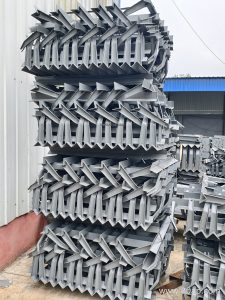
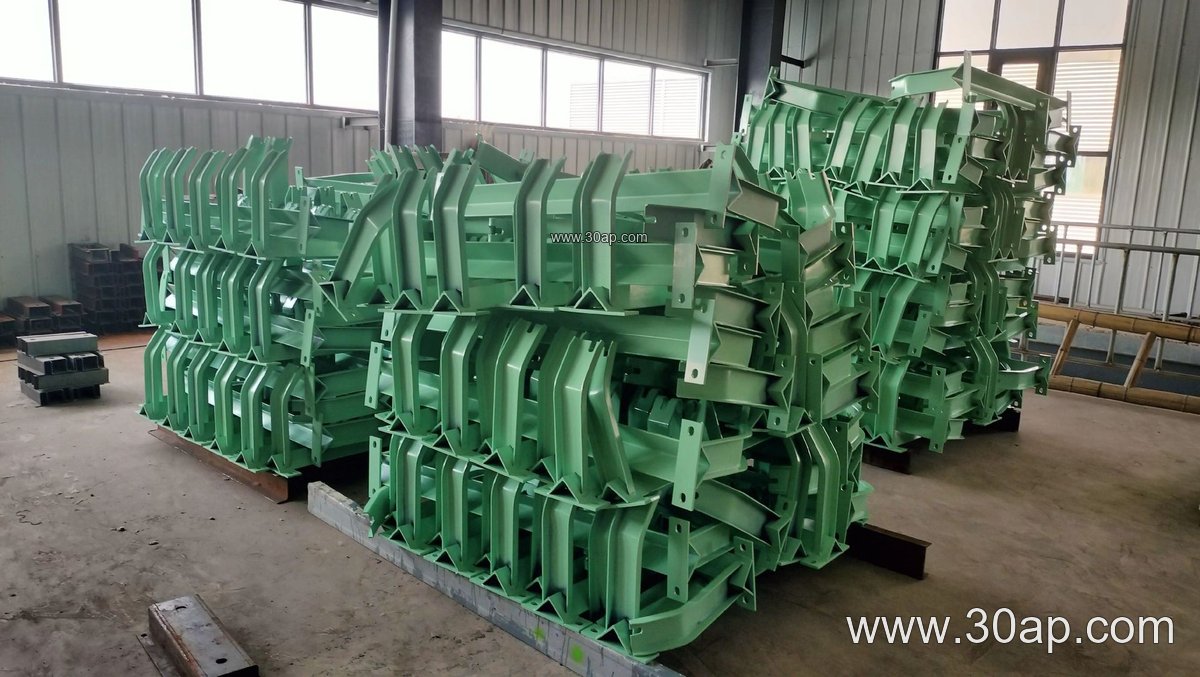
Most brackets are fabricated from angle steel, channel steel, or folded steel plate, then drilled or punched for mounting holes. The hole spacing and crossbeam length usually change with belt width and trough angle, so they are confirmed per design rather than taken as universal figures.
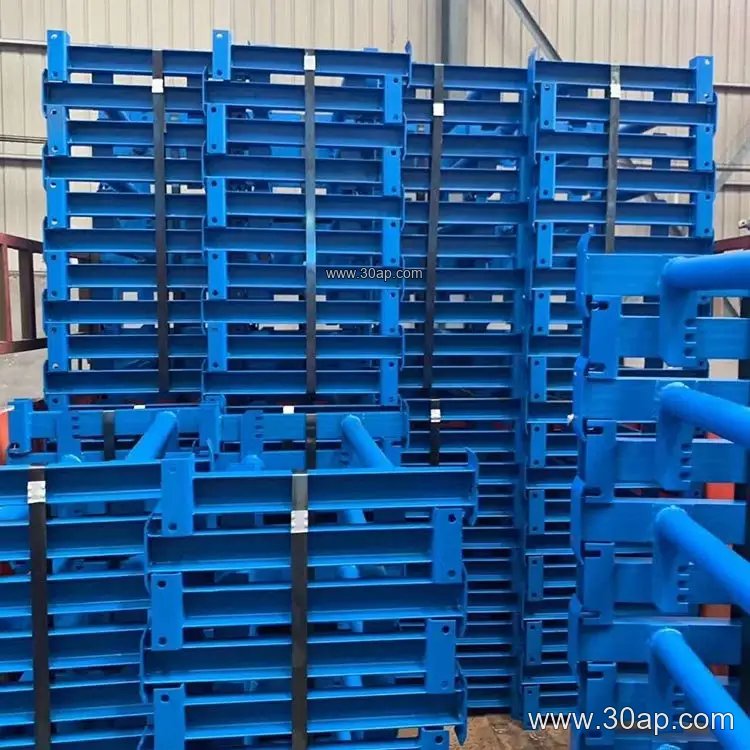
- Troughing bracket – carries three rollers in a trough profile on the carrying side.
- Transition bracket – eases the belt from flat to troughed shape near pulleys.
- Return bracket and V-return bracket – support the return strand, with the V form helping center the belt.
- Impact bracket – used under loading points where material falls onto the belt.
- Self-aligning and forward-tilted brackets – correct minor tracking deviation; forward tilt is commonly about 1.5 to 2 degrees.
- Adjustable bracket – allows the trough angle to be set between common values such as 20, 30, 35, and 45 degrees.
Adjustable and fixed versions differ mainly in the mounting slots and pivot points. Fixed brackets are simpler and stiffer; adjustable ones help when a conveyor handles several material types or when the belt needs fine tuning after installation.
Matching Belt Width, Trough Angle and Roller Diameter
Belt width, trough angle, and roller diameter are chosen together, but they are not locked to one another. A 35-degree trough with Ø108 rollers is common on medium belts, while a wider 45-degree arrangement with Ø133 or Ø159 rollers suits high-capacity duties. The table below shows typical reference combinations; final values come from the conveyor design.
| Belt width | Typical trough angle | Typical roller diameter | Bracket note |
|---|---|---|---|
| B500 / B650 | 20°–30° | Ø89 | Compact frame, short crossbeam |
| B800 / B1000 | 30°–35° | Ø108 | Standard troughing bracket |
| B1200 / B1400 | 35°–45° | Ø133 | Reinforced mounting plates |
| B1600 / B1800 | 35°–45° | Ø159 | Heavy channel or folded plate |
| B2000 / B2200 | 35°–45° | Ø194 | Wide crossbeam, high load rating |
Do not assume that one belt width limits the bracket to a single trough angle or roller size. A B1200 conveyor may run 35 degrees with Ø133 rollers in one plant and 45 degrees with Ø159 in another, depending on capacity and material.
Where the Part Fits in Real Installations
In a cement plant, troughing brackets along the clinker and raw material lines hold the belt in shape over long runs, while impact brackets sit under transfer chutes. In a coal preparation plant, flame retardant and anti-static belt requirements often come with steel frames that need corrosion protection, and the bracket material should be specified accordingly. The bracket works with the idler roller, the conveyor pulley at each end, and the belt itself; a worn bracket bushing or elongated hole lets the roller tilt, which shows up as edge wear on the belt.
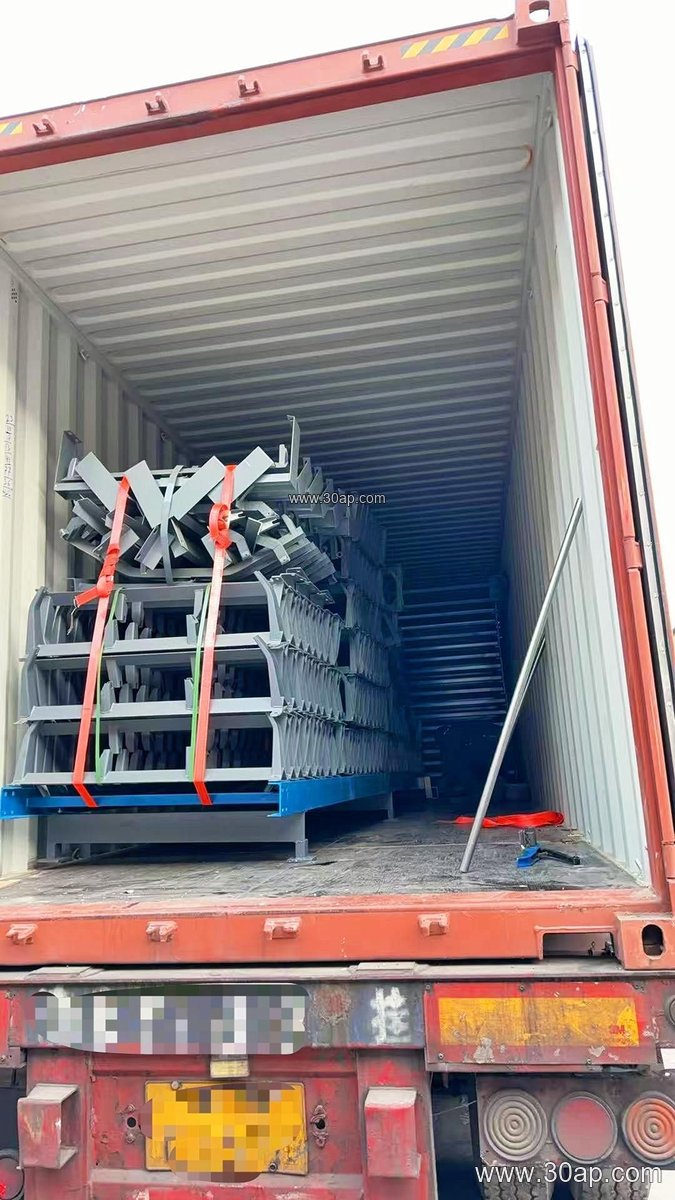
For heavy-duty mining conveyor belt duty, brackets are usually thicker and the mounting bolts larger. On a crusher conveyor belt or an aggregate conveyor belt fed by a primary crusher, impact brackets and closely spaced idlers reduce stress at the load point.
Buyer Checklist
- Confirm belt width and the required trough angle before ordering, and state whether fixed or adjustable is needed.
- Give the roller diameter and the actual mounting hole spacing, or send the frame drawing.
- Check the steel section and finish against the site conditions, especially in wash plants and coastal ports.
- Ask how the bracket interfaces with the stringer and whether shims are supplied.
- Keep spare brackets for the highest-wear positions, such as impact and transition zones.
When the bracket is matched to the roller, the belt width, and the trough angle, the conveyor runs straighter and parts last longer. For more on idler bracket options and matching conveyor components, visit rubberbeltconveyor.com and review the bracket and roller ranges together with the belt specification.