What Makes a Ceramic Lagged Pulley Heavy-Duty
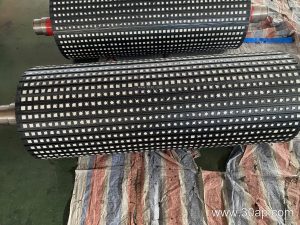
A heavy-duty ceramic lagged pulley is a conveyor pulley whose shell is covered with ceramic tiles set in a rubber or epoxy matrix. This ceramic lagging is what separates it from a plain rubber-lagged pulley or a bare steel drum. The tiles create a high-friction surface that grips the conveyor belt under demanding loads, while the rubber or epoxy base absorbs shock and protects the pulley shell. In industries such as mining, coal preparation, cement plants, and power station coal handling, this type of pulley is often chosen for drive positions where slip would stop production.
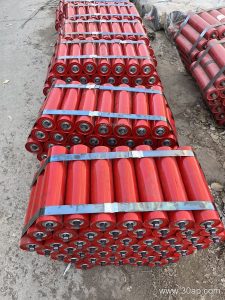
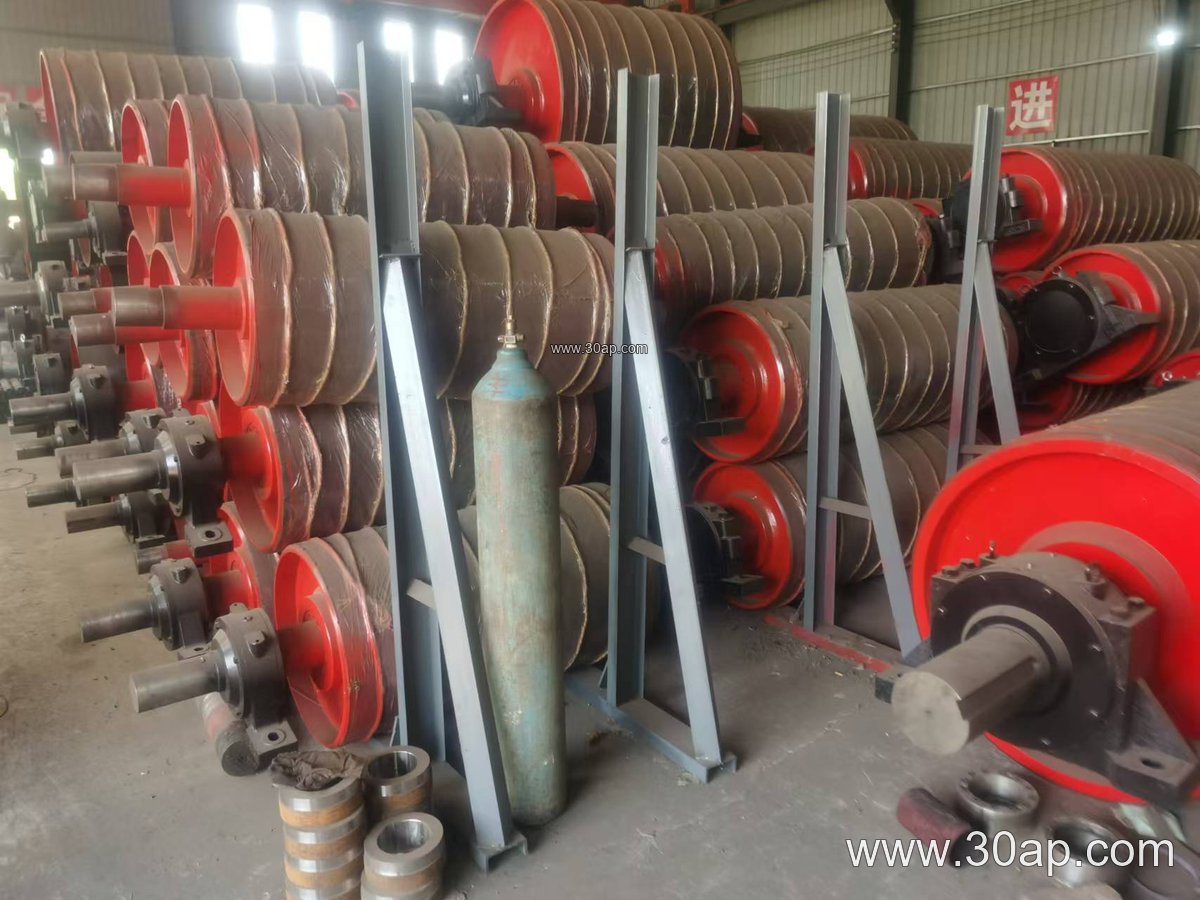
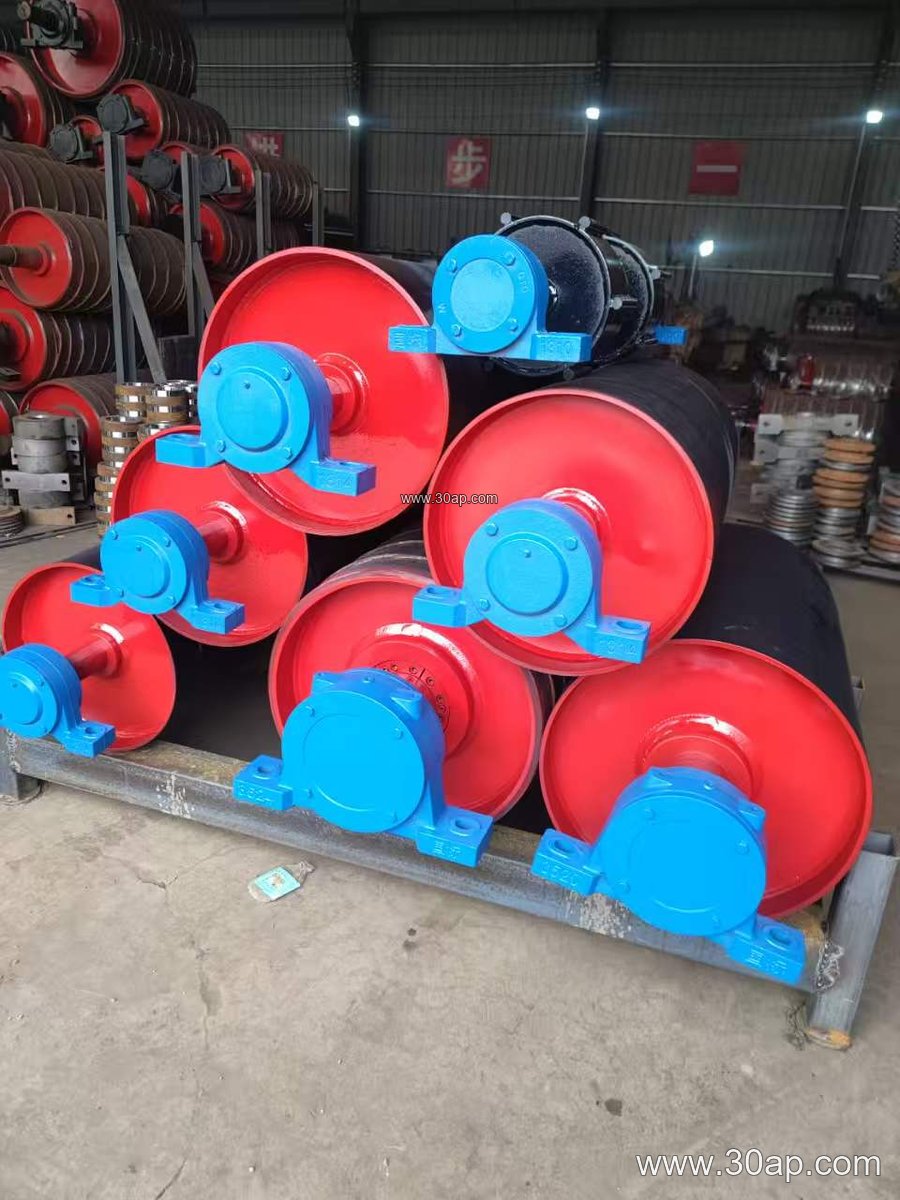
The heavy-duty designation usually refers to the pulley’s construction: thicker shell, reinforced end discs, larger shaft, and heavier bearings. It is not a specific model number, but a general class of robust conveyor pulley built for continuous operation and high tension. A heavy-duty ceramic lagged pulley is an accurate equivalent name for the same product, and both terms point to the same component.
How the Ceramic Lagging Is Built
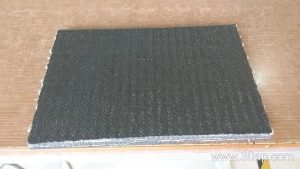
Ceramic lagging is applied in several steps. First, the pulley shell is cleaned and prepared. Then a rubber or epoxy layer is bonded to the surface, and ceramic tiles are embedded into that layer. The tiles are typically small, with raised dimples or grooves that increase grip and help shed water and fine particles. Common lagging thicknesses are 8, 10, 12, 15, and 20 mm, with the ceramic tiles adding further profile depth.
The pulley body itself is usually welded steel, with a machined face and keyed shaft. Shaft diameters commonly range from Ø50 to Ø200 mm, but the final size is determined by torque and load, not by belt width alone. The pulley face width is normally wider than the belt, for example B800 may use a face width around 950 mm, and B1200 around 1400 mm. These are typical references, not fixed rules.
Where It Fits in the Conveyor
Ceramic lagged pulleys are most often used as drive pulleys, also called head pulleys, where the belt leaves the carrying run. They can also serve as tail pulleys or bend pulleys in some configurations, but the drive position is where the extra traction matters most. In a coal mining conveyor, a ceramic lagged drive pulley helps maintain grip when the belt is wet or coated with fine dust. In a cement plant, the same pulley type may be found on clinker transport lines where heat and abrasion are present.
It is important not to confuse drive, tail, and bend pulleys. They are not interchangeable names. A tail pulley guides the belt at the loading end, while a bend pulley changes the belt direction. A heavy-duty ceramic lagged pulley is usually specified for the drive, though other positions may use ceramic lagging when slip is a concern.
Choosing the Right Size and Surface
When selecting a heavy-duty ceramic lagged pulley, buyers should consider belt width, belt tension, and the environment. The pulley diameter should be large enough to avoid excessive belt bending stress, especially with thick or stiff belts such as steel cord conveyor belt or heavy EP conveyor belt. Common diameter options include Ø500, Ø630, Ø800, Ø1000, and Ø1250 mm, but the final choice depends on the conveyor design.
Lagging thickness and ceramic pattern also matter. A 15 mm or 20 mm lagging may be used in high-torque drives, while 10 mm might suit lighter duties. The ceramic surface is available in plain tile or dimpled tile forms. For wet or muddy conditions, dimpled tiles help drain water. For dry abrasive materials, plain tiles can provide consistent wear resistance.
Maintenance and Compatibility
Ceramic lagging is hard and wear-resistant, but it is not indestructible. Impact from large lumps or tramp metal can crack tiles, so attention should be paid to loading conditions and belt cleaning. Regular inspection of the lagging surface and belt tracking is recommended. The pulley should be paired with a compatible conveyor belt, such as an abrasion resistant conveyor belt or a flame retardant conveyor belt for underground coal mining. Idler rollers and conveyor brackets also affect belt alignment, so the whole conveyor system should be checked.
For harsh industries like iron ore, copper ore, or quarry aggregate lines, a heavy-duty ceramic lagged pulley can extend drive pulley life and reduce slip-related downtime. Buyers should request drawings showing shell diameter, face width, shaft size, lagging thickness, and bearing type. Avoid assuming that a given belt width automatically dictates a specific shaft diameter or pulley diameter; those values are determined by the conveyor designer based on actual load and tension.