What a Belt Conveyor Drive Pulley Does
A Belt Conveyor Drive Pulley is the powered drum at the head of a conveyor that grips the belt and pulls the entire loop forward. Sometimes called a head pulley or drive drum, it is the one pulley in the system that receives torque from the gearbox and motor. Tail pulleys and bend pulleys only redirect or tension the belt; they do not transmit drive force. That functional difference matters when specifying, ordering, or replacing parts, because a drive drum must be built for torque transmission, not just for guiding.
In a quarry, cement plant, or coal handling line, the drive pulley is usually the largest and heaviest drum on the conveyor. Its job is simple to describe and demanding to execute: transfer motor power into belt motion without slipping, and do it for years under dust, grit, and constant load.
How the Drum Is Built
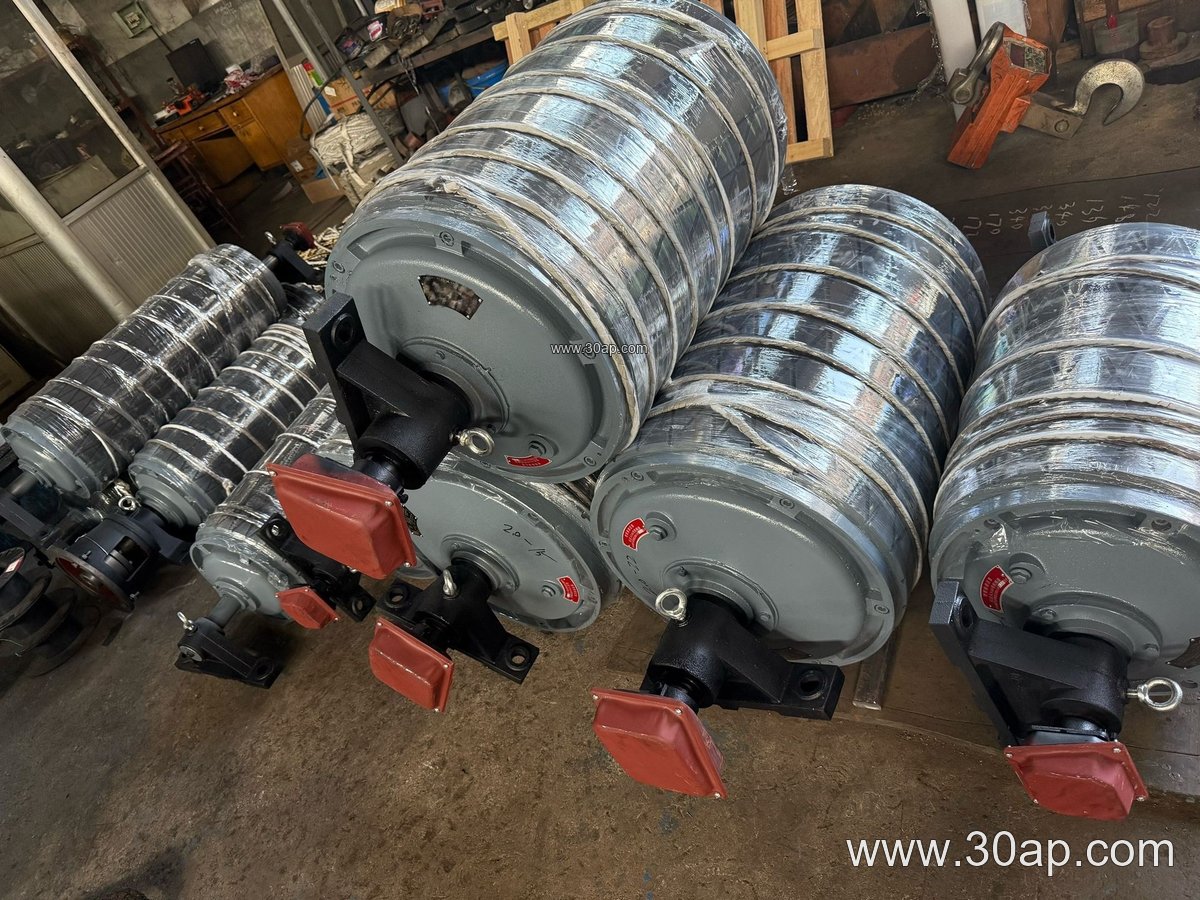
A typical drive pulley combines a cylindrical shell, two end discs, a shaft, and a locking assembly that connects the shaft to the hub. The shell is usually rolled steel, machined for balance, and often covered with rubber or ceramic lagging to raise friction against the conveyor belt. Bearing housings sit at each end, and the whole assembly mounts into a conveyor bracket or frame at the head station.
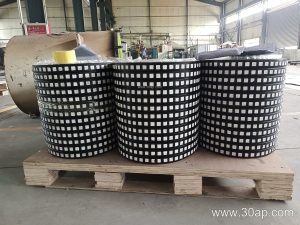
Lagging is where much of the design attention goes. Plain, cast rubber, cold-bonded rubber, hot-vulcanized rubber, diamond, herringbone, and ceramic surfaces each suit different conditions. Wet or oily belts favor grooved patterns that channel water away, while abrasive ore and rock service often calls for thick rubber or ceramic tiles. Common lagging thicknesses run 8, 10, 12, 15, and 20 mm, selected by duty rather than by habit.
Matching Diameter to Belt Width and Duty
Belt width and pulley diameter are related but not locked together. A wider belt needs a wider drum face, and a heavily loaded belt needs more wrap and more diameter to reduce bending stress in the carcass. Typical face widths run slightly wider than the belt, for example about 500 mm face for B400, around 950 mm for B800, roughly 1400 mm for B1200, and about 1800 mm for B1600. Diameters commonly range from Ø200 up to Ø1800 depending on tension and belt stiffness.
Some representative combinations seen in design work include B800 × Ø500, B1200 × Ø1000, and B1400 × Ø800, but these are examples, not rules. A B1200 conveyor might use a smaller drum in a light duty line or a larger one where the belt is thick and heavily tensioned. Shaft diameter is set by torque and bearing load, using sizes such as Ø80, Ø100, Ø120, Ø140, or Ø160, and should never be picked from belt width alone.
Reference envelope for drive drums
- Belt widths: B400, B500, B650, B800, B1000, B1200, B1400, B1600, B1800, B2000
- Drum diameters: Ø200, Ø250, Ø315, Ø400, Ø500, Ø630, Ø800, Ø1000, Ø1250, Ø1400, Ø1600
- Lagging: plain, cast rubber, cold-bonded, hot-vulcanized, diamond, herringbone, ceramic
- Lagging thickness: 8, 10, 12, 15, 20 mm
- Shaft diameters: Ø50 to Ø200, confirmed by torque calculation
Where It Fits in the Plant
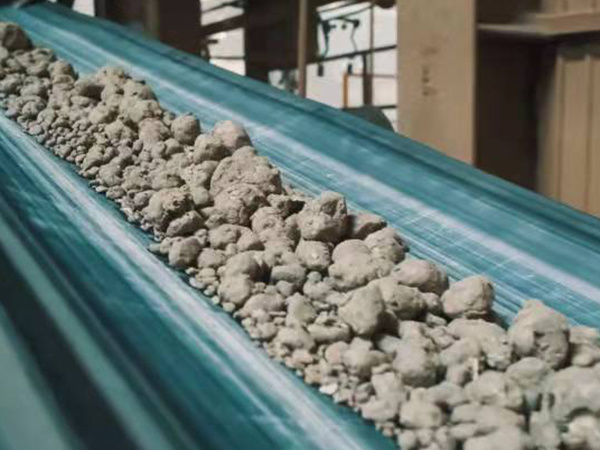
Drive pulleys appear at the discharge end of nearly every bulk handling conveyor. In a limestone quarry they pull crushed rock up incline conveyors toward the screening plant. In a coal preparation plant they move washed coal across long runs where flame retardant and anti-static belt grades are required. In a cement plant they handle clinker and raw meal; in a power plant they feed coal to the bunkers. Port bulk terminals, steel sinter lines, and aggregate washing circuits all rely on the same principle.
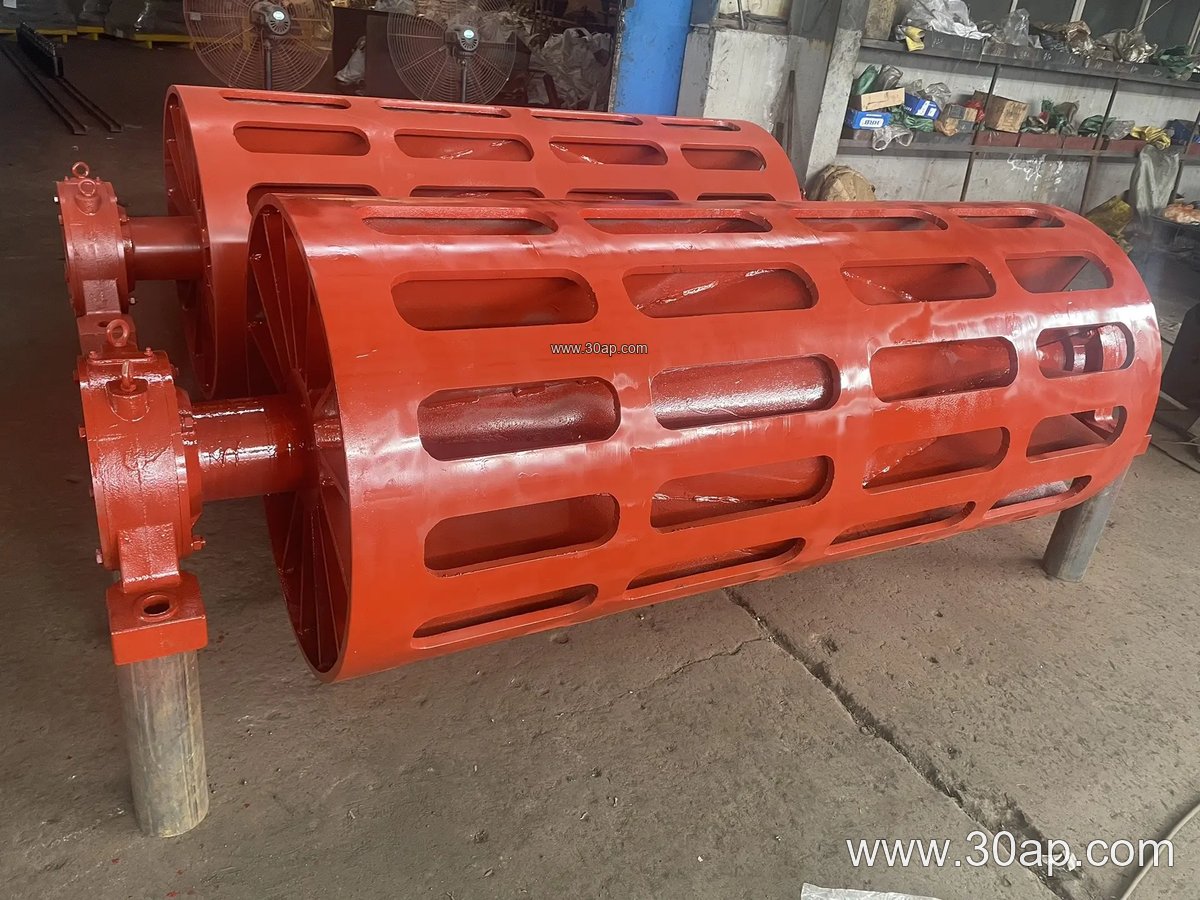
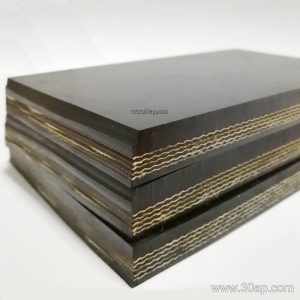
The belt itself must match the drum. A steel cord conveyor belt behaves differently from a multi-ply fabric core belt, and an EP conveyor belt or NN conveyor belt has its own bend radius and tension needs. Where the belt is heat resistant, oil resistant, or abrasion resistant, the lagging and drum surface should be chosen to work with it rather than against it.
Buyer Checklist Before Ordering
Start with the conveyor duty: tonnage per hour, belt speed, incline, and starting conditions. Then confirm belt width, belt type, and the required wrap angle at the drive. Specify the drum diameter and face width, the lagging pattern and thickness, the shaft diameter with keyway or locking assembly details, and the bearing type and housing style. Ask how the pulley will be balanced and how the lagging will be bonded, since a poorly bonded cover can peel under load.
Also confirm mounting dimensions against the existing conveyor bracket, and check whether the drive is a conventional drum with external gearbox or an integrated motorized drum. Spare parts planning matters too: a second drive pulley on the shelf is cheaper than a stopped line.
For matching belts, idlers, and drums, see the conveyor components range at www.yourdomain.com/conveyor-pulley and the belt options at www.yourdomain.com/conveyor-belt. A well specified Belt Conveyor Drive Pulley is the difference between smooth production and repeated belt slip, so treat the drum as an engineered component, not an accessory.