What a Custom Conveyor Bracket Really Is
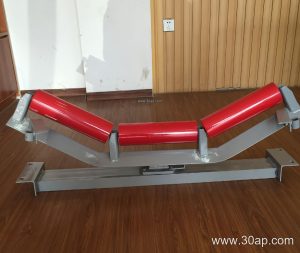
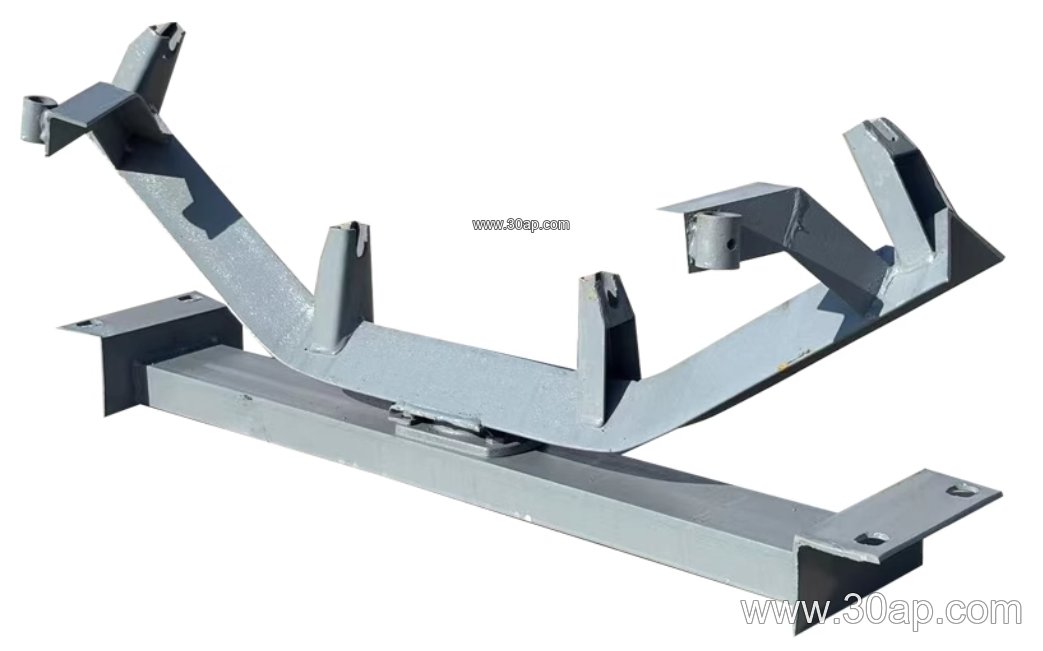
A custom conveyor bracket is a made-to-order support component that positions idler rollers along a conveyor frame. Instead of forcing a standard bracket onto a structure it was never designed for, the bracket is built around the actual belt width, trough angle, roller diameter, and mounting hole spacing of the line. In practice, this means the bracket becomes a matching interface between the steel structure and the rotating parts, whether the plant handles limestone in a quarry, coal in a power plant, clinker in a cement works, or ore in a concentrator.
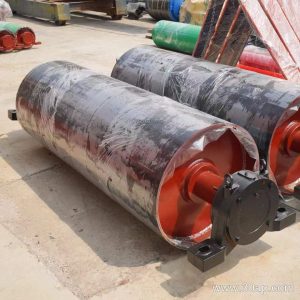
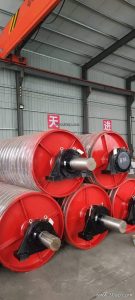
Buyers often describe the same item as a bespoke idler support bracket or a tailor-made roller mounting bracket. These are accurate equivalents for the same product; they are not different hardware. The bracket is the stationary part, while the conveyor pulley at the drive, tail, or bend position is a separate assembly with its own function, and none of those pulley roles should be confused with a bracket.
How the Bracket Is Built
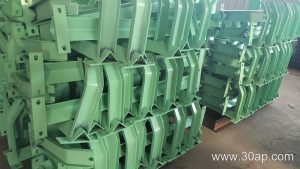
Most units are fabricated from angle steel, channel steel, or folded steel plate. The grade and thickness follow the load case and the design life agreed with the fabricator. A typical build includes:
- Base plates or cross beams drilled to match the frame hole pattern
- Roller seats or cradle notches set at the required trough angle
- Gussets and stiffeners where the bracket carries impact or heavy belt tension
- Adjustment slots or pivoting arms on adjustable versions
- Surface treatment chosen for the site, such as painting or hot-dip galvanizing
Because every mounting hole distance and cross beam length depends on belt width and trough angle, these dimensions are set per project rather than taken from a single catalogue number.
Bracket Families and Where They Sit
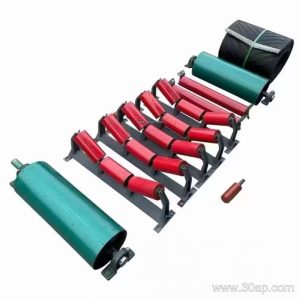
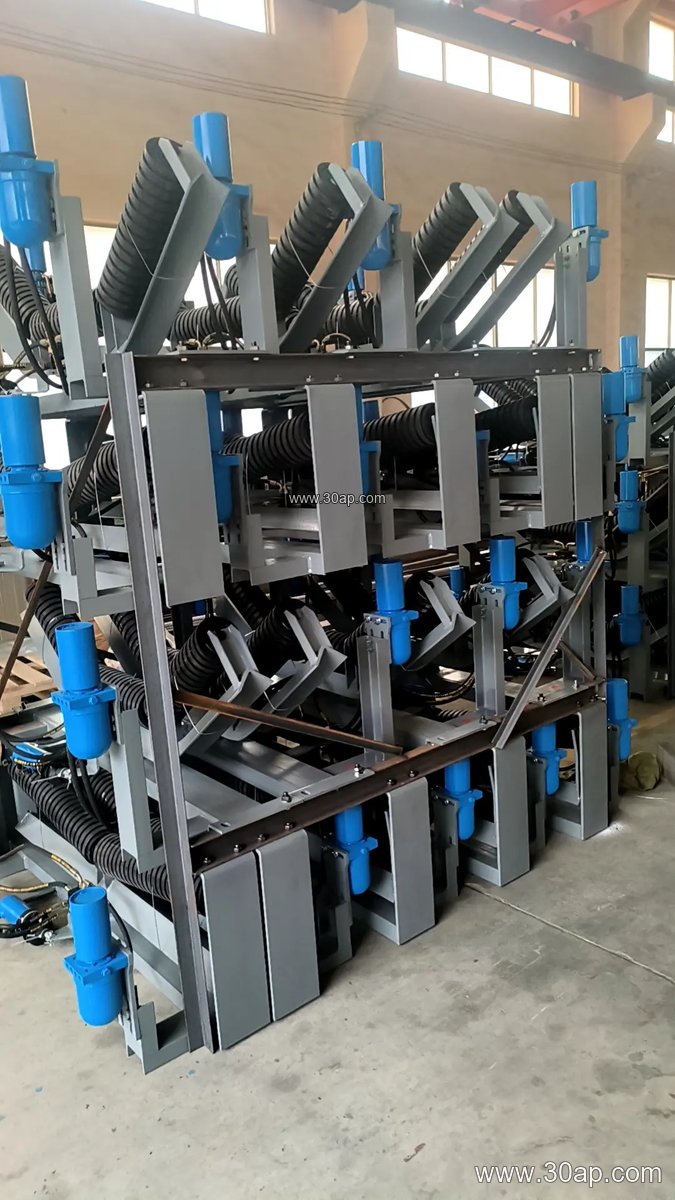
The bracket family is broad, and each member has a defined place on the conveyor. Troughing brackets carry the loaded side of the belt; transition brackets sit near pulleys where the belt changes profile; return brackets support the empty strand, and V-return brackets help center it. Impact brackets are placed under loading points, self-aligning brackets correct belt drift, and suspended brackets hang from the structure where floor space is tight. A fixed bracket holds one geometry, while an adjustable bracket can be set between common trough angles.
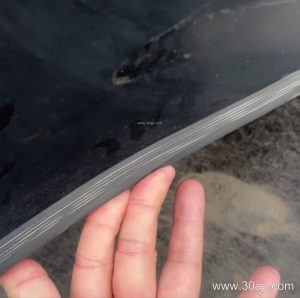
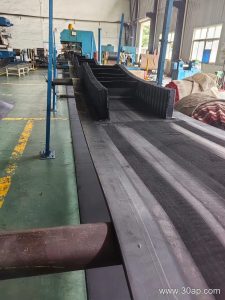
This is also where the belt specification matters. A heavy-duty mining conveyor belt on an underground coal mining conveyor belt system may call for a more rigid bracket than a lightweight fabric core conveyor belt on a short transfer. The bracket does not change the belt, but it must suit the belt’s stiffness, load, and speed.
Matching Belt Width, Trough Angle, and Roller Diameter
Selection is a three-way conversation between belt width, trough angle, and roller diameter, plus the frame hole pattern. The table below shows reference combinations; they are examples, not fixed rules, and other pairings are common.
| Belt width | Trough angle | Roller diameter | Typical setting |
|---|---|---|---|
| B650 | 30 degrees | Ø89 | Light to medium duty, aggregate lines |
| B800 | 35 degrees | Ø108 | General bulk handling, cement plants |
| B1000 | 35 degrees | Ø108 or Ø133 | Power plant coal conveyors |
| B1200 | 45 degrees | Ø133 | High capacity, iron ore and quarry duty |
| B1400 | 35 to 45 degrees | Ø159 | Heavy-duty mining conveyor belt lines |
| B1800 | 35 degrees | Ø159 or Ø194 | Large port and steel plant systems |
Common trough angles are 20, 30, 35, and 45 degrees. Forward-leaning brackets are usually set around 1.5 to 2 degrees to assist belt tracking. A wider belt does not automatically dictate one angle or one roller size; the material, capacity, and transition length decide that.
Installation Notes That Save Rework
Check the hole pattern against the frame before delivery, confirm that the bracket seats the idler roller squarely, and verify clearance around the conveyor pulley at transition zones. On site, align brackets in a straight run so the belt does not weave, and torque fasteners to the specified value. For abrasive duty, such as a crusher conveyor belt or a quarry conveyor belt, inspect wear at the roller seats during routine stops; for hot material, allow for thermal movement in the design.
At yongguangconveyor.com, custom conveyor bracket drawings are reviewed together with the belt and roller selection so the whole support line works as one system.
What to Send in an Enquiry
Provide the belt width, required trough angle, roller diameter, frame hole spacing, material handled, and any adjustment requirement. Mention the environment, for example a dusty coal preparation plant, a wet wash plant, or a coastal port. With those details, a fabricator can produce a bracket that fits the first time and keeps the idler roller, conveyor belt, and frame working together.